Public oversight of prisons: an effective tool or a simulation of prisoner rights protection?
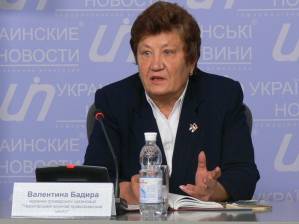
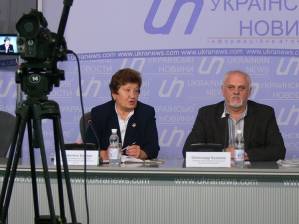
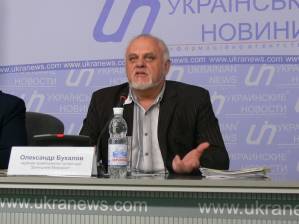
Theses for the press conference on 17 September 2008
An important mechanism for verifying compliance with human rights in places of detention is public oversight of the activities of penal institutions. According to Article 25 of the Criminal Executive Code, this oversight must primarily be provided by supervisory commissions (note!).
Naturally, this oversight must be carried out by the public, including non-governmental organisations, which should make up at least half of the commissions’ membership. It is these commissions that are charged with the responsibility of conducting public oversight regarding the observance of human rights.
A couple of years ago, Public Councils began to be established under the regional departments of the State Department. One of their functions is also related to the observance of human rights.
Given the existence of these two institutions, and taking into account the efforts of the prosecutor’s office and the Human Rights Commissioner, it would seem that any human rights violations in penal institutions could, if not prevented, have their causes and circumstances identified, with the perpetrators being held accountable in due course.
Instead, reports of brutal human rights violations in the colonies of the prison service are becoming more frequent. Meanwhile, the official responses remain traditional: reports of human rights violations were not confirmed, there were no hunger strikes, and suicide attempts were merely “minor skin scratches” by the convicts. In general, everything is fine, everything is in order, and no one is violating the rights of the convicts.
To speak argumentatively about the true state of affairs in this extremely important area, one needs an objective picture. Therefore, the public human rights organisation “Donetsk Memorial” has been carefully researching various aspects of the activities of institutions and the aforementioned bodies related to the exercise of public oversight of the observance of prisoners’ rights for several years.
It is worth emphasising that, to date, there is no tradition of exercising public oversight in Ukraine. At the same time, it should be noted that recent changes in legislation have provided more grounds for exercising public oversight of penal institutions. Previous studies revealed that, firstly, representatives of non-governmental organisations never constitute half of the composition of the commissions. Moreover, they are often absent from the membership altogether.
An important element affecting the effectiveness of supervisory commissions is the legislative support for their activities, in particular, the relevant Regulations. Therefore, “Donetsk Memorial” also conducted a study on the effectiveness of the Regulations on supervisory commissions, using the commissions of the Donetsk region as an example. Such a study was conducted for the first time in Ukraine. Unfortunately, fragments of this study were used by the organisers of an international conference without the authors’ permission, and in a distorted form; later, at the prompting of certain heads of the State Department for the Execution of Criminal Punishments, it was printed and distributed, which led to a distorted reflection of the real situation regarding the composition of supervisory commissions in the Donetsk region.
The result of previous studies was two methodological brochures on the activities of supervisory commissions and an updated version of the Regulations, prepared by the organisation in close cooperation with the Ministry of Justice. Unfortunately, this Regulation has still not been adopted by the Cabinet of Ministers.
It was at this stage of “Donetsk Memorial’s” activities that the project “Promoting the improvement of the regulatory framework for the serving of criminal sentences in Ukraine,” supported by the International Renaissance Foundation, was launched.
Research into issues of public oversight of human rights compliance in penal institutions within the framework of the project was conducted in the following directions:
1. Sending requests regarding the activities of supervisory commissions and Public Councils under the regional departments of the State Department for the Execution of Sentences. In total, nearly 200 requests were sent.
- to all regional supervisory commissions (25 addresses, 14 replied);
- to local supervisory commissions where penal institutions are located (54 addresses, 16 replied);
- to local supervisory commissions where there are no penal institutions (41 addresses, 10 replied);
- to regional administrations of the State Department for the Execution of Sentences (25 addresses, 19 replied);
- to Public Councils under the regional administrations of the State Department for the Execution of Sentences (25 addresses, 14 replied).
Separate requests were also sent to supervisory commissions in penal institutions where emergency incidents had occurred.
In total, over 70 responses were received.
The second important element of the project was sending requests regarding specific cases of alleged human rights violations both to the relevant supervisory commissions and to the Prosecutor General’s Office and the leadership of the Department. “Donetsk Memorial” also participated in sending open letters to the country’s leadership regarding violations of prisoners’ rights, and the reaction to such public appeals is quite telling.
The norms of current legislation regulating the exercise of public oversight, as well as international standards in this area, were also carefully analysed.
During the project, several “round tables” were held on the topic of exercising public oversight – in Simferopol, Luhansk, and Donetsk. These discussions were quite fruitful and helpful in understanding the context in which public oversight is carried out in these regions.
Several questions were raised in the press conference announcement, which we will try to answer.
First:
Are supervisory commissions and public councils effectively performing their functions?
The first thing that catches the eye is the statistics of responses to requests. They are best for the regional departments of the State Department (19 out of 25 replied, i.e., 76% of those requested). Supervisory commissions in administrative territories where there are no penal institutions replied rather sluggishly – only 10 out of 41, i.e., less than 25%. The percentage of respondents among commissions where such institutions exist is not much higher – 30%. Excluding the Donetsk region, where commissions are accustomed to such requests, this percentage is only 22%.
It is important to make this remark here. It is our conviction that public oversight does not exist merely when members of the public have access to closed institutions, when they have the opportunity, as members of the public, to familiarise themselves with the conditions of detention and other aspects of the activities of such closed institutions, but when the information they obtain becomes known to the general public, to society. Therefore, an essential element of public oversight is conveying to society the information that its representatives receive during the exercise of this oversight. And therefore, the widest possible reporting on the work of supervisory commissions must be an mandatory part of their work. The lack of responses to requests indicates that in the vast majority of randomly selected supervisory commissions, there is either nothing to answer, or, even if there is, they do not consider it necessary to report it.
For instance, the Deputy Head of the Rivne Regional State Administration did not provide a substantive answer but demanded “information regarding the location, time of state registration, and statutory tasks of the organisation, as well as copies of registration documents and the statute.”
Such a demand is illegal, and “Donetsk Memorial” has already won many lawsuits precisely when receiving such responses from state institutions.
It is characteristic that during the “round table” in Simferopol, the first questions from a representative of the local supervisory commission were: why is “Donetsk Memorial” not in the Ministry of Justice registry (because they checked and did not find it), and does the organisation receive funds for its activities from foreign donors, in particular, from American foundations?
The lack of responses to requests may also be caused by the absence of supervisory commissions altogether. Responses arrived from some regions such as: “What are these supervisory commissions?”
As for the Public Councils under the regional departments of the State Department, a list of them is available on the department’s website, but it is quite outdated. The information has not been updated for over two years, which is a kind of indicator of the department’s attention to the activities of these structures. And what is most interesting: the composition of the Public Council directly under the department is absent. As is information about its work.
Along with quite substantive answers to requests about the activities of Public Councils under the department’s administrations, somewhat specific responses were also received.
For instance, the head of the Public Council under the department’s administration in Crimea did not answer the first request, and reacted quite irritably to the second, calling it a “template circular” and agreeing to answer only when informed of what this request implied. After clarifications, no further response was received from the head of this Public Council.
And the head of the Public Council under the department’s administration in the Odesa region asked with surprise why the “Coalition of HIV-Service Organisations did not notify about the conduct of research on the activities of Public Councils at the national level with the participation of your organisation.”
To assess the effectiveness of these institutions, it is still important to know what exactly supervisory commissions and public councils report about their work on exercising public oversight.
Obviously, these institutions do, as they say, perform certain work. Most often, this concerns providing assistance from the public to penal institutions – holding cultural and sporting events, resolving educational issues, organising meetings with representatives of the church, artists, athletes, etc. However, this entire set of activities does not constitute public oversight.
The effectiveness of these structures is most clearly manifested during emergency events, when public intervention must reveal whether the rights of prisoners were violated. “Donetsk Memorial” appealed to the supervisory commission of the Solonyansky district of the Dnipropetrovsk region regarding a likely violation of the rights of convict D. The appeal from “Donetsk Memorial” in August 2007 remained unanswered, as did the second one in December 2007. Only after the third letter in April 2008, copies of which were delivered to the district and regional prosecutor’s offices, as well as to the regional supervisory commission, did a response arrive stating that in January (!) 2008, an inspection was conducted which did not reveal any violations regarding convict D.
A second case. To an inquiry to the supervisory commission of the Iziaslav district regarding complaints from convicts, allegedly not sent by the administration of Iziaslav colony No. 31, it was reported that on 30.08.2007, complaints from convicts to the prosecutor’s office were registered in a special log under Nos. 6-13. Regarding the events in January 2007, it was reported that members of the commission participated in an inspection, and violations were rectified. But it is not superfluous to ask: why were 8 complaints registered on 30 August, and for the entire previous period (from January to the end of August?), according to the numbering, only five?
Nothing is known about the consideration of emergency events at meetings of Public Councils under regional departments. Instead, regarding emergency events in penal institutions and the need to consider these issues at the Public Council under the Department, five appeals were sent to its chairman, Mr. I. V. Shanko, during August–December 2007. He did not respond to any of them. And the important issues proposed by human rights defenders regarding alleged brutal violations of convicts’ rights were not included in the agenda of the Public Council in February 2008.
Consequently, it can be stated that public oversight of the observance of human rights in penal institutions as a systematic activity does not exist in Ukraine.
What factors influence the activities of supervisory commissions and public councils?
Research revealed that the legislative framework significantly affects the quality of the activities of these institutions. In the case of supervisory commissions, public oversight is merely proclaimed in the code, but the Regulations do not provide for public oversight among the functions belonging to the commission’s competence, and it remains only a declaration. Moreover, the code specifies that commissions *ensure* public oversight, which means that other structures can also exercise it. However, the rest of the norms of laws and departmental documents practically do not provide for the possibility of exercising such oversight.
Even with such an imperfect framework, the practical attitude of some heads of the system makes public oversight impossible. Thus, in May 2007, an instruction was issued by the head of the department about the possibility for the public to visit penal institutions only on weekends. After the Prosecutor General’s Office recognised this condition as illegal and cancelled it, orders were issued in the Volyn region that duplicated this illegal instruction, and the department’s leadership did not see anything wrong with such a violation of the law. The head of the department’s administration prohibited members of supervisory commissions from visiting institutions on many occasions and brutally confiscated their IDs. Yet he remains in favour with the department’s leadership – he was even awarded a certificate of merit.
It is also worth noting the professional capacity of non-governmental organisations to carry out public oversight at an appropriate level, without turning it merely into a search for negatives in the activities of institutions. Unfortunately, in Ukraine there are still too few NGOs capable of carrying out such oversight activity without creating artificial obstacles for the staff of penal institutions. In view of the highly unfavourable attitude of departmental leadership towards real public oversight, the vast majority of NGOs that cooperate with the system’s institutions limit their cooperation to educational and charitable activities, providing legal assistance and support after release. This allows them to avoid conflicts with the institutions’ administration.
That their fears are not illusory is evidenced by the attitude of the department’s leadership towards those NGOs that raise the issue of compliance with prisoners’ rights, disseminate information about cases of violations, and demand investigations into such cases. The current leadership resorts to spreading nonsense, explaining such a position by human rights defenders as supposedly being “ordered by the criminal world.” That is exactly how the head of the department, V. V. Koshchynets, reacted to two open letters from human rights defenders in February and June.
Among the factors influencing the activities of these structures is also the poor awareness of the public about the essence of public oversight. Public oversight should be distinguished from civil oversight, which is carried out by both non-governmental and state structures, and of which public oversight is a part. And it consists of investigating those sides of the activity of state institutions, in this case, colonies, that affect the observance of fundamental human rights.
Given the above, the answer to the following question becomes quite important:
Can supervisory commissions help in protecting the violated rights of prisoners?
Examples of effective activity of supervisory commissions, although very rare, unfortunately, show that they can. Even in the current situation, they can help in protecting violated rights. But for this, they must recognise such activity as important and mandatory for themselves, be principled in investigating situations, and necessarily inform society about the results of their activities. This is only possible when there are structures that will demand such activity from supervisory commissions. Such structures do not exist at the moment. And therefore, the inaction of supervisory commissions in protecting prisoners’ rights, as well as the inaction of public councils, suits the department, and suits almost all supervisory commissions where they exist. And on the part of society, a clearly expressed such demand is also absent today.
Finally, the fourth question was:
What is the responsibility for the inaction of these bodies in protecting the rights of citizens?
Practically none. Only the attention of society to this important link in the activities of the penal system, the activity of the public, and the lack of indifference of society to human rights violations against any persons, even those who have broken the law and are serving sentences behind bars, can significantly change the situation for the better.
Summing up, we can state the following:
Public oversight of the observance of human rights in penal institutions as a systematic activity is absent. There are several factors contributing to this situation:
“Normative”
The existing regulatory framework for exercising public oversight is too imperfect and does not contribute to its effective implementation. There are practically no legislative and financial conditions for such activity, and the subjects of public oversight, their powers, and the scope of their competence are not clearly defined.
“Social”
There is no noticeable need in society for exercising public oversight of the observance of human rights in penal institutions. Too few non-governmental organisations are concerned with this issue and understand it. Neither representatives of the public nor employees of the system have realised the need for such oversight and the responsibility associated with it.
“Departmental”
The Department demonstrates a persistent unwillingness to facilitate the exercise of public oversight of its institutions; its leadership is comfortable with a situation where declarations about such oversight are made, but in reality, it does not exist. Rarely does the department agree to a simulation of this oversight, which in fact turns into deception of both society and foreign institutions interested in such activity.
The country’s leaders are practically indifferent to manifestations of public oversight, thereby destroying the shoots of such civic activity.
It is necessary to conduct more discussions, debates, and communication regarding ways to establish public oversight of penal institutions in Ukraine, and to highlight both the positive and negative experience of its implementation.
The results of the project’s research will be published in detail in a separate edition.