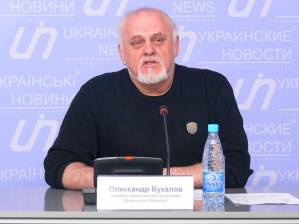
Discrimination against prisoners in Ukraine remains an insurmountable problem
On 23 April, a press conference of the human rights organisation “Donetsk Memorial” took place in Kyiv on the topic “How prisoners’ rights were observed in 2008”, where the main theses and conclusions of the fourth annual report “Compliance with prisoners’ rights in Ukraine-2008”, prepared with the support of the International Renaissance Foundation, were presented.
The number of prisoners in Ukraine is decreasing
The report notes that in 2008, the decline in the prison population in Ukraine continued, amounting to 145,946 people as of 01.01.2009. However, the rate of decline in the number of prisoners decreased almost threefold compared to previous years. There are 314 people behind bars per 100,000 population in Ukraine, which is almost three times higher than the indicator in Western European countries.
Violation of prisoners’ rights: no positive changes have occurred
Despite this positive trend, no noticeable changes for the better in the sphere of human rights compliance occurred during 2008. A high level of violations of prisoners’ rights persists. This concerns not so much the conditions of detention, but rather the treatment of prisoners by staff. As in previous years, it can be argued that respect for human dignity has not yet become the dominant factor in penal policy, and the existing practice of treating prisoners is built on the strict demand by the administration of institutions for unquestioning obedience from prisoners. This is complemented by the absence of an effective mechanism for filing complaints.
Prisoner protests are punished and concealed
Incidents of protests by convicts are not decreasing. The department’s management tries to conceal the true scale of prisoner protests. An honest analysis of the causes of such events is missing. The department’s management explains the reasons for the protests by external factors – “someone needs to agitate the convicts”. The results of investigations into extraordinary events are not made public; society is sometimes provided with false information about the true course of events, and facts of beating of convicts and brutal treatment are denied. Punitive measures are applied to convicts who protest and complain.
The management of the agency ignores proposals from leading human rights organisations to objectively investigate reports of conflict or extraordinary events in institutions, which significantly narrows the possibilities for independent assessment of potential human rights violations.
Access to information regarding compliance with prisoners’ rights in the system is too limited. The practice of non-response or only partial provision of information by officials of agencies to requests continues. No response measures are taken against agency employees who violate information legislation.
Public control is limited
Interaction with the public, primarily with non-governmental organisations, is limited only to issues of material assistance to the system and specific services of a legal and consultative nature for convicts. The Department’s management demonstrates an inability to cooperate with human rights organisations that have their own views on facts and events and express critical remarks regarding the system’s management, and continues the practice of avoiding cooperation with them. Public control of compliance with the rights of convicts and detainees, as well as the activities of penal institutions, is absent.
The state leadership is indifferent to the problems of the penitentiary system
In 2008, no positive changes occurred in the Department in the practice of adopting departmental documents that violate the rights of convicts and detainees. In the agency’s rule-making activity, a significant preference remains for security and safety issues to the detriment of human rights compliance; the public and leading scholars are not involved in the development of documents concerning human rights. Ukraine’s obligation, made upon joining the Council of Europe in 1995, to subordinate the penal system to the Ministry of Justice, remains not fully fulfilled. During the more than ten years of the Department’s existence, the agency has not taken measures that would involve preparation for such subordination.
This situation is facilitated by several factors, among which the indifference of the state leadership to the problems of the system is important. There are no changes in the issue of the lack of social insurance for working convicts; contributions to the Pension Fund are not paid for them. The agency’s management remains indifferent to such discrimination against prisoners. The staffing problem remains acute. At the same time, the level of social protection of staff remains unacceptably low.
Corruption is widespread among prison staff, especially in the application of parole. It is difficult to estimate its true scale. At the same time, there is no effective and public reaction from management to cases of corruption.
It is worth noting that out of the sixteen proposals of the previous Report, not a single one has been implemented. There is no reaction from the Department to the recommendations of the previous “Donetsk Memorial” reports or to the reports in general.
The full text of the Report will be released in mid-May 2009 and posted on the Internet site “Prison Portal” – www.ukrprison.org.ua