‘We will put an end to brutality in camps and prisons’
It is possible that the only department in Russia undergoing real reform is the Federal Penitentiary Service (FSIN). It is interesting that the reform concept itself is still under consideration by the government, while serious changes are already taking place within the department. Almost a year ago, the system-forming figure Yuri Kalinin departed. Subsequently, in less than a year, eighteen heads of regional FSIN directorates and the central apparatus were dismissed, as well as several dozen of their deputies.
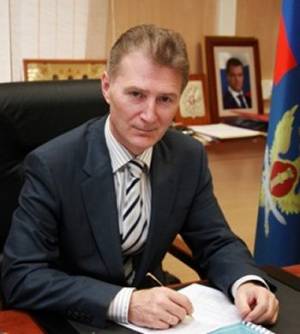
Vasily Bolshakov, Deputy Director of the FSIN of the Russian Federation, told a *Novaya Gazeta* correspondent what Russian prisoners and their numerous relatives should expect.
— Vasily Pavlovich, a large-scale purge of the system began shortly after the death of Sergei Magnitsky in the Butyrka pre-trial detention centre. It is said that under this pretext, the new FSIN director, Alexander Reimer, simply cleared the way for his own team...
— You must agree that any leader needs their own team. However, the dismissals took place in accordance with the staffing schedule. Most of the leaders were retired due to reaching the maximum age for service, and some due to health conditions. Although there were also those who were removed from service during inspections, such as in Moscow.
— Replacing FSIN professionals, at least in the central apparatus, are police officers who are little acquainted with the specifics of this department and have never worked 'on the ground'. Will anything good come of this?
— Do not forget that until 1998 — when the Main Directorate for the Execution of Punishments (GUIN) was still under the Ministry of Internal Affairs — we had a lot in common: personnel work issues, service progression issues, and methods of working with personnel. It cannot be said that this is an entirely unfamiliar field of activity for us. And an infusion of fresh blood always has a positive effect on an organism. New people can see the flaws more clearly...
— Tell us about the legacy you inherited.
— I cannot say that everything is bad, but one cannot claim that everything is good either. It is a large and complex organism, and most importantly, it functions, and it functions without interruption. And this is to the credit of those people who worked here before us.
— But Yuri Chaika, while still Minister of Justice, pointed out that the department had turned into an uncontrollable closed structure where the law is systematically violated and the situation regarding the observance of convicts' rights is deteriorating from year to year. Do you agree with this?
— Partially. I do not know how it was before the arrival of Alexander Reimer and his team, but now we see that there are problems. The main one is that the system itself has long become archaic. It is precisely this that the Minister called a GULAG system.
— The current Minister of Justice, Alexander Konovalov, said that?
— Yes, and repeatedly.
— I only heard his phrase that Magnitsky’s death in the Butyrka pre-trial detention centre did not come as a 'surprise' to him. And in your opinion, who is to blame for the death of the Hermitage Capital Management lawyer?
— The degree and guilt of each person will be determined by the Investigative Committee of the Prosecutor General’s Office within the framework of the ongoing investigation.
— Hermitage Capital Management employees are also trying to find out the names of officials responsible for Magnitsky's death, and Benjamin Cardin, an American senator, has already presented a list of 60 employees of the prosecutor's office, the investigative committee, and tax authorities... In this list are four FSIN employees*. Do they still work for you?
— Larisa Litvinova has been dismissed from her job, Dmitry Kratov has been dismissed from service in the Penal Enforcement System (UIS), and Dmitry Komnov has been demoted. As for Ivan Prokopenko, he has nothing to do with the incident that occurred and continues to work in his previous position.
— After the death of Sergei Magnitsky, the question of the quality of prison medicine was raised once again. Why does your department not want to transfer medicine to the civilian sector, to the Ministry of Health and Social Development?
— We are 'for' it with both hands. It is not very pleasant to receive slaps in the face on this front, especially since it is sometimes objective and unfair. However, the Ministry of Health and Social Development is against it. After Magnitsky’s death, we immediately proposed that they take medicine away from us, and we came out with a similar proposal for the second time this year. But both times the Ministry of Health and Social Development refused us, saying there was no need or expediency for it**.
— Regarding the 'GULAG system'. Human rights activists have repeatedly pointed out that the three main problems of our penitentiary system are the lack of access to information, 'preventive' raids by prison special forces, and the existence of discipline and order sections (SDiPs) — detachments of prisoners-jailers who have broad powers and are not constrained by laws or instructions.
— We are trying to be open now. We have launched an updated website. All divisions are clearly defined there, and it is stated by name who is responsible for what. The addresses, telephone numbers, and websites of the FSIN territorial divisions are provided. We cooperate with human rights activists and public organisations. As a result of meetings, after analysing the situation, all sections that performed administrative functions were abolished, including the SDiPs.
Initially, the activities of these sections were aimed at re-educating prisoners. But over time, they degenerated; criminal bosses began to penetrate them, and the sections turned into groups of convicts who sought to control the colonies.
— I heard that in some colonies the functions of the SDiP have now passed to fire safety sections. The powers are the same, the people are the same, but the sign is different; they have simply stopped wearing red armbands. I even have a list of such zones.
— I think this is a fabrication. Yes, there is a group ensuring fire safety, but nothing more. This is a technical section. Give me that list; we will check it, and if the information is confirmed, the heads of such colonies and the employees involved in this will be subject to strict disciplinary liability.
— The FSIN has its own special forces — to suppress riots in colonies and prisons, which are fairly rare, at least now. I have heard a lot about so-called 'training raids'. Special forces in masks enter a zone and beat prisoners as a preventive measure. Is such a thing possible now?
— Categorically no. This is an unmotivated violation of the law. Every deployment of special forces is strictly regulated. If an emergency occurs, the decision to deploy special forces is made by the head of the territorial body, who informs the prosecutor's office. Special forces enter the territory of a colony or prison only accompanied by a prosecutor who exercises supervision. A report is drawn up: why the detachment was called, what measures were applied, who was detained.
— If an incident involving a 'training raid' comes to light today, who will be punished?
— From the number one person down to the perpetrators. Unconditional dismissal from office.
— It is believed that the FSIN has a good lobby in the legislative and executive bodies of power. People who promote the interests of the FSIN sometimes act in rather strange ways, for example, by attacking human rights activists. Does Deputy Abeltsev represent the interests of the FSIN in the State Duma? And does Senator Spiegel in the Federation Council have any relation to the department?
— Both Deputy Abeltsev and Senator Spiegel act solely on their own considerations.
— Although the FSIN reform concept has not yet been approved by the government, I know that some of its points are already being implemented.
— Yes, over this year we have managed to fully fulfil the requirement for the separate detention of persons who are convicted for the first time ('first-timers') and those who are repeat offenders. Although this provision was previously written into Article 80 of the Penal Code, it simply was not observed. We considered this measure necessary to separate the so-called first-timers from the negative influence of prison subculture. Colonies have been formed where only first-timers are held. Over this year, 80,000 people who were already serving terms have been moved in accordance with this provision.
Now, everyone who has ended up in a pre-trial detention centre for the first time does not come into contact with recidivists. And furthermore, if they end up in colonies, it is only in those where first-timers are held. And recidivists, depending on the severity of the punishment, will be gradually moved in accordance with the new scheme of correctional institutions.
— First-timers are also different; some will give odds to criminal bosses. Let's assume a first-timer was given 10 years, eight of which he spent in a colony, and all these years he was in direct contact with the 'negative prison subculture'. And now he is being moved to a zone for 'newcomers'. It is clear that he will share his experience of 'how it happens among serious people'.
— I don't see a problem with that. The first-timers you are talking about are few, and for the general mass of prisoners, they do not pose a serious threat.
— There is an opinion that the main goal of such a measure is to lock up negatively inclined convicts who do not want to cooperate with the administration, so that others don't get any ideas.
— Firstly, according to our statistics, 400,000 people in places of detention are prone to various forms of destructive behaviour. Do you have any idea what a mass of people that is! They systematically violate the regime and have a negative influence on other convicts.
— As many heads, so many opinions. For one person, a violation of the regime is open disobedience. For another, it is an unbuttoned top button. You didn't button the button a few times — and you are a malicious violator.
— Yes, yes, marching on the parade ground, and choral singing... This is excessive zeal and the interpretation of the law as one pleases. Forget it; this will not happen again. We are ending the Chelyabinsk experience. And we will put a stop to this firmly.
Let us return to the question. The essence of separating first-timers and recidivists is not to lock up the so-called 'negatives', but to differentiate punishment depending on the intent and severity of the crime. It makes a big difference if one person accidentally dropped a brick at a construction site and killed a companion, and another killed an old woman for three thousand roubles. Our task is to separate such people. Therefore, we plan to create two types of settlement colonies, introduce a provision on forced labour, and move those who are not having trouble with the law for the first time to prisons.
All this is done to give those who ended up behind bars 'by accident', out of negligence, the opportunity to calmly serve their term and return to a normal life. To give them the opportunity not to lose social ties, to communicate with their wife, children, and relatives. To help such people socialise in the colonies. We plan to introduce resocialisation centres on the ground where, after the end of the term, a convict can live for three months and adapt to the conditions of normal life. Centres for the employment of former convicts will be formed. Currently, these mechanisms are poorly developed.
— And don't you think that it is necessary to socialise not only convicts but also colony employees, in order to avoid situations like those that arose in Kopeysk and Saint Petersburg?
— Undoubtedly. Coming here, I studied the scandalous cases in the Chelyabinsk region and Saint Petersburg in detail. My hair stood on end. And now our main task is to change such an attitude towards people on the part of employees, to break this GULAG system.
The first thing we did was to recreate the psychological service for personnel; before this, it existed only on paper. No one worked with the staff. Hence came the inevitable psychological deformation. Now we have tightened the requirements for employees and the organisation of their work. Starting this year, upon hiring, we will introduce a polygraph and check everyone for drug and alcohol use, as well as the motivation with which they come to us for service. Then we will introduce a mandatory preventive testing system every six months.
— You cannot blame all sins on rank-and-file employees. After all, they act on someone's order. The horror is that the bosses cover for them. In the Kopeysk case, Lieutenant-General Zhidkov is being prosecuted; in the St. Petersburg case, it is full of colonels. In such a regulated department as the FSIN, a leader cannot help but know what is happening on their territory.
— Of course, all the measures that we will introduce regarding psychological certification and other parameters of personnel work also apply to the command staff. We will be even stricter with them. We have recently created an internal security service; one of its tasks is to curb the abuse of power by FSIN employees.
— How can employees protect themselves from their superiors? Can an employee of, for example, a Mordovian colony, contact you directly?
— We are currently working on this, trying to communicate with them as much as possible. I personally receive people once a month at Sadovaya-Sukharevskaya. You can make an appointment; I will listen, take the case under control, and, if necessary, send a group from the central apparatus to figure out the situation on the spot. We always react even to anonymous letters.
— And have the current FSIN employees already passed psychological certification?
— Not yet, but everyone will definitely go through it. We are just preparing for it.
— In the process of testing, institutions may be identified where 30% of employees, or perhaps more, are not suitable for service according to psychological indicators; what will you do then?
— Dismiss them. There is no shortage of personnel today. There is a recruitment problem in large cities, such as Moscow or Saint Petersburg. In the regions, there are no such problems. The reduction of the armed forces gives us a tangible influx of personnel, and it is easier to attract people from remote areas where there are employment problems to join us.
— In the FSIN, there is a mysterious system of performance indicators for institutions and their employees, about which ordinary mortals know almost nothing. I have heard a lot that the employees themselves are howling from these rankings, and on the other hand, these rankings do not show anything real. For example, Chelyabinsk, before the scandal that occurred there, was for several years first in the system's ranking, and Bychkov was recognised as the best employee of the year.
— Any work needs assessment and encouragement. But the ranking system that existed previously was ill-conceived; indicators were evaluated incorrectly there. And often they didn't even lend themselves to logic. For example, the point about violations of discipline among colony employees. Tell me, is an indicator of an increase in violations good or bad for a head? On one hand, it can be assessed as an increase in the manager's demands on subordinates — they have become stricter. And on the other, it can be viewed as a decrease in demands. Such a system of double standards: if you want, you evaluate it with a plus sign, or if you want, with a minus sign... This is absolutely wrong. Therefore, the old system of evaluating activities has been completely abolished. Now new, more effective criteria are being developed that will reflect the real situation on the ground.
* In Cardin's list, the FSIN is represented by the head of 'Matrosskaya Tishina' Ivan Prokopenko, the head of the Butyrka pre-trial detention centre Dmitry Komnov, the deputy head of Butyrka for medical and preventive work Dmitry Kratov, and the head of the Butyrka therapeutic department Larisa Litvinova.
** However, as Tatyana Golikova's assistant Sofya Malyavina informed us, 'proposals of this kind from the FSIN never came to the Ministry of Health and Social Development'. In the coming issues, *Novaya* will try to clarify this situation.
Information from *Novaya*
Bolshakov, Vasily Pavlovich. Major General of the Internal Service. Born in 1958 in the city of Novoaltaysk. Graduated from the All-Union Correspondence Institute of Law. From 1978 to 1988, he worked in the internal affairs bodies of the city of Moscow. From 1988 to 1990, he was a senior inspector of the personnel department of the police for maintaining order on Red Square. From 1990 to 1999, he served in the personnel units of the Main Directorate of Internal Affairs of the Moscow City Executive Committee, the Ministry of Internal Affairs of the RSFSR, and the Ministry of Internal Affairs of Russia.
In 1999, from the position of deputy head of the personnel organisation department of the Ministry of Internal Affairs of Russia, he was seconded to the administration of the President of the Russian Federation (he dealt with personnel policy issues in law enforcement agencies).
From 2007 to 2009, he was the first deputy head of the Personnel Provision Department of the Ministry of Internal Affairs of Russia. In October 2009, he was appointed to the position of deputy director for personnel of the FSIN of Russia.
State of the Z/K (Convicts)
In Russia, millions of people are still behind bars: some are sitting, others are guarding.
The Federal Penitentiary Service (FSIN of Russia) is one of the largest Russian law enforcement agencies in terms of numbers. To date, more than 846,000 suspects and convicts are being held in places of detention. The FSIN system includes 755 correctional colonies, 227 pre-trial detention centres and 165 premises functioning in the mode of a pre-trial detention centre at colonies, 7 prisons, and 62 educational colonies for minors. The established number of employees is 360,000 people.
The Penal Enforcement System (UIS) also includes 2,467 criminal-executive inspections (where 517,800 people sentenced to punishments not related to imprisonment are registered). And also 262 federal enterprises, 495 centres for labour adaptation, plus schools, vocational colleges, hospitals, and churches.
Interviewed by
Irina Gordienko