NO RADICAL POSITIVE CHANGES ARE OCCURRING IN THE PENAL SYSTEM, WHILE ALARMING TRENDS ARE INTENSIFYING.
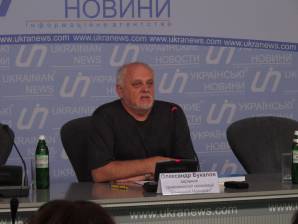
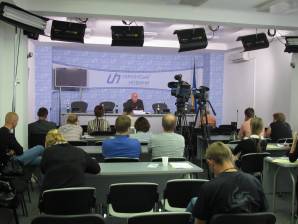
On 15 September, a press conference was held in Kyiv by the human rights organisation ‘Donetsk Memorial’ on the topic ‘Violation of Prisoners’ Rights: 2011 Trends’, where statistical data for the first half of 2011 were presented and examples of human rights violations in 2011 were cited.
The situation regarding the observance of prisoners’ rights in 2011 has not changed for the better.
A high level of violations of the rights of convicts persists. This concerns conditions of detention, and sometimes the treatment of prisoners by staff. Unfortunately, as before, it can be stated that respect for human dignity has not yet become a dominant factor in the activities of penal system institutions, and the existing practice of treating prisoners is built upon the administration’s strict demand for unquestioning obedience. This is compounded by the lack of an effective mechanism for filing complaints.
To a significant extent, the leadership of the penal service—both current and former—bears responsibility for this. However, often other government structures are responsible for the agency’s existing problems in the sphere of human rights observance: the Prosecutor’s Office, the Verkhovna Rada, the Government, and the courts.
The number of prisoners in Ukraine is increasing
In the first half of 2011, the prison population in Ukraine grew by 2.49%, or 3,839 people, and amounted to 157,866 as of 1 July 2011, having increased by more than 10,000 people over the past year and a half. The number of convicts increased from 108,187 at the beginning of 2010 to 119,153 by 1 July 2011.
The number of remand prison (SIZO) inmates decreased over the six months by 650 people (-1.65%)—from 39,363 (as of 1 July 2010—40,024 people) to 38,713. During those six months, 6,921 people were released from remand prisons, including 2,650 upon completion of their sentence, and measures not involving deprivation of liberty were applied to another 2,728 people. It is worth noting that the courts bear primary responsibility for the number of people in remand prisons, as their decisions to send them there are not always well-founded.
There are 345 people behind bars per 100,000 of the population in Ukraine (in 2009, this was 314 people), which corresponds to a 10% increase and is almost four times the figure in Western European countries.
The significant increase in the number of deaths (calculated annually) in the Department’s institutions is highly alarming: 601 people in the first half of 2011, compared to 808 people for the whole of 2010 (and 761 in 2009). The number of suicides has also increased (calculated annually)—28 over the six months (in 2010, as in 2009, there were 44 per year). The number of tuberculosis patients is gradually decreasing (5,393 people, compared to 5,486 six months ago, and 5,667 people a year and a half ago). The number of HIV-positive individuals has increased over the six months by 418, reaching 6,438. Medical services are at an extremely minimal level. Medical staff are not independent of prison management; they are employees of the agency and often neglect professional integrity in favour of the demands of prison management. In addition, there is a series of unresolved problems regarding the use of medications by the agency’s medical structures.
.
Funding for the agency over the last decade has been at an extremely low level, barely covering staff salaries and the most essential expenses. This is an area of responsibility for the Government and the Verkhovna Rada. At the same time, funds allocated to the system under government development programmes are used extremely inefficiently. During changes in agency leadership, multi-million [hryvnia] schemes of predecessors are exposed, but no noticeable changes for the better are felt under the new leadership either.
The regulatory framework for the system’s activities is rather imperfect. Some norms of the Criminal Executive Code violate the Constitution, but neither the deputies nor the Government have the time or the conscience to pay attention to this and correct the situation. For instance, there is discrimination and a violation of the Constitution regarding the remuneration of convicts. Working convicts do not have contributions made to the Pension Fund due to the absence of legislative grounds for this. Convicts have no lobbyists in the Government or Parliament, and the agency’s leadership remains aloof from active steps.
Despite numerous appeals to the Committees of the Verkhovna Rada regarding the likely violation of the Constitution of Ukraine by the norms of the Criminal Executive Code, these norms remain and are active in the Code. This concerns the failure to calculate Pension Fund contributions for working convicts. Another problem is that convicts who become eligible for a pension while serving their sentence are not granted one until they are released.
Incidents in 2011
Incidents have become more frequent in 2011.
It is worth noting that the agency has begun to react more promptly to high-profile events and provide information about such incidents via its website. However, traditions of secrecy and unjustified concealment remain. The heads of bodies and institutions often do not understand at all the importance of their accountability to society and citizens, mistakenly believing it is their right to decide whether or not to provide information about incidents in prisons.
Furthermore, there is a lack of frank public analysis regarding the causes of these incidents. The results of their investigations are not made public, only extremely limited and overly generalised information about the actual course of events and their causes is presented to society, and facts of brutal treatment are distorted. Punitive measures are applied to convicts who protest and file complaints.
The media are sometimes denied access to institutions without adequate explanations.
Legal aid
Convicts are deprived of access to legal aid, and the conditions for engaging lawyers are difficult. The lack of necessary literature in institutional libraries is compounded by the low level of legal awareness among staff and their unwillingness to facilitate the provision of legal aid to convicts by public organisations and lawyers.
In 2011, ‘Donetsk Memorial’, with the support of the Embassy of the Kingdom of the Netherlands and the UNDP Programme, made an attempt to provide all institutions with a series of informational-legal publications. But the agency’s reaction to this initiative was too sluggish. The publications did not always reach the libraries of the institutions. Thus, while complaining about the lack of their own resources to provide legal literature to convicts, the agency neglects the resources of public organisations.
In the State Department for the Execution of Sentences, the staffing problem remains acute. Often, when appointing officials, the professional level is not a priority factor. At the same time, the level of social protection for staff remains unacceptably low, and salaries are inadequately small. Staff awareness of international standards for the treatment of prisoners also leaves much to be desired. Conversely, the resources of public organisations in matters of human rights training for staff or holding joint events like public hearings on human rights compliance in the activities of institutions are ignored by the agency’s leadership or unreasonably rejected. Interaction with the public, primarily with non-governmental organisations, is limited only to issues of material assistance to the system and specific legal and consultative services for convicts. The possibilities and resources of public organisations are not used for solving urgent issues such as lobbying for legislative changes or human rights training with the involvement of international experts. The current leadership, like its predecessors, views public organisations, at best, only as their ‘helpers’, but by no means as partners.
Public control over the observance of the rights of convicts and detainees, as well as the activities of penal institutions, still lacks proper legislative grounding and is effectively almost non-existent. Supervisory commissions have not become an effective mechanism for preventing or even investigating cases of ill-treatment of prisoners. Ideas for creating new mechanisms have remained in the agency for more than a year only as a pretext for discussion.
The Prosecutor General’s Office is attempting to involve the resources of public organisations in verifying the observance of human rights in the agency’s institutions, as evidenced by the existence of PGO Order No. 7gn of 6.04.2011, but its local bodies react very reservedly to such initiatives. The established practice of ‘sweeping under the carpet’ cases of violations remains extremely widespread.
More information about the problems of the penal system and the cooperation of public organisations with its institutions, as well as texts of the organisation’s published works, can be found on the ‘Prison Portal’ website: www.ukrprison.org.ua
* * *
The public human rights organisation ‘Donetsk Memorial’, established in 1989, concerns itself with the problems of the Ukrainian penal system and the monitoring of the observance of prisoners’ rights.
The press conference is taking place within the framework of the project
‘Increasing the Level of Protection of Prisoners’ Rights: Ways and Methods’,
which is supported by the Embassy of the Kingdom of the Netherlands in Ukraine.
In its preparation, materials obtained within the framework of the project
‘Expanding the Possibilities for Protecting Prisoners’ Rights’, which is being implemented
with the support of the United Nations Development Programme in Ukraine, were used.