Access to medical treatment for prisoners in the ATO zone
OPERATIONAL INFORMATION
REGARDING THE SITUATION WITH THE COVERAGE OF PREVENTION, CARE AND SUPPORT PROJECTS WITHIN THE PENITENTIARY SERVICE IN DONETSK AND LUHANSK OBLASTS AS OF 12 JUNE 2015.
There were 36 institutions of the State Penitentiary Service of Ukraine located in the territory of Donetsk and Luhansk oblasts. Of these, 28 are situated in territory controlled by the so-called ‘DPR’ and ‘LPR’ forces (3 of which are no longer functioning), and only 7 are controlled by the Government of Ukraine. Since last year, the State Penitentiary Service of Ukraine has ceased the financing and supply of medicines and food products to institutions that have come under the subordination of the so-called ‘State Penitentiary Service of the Ministry of Internal Affairs of the DPR and LPR’. It is important to emphasise that the PLWH Network provides medicines to all penal colonies in these regions, as the State Penitentiary Service is currently not delivering them.
6 NGOs (the ‘Variant’ Donetsk Oblast Charitable Organisation, the ‘Club Svitank’ Charitable Organisation, the ‘Club Future’ Charitable Organisation, the ‘Oberih’ Donetsk Oblast Charitable Foundation, the ‘Your Chance’ Public Organisation, and the Luhansk Oblast branch of the All-Ukrainian Network of PLWH) continue their project activities in 17 institutions in Donetsk Oblast and 11 institutions in Luhansk Oblast.
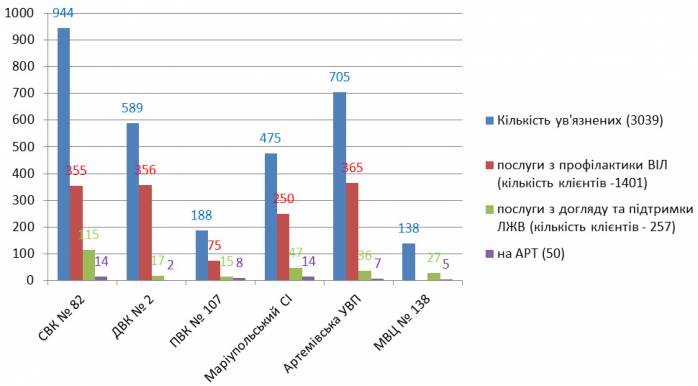
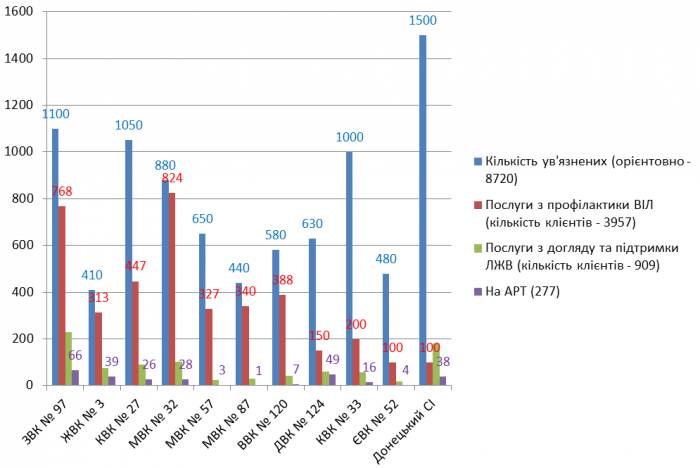
As of 12 June 2015, there are 934 HIV-positive prisoners in 11 institutions in Donetsk Oblast not controlled by the Government of Ukraine, 276 of whom are on antiretroviral therapy. In the 6 institutions in Donetsk Oblast controlled by the Government of Ukraine, there are 232 registered HIV-positive convicts and individuals taken into custody (50 of whom are on ART).
Despite the Decree of the President of Ukraine No. 875 of 14 November 2014 regarding the evacuation of penal institutions, the evacuation measures themselves did not lead to any results. This is evident from the events surrounding the Chornukhyne Penal Colony No. 23, where there were 16 HIV-positive convicts, 10 of whom were on antiretroviral therapy. The fate of these people remains unknown.
Penal institutions and pre-trial detention centres that have submitted to the so-called ‘DPR’ and ‘LPR’ have ceased to be financed from the state budget of Ukraine. Naturally, prisoners and staff face shortages of food, sanitary and hygiene products, medicines, and so on.
Coverage of project activities in State Penitentiary Service institutions in Donetsk Oblast
Coverage of project activities in institutions not controlled by the Government of Ukraine
Coverage of project activities in institutions in Luhansk Oblast
As of 12 June 2015, there are 199 HIV-positive prisoners in 10 institutions in Luhansk Oblast not controlled by the Government of Ukraine, 91 of whom are on antiretroviral therapy. In the 1 institution in Luhansk Oblast controlled by the Government of Ukraine, there are 11 registered HIV-positive convicts and individuals taken into custody (11 of whom are on ART).
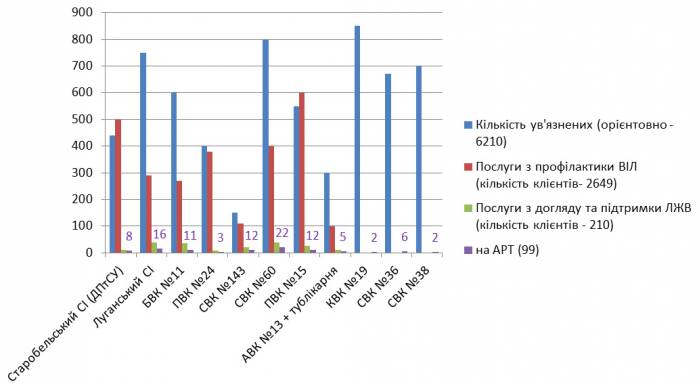
* Project activities are planned to be carried out from July 2015 in Krasnyi Luch Penal Colony No. 19, Sukhodilsk Penal Colony No. 36, and Sverdlovsk Penal Colony No. 38; communication processes with the management of the so-called ‘LPR’ regarding access to these institutions are currently underway.
Obstacles to activities within penal institutions:
· Lack of transport for biomaterials for laboratory analysis. (Selydove Penal Colony No. 82, Dzerzhynsk Penal Colony No. 2, Artemivsk Pre-trial Detention Centre – which lacks an equipped laboratory in the city of Sloviansk)
· Shortage of prison medical staff due to military hostilities.
CONCLUSIONS
The All-Ukrainian Network of PLWH, as an organisation representing the interests of HIV-positive people throughout Ukraine, is concerned about the situation regarding difficulties in accessing antiretroviral treatment for HIV-positive people residing in the territory of Donetsk and Luhansk oblasts.
We remain committed to the values of upholding the right to medical care for people living with HIV and are initiating the use of all possible diplomatic channels to preserve the medical system, maintain access to medicines, and support the activities of non-governmental organisations in the ATO zone.
At the Board meeting of the Global Fund to Fight AIDS, Tuberculosis and Malaria, the All-Ukrainian Network of PLWH proposed two urgent solutions:
1. Use funds from the Global Fund’s Emergency Fund to purchase ART for pregnant women, children, adults, and prisoners living in the uncontrolled territory, by involving UNICEF in the procurement of medicines for patients who previously received medication at the expense of the state budget of Ukraine.
2. Support the payment of services for medical staff in ATO zone medical institutions providing HIV treatment, using $200,000 saved by the Network in a previous Global Fund project.
The Global Fund supported the initiative regarding the payment of medical staff services. On 03 June 2015, UNICEF submitted a request for the procurement of an annual supply of ARV medicines for patients in the ATO zone.
The World Health Organization (WHO) office in Ukraine regularly holds meetings of a special working group (cluster) on the treatment of tuberculosis and HIV infection, during which the PLWH Network provides information on the delivery of medicines and blood, services rendered, and the current situation regarding the provision of medical and social support for HIV-positive individuals in the ATO zone.
The PLWH Network is the only organisation that, since the beginning of the military conflict, has systematically provided ARV medicines both to clients of AIDS Centres and Trust Cabinets, and to penal institutions in the ATO zone.
Currently, given the economic blockade of territories not controlled by the Government of Ukraine, we have proposed that organisations implementing care and support projects in the military conflict territory of Donetsk Oblast develop action plans for the delivery of ARV medicines individually for each client or group of clients (delivery of medication by a social worker/individual visits by the patient to a Centre and registration).
Contact person:
O. Hatiiatullin, +38 (044) 467-75-69 (ext. 716)