Report on the results of the monitoring visit on 11 May 2017 to Bucha Penal Colony No. 85
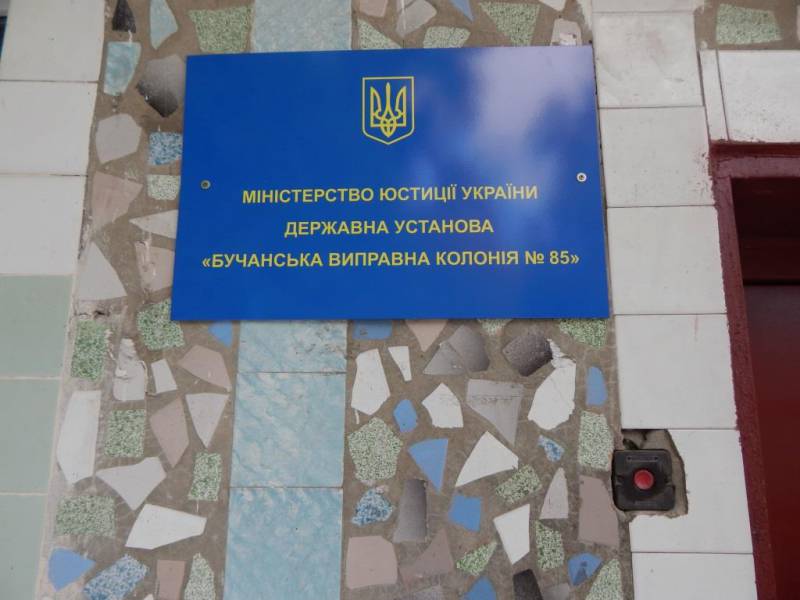
On 11 May 2017, a monitoring group consisting of Vasyl Melnychuk and Oleksandr Pavlichenko visited Bucha Penal Colony No. 85, where 680 convicts were held on the day of the visit. An inter-regional hospital for the treatment of convicts is also located on the territory of the colony.
Disciplinary Isolation Unit (DIZ), Punishment Cells (PKT)
Initially, the monitors visited the DIZ-PKT unit, where 19 convicts were being held, 13 of whom were in DIZ cells. During the conversations, the convicts complained that rats were running under the floorboards in the cells and jumping into the cells through the toilet openings. One of the convicts from the PKT unit complained that at night a rat had bitten his lip, and he had been forced to call the duty officer to provide medical assistance and stop the bleeding.
It is cold in the cells, as the weather had become much colder during this period, and the premises were no longer being heated. The windows in the cells cannot be opened or closed from the inside; this can only be done from the outside. It is cold in all the cells; to conserve heat, the convicts in one of the cells had covered the window with a blanket.
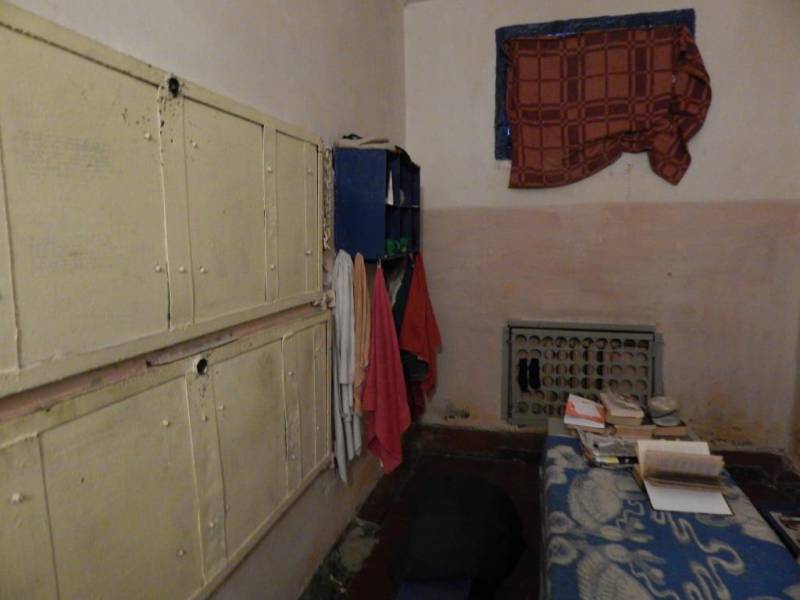
There is, accordingly, no ventilation in this cell. In the neighbouring cell, however, the glass is missing from the window, meaning there is constant ventilation; yet, this persists even when the outside air temperature, as it was in those days, reached +3 degrees at night. Consequently, the temperature in this cell is highly dependent on the outside temperature.
In the cells visited by the monitors, there is no ventilation to the outside; instead, there is a ventilation opening from the cell to the internal corridor.
The cells are equipped with washbasins with running water and a toilet – which is, practically, a hole in the floor. Everything is in a very neglected state.
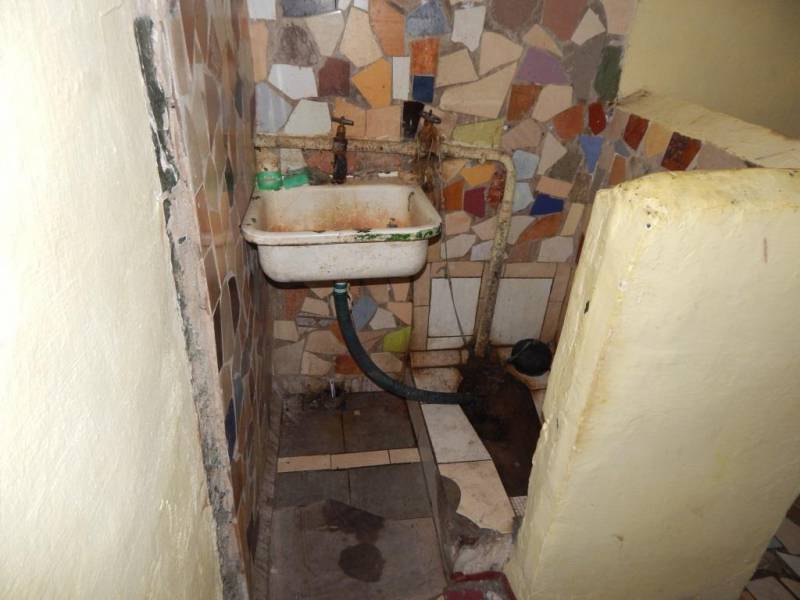
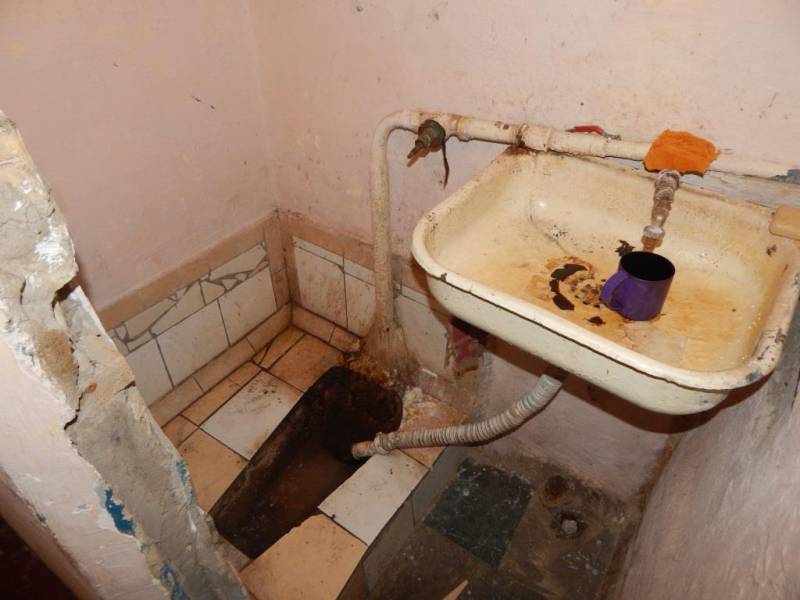
The equipment in the DIZ and PKT cells requires urgent repair and needs to be brought to a normal state.
The convicts in the DIZ noted that their one-hour walk takes place immediately after the wake-up call (and the wake-up call in the DIZ-PKT is at 5 a.m.), meaning they are outside from 5 to 6 a.m. This is provided for by the daily schedule, but such a practice should be reviewed and a time for walks should be set when there is more sun and warmth outside – from 11:00 to 16:00.
Possibility of communication with the outside world
All the convicts with whom the monitors spoke in the DIZ-PKT claimed that, while in the colony—and some of the convicts had been there for several years—they had never once made a call from the colony's phones and were not even aware that such a practice existed. During previous visits, the monitors had already drawn the colony administration's attention to this, even though a portion of the individuals who end up in the DIZ-PKT are there due to phones or SIM cards seized from them. The colony must establish a normal regime for convicts to communicate with the outside world, ensure that convicts have a real opportunity to communicate, and put an end to illegal phones on the colony's territory.
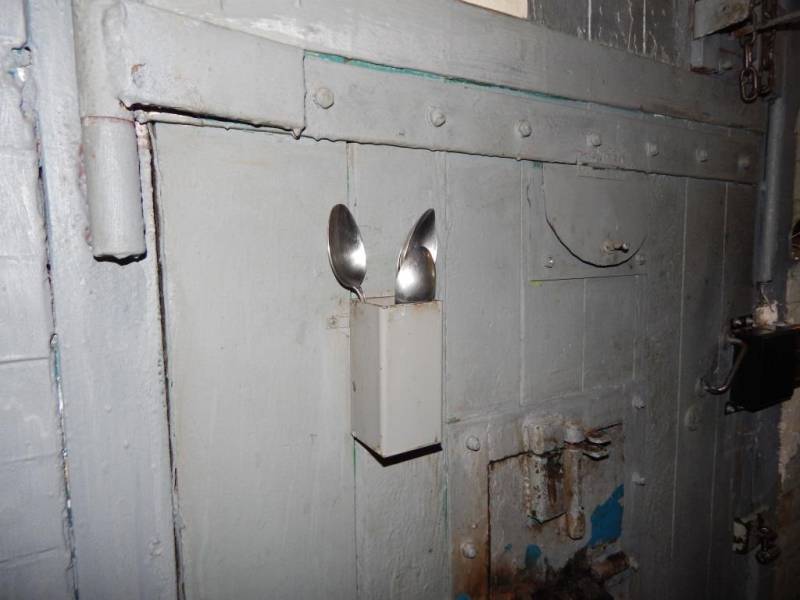
The monitors also drew attention to the observance of sanitary standards regarding the convicts' cutlery. The spoons are inserted directly into a box in the door from the outside.
By contrast, in the DIZ of another institution, Poltava Penal Colony No. 64, which the monitors visited two days before this visit, the spoons were wrapped and covered separately:
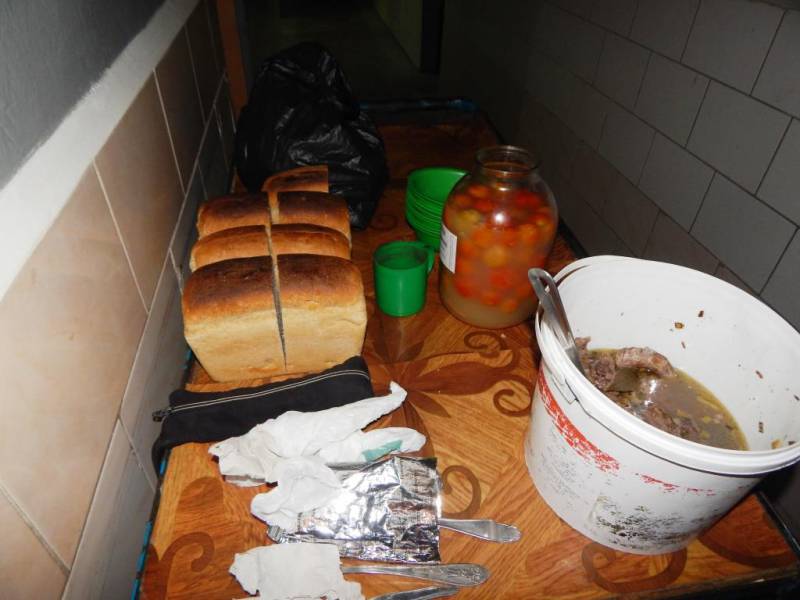
Sanitary standards must be observed during the feeding of convicts, in particular, by ensuring the cleanliness of cutlery.
A separate recommendation is to carry out deratisation of the premises and destroy the rodents living under the floors in these premises that are able to enter the cells.
Inter-regional hospital (IRH)
On the day the monitors visited the hospital, there were 74 sick convicts in it.
The monitors inspected the wards of the surgical and therapeutic departments. One of the convicts in ward No. 8, who was a former law enforcement officer, rightfully demanded to be placed separately from other convicts. The medical unit management agreed, after speaking with him, to move the other convict away from this former law enforcement officer.
The convicts complained that they had not received treatment or examinations and had requested that examinations be conducted and a diagnosis established. In the presence of the monitors, the head of the medical unit assigned times for the convicts' examinations.
Convicts who have difficulty moving (amputees) do not go for walks, as there is no lift in the building, and such convicts would have to be carried by other convicts (who are also undergoing treatment). Consequently, such walks, as a rule, do not take place.
The convicts complained that they did not have access to their medical records and did not know for certain which drugs had been prescribed to them and what they were receiving.