Report on the findings of a monitoring visit to Igren Penal Centre No. 133
On 20 February 2019, a group of monitors consisting of Dmytro Reva, Maryna Davydova, and Volodymyr Pletenko visited Igren Penal Centre No. 133. Following a previous visit that took place in the summer of 2018, inspections were carried out by the State Labour Service and the Prosecutor General’s Office regarding the violations identified by the monitors, after which the facility was fined, and the individuals responsible for the violations were temporarily suspended from their posts. The appearance of the monitors was met with bias by the administration; there were attempts to delay the work, and the administration refused to complete the consolidated statistical data table for the facility. A request for information was sent, to which no response has yet been received. Currently, the NGO “HPG ‘SICH’” has filed a complaint regarding the failure to provide information to the Human Rights Ombudsman.
DISCIPLINARY CELL / CELL-TYPE UNIT
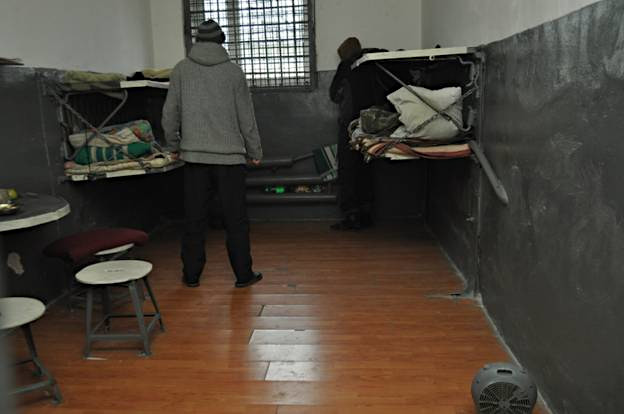
The monitors received complaints regarding the conditions of detention, in particular from two of the three individuals who were in the disciplinary isolation cell (DIZO) at the time of the visit. There was no one in the cell-type unit (PKT).
The DIZO building is cold; the inmates are wearing outdoor clothing and hats. The cells are smoky, but there is access to fresh air, and the lighting is sufficient. Complaints were received regarding cold food, which cools down by the time it is delivered to the individuals held in the DIZO from the general canteen.
Two individuals also complained about the reasons for their placement and the mechanisms by which violations are identified. According to one inmate, on the eve of a court hearing regarding parole, a syringe containing 1 milligram of an unknown substance, similar to a narcotic, was found in the common room. The syringe was not found in his personal belongings, and the search was conducted without proper video recording. The inmate insists that the substance found does not belong to him and, after consulting with a lawyer, requested to see the search footage, as a result of which, according to him, he was beaten by facility staff and placed in the DIZO for 9 days.
The second inmate also had a complaint regarding the reason for his placement in the DIZO. He insists that the sewing needle with thread and the heater found in his personal belongings were merely a pretext; in reality, the reason is his desire to complain to the Prosecutor’s Office and the Human Rights Ombudsman about inappropriate detention in the facility.
Residential Zone
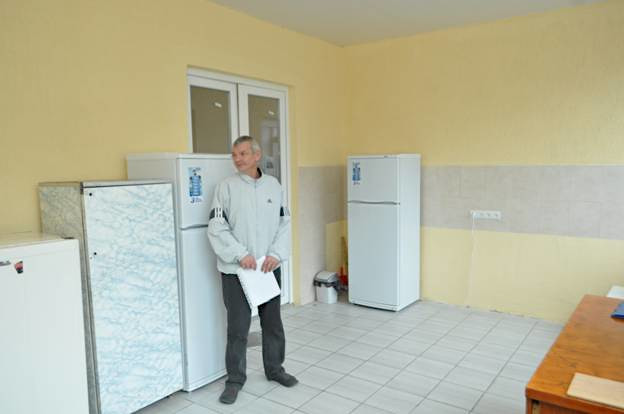
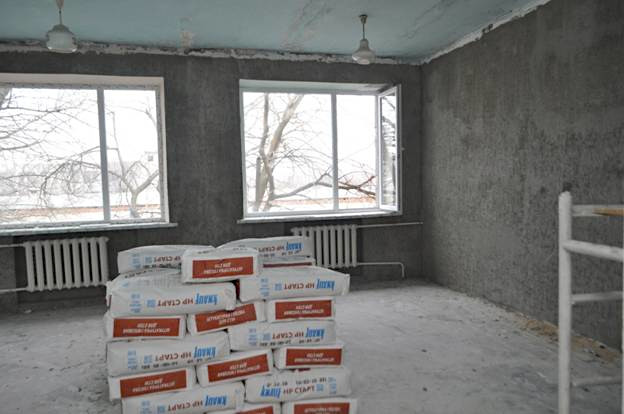
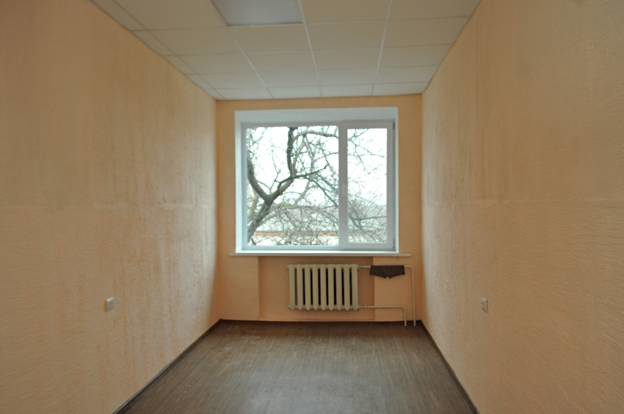
Repair work is ongoing in the residential zone of IPC No. 133. Some rooms have already been brought up to standard and are occupied, while others are still in progress. The residential buildings are warm, there are no foreign odours, the bedding looks clean, there are flowers on the windowsills, and the kitchens are clean and in a satisfactory condition; there are enough refrigerators to meet the needs of the inmates.
The inmates who were interviewed had no specific complaints about the conditions of detention; however, there is general concern regarding the non-transparent calculation of wages. The inmates explained that, despite inspections and identified violations, they are still working without employment contracts and, therefore, are unable to forecast or control their income and expenses. For many, after deductions for maintenance costs, the balance on their accounts is negative. Also, according to the inmates, the administration regularly organises charitable collections for petrol, with a minimum contribution of 100 UAH, and the unofficial “tax” for withdrawing cash from a personal account is 50%. The issue of parole is also problematic. Inmates complain that even when engaged in work, it is almost impossible to obtain a certificate confirming this, and consequently, it is impossible to use it to obtain the benefit of early release.
Several inmates expressed a desire to speak confidentially and recorded their complaints about the conditions of their stay on video, on the condition that this information is not disseminated in public sources, as they fear pressure from the administration (the video recordings are kept by the monitoring group).
Medical Unit
The facility lacks a medical unit. In the event of an acute condition, an ambulance is called for the inmates. In other cases, inmates have the opportunity to seek treatment in the city’s civilian hospitals on their own. Individuals living with HIV who are serving sentences in this facility also take care of obtaining antiretroviral therapy independently.
Canteen
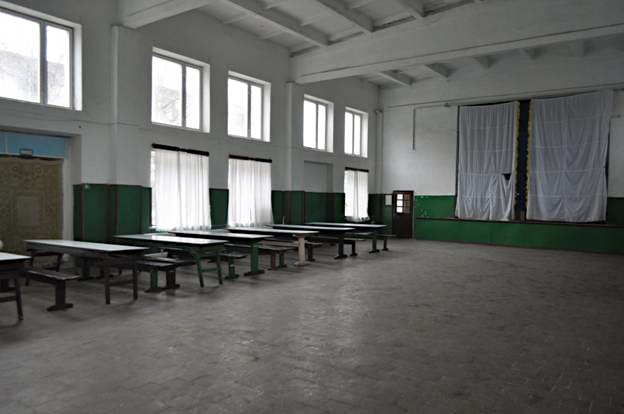
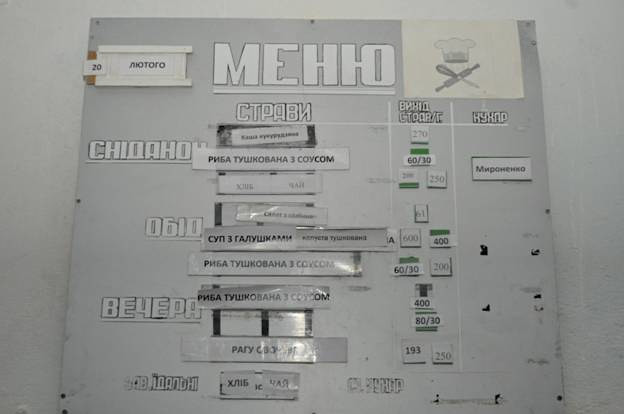
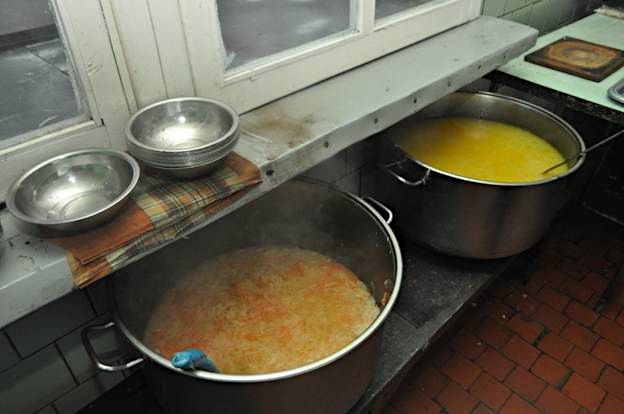
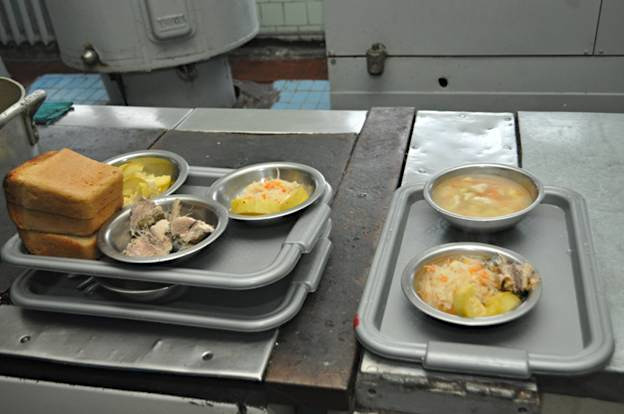
The canteen and kitchen building is old and obviously in need of repair. The premises are clean, and there are no foreign odours. The staff work in white coats and changing footwear, and the containers for food distribution look clean. The monitors arrived during the pre-lunch period; the menu included soup with dumplings, stewed fish, and a side dish. The food storage facilities are dry, there is a separate meat-processing area, ventilation is good, and no mould or dampness was noticed.
Industrial Zone
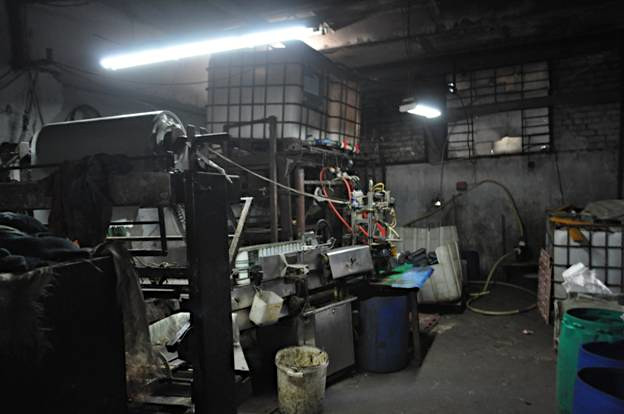
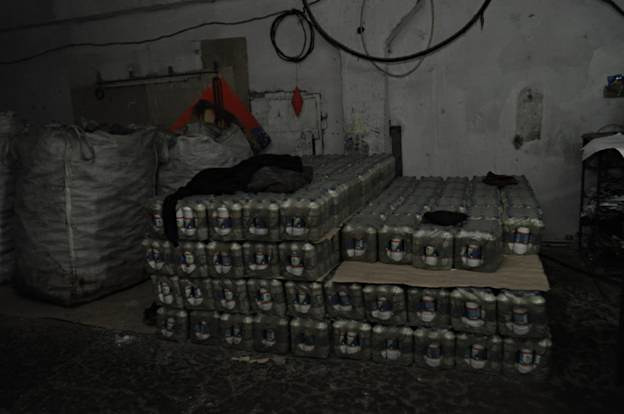
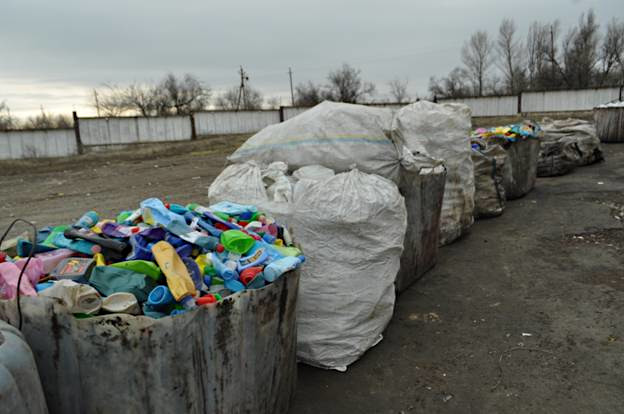
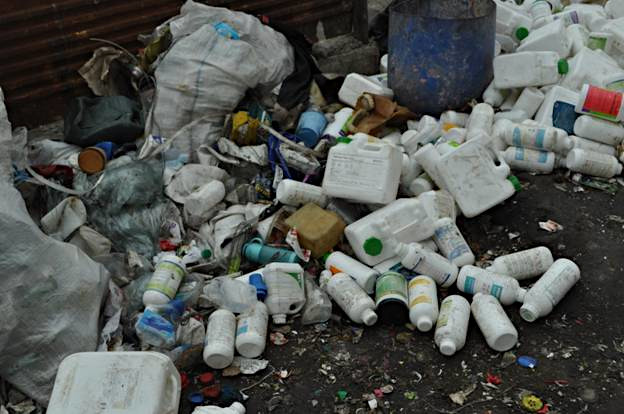
The industrial zone of IPC No. 133 is divided into several workshops. In one, metal is processed, and another workshop specialises in recycling plastic into bottles for laundry detergent and filling the detergent into the manufactured containers. During the previous visit, the monitors found canisters of toxic substances—fungicides and pesticides—on the container-shredding preparation site, with residues of the substance inside. Inmates complained that they were forced to work with hazardous materials with almost no protective equipment, which caused burns to the mucous membranes of their mouths and eyes, skin burns, general deterioration in their health, and significant weight loss. During this visit, no hazardous substances were found on the territory of the industrial zone; all containers are clean and, according to the labels and safety data sheets of the preparations, do not require disposal by incineration and can be recycled into non-food plastic containers.
The lighting of the workplaces is insufficient; in the detergent-filling workshop, where an excessive concentration of chlorine in the air was noted during the inspection, no exhaust hoods or any other air-cleaning equipment have been added. Out of all the inmates the monitors were able to speak with (about 20 people), only one inmate confirmed having an employment contract. Representatives of the administration emphasised that, following an inspection by the State Labour Service, fines were imposed on them, which are currently being challenged in court.
EU Project “Fight against torture, ill-treatment and impunity in Ukraine”