Monitoring visit to Vilniansk Correctional Colony No. 20
I. General information
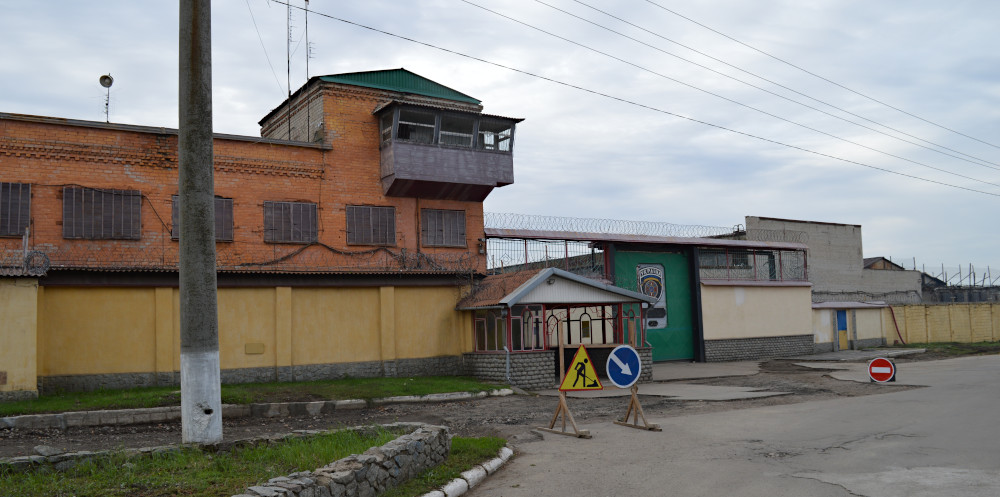
On 22 October 2020, a monitoring group from the KHPG, consisting of assistant to the People’s Deputy Maksym Revyakin and two journalists – Hanna Ovdiienko and Pavlo Shvab – visited the SI ‘Vilniansk Correctional Colony No. 20’. This is a medium-security institution for men deprived of liberty for the first time. The planned capacity of the institution is 900 persons. On the day of the visit, there were 388 persons in the colony.
The colony has been operating since 1929. A feature of the institution is the presence of a psychiatric hospital attached to it.
At the entrance to the institution, temperature screening was conducted for the monitors, but they were not offered gloves and masks.
II. Living quarters
Nine units are operating in the institution. They are all of a block system. Over the last six years, major repairs have been carried out in six units. Due to the lack of stable funding, repair work in other residential units is carried out when funds are available and as far as possible. A large contribution to the repair of residential units is made by non-governmental organisations, especially religious ones.
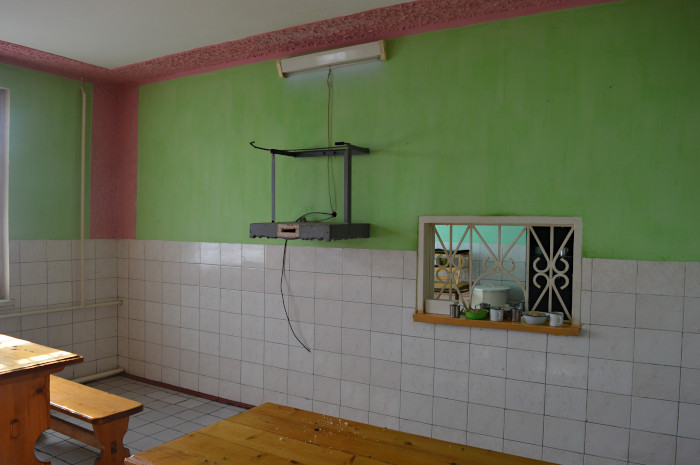
First, the monitors visited three fully refurbished units. However, it is difficult for the monitors to call this a ‘major repair’. uPVC windows are installed in the rooms. These units comply with the space standards per inmate. The dining room has a refrigerator, lockers for storing personal food products, an electric kettle, and a microwave. The walls in all units are painted green or pink. In some places, mould has already appeared on the walls, which can negatively affect the inmates' health. A tank with drinking water is installed in the kitchen, but for some reason, there is no tap with technical water.
The sanitary facilities in two units are located in a separate room, the entrance to which is only from the yard. In one unit, the sanitary facility is located directly in the unit itself. At the time of the monitors' arrival, there was no water in the institution, so there was a strong smell of sewage in the sanitary facilities. Because of this, the inmates were forced to close the toilet openings with rags. However, it should be noted that after some time, the water did appear.
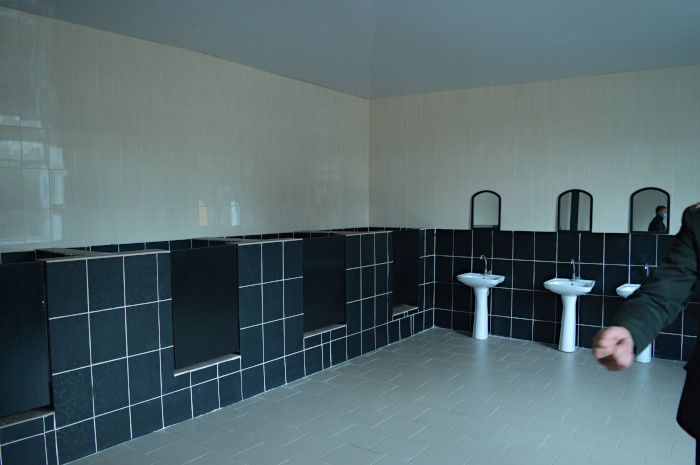
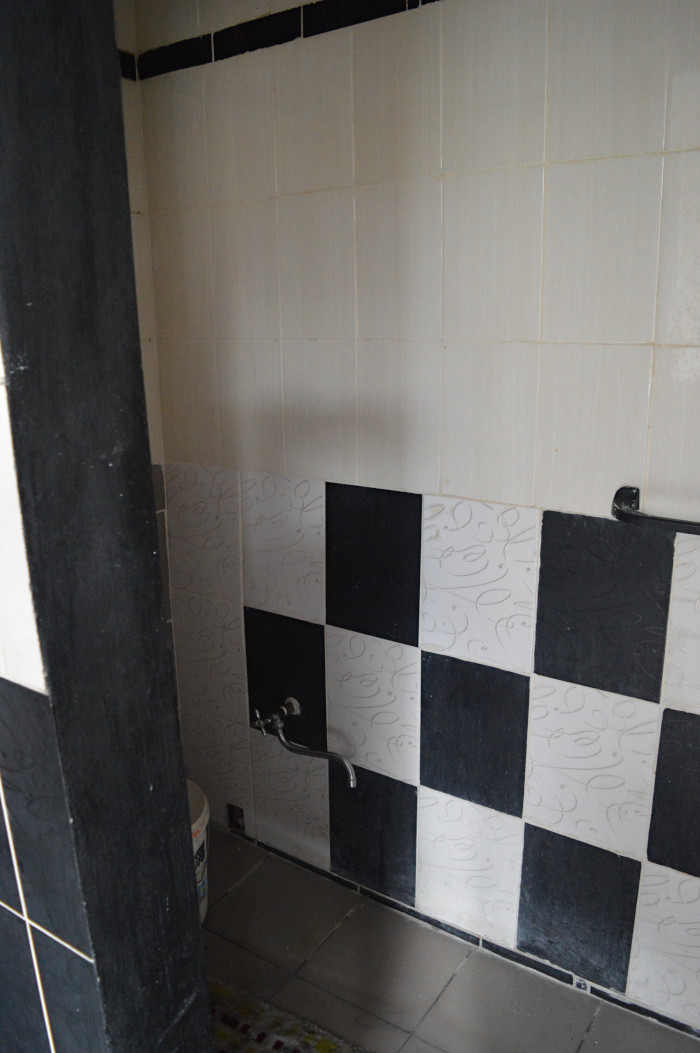
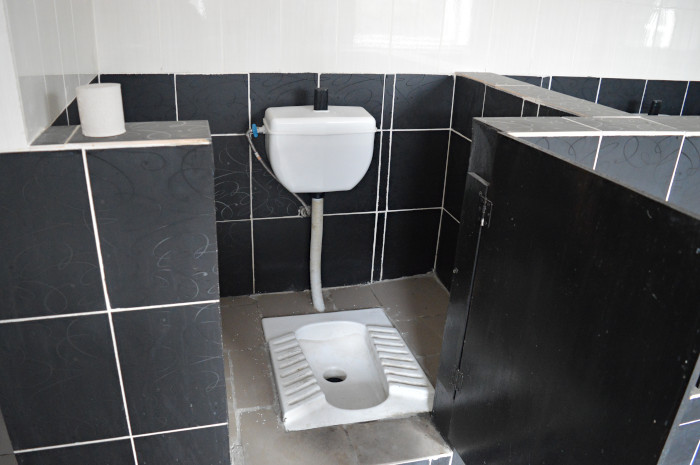
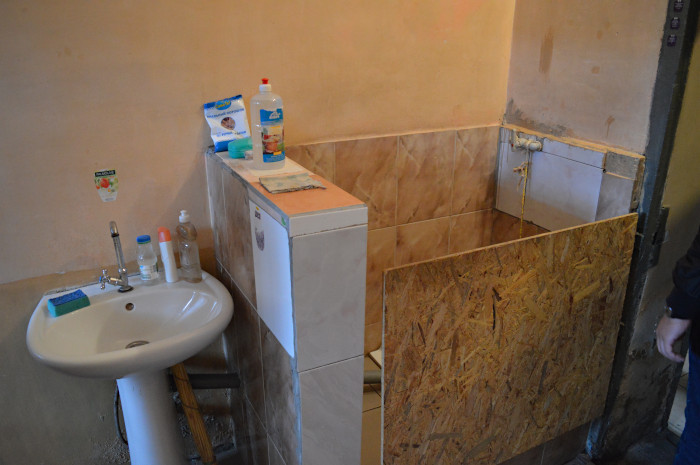
In the sanitary room, there is a washbasin and tanks for collecting technical water, which indicates frequent interruptions in the water supply. However, the colony administration assured that this is a temporary phenomenon – due to pipeline repairs near the colony. A homemade summer shower is constructed in the sanitary room. The tiles and ceiling are covered with mould. The toilets are separated by low walls and doors, which does not allow the inmates to achieve privacy to a sufficient degree. The walls in the toilet are also covered with mould.
Only in one unit, which was not yet occupied, did the monitors see a nicely renovated toilet, about which the monitors had no complaints – except for the low doors and partitions.
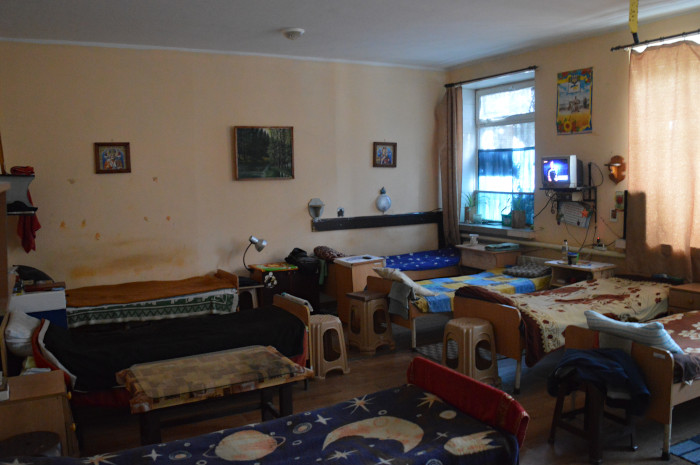
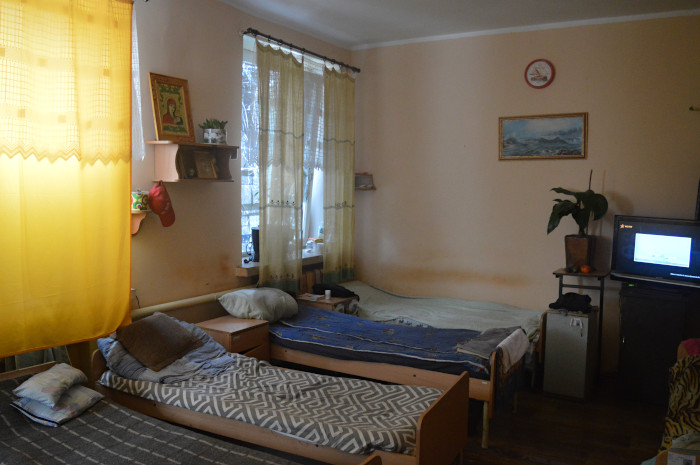
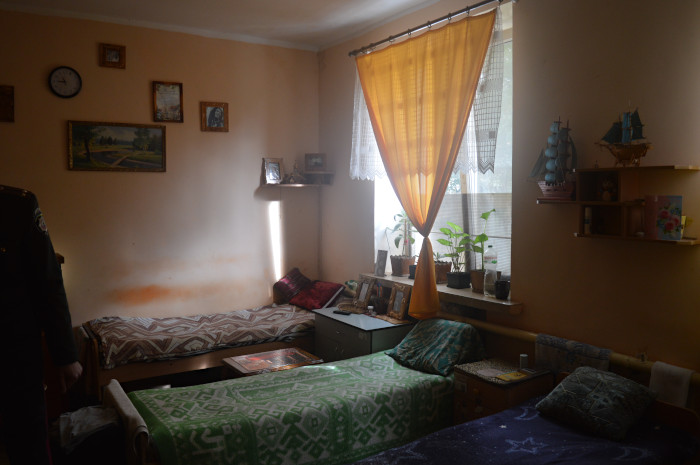
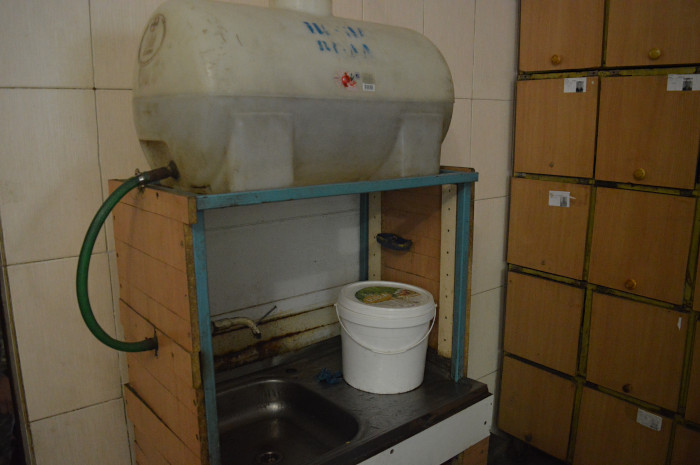
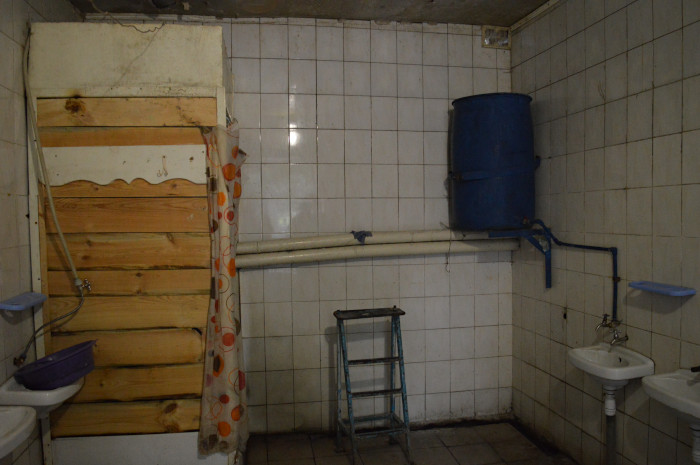
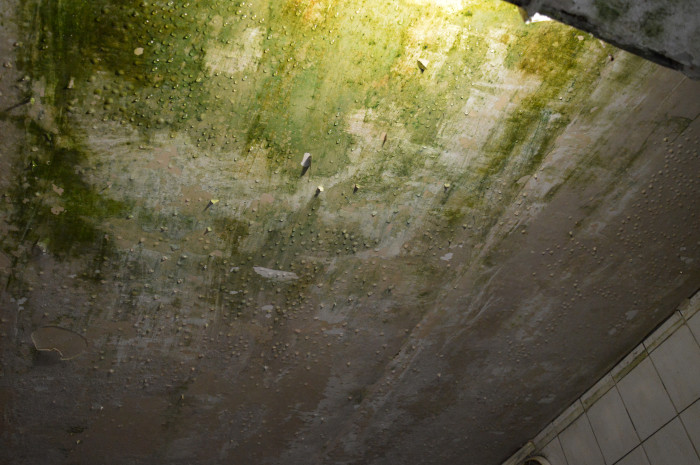
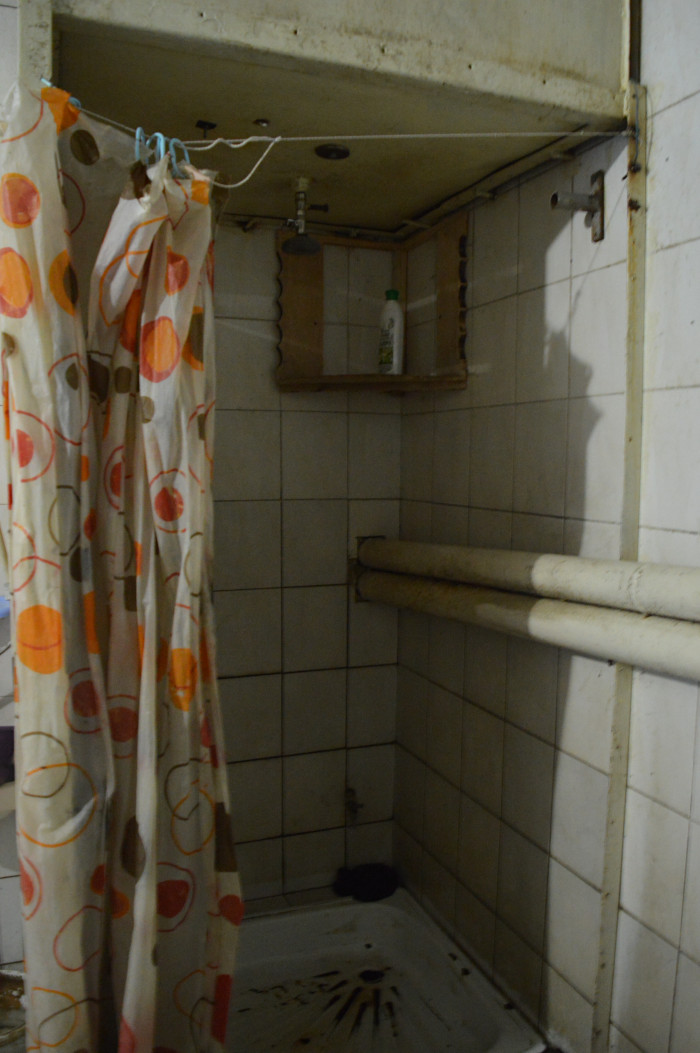
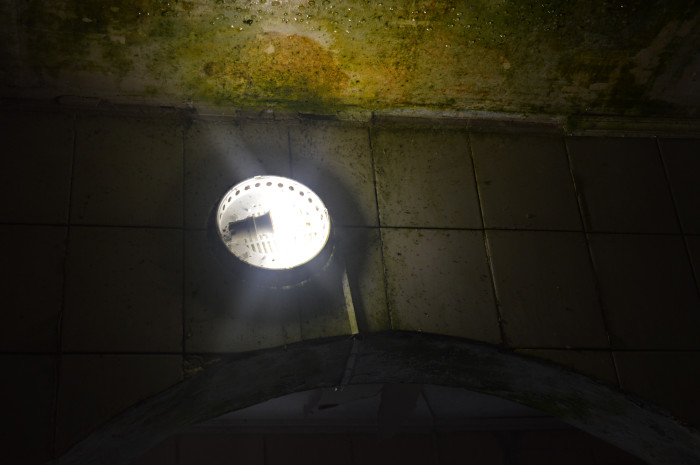
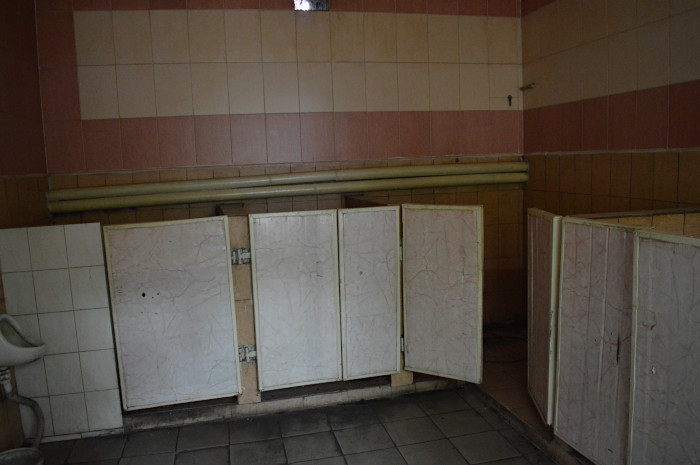
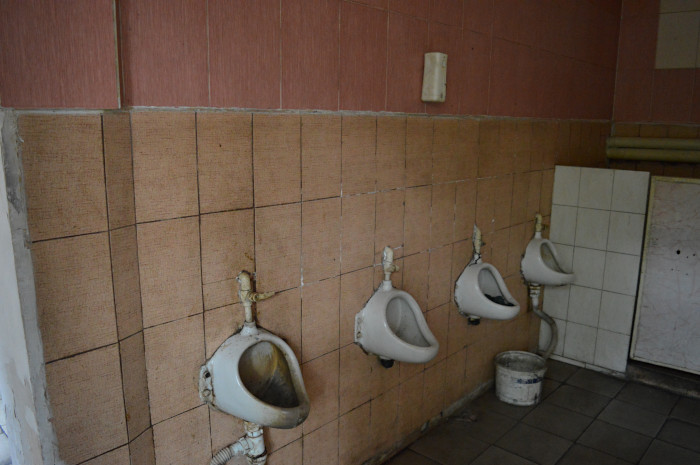
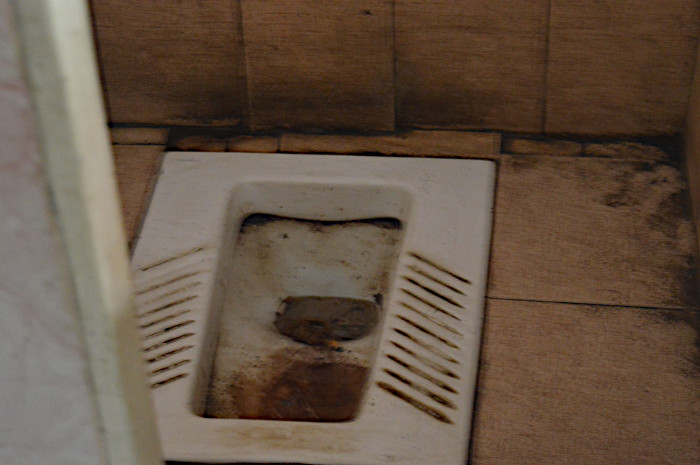
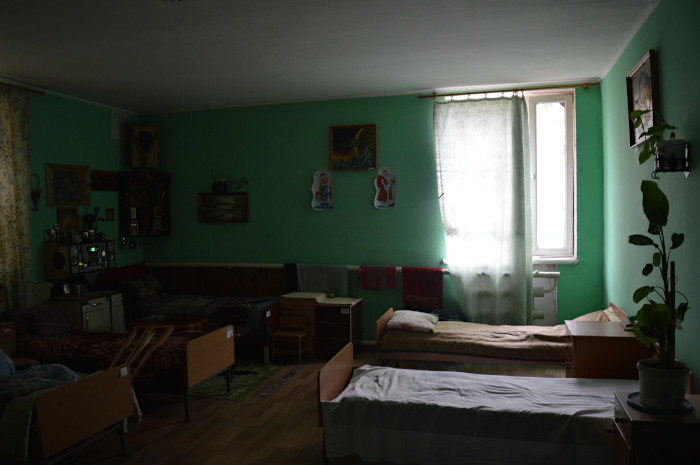
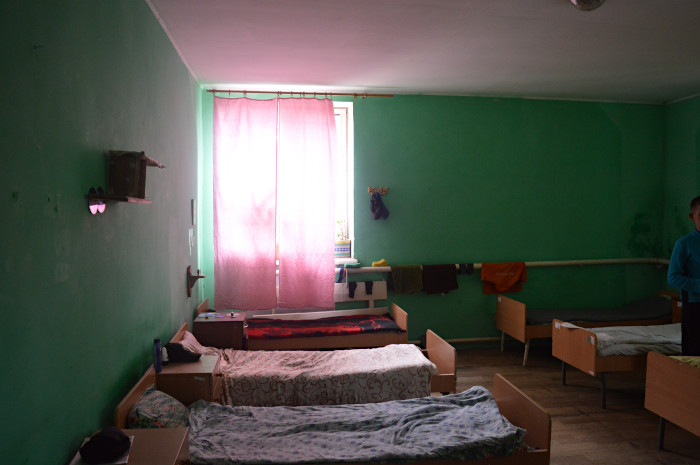
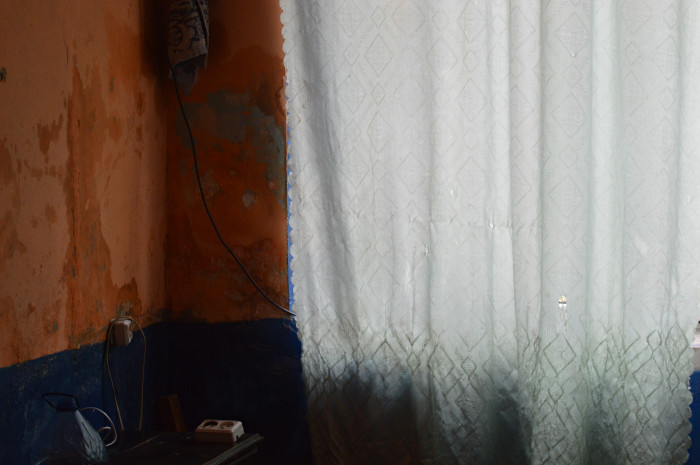
In other units, the sanitary condition is even worse. In the sleeping rooms, there is even more mould on the walls. In the dining rooms, there is only a microwave, and it is quite dirty. Many bunk beds are installed in the sleeping room, which contradicts the European Prison Rules and the recommendations of the European Committee for the Prevention of Torture. Only in some units is mould almost absent.
For incomprehensible reasons, some rooms have a much tidier appearance than others.
In these units, unlike the refurbished ones, the sanitary facilities are located directly in the residential sections. However, a leak appeared in the toilets, which caused fungus and mould. So, the leak has been there for a long time. In the sanitary facility, there is also a summer shower.
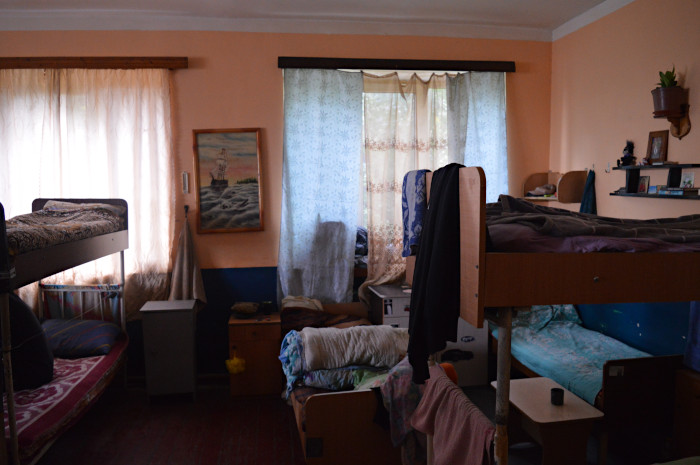
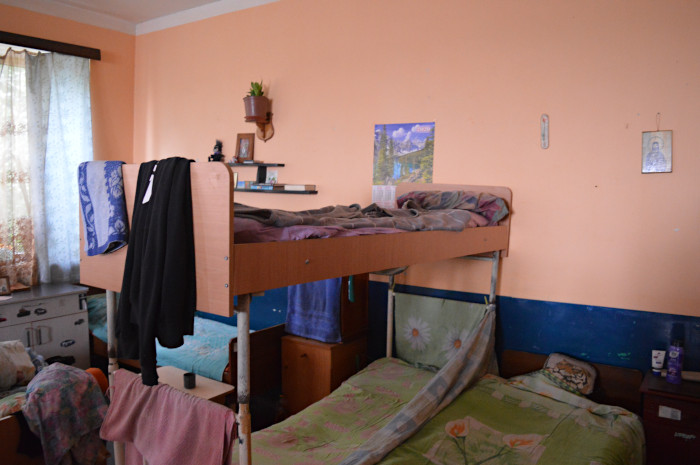
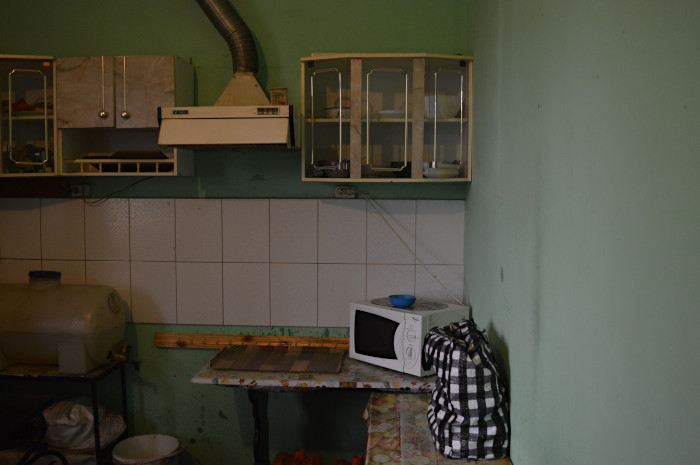
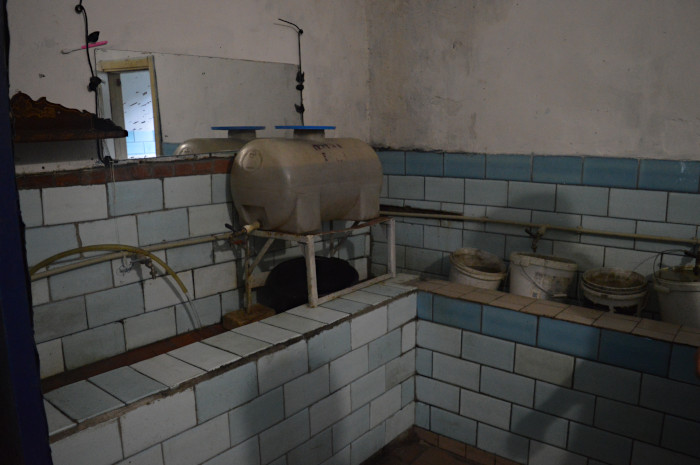
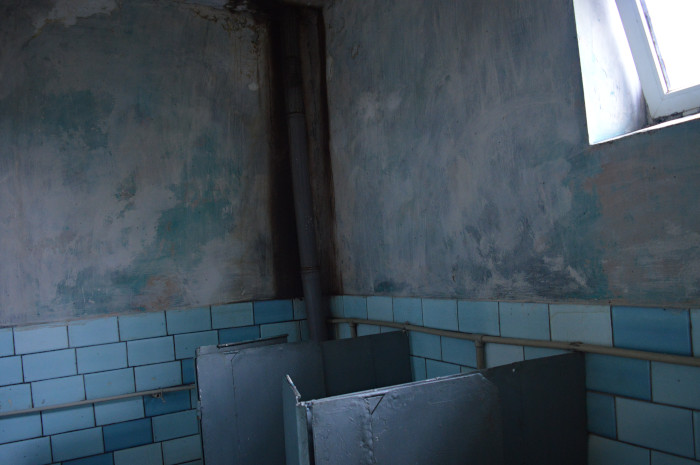
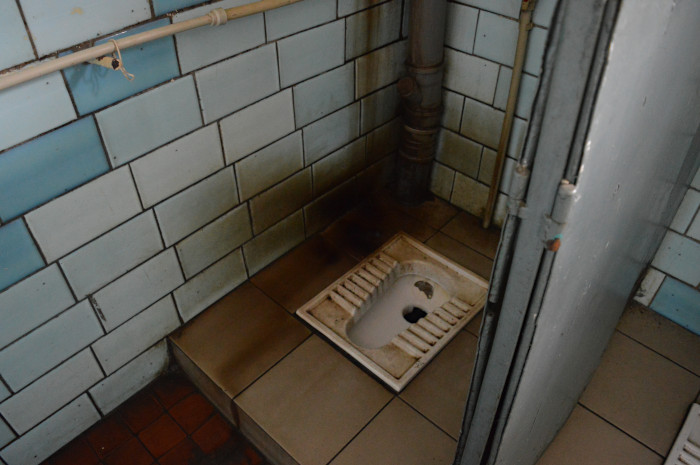
However, the monitors noted the efforts of the institution’s head to improve the conditions of detention for the inmates. The monitors understand that under the conditions of residual funding for the penal system, it is impossible to achieve European standards.
The monitors also positively evaluate that thanks to the electric heaters installed in each unit, the institution managed to save the state two million hryvnias. However, these funds returned to the state budget because it is impossible to redistribute expenditure items during the current budget period without a corresponding decision of the Verkhovna Rada of Ukraine and to direct these funds to the improvement of living conditions.
III. Bath and laundry complex
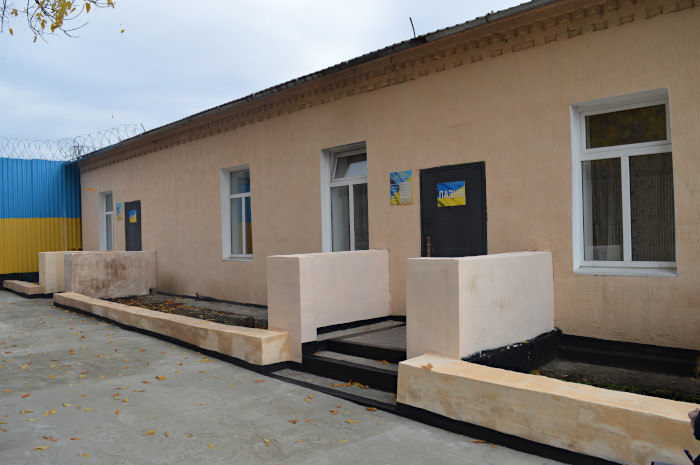
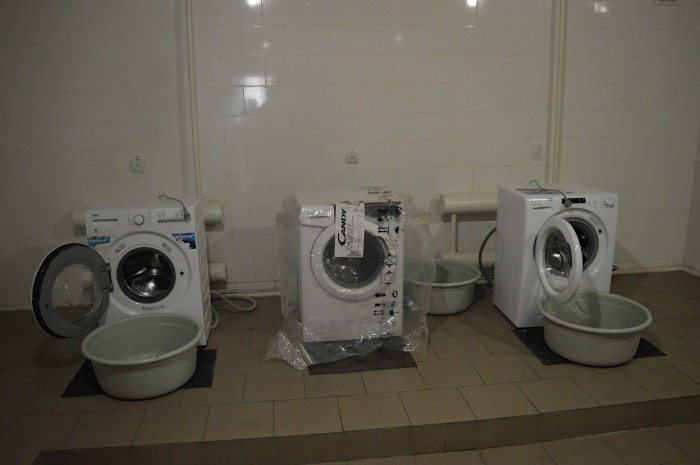
The bathhouse and laundry in the institution have been completely renovated. New machines have been installed in the laundry section. The administration assured that the capacity is sufficient for the colony's needs.
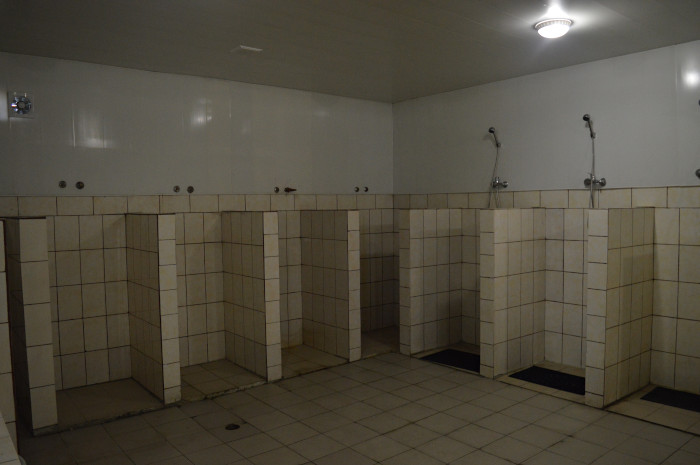
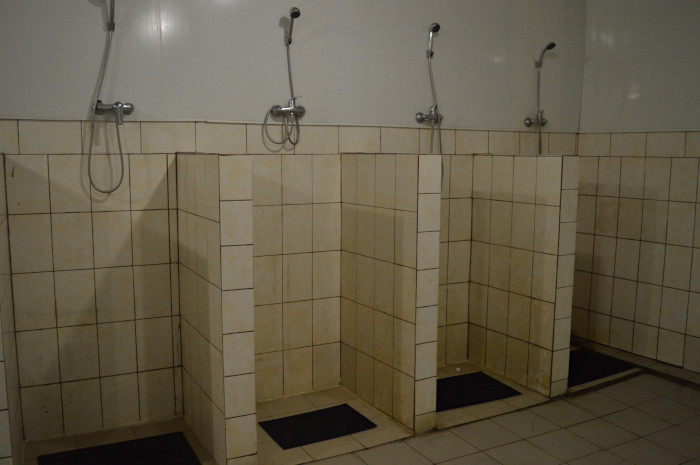
The bathhouse has also been renovated. There are partitions between the washing areas, there are mats, but curtains are missing. The monitors noticed mould on the floor.
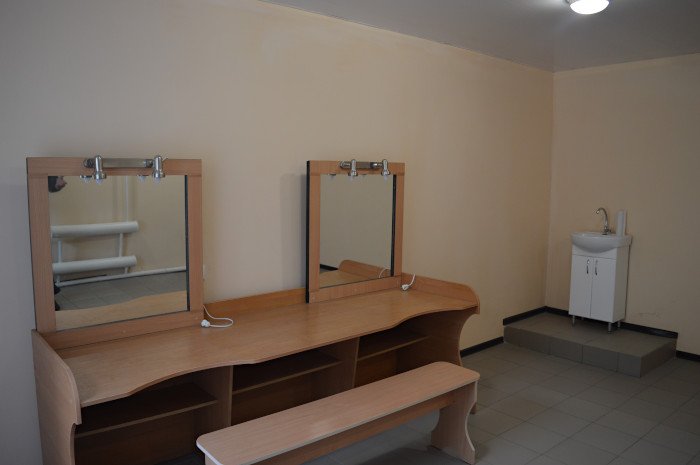
There is also a barbershop where inmates can get a haircut themselves.
IV. Canteen
At the entrance to the canteen, only two washbasins are installed, which is clearly insufficient for almost four hundred inmates. Also, at the time of the visit, soap and towels were missing.
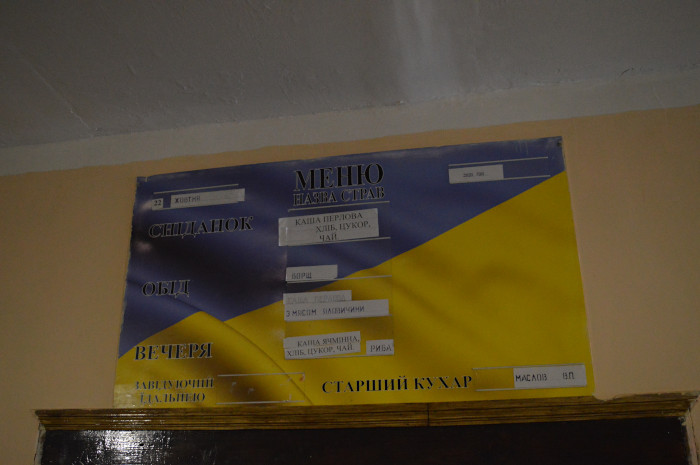
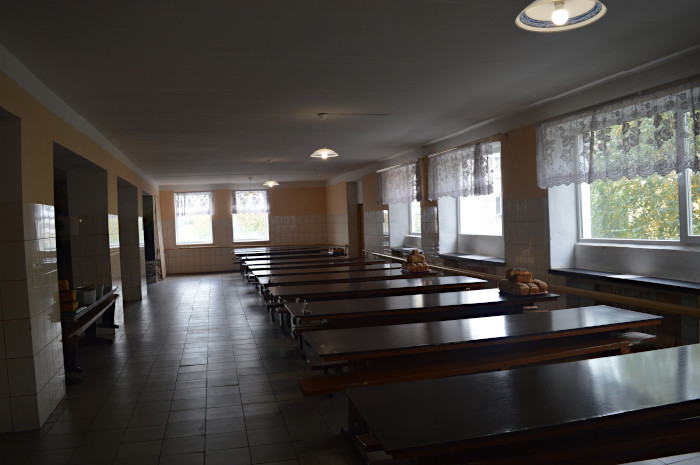
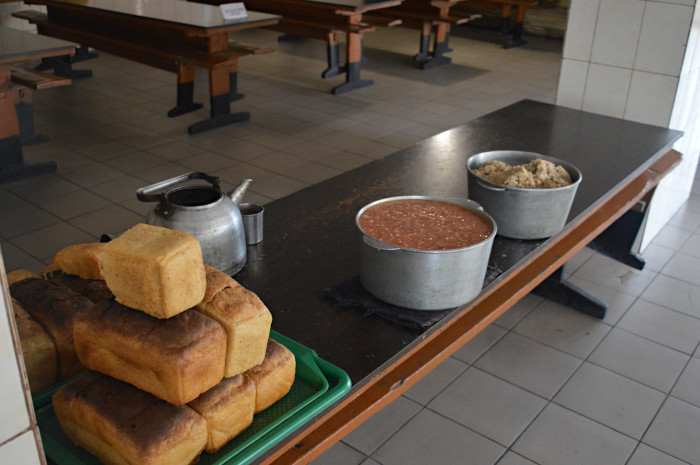
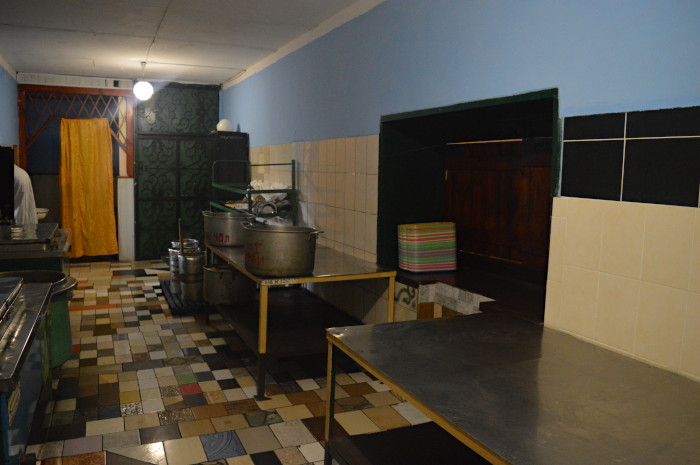
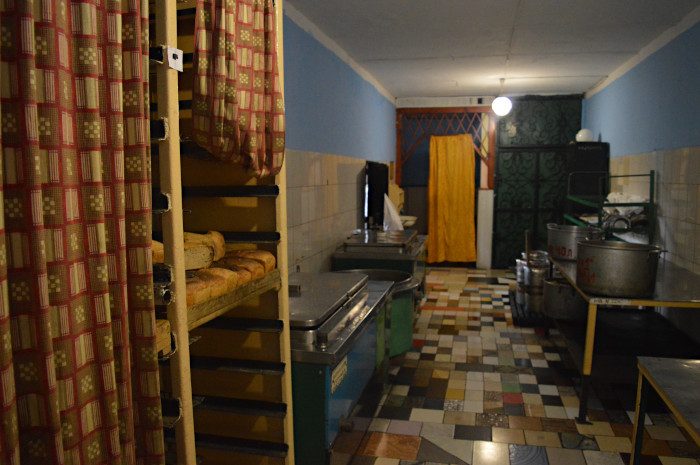
The canteen premises are spacious, and there is a board with an information menu. In the institution's kitchen, food was being prepared. Unpleasant odours were absent. There was a pleasant smell of bread.
The institution's administration kindly provided the monitors with sanitary certificates.
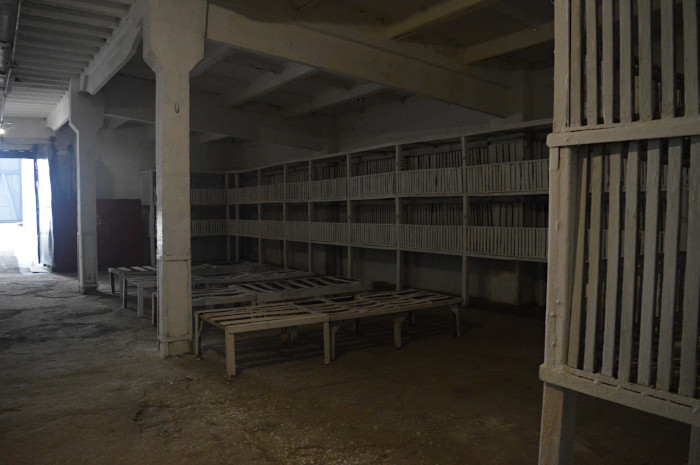
The institution has a vegetable storehouse, which is located not far from the kitchen. At the time of the visit, part of it had been renovated. This part can already be exploited, while the other was undergoing repairs.
V. Production
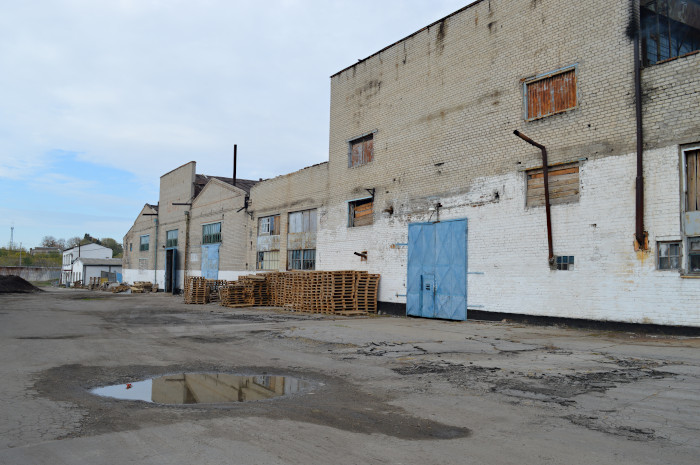
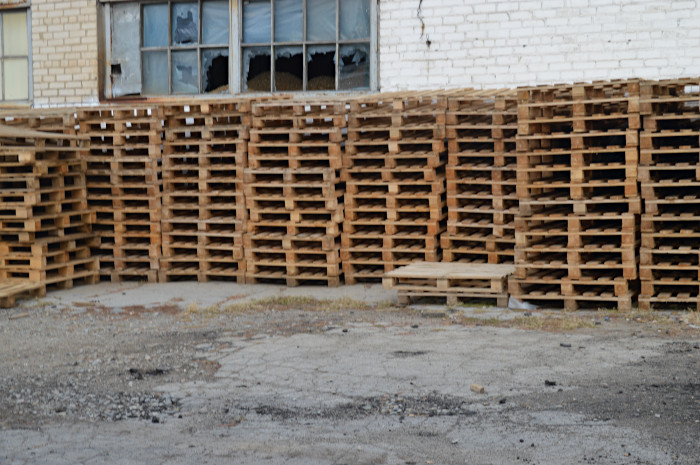
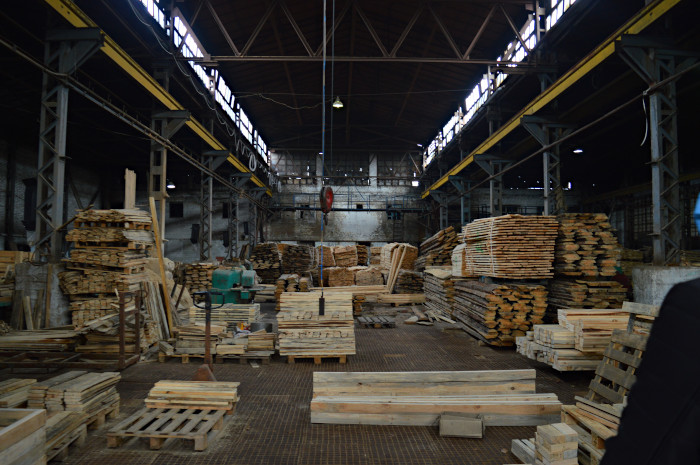
Ninety inmates work in the industrial zone. The colony specialises in the production of wooden pallets. The workers did not have safety goggles and ear protection. Later, the inmates demonstrated goggles and said that they do not use them because of the inconvenience.
VI. DIZO/PKT
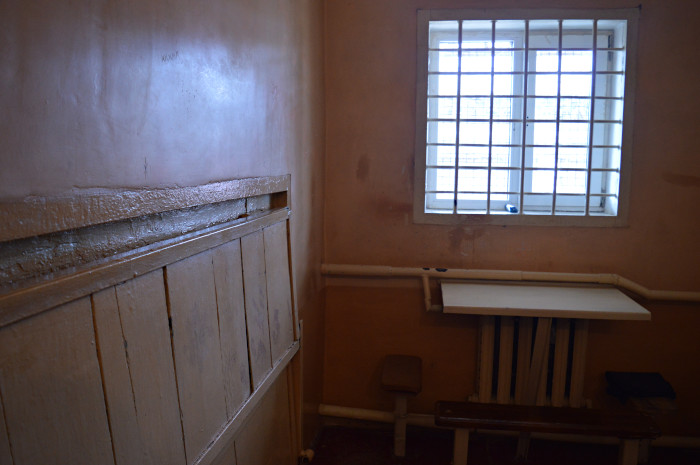
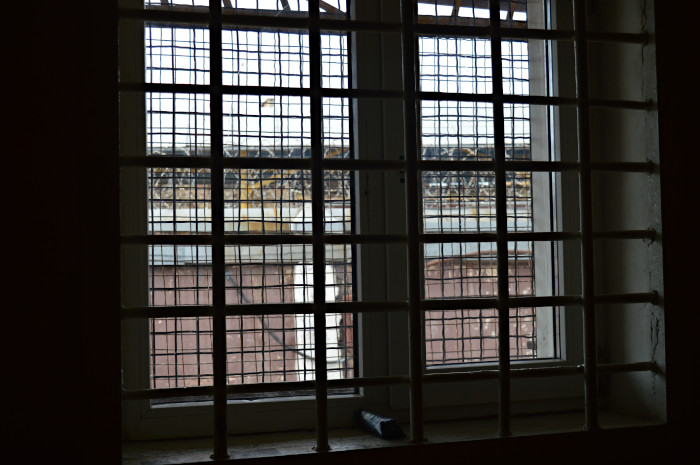
At the time of the monitors' visit, four persons were in the DIZO, and three in the PKT. In total, since the beginning of the year, 165 violators have been placed in the DIZO, and nine in the PKT. In the DIZO cells, there is necessary furniture, and uPVC windows are installed. The toilet is partitioned by a low wall. Drinking water is absent.
VII. Medical unit
The staff in the medical unit is almost fully equipped; only one position of paramedic is vacant – 0.75 of a position. The head of the medical unit, a family doctor, a dentist, and a radiologist work there. The monitors were pleasantly surprised by the politeness and high professionalism of the medical staff, in particular the head of the medical unit.
According to the head of the medical unit, the institution is provided with medicines.
At the time of the visit, four inmates were in the medical unit. They did not complain about the quality of medical assistance.
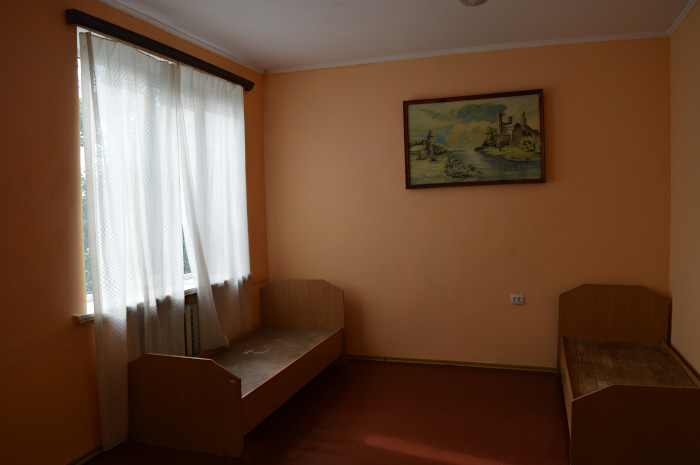
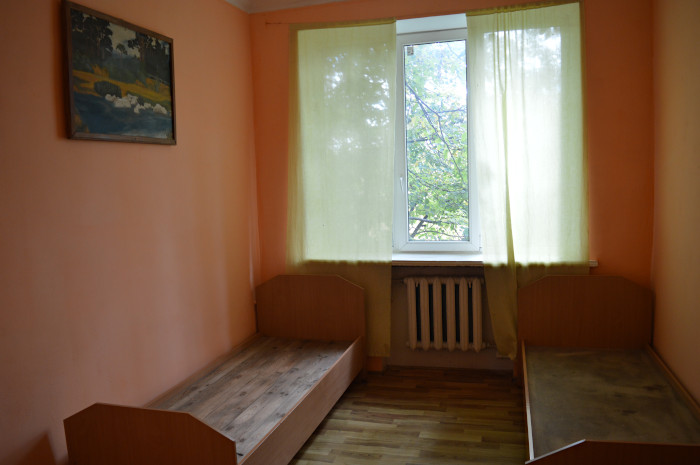
The wards of the medical unit are bright, renovated, and the beds are new.
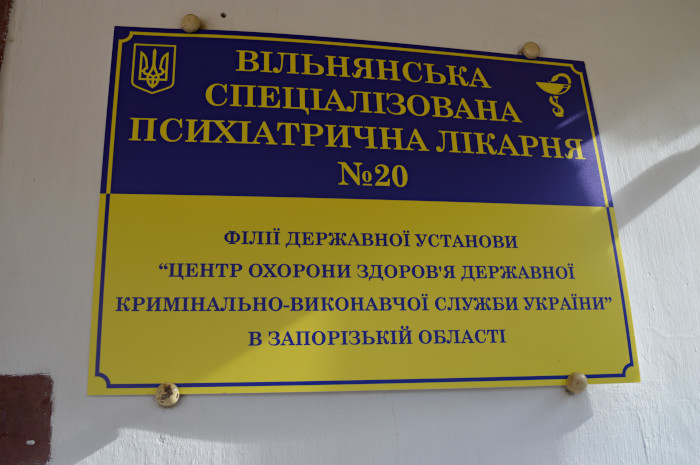
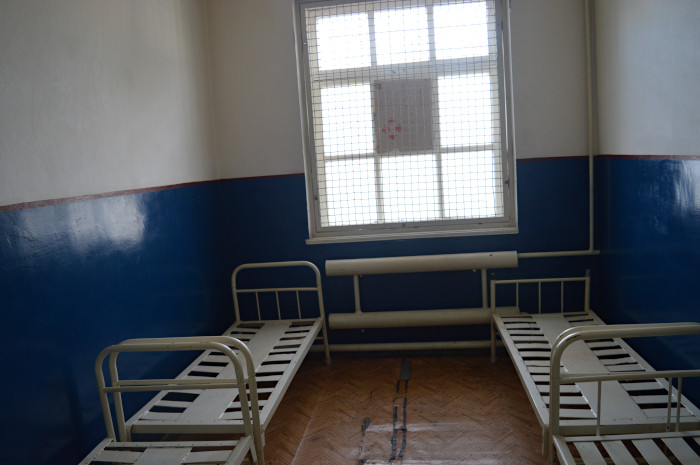
The monitors also visited the psychiatric hospital at the institution. There, inmates are held in cells with cosmetic repairs. uPVC windows are installed, which the inmates can open. However, the monitors found that there are no toilets in the cells. So, to go to the toilet, an inmate must ask the attendant. The problem is also complicated by the fact that the institution lacks junior medical personnel, and its function is performed by the inmates themselves.
Inmates in the hospital eat separately. Food arrives in special containers from the main kitchen.
VIII. Leisure
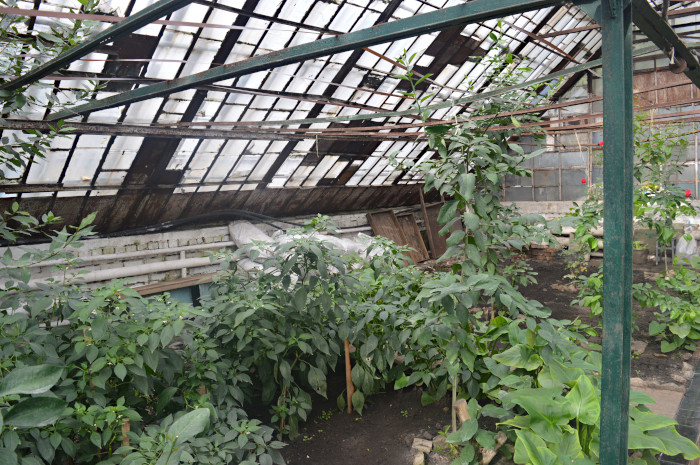
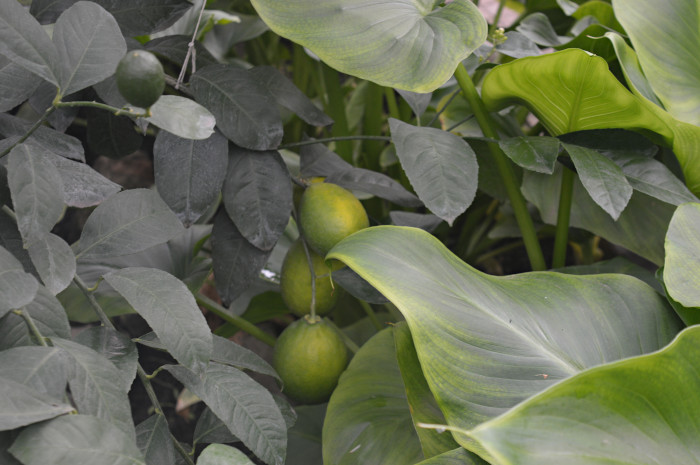
Greenhouses are equipped in the institution, in which ‘oranges’ and pomegranates are grown. The cultivation of decorative flowers and some cultivated plants, namely aubergines, tomatoes, and others, is also practised.
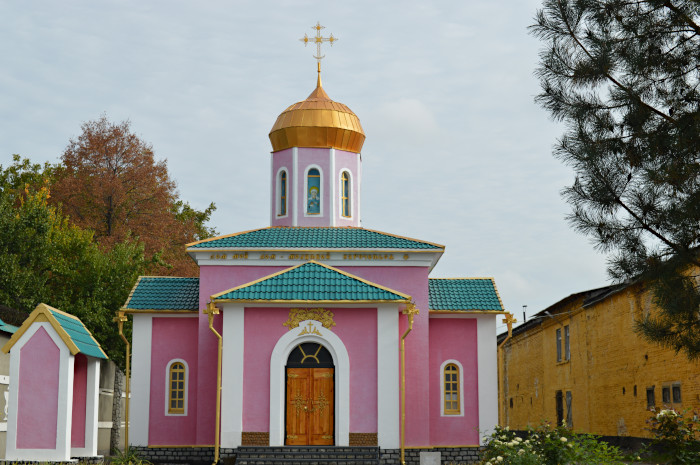
There are seven religious movements in the colony. A school and a vocational school are also operating. In the latter, one can obtain more than ten different professions.
EU project ‘Resisting torture, ill-treatment and impunity in Ukraine’