Monitoring visit to State Institution ‘Bila Tserkva Correctional Colony (No. 35)’
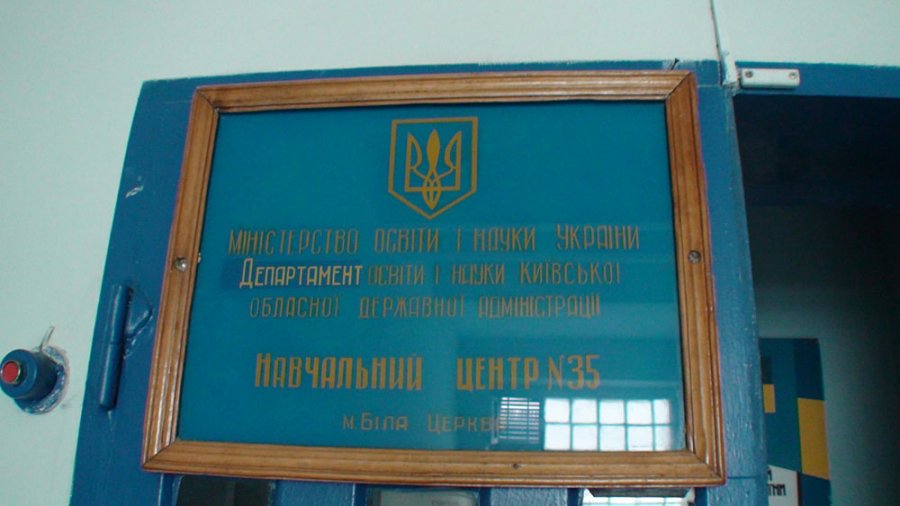
On 6 August 2021, a monitoring group consisting of members of the public council under the Ministry of Justice of Ukraine, Hanna Skrypka and Serhii Zuikov, as well as journalists Andrii Didenko (Information Bulletin ‘Human Rights’ of the Kharkiv Human Rights Protection Group), correspondent Karina Buhaichenko, and cameraman Oleksandr Tyminskyi (JSC ‘NSTU’ UA: Pershyi), visited State Institution ‘Bila Tserkva Correctional Colony (No. 35)’.
One of the tasks of the monitoring visit was to verify the performance indicators for correctional colonies and pre-trial detention centres announced by the Ministry of Justice.
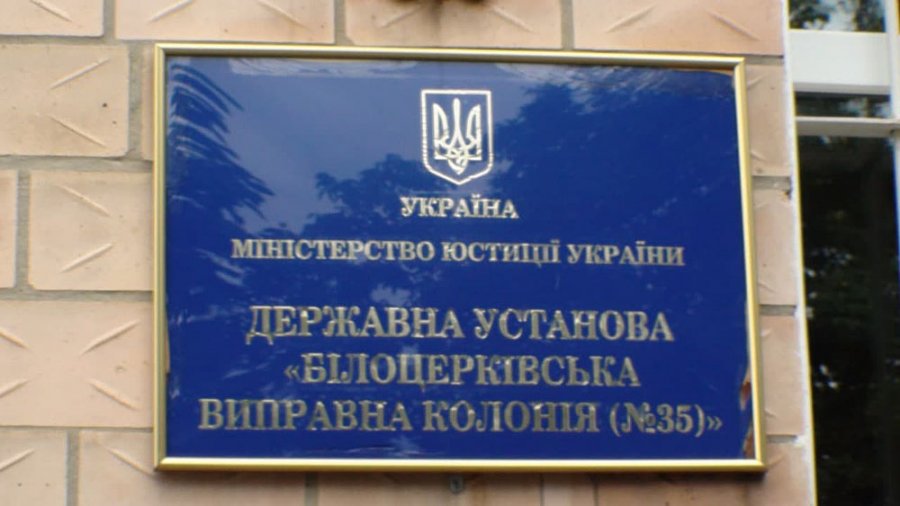
The institution is located in the city of Bila Tserkva; it is a medium-security correctional colony for holding men who have previously served a sentence of imprisonment. On the territory of the institution, there is a section of the pre-trial detention centre.
A brief history
By the decision of the executive committee of the Bila Tserkva City Council of Working People’s Deputies No. 273 of 25.04.1945, a land plot of 3 (three) hectares was allocated for the construction of a prison, of which 0.7 hectares were allocated for the construction of residential houses for its employees.
According to data from the archive of the Ministry of Internal Affairs of Ukraine and the archive of the Main Directorate of the Ministry of Internal Affairs of Ukraine in the Kyiv region, from 1956 to 1960 (Order of the Ministry of Internal Affairs of Ukraine No. 0216 of 22.12.1995), the prison functioned as a children’s colony with professional education and production. By Order of the Ministry of Internal Affairs of Ukraine No. 0159 of 19.08.1960, institution Ya/A-128/35 was created on the basis of the children’s colony, which after 1964 was called institution YuA-45/35 of the Internal Affairs Directorate of the Kyiv Regional Executive Committee in official documents, and in December 1999 it was renamed the Bila Tserkva Correctional Colony of the Directorate of the State Department of Ukraine for the Execution of Punishments in the city of Kyiv and Kyiv region (No. 35).
General Information
The planned capacity of the colony is 782 people. At the time of the visit, there were 616 convicts in the colony.
In 2020, 474 people were serving their sentences in the colony, meaning that compared to 2020, the number of convicts has increased by nearly 150 people. Such an increase is connected to the fact that in 2020, State Institution ‘Bucha Correctional Colony No. 85’ was liquidated.
The head of the institution is Colonel of the Internal Service Ponochnovnyi Yevhen Volodymyrovych.
There were 13 people in the DIS, 4 in the PKT, and 1 in the pre-trial detention centre.
There are 87 people registered with HIV/AIDS (85 people are receiving antiretroviral therapy), 4 prone to suicide, 48 people prone to self-harm, and 131 malicious violators of the detention regime. An ambulance was called 6 times in 2021 (in 2020, 19 times), 20 people with bodily injuries were in the log for 2021 (for 2020, 14), special measures were applied 4 times in 2021 (in 2020, 0), and one convict died (the cause of death was suicide).
The number of appeals (complaints) from convicts has doubled compared to the previous year; according to the data provided to the monitors by the colony, there were 111 appeals in 2020, and 199 for the first six months of 2021. The rating table states that the total number of appeals for 2020 was 266.
The total number of convicts released in 2020/2021: on parole in 2020 – 20 people (in 2021 – 15 people); under Art. 82 of the Criminal Code of Ukraine in 2020 – 15 people (in 2021 – 1 person).
Under Article 391 of the Criminal Code of Ukraine, 4 convicts are serving sentences at the institution, and the number of criminal proceedings is 2.
In 2021, six convicts were transferred to other colonies (in 2020 – 12 people).
The total number of convicts working under an employment contract is 216 people.
No obstacles were placed by the institution’s management. The monitors had the opportunity to visit any premises and section of the institution and to speak with the convicts on the condition of anonymity.
Accompanied by the first deputy head of the institution, Dobrovolskyi Valentyn Mykolaiovych, the production zone, boiler house, residential premises, medical unit, DIS and PKT cells, bathhouse, and food preparation area were visited.
Production Zone
There is no large-scale production in the colony; there is only one sewing workshop, which manufactures sacks. The production takes up a significant area. Most of the workshops and buildings are not currently being used; for example, the woodworking shop is not operating, as the institution’s management explained, due to a lack of orders. In total, 216 convicts work in the colony.
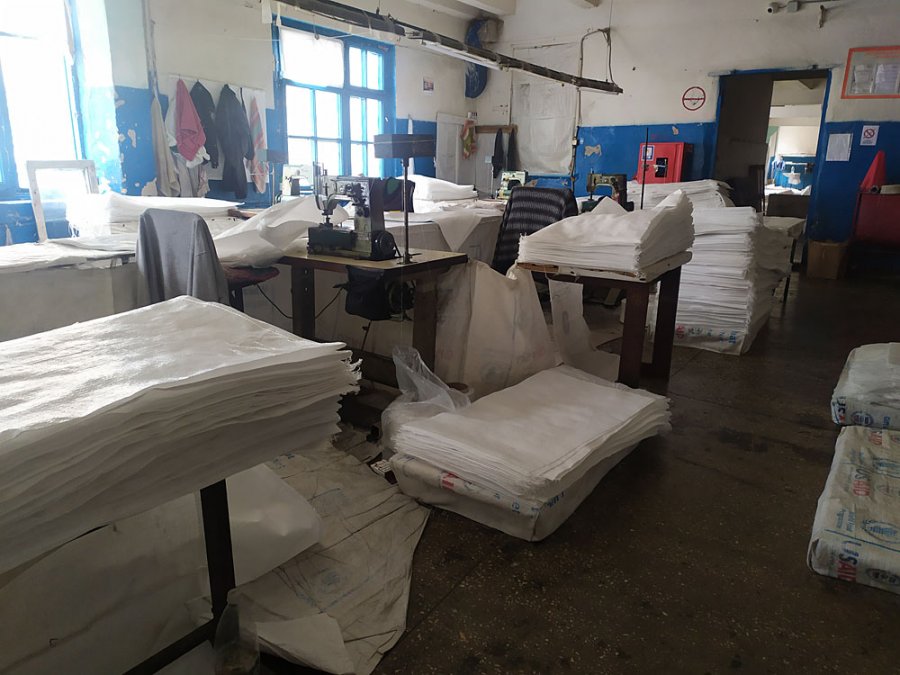
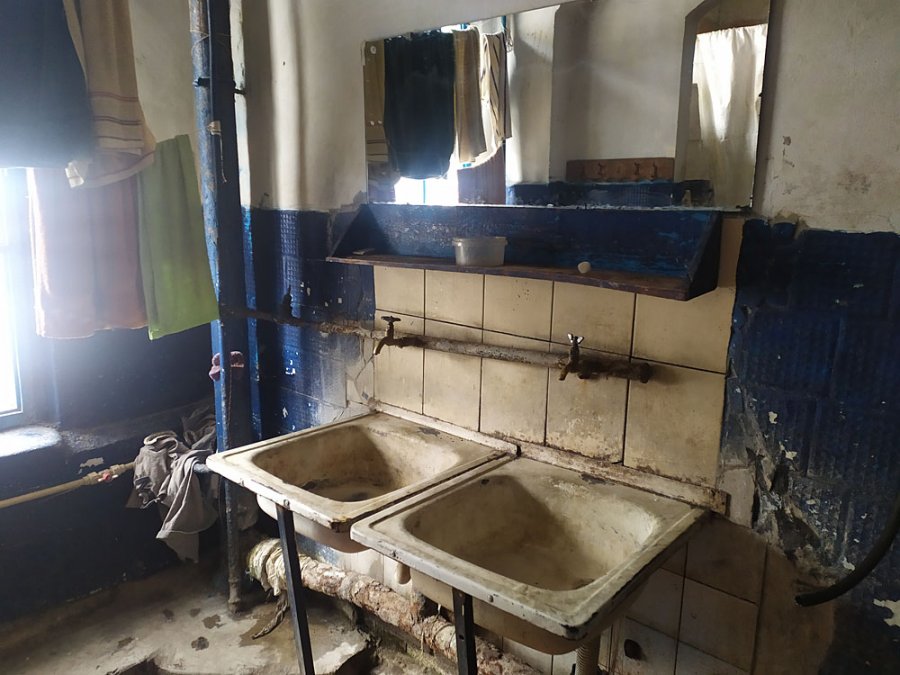
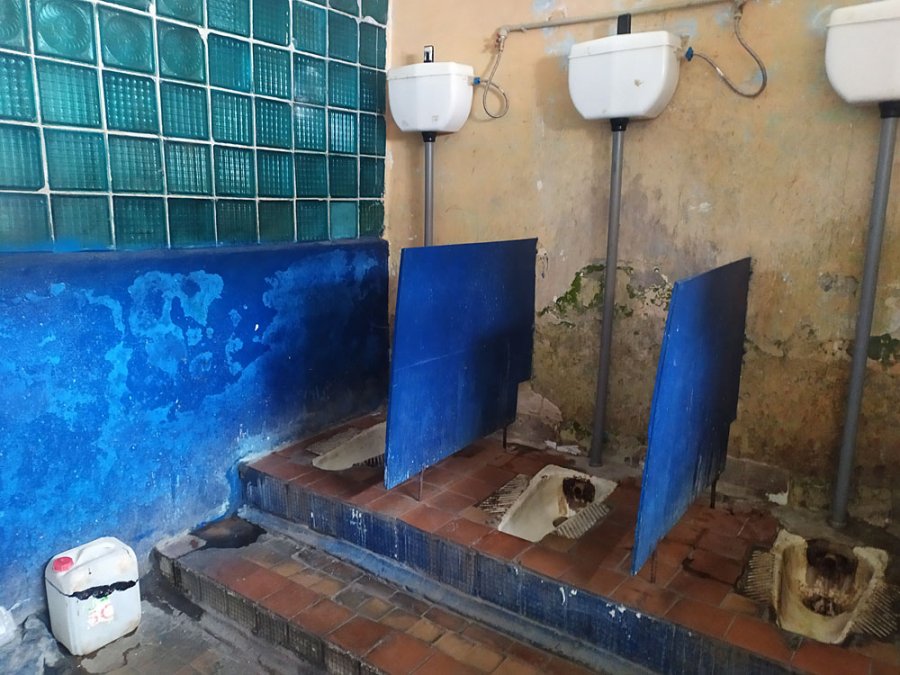
The premises of the sewing workshop lack repairs; the toilets and washbasins are in an inadequate state. The workshop foreman is Kompanenko Andrii Vasylovych.
The monitors drew attention to a piece of paper with numbers on it. When we asked the management what these numbers meant, we were told that this was possibly the number of sacks manufactured by each convict per shift; however, the sheet lacked names and any data, in particular, a date.
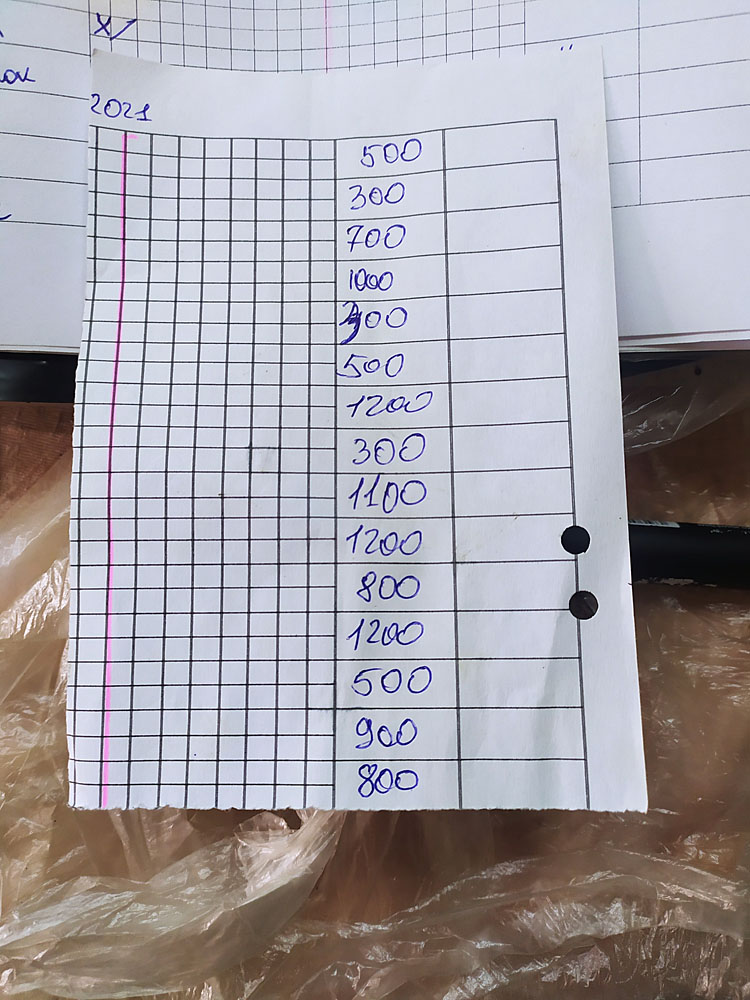
On the information boards, there is no information about the size of the salary or remuneration for manufactured products. Fixed-term employment contracts have been concluded with all convicts.
At the time of the monitors’ arrival at the production workshop, the convicts were absent from their workstations, so the monitors were unable to speak with them. As we were informed, the reason for the convicts’ absence was the ‘Storm’ special operation.
Vocational School
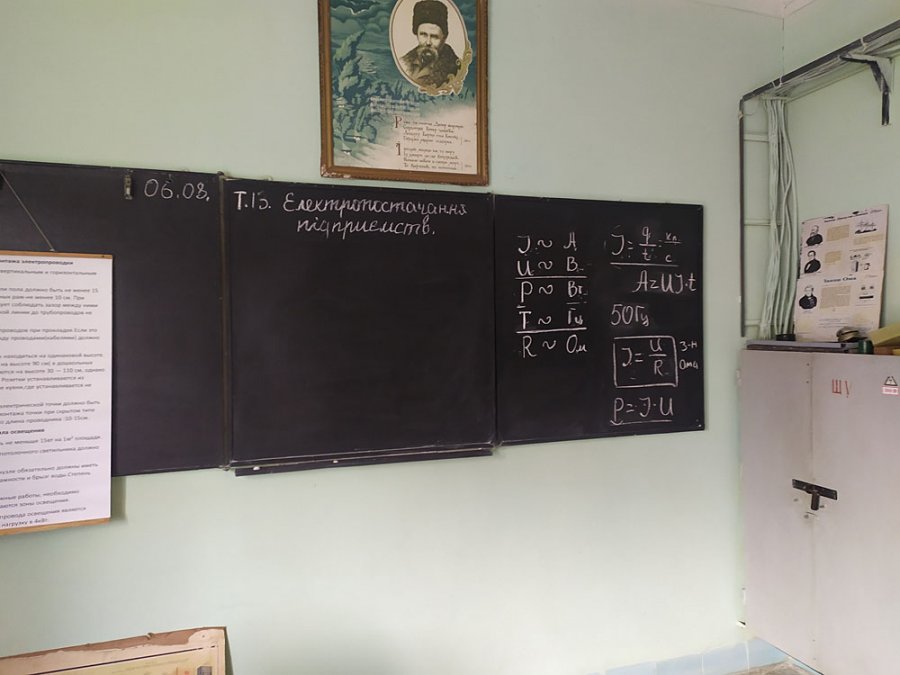
There is a vocational school in the colony, in which 44 people are studying. Convicts can obtain professional specialities as electricians, plumbers, and auto mechanics. In total, there are 4 groups of 10 people each.
DIS/PKT and Pre-trial Detention Centre Section
On the day of the visit, 13 people were in the disciplinary isolation unit, and 4 people were in the PKT. Let us recall that in 2020, 459 people were placed in the DIS, and the total number transferred to the PKT (OK) was 22 people.
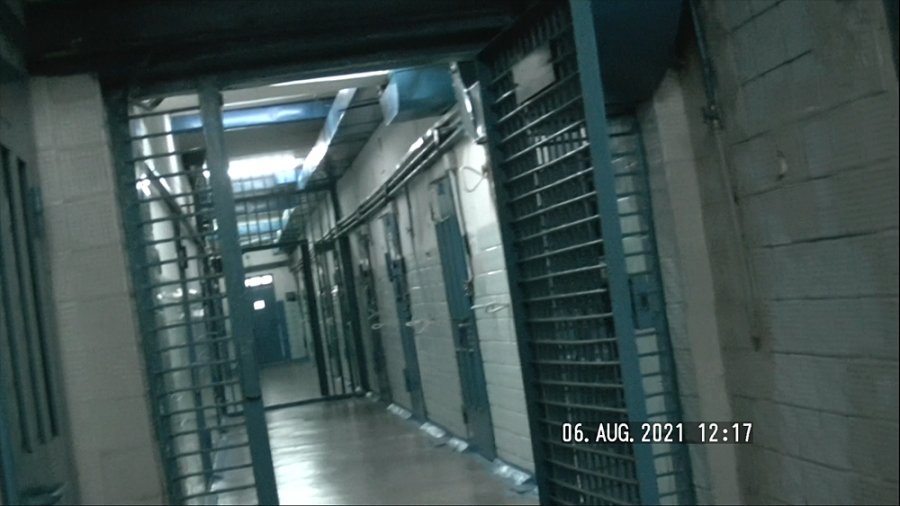
The DIS and PKT premises have been renovated. The toilet is separated by a low wall.
The monitors were able to speak privately with the convicts being held in the DIS/PKT. There were no complaints from the convicts.
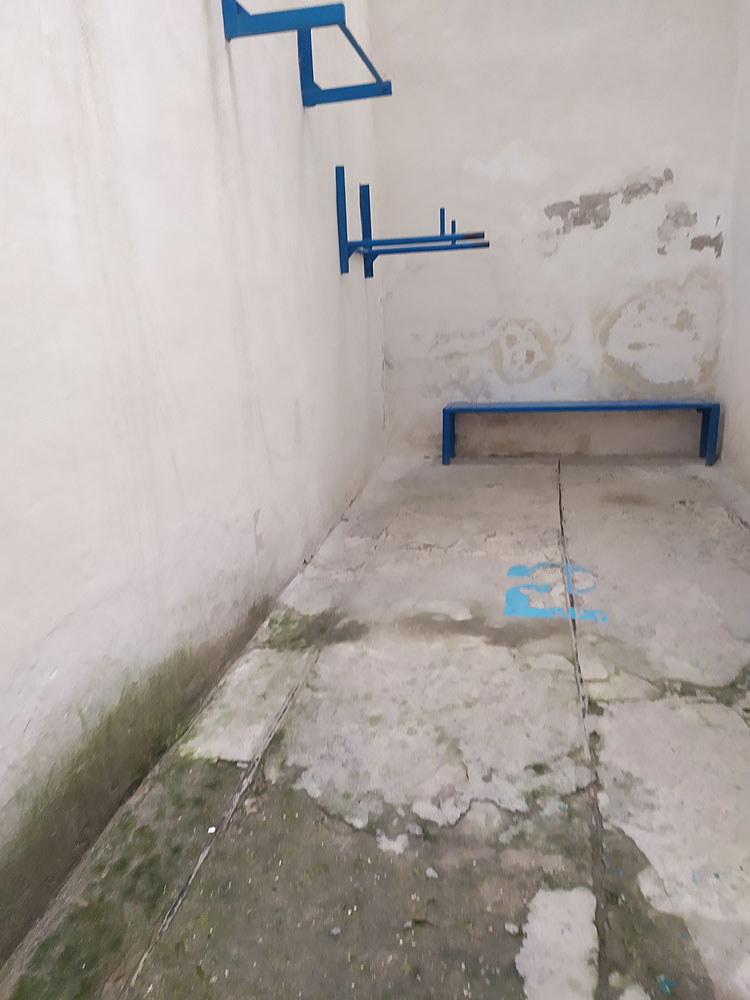
The exercise yards in the DIS/PKT section require repairs.
In the pre-trial detention section, prisoner Ruslan Onishchenko, the former commander of the ‘Tornado’ company, was being held. The prisoner complained that he was being held in a solitary confinement cell without a court decision choosing a preventive measure. Onishchenko provided written consent for the processing and dissemination of his personal data.
During the review of the convict’s personal file, it became clear that the prisoner is serving an 11-year prison term according to a court decision that has entered into legal force. He is also a defendant in a criminal proceeding. However, no grounds for his detention in a solitary confinement cell of the pre-trial detention centre were found.
Let us recall that according to the Order of the State Department of Ukraine for the Execution of Punishments No. 280 of 30.12.2003, the order and conditions of detention for persons taken into custody and convicts in the section are determined by the Law of Ukraine ‘On Preliminary Detention’, the normative legal acts of the Department, and also by this Regulation. The basis for receiving and holding persons taken into custody and convicts in the section is a reasoned court decision on choosing a preventive measure in the form of taking into custody or a court-passed sentence of imprisonment for a specific term that has not entered into legal force, and a reasoned decision of the distribution commission.
Consequently, persons taken into custody are held in small or general cells. In exceptional cases, with the aim of preserving the secrecy of a pre-trial investigation, protecting prisoners from possible attacks on their life, or preventing them from committing a new criminal offence, or if there are medical grounds for doing so, they may be held in solitary confinement cells by a corresponding decision of the person or body carrying out the criminal proceedings, or the head of the institution for preliminary detention, sanctioned by a prosecutor (Art. 8 of the Law of Ukraine ‘On Preliminary Detention’).
Residential Zone
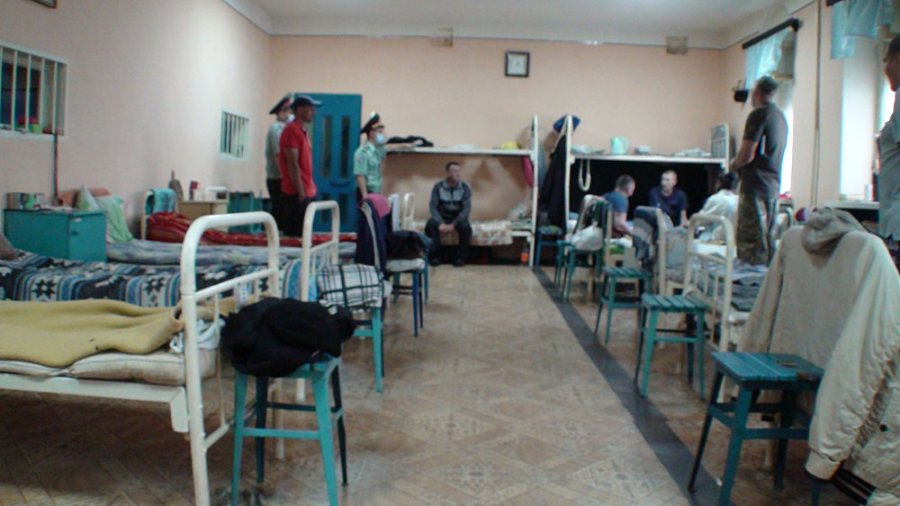
Residential wards for convicts are of the barracks type. In some wards, repairs are being carried out. Ongoing cosmetic repairs are carried out at the expense of the institution’s special fund.
In most sleeping rooms, single-tier beds are installed, but there are also bunk beds, which does not comply with European Prison Rules and leads to additional discomfort for the convicts.
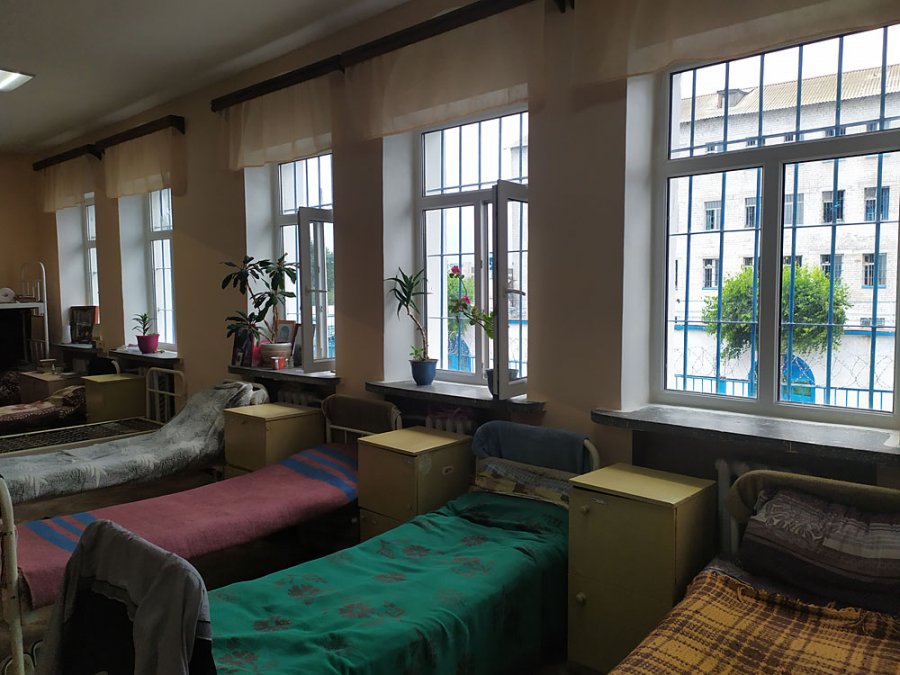
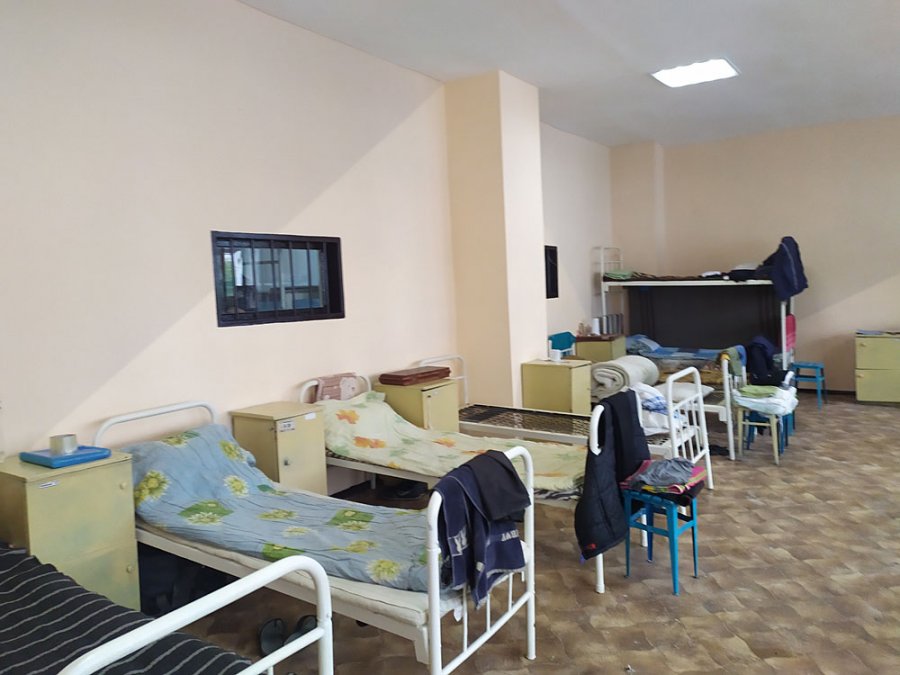
In one of the wards where repairs are being carried out, the monitors noticed a payphone had been installed.
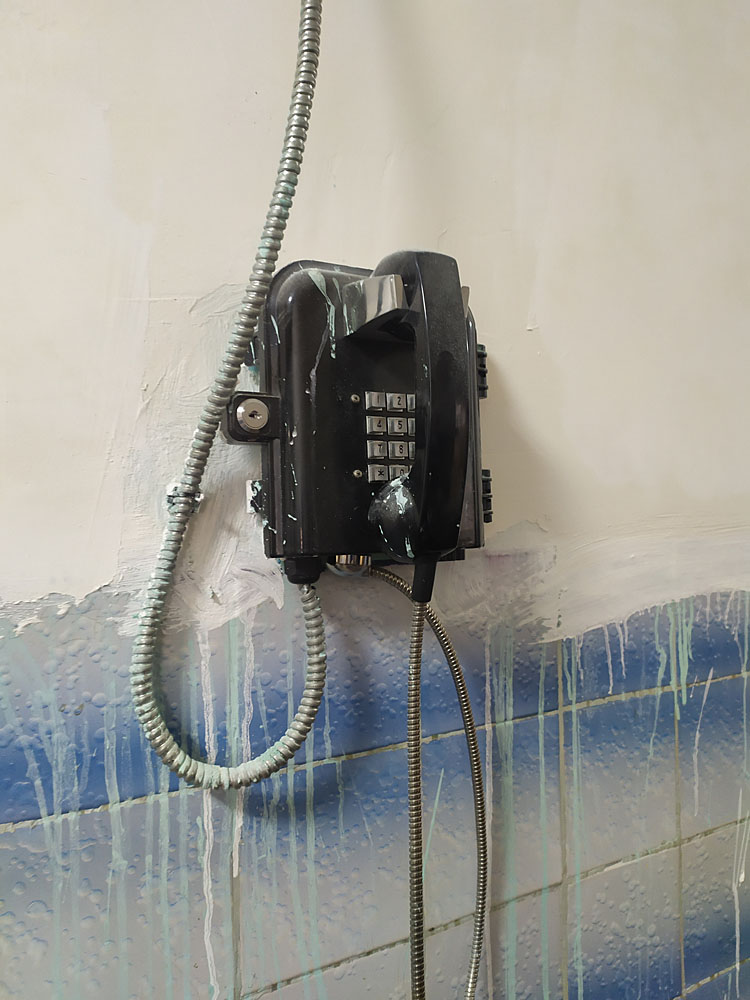
The price per month, according to the convict, is approximately 100–150 hryvnias, which is clearly too expensive for convicts who, for the most part, are in a difficult financial situation.
The monitors visited the ward where disabled people live, of whom 8 people have a Group II disability and 12 people have a Group III disability; there are 20 disabled people in total in the institution. The persons with disabilities spoke about the problems they encounter, for example, the lack of medicines. At the same time, it is practically impossible to buy the necessary medicinal products with the pension they receive, and medical parcels are not accepted at the institution.
Among the problematic issues that the colony staff face remains the issue of convicts obtaining (restoring) passports. Due to the lack of a passport, convicts cannot be registered for work, and therefore they do not have the funds to pay for passport services. There are cases when convicts are released without a passport (only with a release certificate in hand).
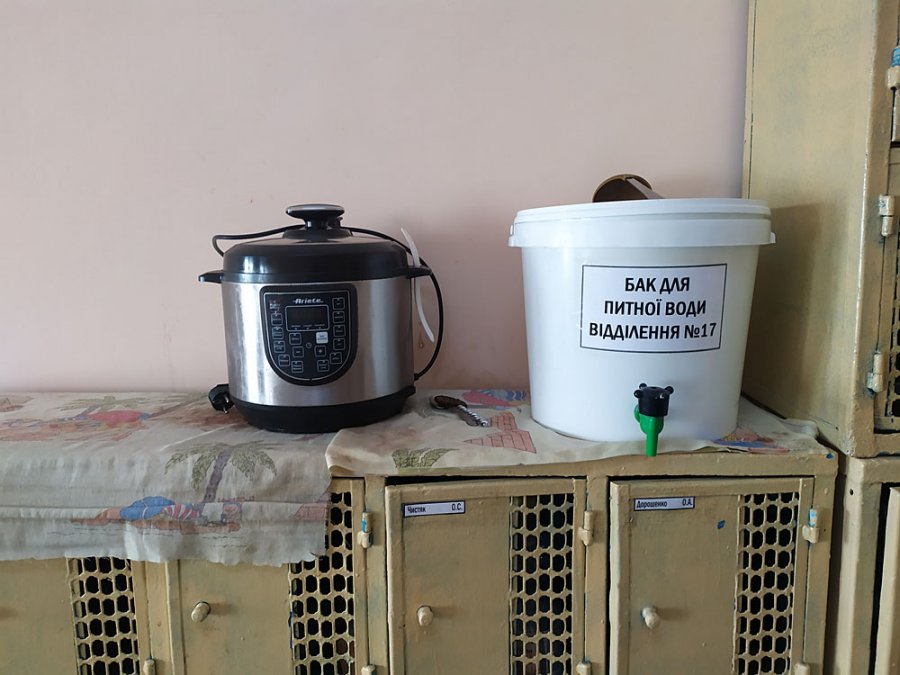
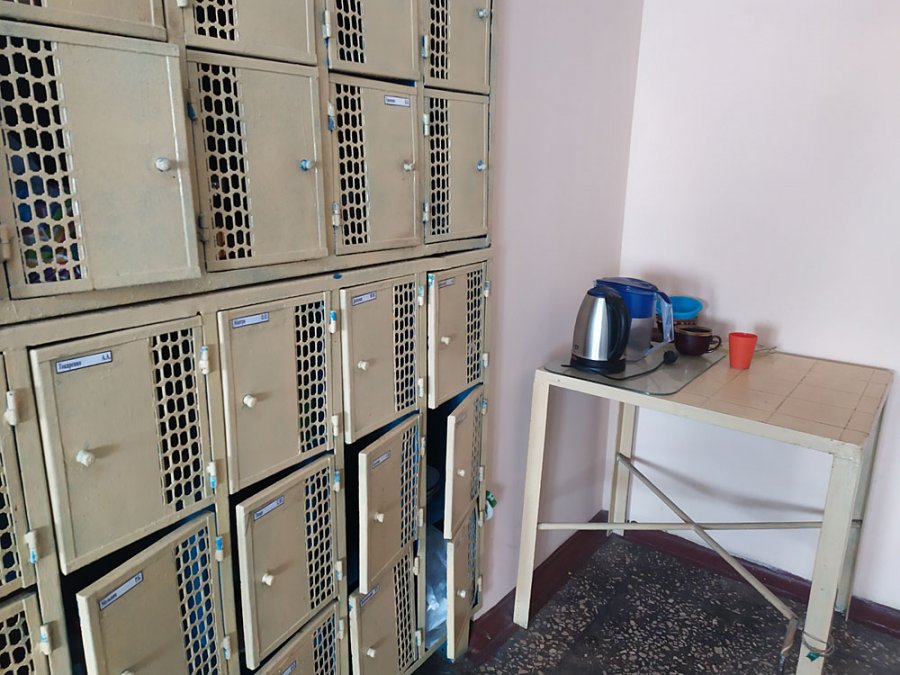
In the dining rooms, there are: a tank with boiled drinking water, an electric kettle, a multicooker, and a refrigerator.
Dining Room and Kitchen
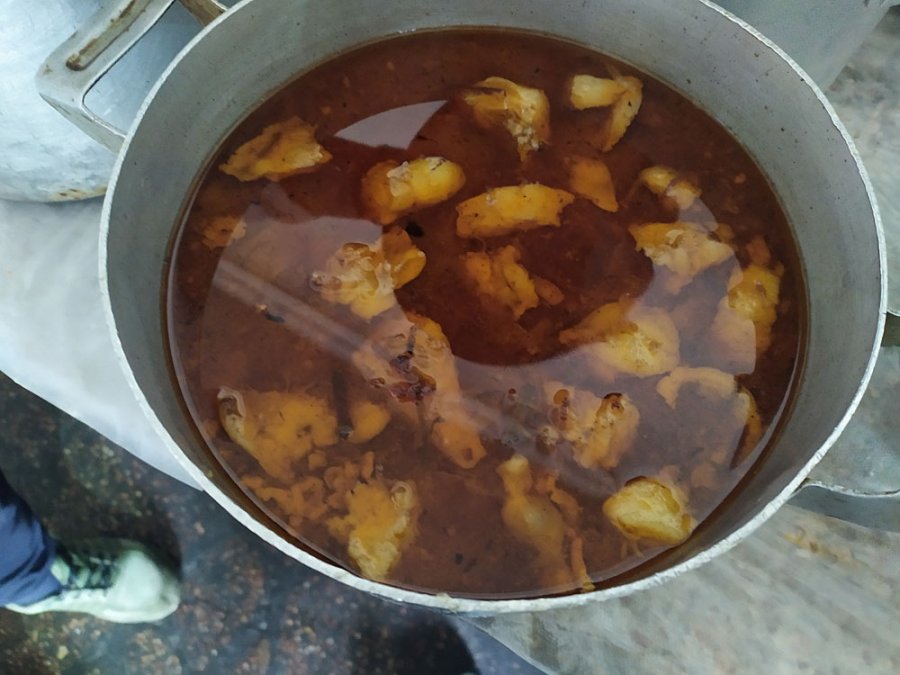
Food for the convicts is prepared in a specially equipped area located outdoors, which makes it possible to save on gas and electricity, as such a kitchen allows cooking on firewood. The convicts say that such food tastes better.
A qualified cook works in the kitchen. The food has a pleasant smell.
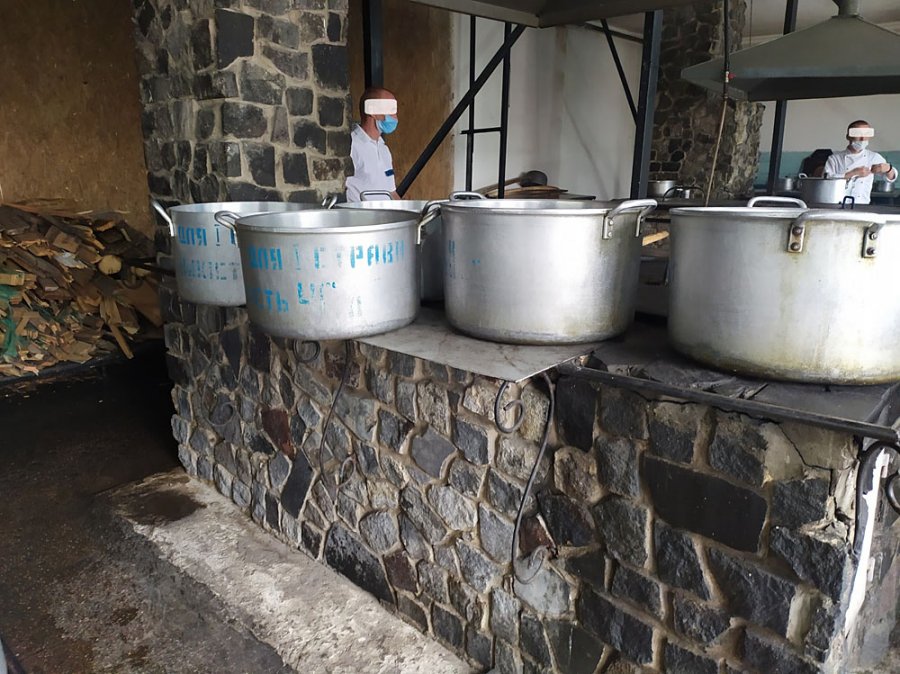
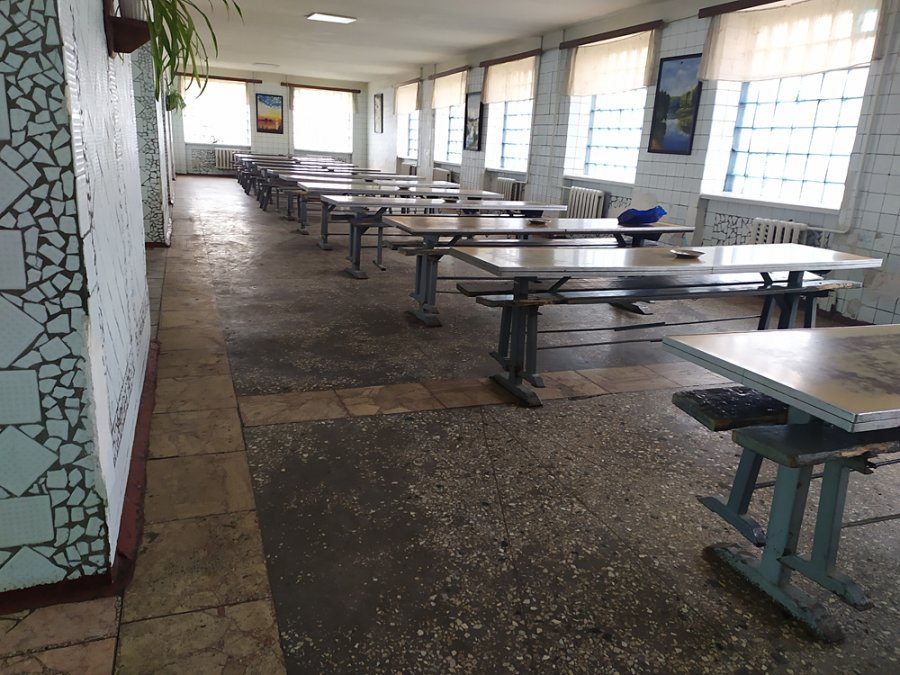
Currently, the dining room is in a satisfactory condition.
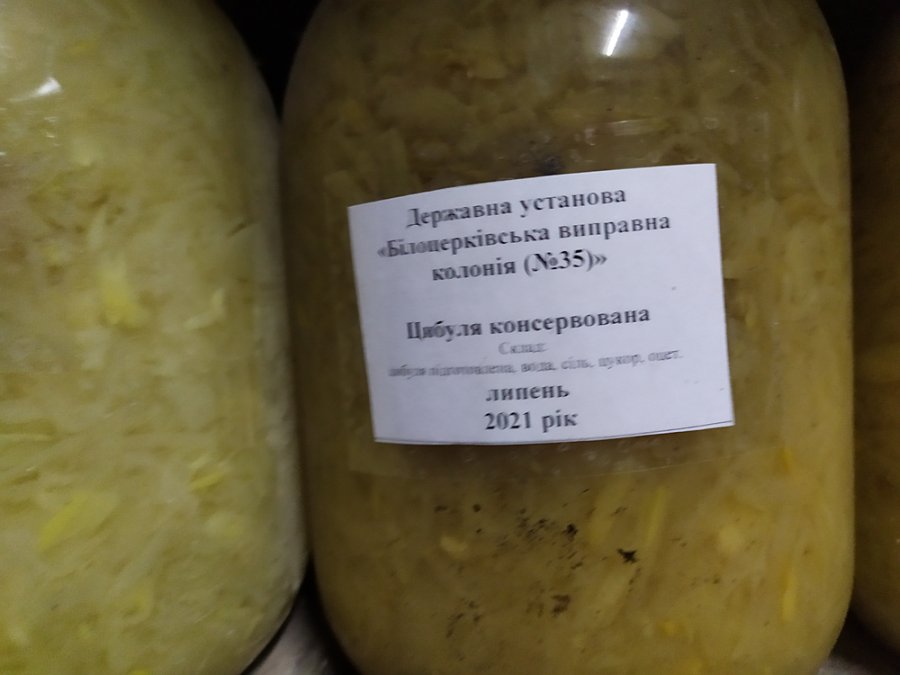
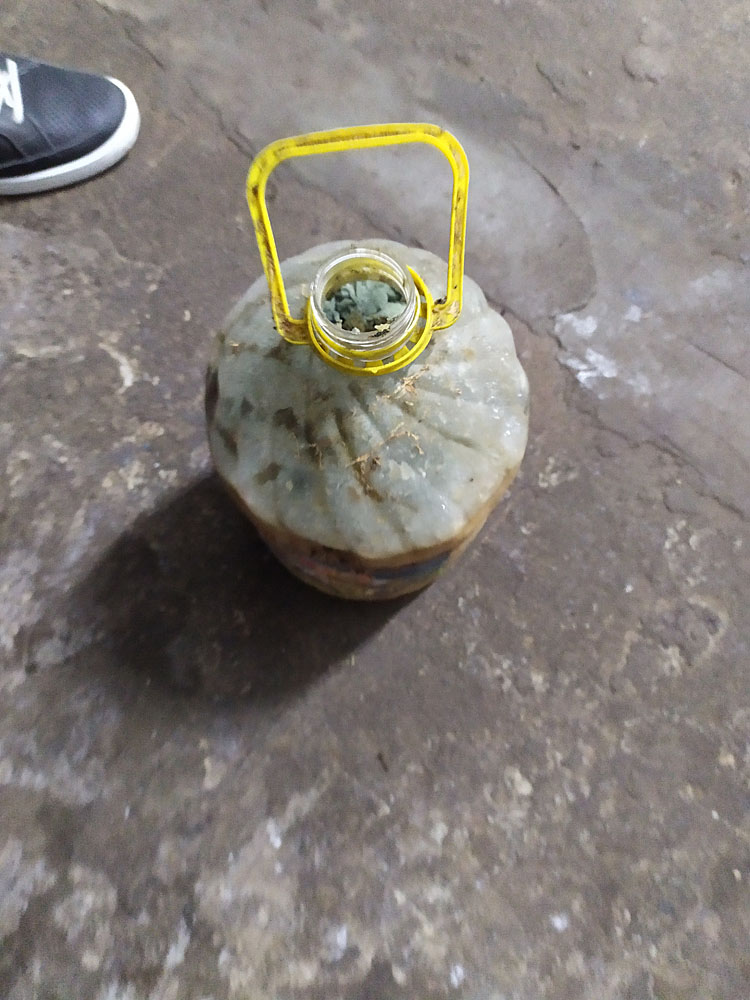
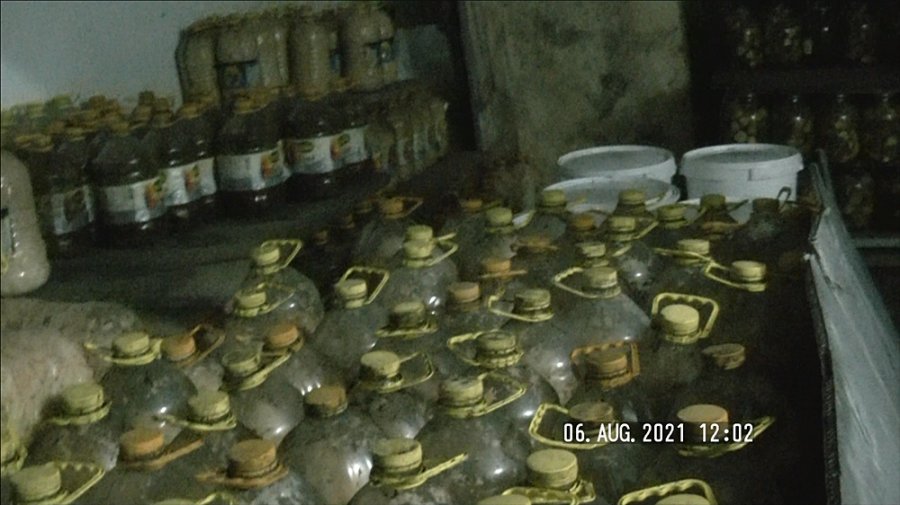
The colony produces preserved food for the winter, which is stored in the basement.
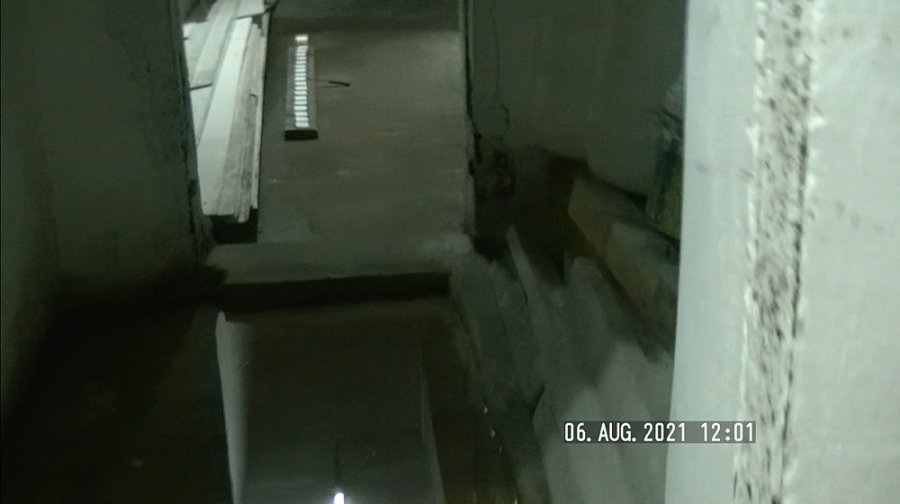
In the basement after the rain, there were puddles left over, which the monitors had to jump over.
The monitors noticed a large amount of sauerkraut that was no longer fit for consumption.
Boiler House
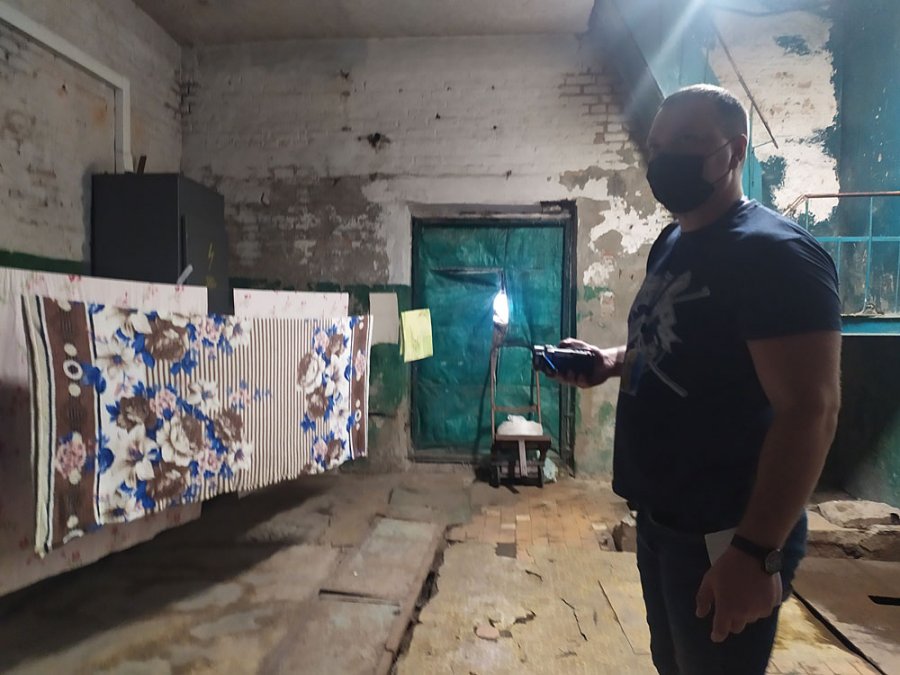
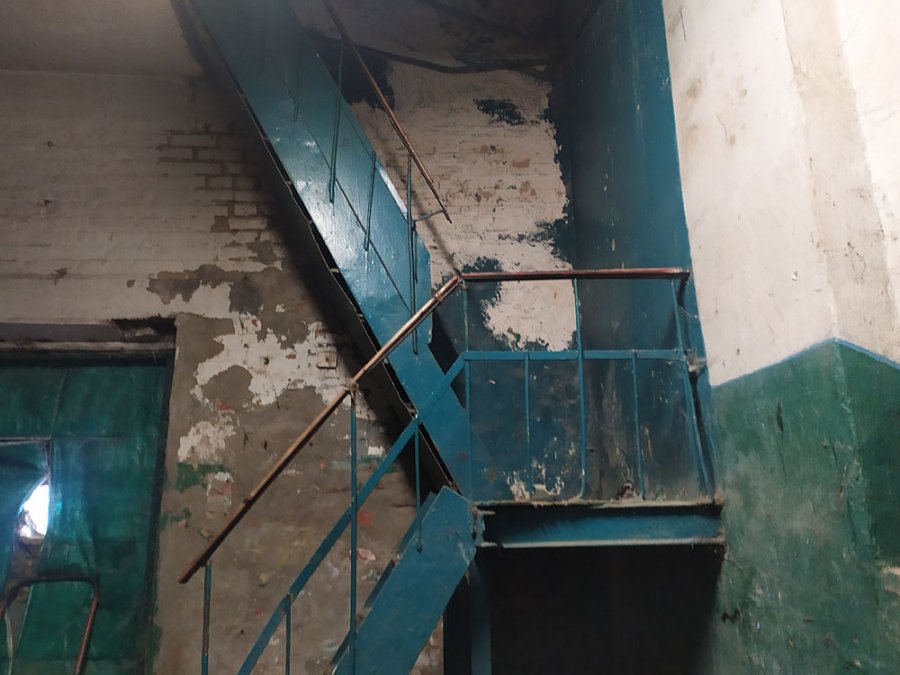
Having entered the territory of the boiler house, the monitors recorded that the roof was leaking as a result of rainfall. Two boilers are in operation in the boiler house. The boiler house premises are in a neglected state and require repairs. Also, laundry hanging out to dry was noticed—the convicts’ bed linen, which should not be in work areas.
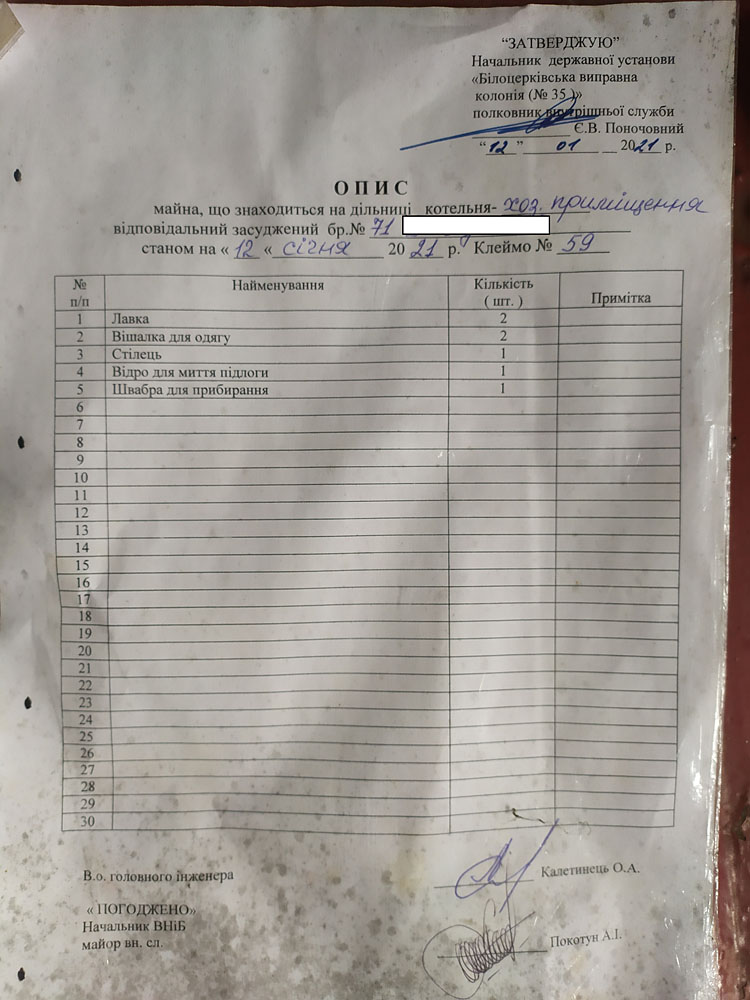
In one of the rooms, an inventory description was discovered on a notice board, which specified the materially responsible convict. The document was signed and approved by the head of the institution, the engineer, and the head of the VNiB (internal safety), yet the signature of the responsible convict was missing.
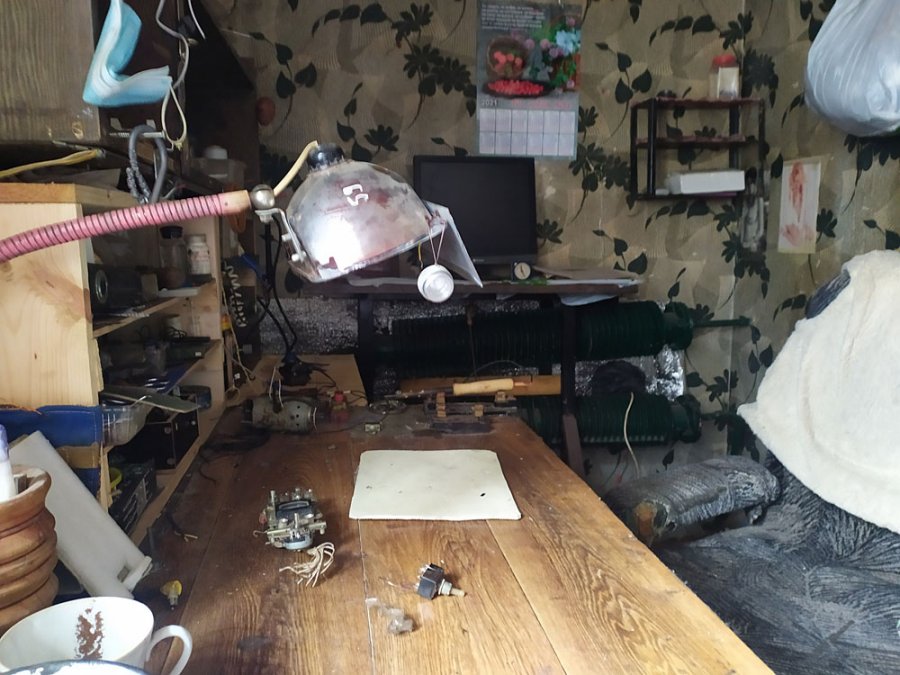
The monitors came across a locked electrician’s room. Upon demanding that the door be opened, they waited 15 minutes, after which a convict came and opened the door. The monitors inspected the work room, where many tools, electrical appliances, and even a computer were kept. When asked what salary the convict receives and under what contract he is employed, the convict did not provide a clear answer.
Medical Unit
In the medical unit, the monitors saw more than 20 convicts standing in a queue for medicines and procedures. There were two people receiving inpatient treatment in the medical institution, and another three people were in quarantine after long-term visits.
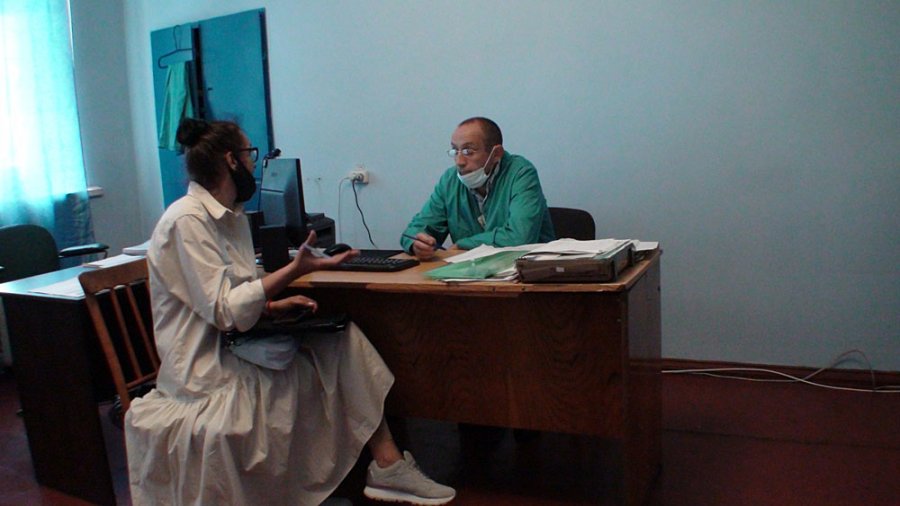
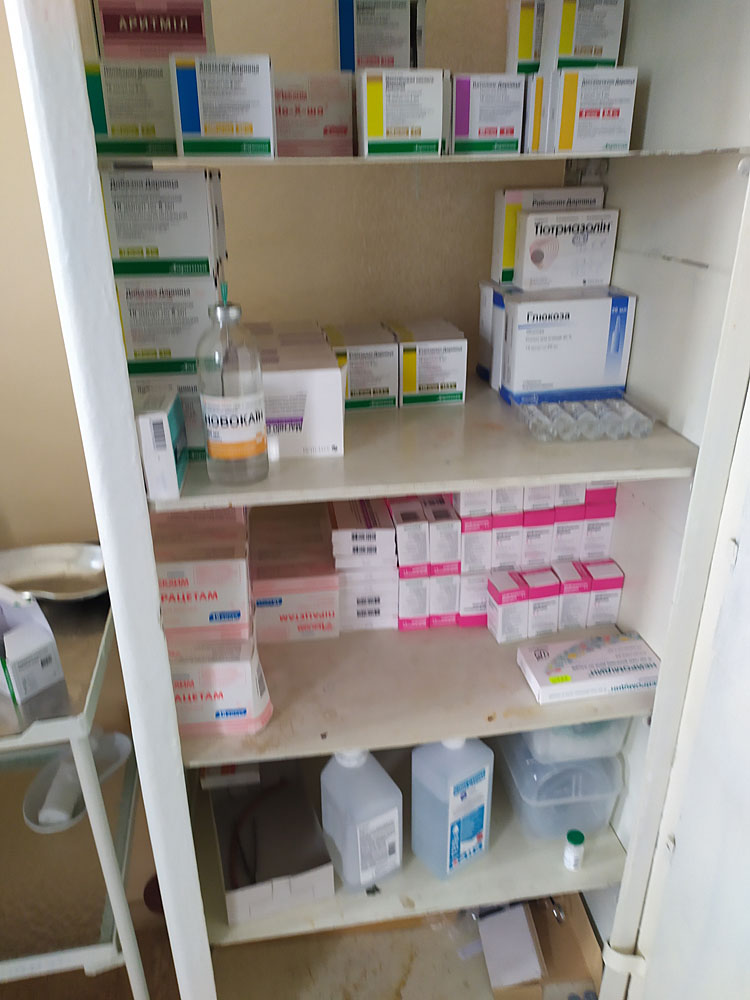
According to the acting head of the medical unit, Viktor Vasylovych Honcharuk, the institution is fully provided with medicines. However, receiving parcels with medicinal products from relatives is not practiced. The acting head of the medical unit says that he does not know the procedure for accepting such parcels.
During the current year, twenty cases of bodily injuries were recorded in the institution, which was logged in the corresponding register; at the same time, in the outpatient medical card 025/o, there was no certificate of such an injury or appendices to it in the form of photographs of the existing bodily injuries, as provided for in point 3 of section 1, chapter II of the joint Order of the Ministry of Justice of Ukraine and the Ministry of Health of Ukraine of 15.08.2014 No. 1348/5/572 ‘On Approval of the Procedure for Organising the Provision of Medical Care to Persons Sentenced to Imprisonment’.
An ambulance was called 6 times in 2021 (in 2020 – 19 times); on the day of the visit, 10 people were in hospital facilities outside the correctional colony.
Over the year, one convict died in the institution, having committed suicide by hanging.
Internet, Long-term Visits
The number of visits conducted using video communication via the internet was 197; the cost of such a call is 15 hryvnias for 15 minutes of conversation (one hryvnia per minute), which is an excessively high price for convicts. The colony’s management explained that 15 hryvnias is a fee for the day, but at the same time, the convict does not use the internet for the whole day, only for 15 minutes.
In the colony, 2 workstations with internet access have been set up; however, during the visit to the internet classroom, we did not see a single convict, whereas colony staff were sitting at the computers.
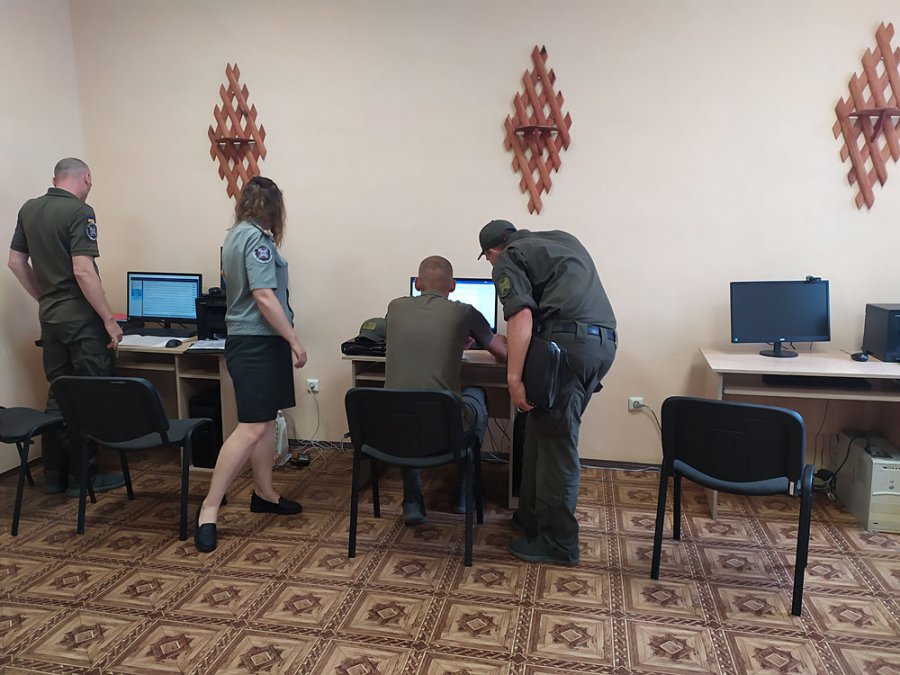
Over the course of the year, 14 people purchased tablets.
Bathhouse
The bathhouse is renovated, but at the time of the visit, there was no water.
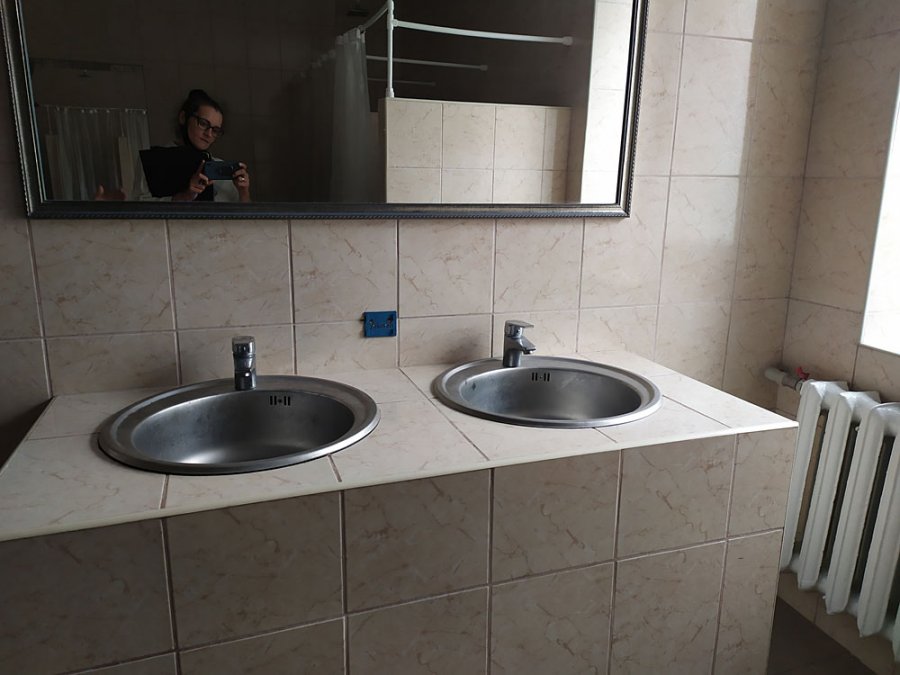
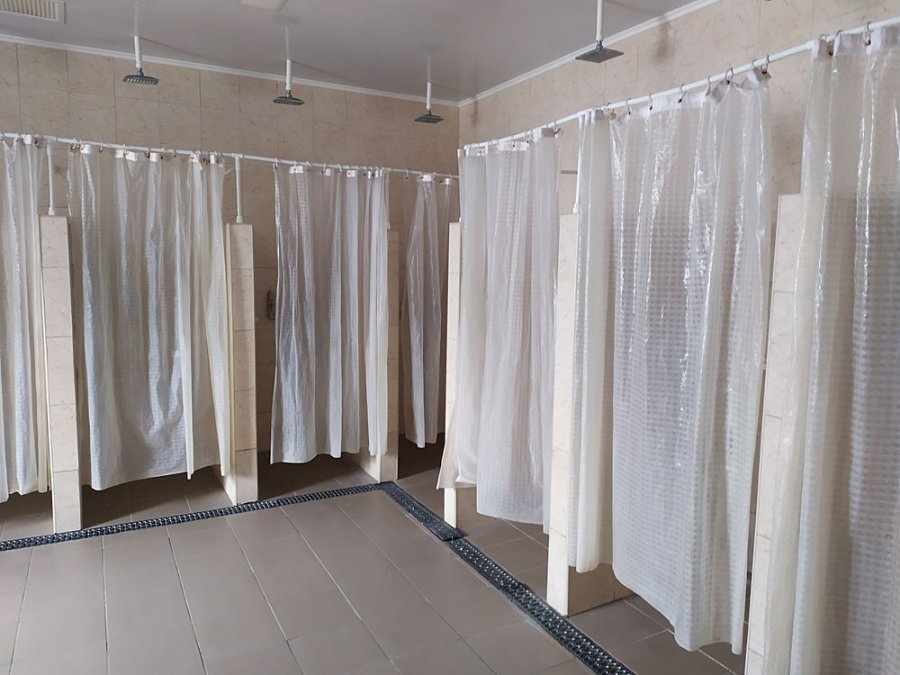
The institution’s management could not explain the reason for the lack of water.
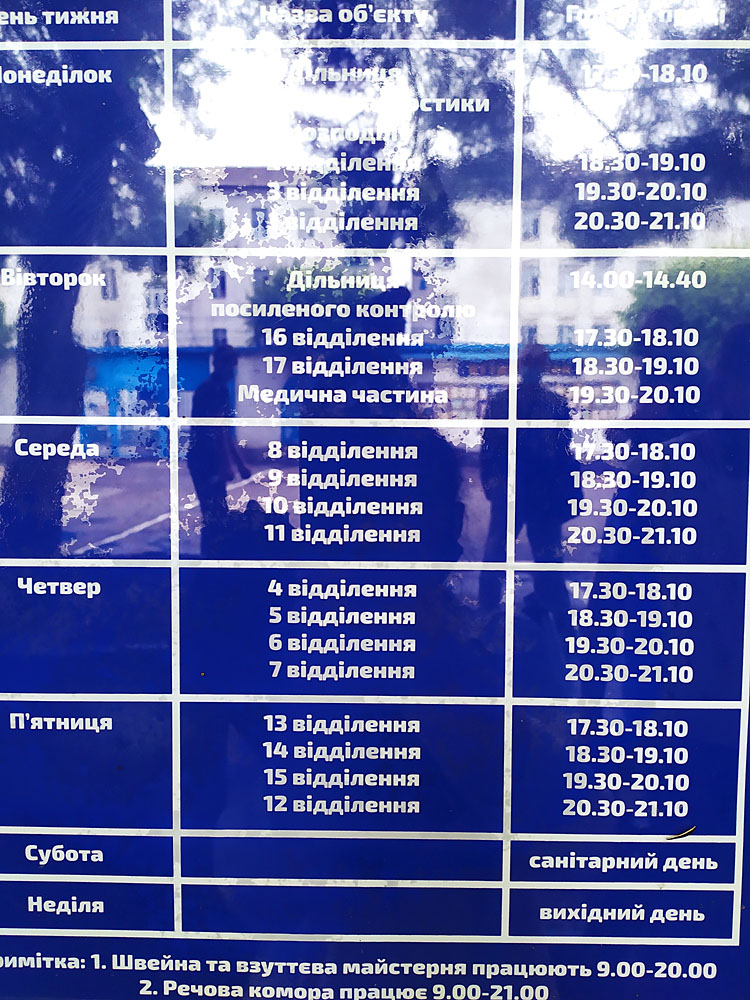
According to the schedule, the convicts bathe once a week.
Long-term Visits
The long-term visit rooms require repairs.
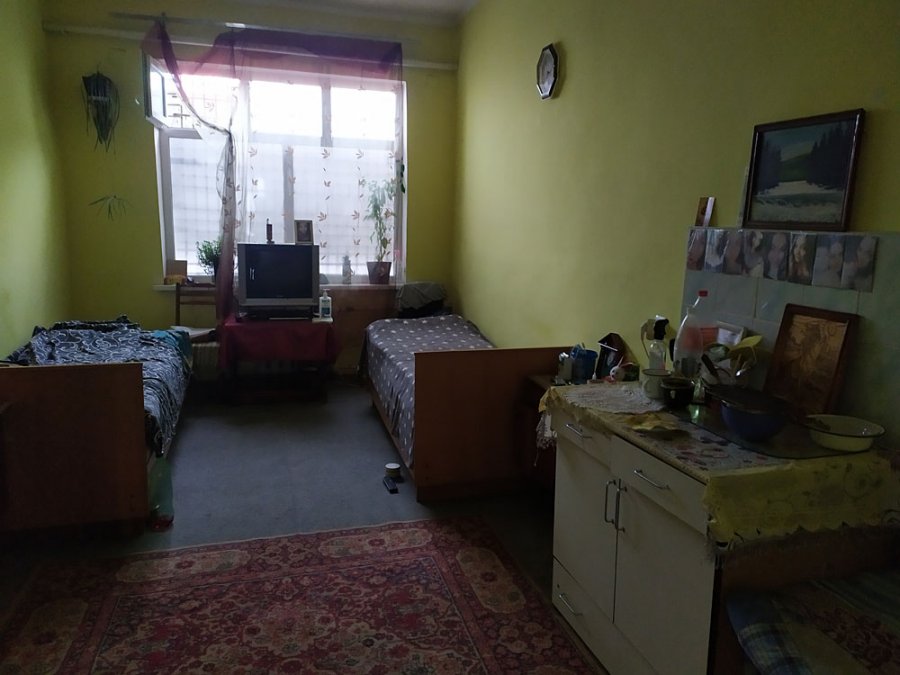
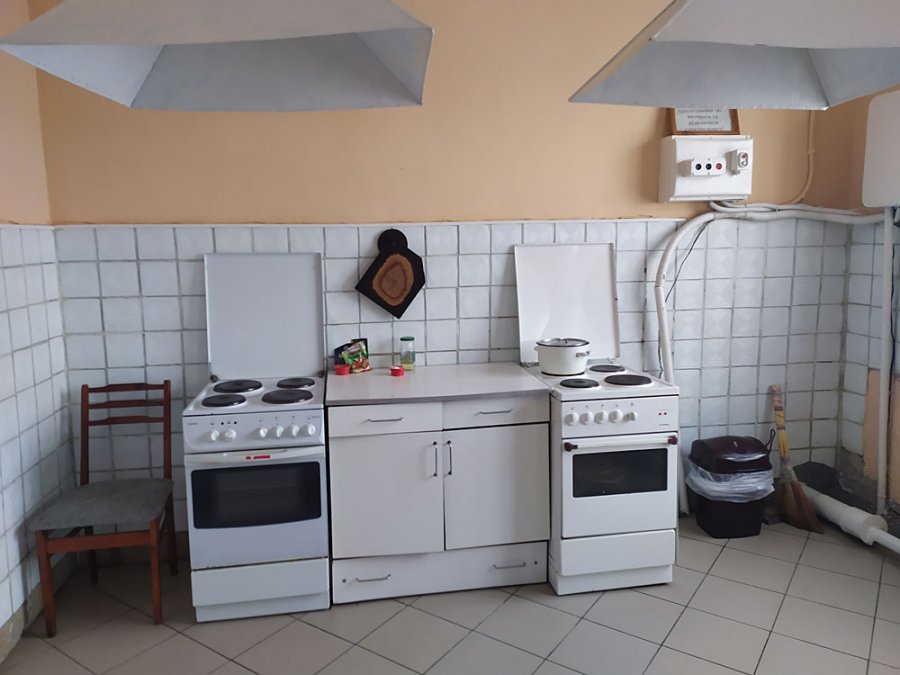
The shower cabins are in a neglected state.

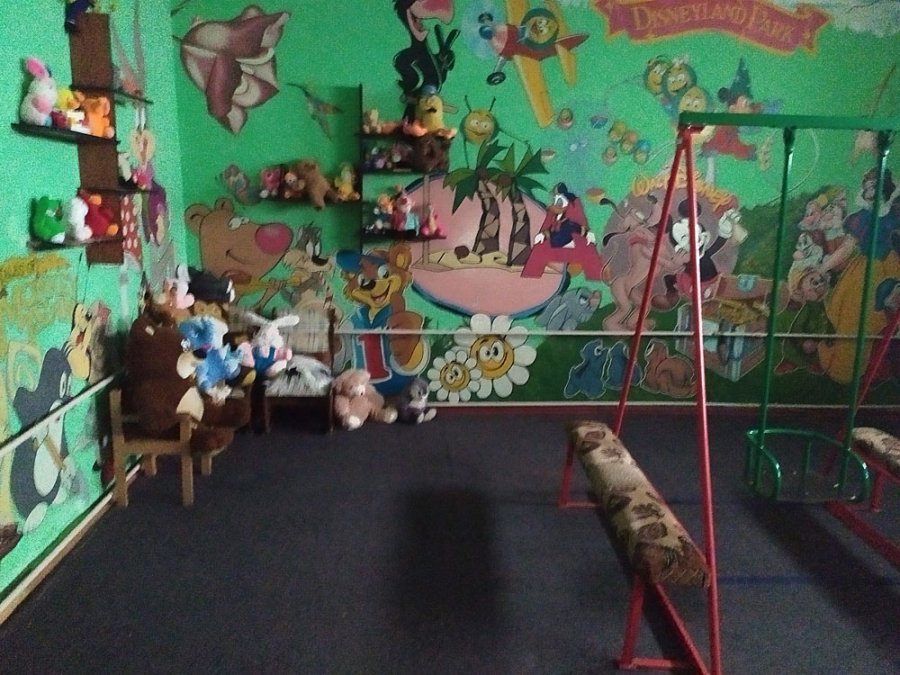
There is a children’s room in the section.
Comparison of Colony Rating Indicators
Let us recall that the Ministry of Justice of Ukraine recently published prison ratings, which, according to the Minister of Justice, are based on clear and measurable criteria and indicators and are regulated by an order of the Ministry of Justice.
First of all, I would like to note that the ratings on the website of the Ministry of Justice of Ukraine are not presented entirely correctly (for example, Russian words or a staff count of 207.5 people); it is very difficult for the monitors to work with the indicators because there are more than 300 indicators, which is physically unrealistic to verify.
Consequently, since these data are entered by the institutions themselves, their objectivity seems quite dubious, and to detect an error, one would need to verify all the indicators.
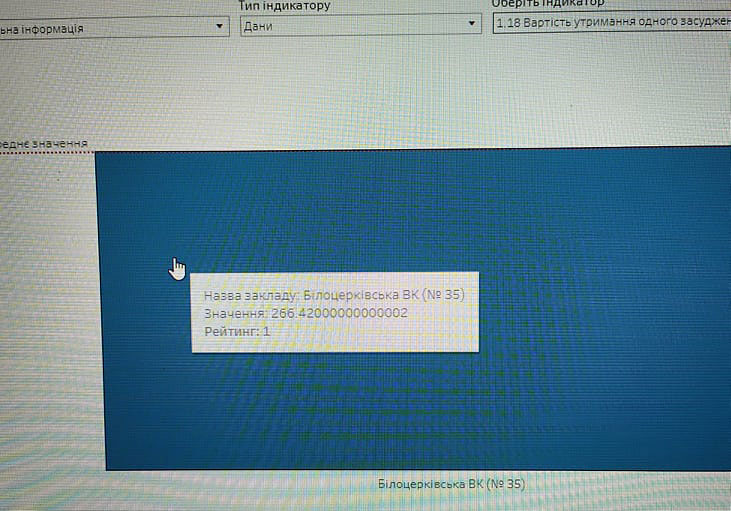
For example, there is a discrepancy in the cost of maintaining one convict per day. Thus, the Ministry of Justice’s website states that in 2020, the cost of maintaining a convict per day was 266.42 UAH; at the same time, in the data provided to the monitors at the colony, it is stated that the cost of maintenance in 2020 was 64.18 UAH, and in 2021 – 73.88 UAH.
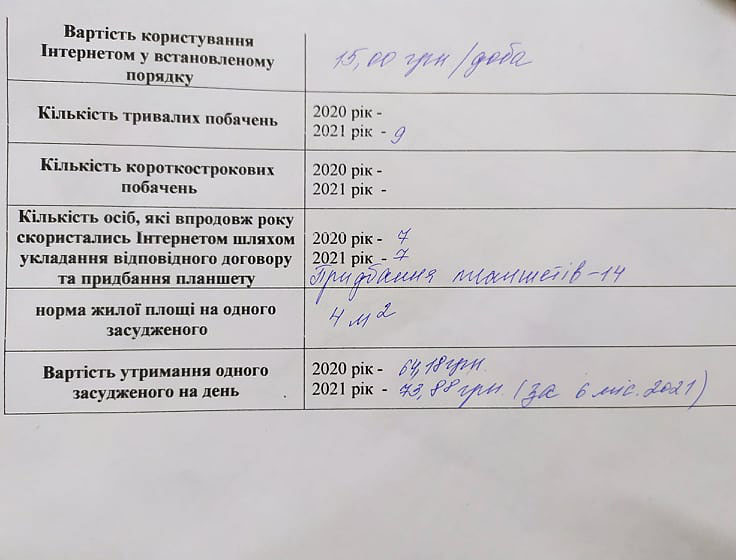
Furthermore, in the ratings presented by the Ministry of Justice, an indicator such as the number of convicts under Art. 391 of the Criminal Code of Ukraine (malicious disobedience to the requirements of the administration of an institution for the execution of punishments) is absent, which is very strange for the human rights community, as we have been talking about the abolition of the aforementioned article for several years in a row (a bill No. 2079 is currently registered in the Verkhovna Rada).
Also, the question arises, what responsibility is envisaged for institutions for providing inaccurate data?
In our opinion, the rating system introduced by the Ministry of Justice needs further improvement and testing.
Members of the Public Council under the Ministry of Justice of Ukraine, who were part of the monitoring group, emphasised that at the next meeting of the Committee on Penitentiary System, Execution of Punishments, and Probation, they will raise the following issues:
1. Ensuring the receipt of medicines from relatives and other persons if there are doctor’s recommendations;
2. For the Ministry of Justice: stop the practice of using pre-trial detention centre cells in institutions for the execution of punishments, since this practice was introduced due to the overcrowding of pre-trial detention centres and is used for the purpose of pressuring persons, abuse, holding persons in solitary confinement cells, etc.; recommend improving the prison rating system.