Another assault on human rights: civil society may be barred from monitoring places of detention
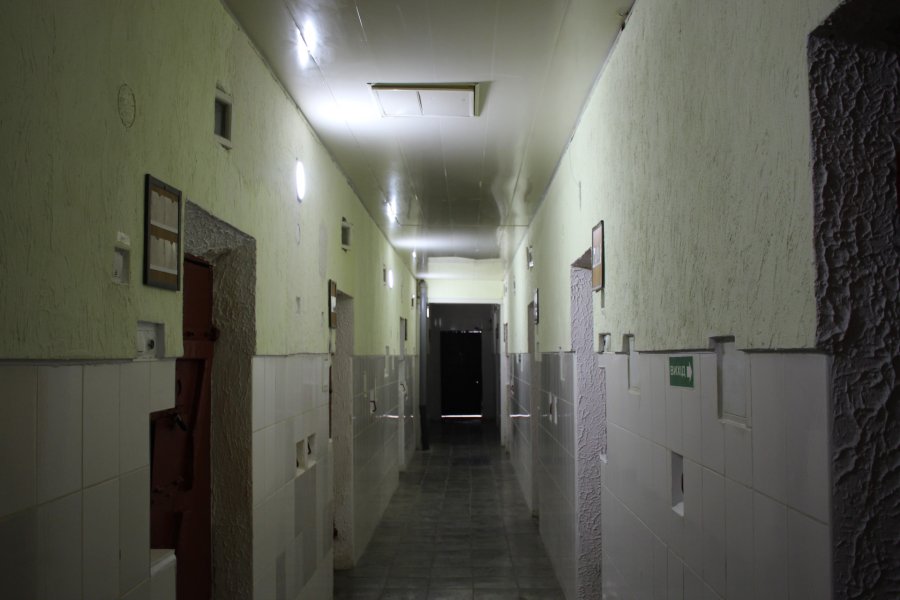 The penitentiary system of Ukraine actively declares and publicly emphasises its reform. However, in the thirty years of Ukraine's independence, the criminal-executive system has failed to change its repressive-punitive paradigm. Despite the goal of criminal punishment prescribed by legislation—the resocialisation of a person who has committed a criminal offence, followed by social adaptation—we often observe the exact opposite: brutal human rights violations in places of detention, such as systemic torture and cruel, inhumane treatment. The leadership of the prison department is once again attempting to close penitentiary institutions to public oversight and conceal human rights violations.
Visits without prior notice
How can we find out about human rights violations in places of detention? Only by visiting these institutions directly and communicating with prisoners under conditions of anonymity.
Before 2012, this was completely impossible and unrealistic, the stuff of fantasy. The system was hermetically sealed, and we received information from only one source—the department itself: “Everything is fine, and we are fighting human rights violations with our own resources.” We only learned the truth about the human rights situation in prisons from victims of torture after their release.
On 21 July 2006, at the request of the Council of Europe, Ukraine ratified the Optional Protocol to the UN Convention against Torture, thereby committing to establish one or more national preventive mechanisms for the prevention of torture within a year. Only on 25 May 2012, within the new structure of the Secretariat of the Ukrainian Parliament Commissioner for Human Rights, was a special structural unit created—the Department for the Implementation of the National Preventive Mechanism.
On 8 April 2014, the Verkhovna Rada of Ukraine adopted the Law “On Amendments to the Criminal-Executive Code of Ukraine regarding the adaptation of the legal status of convicts to European standards”, which amended Article 24 of the Criminal-Executive Code of Ukraine: the right to visits without prior notice and without a special permit (accreditation) was granted to members of the public acting as assistants to People's Deputies, as well as to doctors and journalists.
It was precisely thanks to this mandate that Kharkiv Human Rights Protection Group (KHPG) staff carried out hundreds of unannounced visits, uncovered thousands of human rights violations, made this information public, and attempted to initiate state responses through competent authorities.
Darkness fears the light
However, public monitors are inconvenient for the leadership of the penitentiary system. It seems that, in the opinion of the leaders of the State Penitentiary Service, what happens behind barbed wire is best not publicised, and even less should it be reported to the competent authorities, trigger criminal proceedings, and be insisted upon until its logical conclusion.
Therefore, the system tries from time to time to initiate amendments to Article 24 of the Criminal-Executive Code, narrowing the provision regarding the right of assistants to People's Deputies to carry out unannounced visits. In reality, People's Deputies do not visit penitentiary institutions very often, which is why they delegate these rights to their assistants, who work mostly on a voluntary basis.
The last time we witnessed such an attack by the leadership of the penitentiary system on the rights of assistants to People's Deputies was in 2019: deputies of the Verkhovna Rada introduced bill No. 10243, attempting to deprive human rights defenders of the right of access to correctional facilities, and convicts of the hope for justice. KHPG wrote about this at the time in the articles “Entry forbidden” and “‘Darkness’ versus ‘light’”.
Through monitoring visits, facts of mass beatings and torture in Alexeevskaya Penal Colony No. 25 were uncovered. KHPG lawyers are insisting on holding those involved accountable.
Recent unannounced visits have demonstrated brutal human rights violations in Temnivska Penal Colony No. 100, Kachanivska Penal Colony No. 54, Kharkiv Penal Colony No. 43, and other correctional facilities. We conducted research on the sending of correspondence and found that in 37 penitentiary institutions, the practice of appealing to the Ukrainian Parliament Commissioner for Human Rights, the prosecutor's office, and human rights organisations is almost non-existent, which is cause for concern and prompts members of the public to visit these institutions unannounced more frequently.
Behind good intentions — human rights violations
Recently, under the brand of penitentiary system reform through legislative changes, Deputy Minister of Justice Olena Vysotska presented a series of bills to representatives of the Verkhovna Rada Committees on Legal Policy and Law Enforcement.
“The goal of the legislative changes is to ensure that Ukrainian legislation complies with the Convention for the Protection of Human Rights and Fundamental Freedoms. With these bills, we are moving closer to the EU,” noted Ms Vysotska.
Each of these projects requires separate public discussion and expert study. But among this ‘package’, the Ministry of Justice is actively promoting Bill No. 5884 of 2 September 2021, “On the creation of a dual system of penitentiary inspections”, by which it is once again attempting to deprive members of the public, specifically assistants to People's Deputies, of the right to carry out monitoring visits to places of detention. The Ministry of Justice is advertising this bill as one that will create an effective system of control over the observance of the rights and legitimate interests of convicts and will ensure the functioning of a dual (external and internal) system of regular penitentiary inspections. Moreover, this project is supposed to transfer the functions of the prosecutor's office regarding the supervision of the observance of laws during the execution of court decisions in criminal cases... to the very bodies that are, in essence, the perpetrators of human rights violations!
But most importantly — attention!!! — all of this is being done “in fulfilment of the requirements of the transitional provisions of the Constitution of Ukraine and the recommendations of the ECHR and the CPT”. According to Article 22 of the Constitution of Ukraine, “the enactment of new laws or the amendment of laws in force shall not lead to the narrowing of the content and scope of existing rights and freedoms”.
Honourable Minister of Justice Denys Maliuska! Please tell us in which ruling of the European Court of Human Rights or in the conclusions of the European Committee for the Prevention of Torture is it stated that it is necessary to remove members of the public from unannounced visits to places of detention?!
Double penitentiary inspections
Surely everyone has already heard about the arrest of the heads of the infamous Berdyansk Colony No. 77, who were running a business based on blood. So, do you know how many double and triple inspections and checks there were in this facility before the Prosecutor General's Office and the State Bureau of Investigation intervened and took into custody first the perpetrators of the criminal gang, and then the organisers with the big stars on their epaulettes?!
Minister of Justice Denys Maliuska and the head of the penitentiary service, Serhiy Hrechanyuk, were invited to the meeting of the Verkhovna Rada Committee on Human Rights, Deoccupation and Reintegration of Temporarily Occupied Territories of Ukraine, National Minorities and International Relations on 11 July 2023. Regarding the events at BK-77, Denys Maliuska noted: “Hundreds of inspections were carried out at Colony 77; this institution was inspected by law enforcement agencies and by us every three days.”
At the committee meeting, the Ukrainian Parliament Commissioner for Human Rights, Dmytro Lubinets, noted: “Acts of cruel treatment based on the principle of Berdyansk Colony No. 77 are not just being observed; they continue to exist and are being built into the Ministry of Justice’s correctional system.”
In conclusion
Public oversight and unannounced visits to places of detention are simply necessary. Such visits by independent experts contribute to the reform of the penitentiary system and transform the punitive and repressive ‘GULAG’ structure into a civilised and democratic one. Therefore, Ms Vysotska, Mr Maliuska, if you truly strive for the European integration of the prison department, do not fear the light and do not close the doors of penitentiary institutions to visits from members of the public.