Over 200 life-term prisoners have died behind bars in seven and a half years — Health Care Centre of the State Penitentiary Service
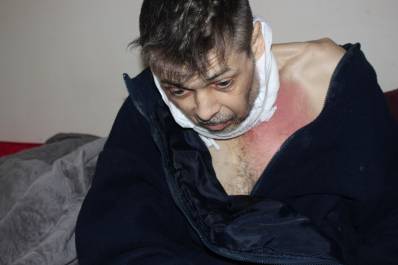
Since 2018, 201 life-term prisoners have died in penal institutions. These figures were provided to the Kharkiv Human Rights Protection Group upon request by the State Institution ‘Health Care Centre of the State Penitentiary Service of Ukraine’. In 2018, 22 people died; in 2019 and 2020, 25 people each; in 2021, 36; in 2022, 30; in 2023 and 2024, 24 people each; and this year, as of 31 August, the Health Care Centre recorded 15 deaths among life-term prisoners.
Causes of death:
natural causes — 7 people;
death due to illness — 179 people;
death due to suicide — 11 people;
death due to accidents — 2 people;
other causes — 2 people.
The problem of releasing convicts due to serious illness in Ukraine shows signs of a systemic violation of human rights. The Kharkiv Human Rights Protection Group records numerous cases where seriously ill people sentenced to life imprisonment die in prison hospitals without ever receiving a humane court decision. Data from the Health Care Centre of the State Penitentiary Service of Ukraine show that from 2018 to August 2025 alone, 201 people sentenced to life imprisonment died, 179 of whom died from illness. Among them were Ivan Yastrebov, Vitalii Matukhno, and others who became victims of prosecutorial formalism and state indifference. Each of these stories shows that even when doctors acknowledge that an illness is grounds for release, prosecutors and judges block the decision, effectively condemning people to death.
The cases of Ivan Yastrebov and Vitalii Matukhno are telling. In October 2022, a medical commission established that Yastrebov had an illness incompatible with further detention in a penal colony. The court ruled for his release, but the prosecutor filed an appeal, which delayed its execution. A few weeks later, the convict died in hospital, never having seen freedom. In the case of Matukhno, who suffered from cancer and had a Grade I disability, even the intervention of the European Court of Human Rights (which applied Rule 39) did not save his life — prosecutors insisted on his continued detention in the colony. The man died in a prison hospital, despite all of Ukraine’s international obligations.
These cases are not isolated; they are systemic. According to research by the Kharkiv Human Rights Protection Group, in such cases, the prosecutor’s position coincides with the court’s decision in over 82% of cases, which signifies almost complete subordination of judicial practice to the prosecutor’s will. This situation not only violates Article 3 of the European Convention on the Prohibition of Inhuman Treatment but also devalues the right to life itself. The situation requires legislative changes: the so-called ‘List of Diseases’, which determines who can be considered sick enough for release, needs to be reviewed or completely abandoned. This approach is inhumane and contradicts the principle of individual assessment of a person’s condition. The right to life and medical care cannot depend on a list of illnesses or the position of a prosecutor. Ukraine must transition to a humane practice where the critical health condition of a convict is in itself sufficient grounds for their release, in accordance with Article 3 of the European Convention on Human Rights.