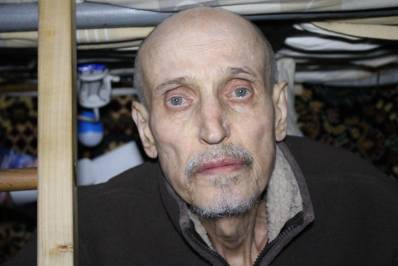
Appellate Court releases Viktor Sleptsov: a decision that should have been taken immediately
This is a correct and just decision. Yet, it is overdue.
Procedural delays led to a sharp deterioration in his condition
The court of first instance dragged out the case regarding Sleptsov’s release from August to the end of October, adjourning hearings and demanding ‘histology’ results, which are impossible to obtain from a terminal patient and which contradict ECHR practice.
It was these delays that caused Sleptsov’s condition to deteriorate sharply: he has lost the ability to move, struggles to breathe in a cell without ventilation, and lives in constant pain. In such cases, time is not merely a procedural resource. It is the difference between a chance at life and death.
Such decisions should be made within 48 hours
European practice is clear: when treatment is impossible in conditions of deprivation of liberty, release must be immediate.
In European countries, the model of compassionate release is in operation — a legal mechanism for the early release of severely or terminally ill prisoners on humanitarian grounds, where the determining factor is not the diagnosis, but the incompatibility of incarceration with human dignity.
In Ukraine, however, hundreds of people die in prisons even before their first hearing. That is precisely why a mandatory 48-hour deadline for consideration is needed — a mechanism capable of genuinely protecting the lives of the critically ill.
Today’s decision is an important step, but not a reform
The Court of Appeal:
● overturned the cruel decision of Judge Haida,
● upheld the findings of the doctors,
● effectively fulfilled the ECHR’s requirement to protect a person from inhuman treatment.
However, the system will continue to keep people in agony unless we abandon the outdated ‘List of Diseases’ and move towards the European model, where the focus is on the individual, their condition, and their dignity.
Conclusion
Viktor Sleptsov should have been released immediately following the Medical Advisory Commission’s findings.
Today, justice has been restored — but at the cost of his health and months of unnecessary suffering.
Humanity cannot wait. Because the critically ill have no time.