The Bullet That Was Never Fired: Twenty-Five Years On
1 September 2026 marks twenty-five years since the entry into force of Ukraine’s Criminal Code of 2001. It is a fitting date on which to recall one of the most important civilisational turning points in Ukrainian criminal law — the state’s renunciation of the death penalty.
In legal terms this happened slightly earlier: on 29 December 1999 the Constitutional Court declared unconstitutional those provisions of the Criminal Code that provided for capital punishment. The new Criminal Code, adopted on 5 April 2001 and brought into force on 1 September, definitively established a system of penalties in which life imprisonment became the most severe.
The Kharkiv Human Rights Protection Group campaigned for many years for the abolition of the death penalty in Ukraine, taking an active part in lobbying for the new Criminal Code, in which there was no longer any place for execution by firing squad. Read more at this link.
Ukraine stopped shooting people. This was, without doubt, a civilisational step. Yet a quarter of a century on, one question remains to which the state has never given a convincing answer: what is to be done about those whom it had already sentenced to death but had not yet had time to execute — if today there are serious grounds for doubting the justice of those verdicts?
For some, the death sentence merely changed its form: instead of a few seconds before the shot — decades behind bars and years of struggle for the chance to prove that the verdict may have been unjust. Capital punishment turned into death by instalments.
Verdicts from another era
Cases from the late 1990s were investigated by a system that remained to a great extent the heir of the Soviet one: a confession was still, in effect, the “queen of evidence”, reports of torture were not effectively investigated, and the prosecution and the defence were far from equal in their opportunities. And it was precisely this system that had the power to take the most irreversible decision of all — to take a human life. Some of the death sentences it handed down were never carried out solely because Ukraine had abolished capital punishment in time. Among those concerned are Yaroslav Mysiak and Ivan Pokotylo, whose cases are presented in the Kharkiv Human Rights Protection Group’s project “The Fight for Life”.
These are not stories claiming that every prisoner serving a life sentence is innocent. They are stories about the state’s duty to examine its own possible error.
Yaroslav Mysiak. A death sentence — fabricated case materials and a forged signature
On 18 August 1999 the Zakarpattia Regional Court sentenced Yaroslav Mysiak to death for the murder of three of his relatives; the sentence was later commuted to life imprisonment. Mysiak does not admit his guilt.
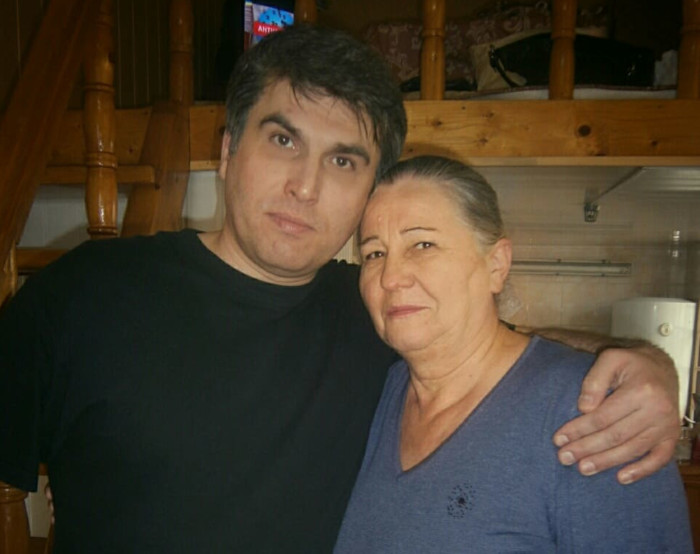
There is no direct evidence in the case. The key element of the prosecution case was a confession which, according to Mysiak, he gave after threats were made against his wife and two-year-old daughter. His alibi, confirmed by two witnesses, was never properly verified. A handwriting examination carried out at the defence’s initiative established that some of the signatures on procedural documents had not been made by Yaroslav. The case materials bear the marks of an artificially constructed body of evidence.
In 2015 a review of the verdict in the light of newly discovered circumstances began. It is now 2026. For eleven years the state has been checking whether it sentenced an innocent man to be shot. The questions now arise not only in relation to the 1999 verdict, but also in relation to the justice system of 2026.
Ivan Pokotylo. A death sentence and the fifteenth volume
In the mid-1990s five people were murdered in the Khmelnytskyi region. Ivan Pokotylo was accused of commissioning these murders, and on 23 December 1998 the regional court sentenced him to death by shooting with confiscation of property; this was later replaced by life imprisonment. Yet there is a circumstance in this case that no amount of respect for the finality of a judicial decision can explain: the fifteenth volume of the criminal case file was never examined by the court of first instance. According to the defence, it was precisely there that materials were held — obtained, among other sources, from the competent authorities of the Republic of Latvia — which confirmed Pokotylo’s alibi.
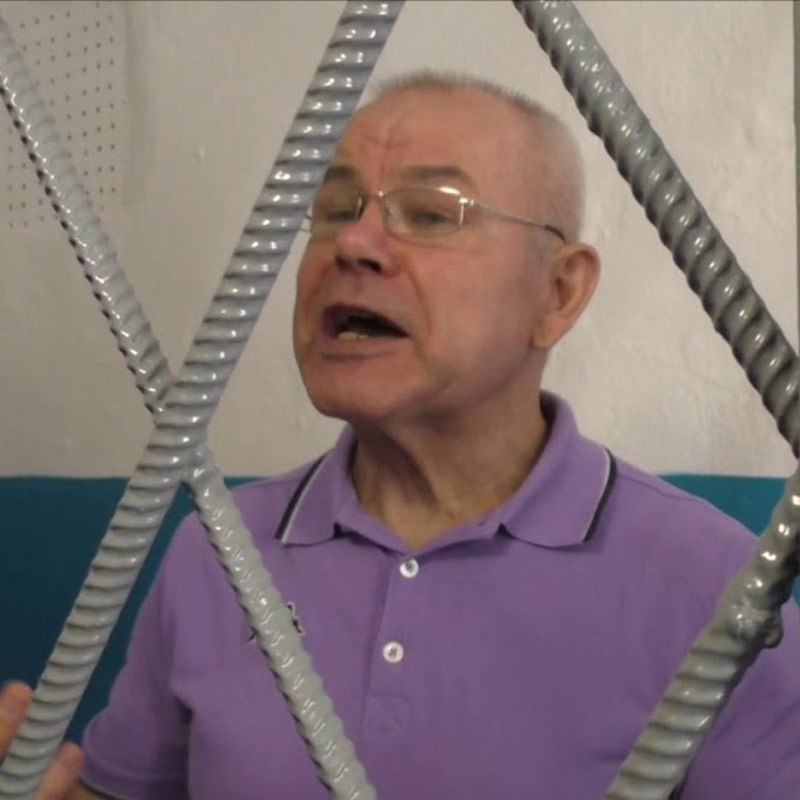
Not a single document. Not a mislaid page. Not a technical error. An entire volume. For many years Pokotylo has also maintained that violence was used against him in order to obtain the testimony the investigation required. He is not asking to be taken at his word — he is demanding that the evidence be examined.
They are not asking to be taken at their word
No one is proposing that Mysiak or Pokotylo be released automatically, or that all prisoners serving life sentences be declared innocent. The question is a different one: what should a state governed by the rule of law do when, years later, objective data emerge capable of casting reasonable doubt on the justice of a death sentence? A forged signature, expert findings that contradict the prosecution case, an unverified alibi, an unexamined volume of the file, well-founded allegations of torture — these are not grounds for automatic acquittal, but they are unquestionably grounds for an effective judicial review. And such a review cannot be allowed to drag on for decades.
The bill of last hope
The problem has long been known to the state. In 2015, together with experts from the Reanimation Package of Reforms, draft law No. 2033a was prepared — on the right of certain categories of convicted persons to a just verdict, aptly named the “bill of last hope”. On 26 November 2015 the Verkhovna Rada adopted it at first reading, but thereafter its parliamentary progress effectively came to a halt. And this despite the fact that on 10 February 2017 the draft received a favourable opinion from the Council of Europe’s Directorate General of Human Rights and Rule of Law as an extraordinary legal framework for remedying the shortcomings inherited by the Ukrainian justice system from the past.
In the new parliament the bill was given the number 0881 and on 10 September 2019 it was withdrawn from consideration. There was one further attempt later — draft law No. 3078. But the years passed, parliaments changed, bills were given new numbers. And the problem remained.
Twenty cases. And those who did not live to see justice done
KHPG experts examined twenty cases of prisoners serving life sentences under judgments whose justice gave rise to serious doubts. Among them are Volodymyr Panasenko, Oleksandr Rafalskyi, Maksym Orlov, Stanislav Levenets, Ihor Vovkodav and others.
Oleksandr Rafalskyi, Viktor Shchetka, Andriy Soroka and others died without ever living to see a just judicial decision. The dead no longer need a review mechanism. For them, the state came too late.
Releasing a life prisoner is not the same as correcting a miscarriage of justice
In recent years a legislative prospect has emerged of commuting life sentences and of subsequent parole. This is an important humanitarian step, but it has nothing to do with correcting a miscarriage of justice. For there are two quite different questions: whether a guilty person who has changed should remain in prison until death — and whether that person is guilty at all. If someone has been wrongly convicted, they should not have to beg the state for mercy twenty-five or thirty years later.
Justice is not about the inviolability of a verdict
The principle of legal certainty is of fundamental importance. But res judicata cannot be allowed to become the state’s right to keep a person behind bars for life merely because admitting an old judicial error would be inconvenient. Justice does not exist to protect a verdict — a verdict exists in order to deliver justice. The criteria for access to a review mechanism may and should be strict. But the door to justice must exist. Especially for those whom the state once intended to kill.
The bullet that was never fired
Mysiak and Pokotylo are alive not because the state reviewed their cases and established a miscarriage of justice. They are alive because Ukraine abolished the death penalty in time. The bullet simply was never fired. Had the death sentences been carried out, no one today would be examining a forged signature, arguing about the fifteenth volume, checking an alibi or drafting bills No. 2033a and No. 3078. Graves do not lodge appeals. That is precisely why the irreversibility of capital punishment is one of the strongest arguments against it: a judicial system created by human beings cannot claim the privilege of considering itself infallible.
Twenty-five years ago Ukraine renounced the state’s right to kill a convicted person. Now this path must be completed — by acknowledging that the state has not only the right to convict, but also the duty to correct its own mistakes. Not clemency. Not compassion. A fair trial.
We abolished the shot. But for some we replaced it with time. And that shot is still going on.