Report on the results of the monitoring visit to Konotop Correctional Center No. 130
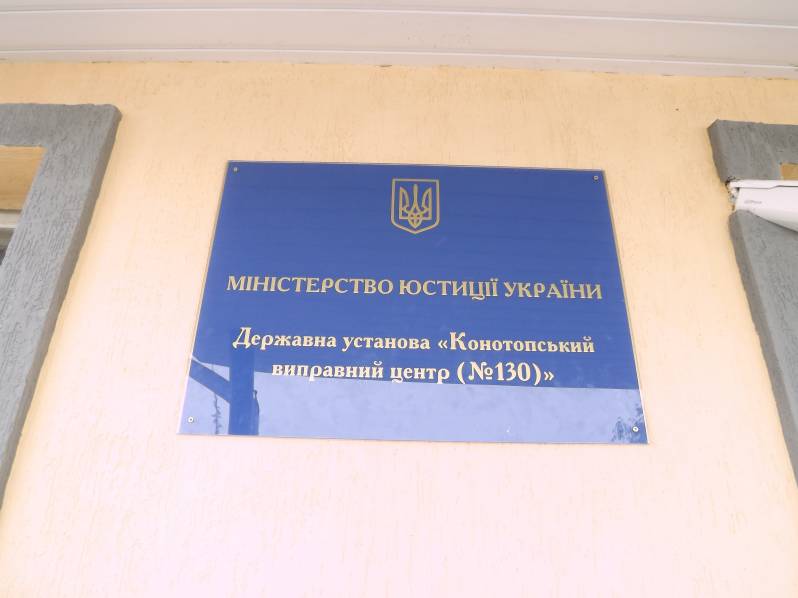
On 18 September 2018, a monitoring group of the KHPG, consisting of Volodymyr Hlushchenko, Hanna Ovdiienko, and Olena Richko, carried out a monitoring visit to the State Institution “Konotop Correctional Center (No. 130)”. Correctional centers are open-type penal institutions intended for serving sentences in the form of restriction of liberty for persons convicted of crimes of low and medium severity; prisoners who have embarked on the path of rehabilitation and have been transferred to serve their sentences with a change of regime also serve their sentences there. The monitoring group was met by the acting head of the institution, O. E. Zenchenko, who for some reason was very nervous, explaining that it was the first time in his career that he was demonstrating the institution to a monitoring group. Participants of the visit freely communicated with persons serving sentences in the form of restriction of liberty, visited residential and other premises, and familiarised themselves with the institution’s documentation. The administration representatives did not create any obstacles to access to the institution or communication with prisoners. On the day of the visit, 153 people were held in the correctional center, who are involved in work at the institution’s production and other enterprises. At the same time, fixed-term employment contracts have been concluded with only 60 prisoners.
Production
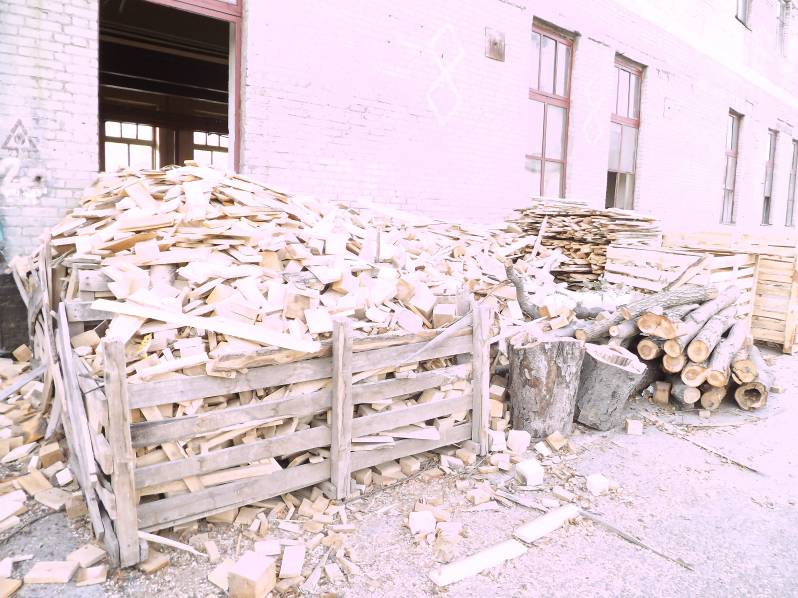
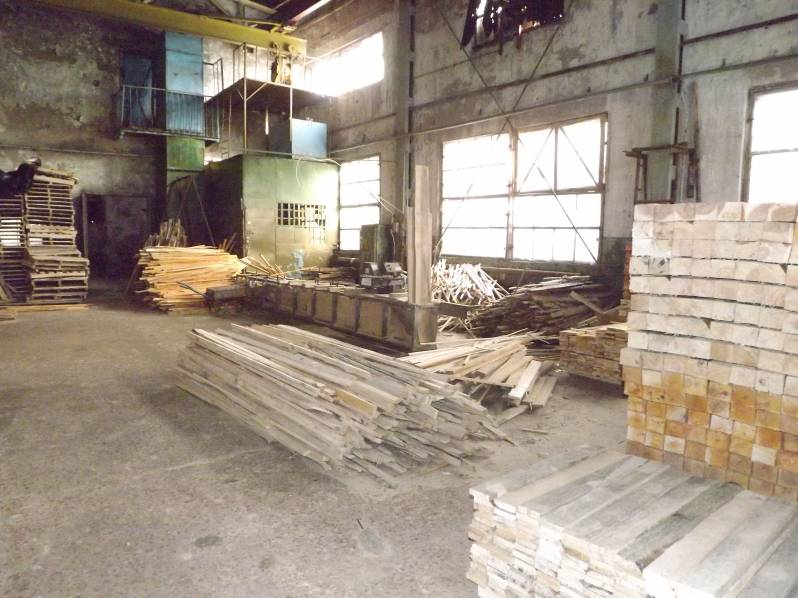
Production in the institution looks quite tidy with a fresh scent of wood. Woodworking production operates on the territory of the colony; there are three working workshops. Directly on the territory, a woodworking shop is in operation, in which timber is manufactured and fuel briquettes are produced. According to the prisoners and the head of the institution, they have an eight-hour workday and receive a salary of 300 to 700 hryvnias, taking into account deductions.
Contracts have also been concluded with counterparties located 30 and 70 kilometres away. Individuals working 30 kilometres away return to the institution after work. That portion of prisoners who work at a brick factory located 70 kilometres away, together with controllers, live in dormitory-type premises at the production site. According to the head of the institution, these prisoners have a significantly higher salary.
Residential sector
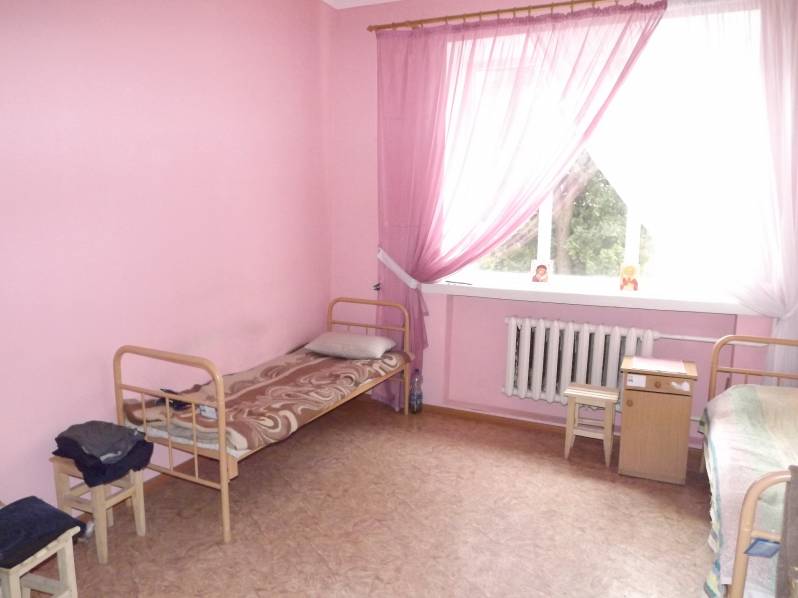
Participants of the visit visited all residential premises. Repair work has been carried out in the dormitories for prisoner accommodation. The cells are not overcrowded, the plumbing is new, and prisoners have the opportunity to cook their own food. There are kettles and microwaves. No one among the prisoners complained about the detention conditions.
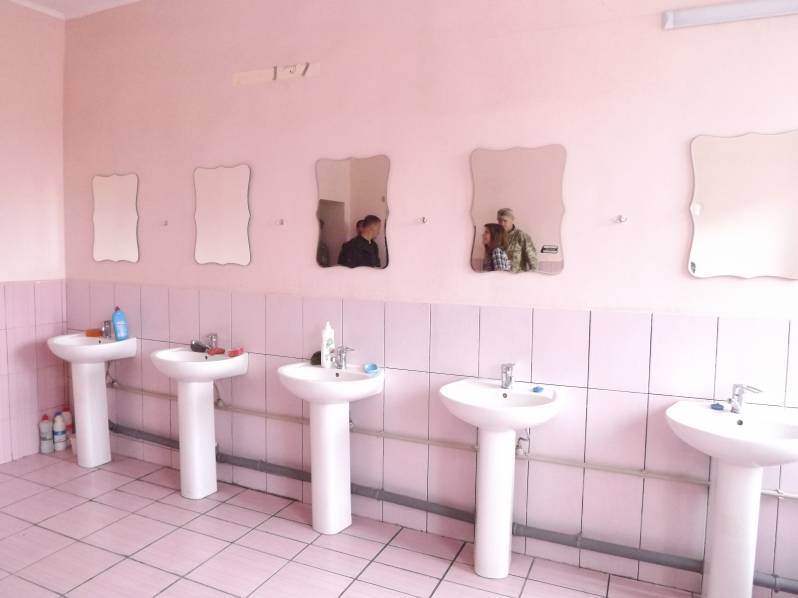
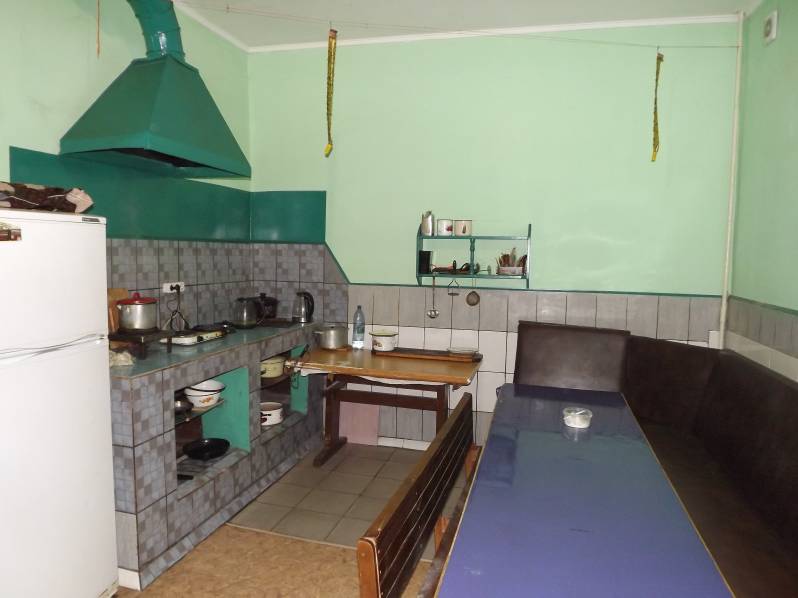
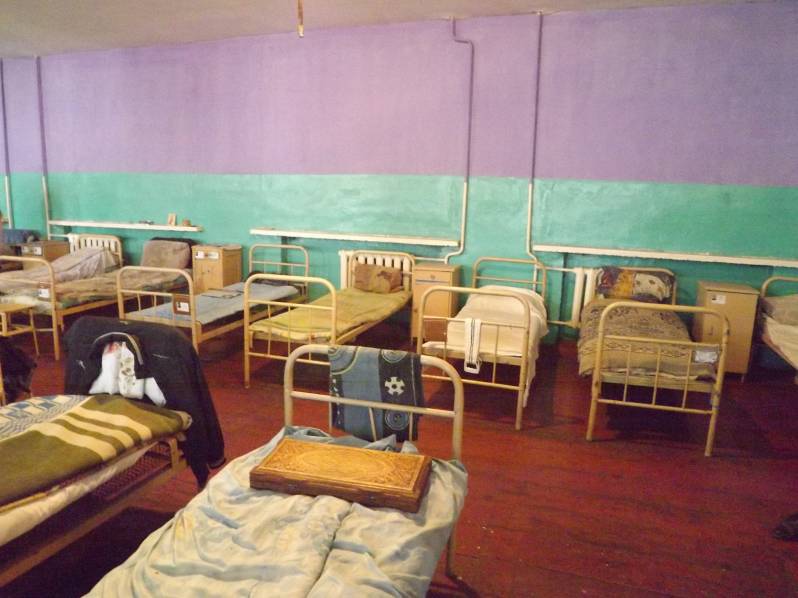
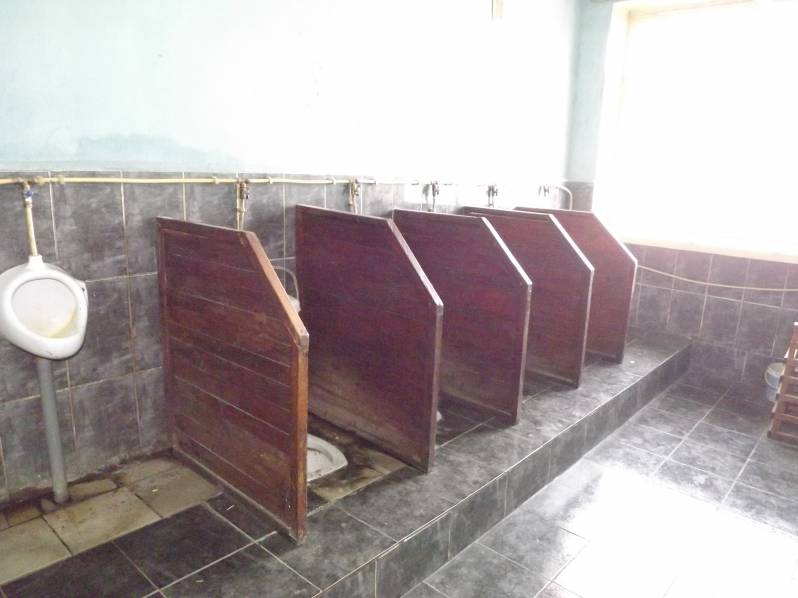
The second detachment is in a state of repair. Accordingly, the conditions of detention are significantly worse. The mattresses and pillows used by the prisoners need replacement. Drinking water is available to the prisoners.
Canteen
The canteen premises are spacious, and there is a menu with the current date. At the time of the monitors' visit, there was no soap or towels, although administration representatives assured that soap is placed immediately before eating; however, this assertion raises doubts.
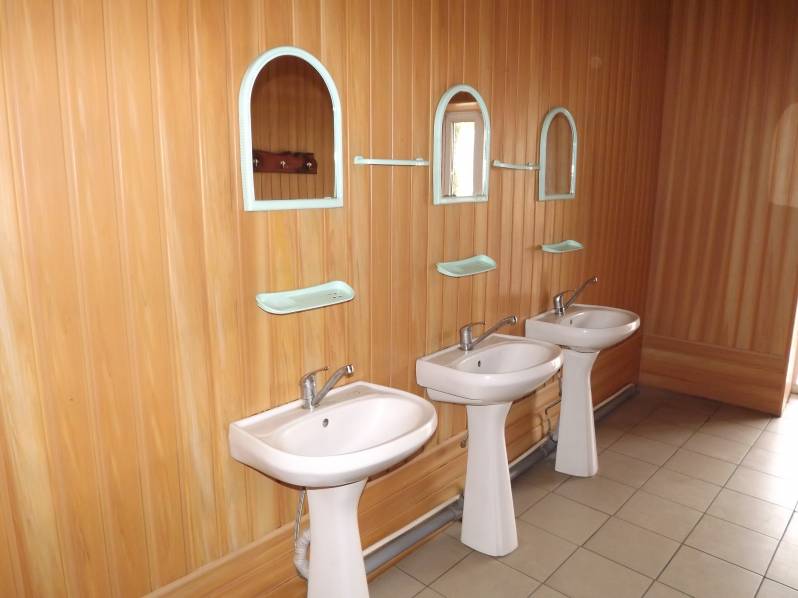
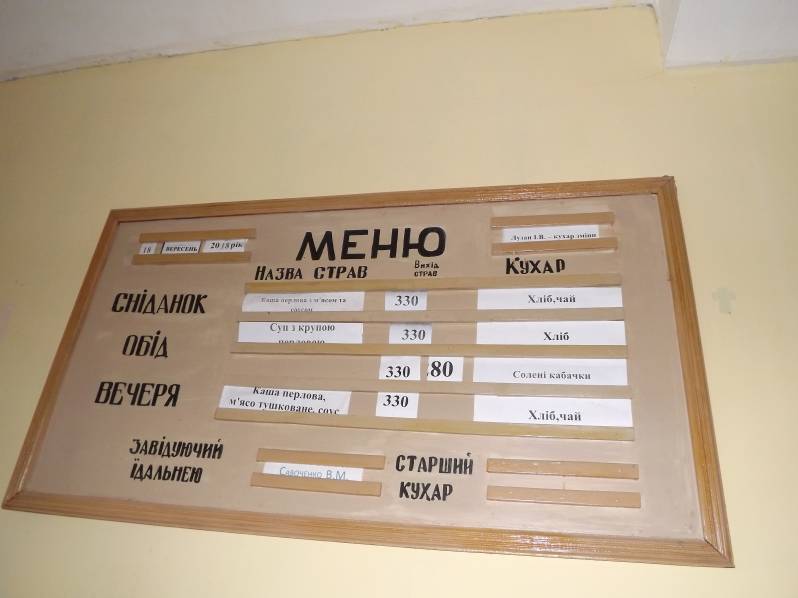
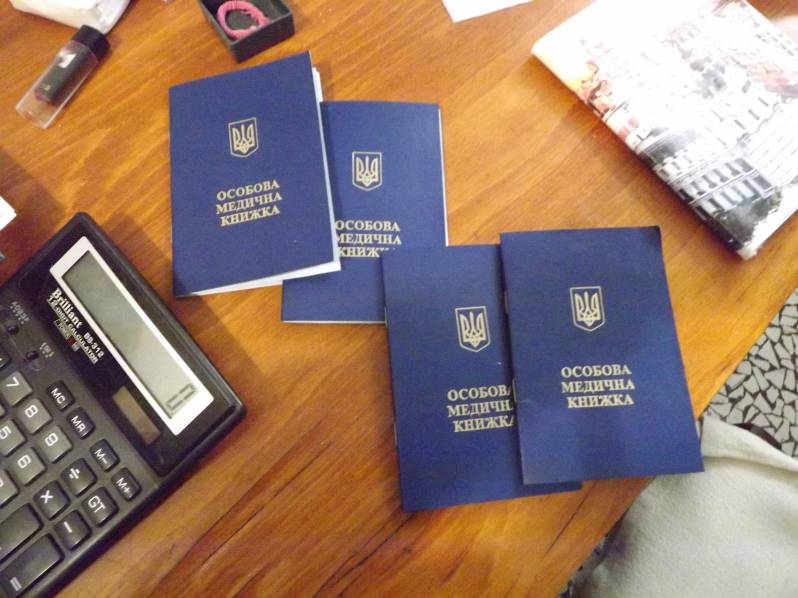
As in other institutions, the administration representative assured that they bake the best bread. In the bakery room, a working prisoner was without a gown, in ordinary clothing. The kitchen premises are dark; at the time of the visit, cosmetic repairs were being carried out. There was a sharp smell of paint in the kitchen, while food was being prepared in the pots. This cannot meet sanitary standards, as the food absorbed these sharp odours. All prisoners working in the kitchen had state-recognised medical books. Medical check-ups were carried out on time, in a hospital in the city.
Shop
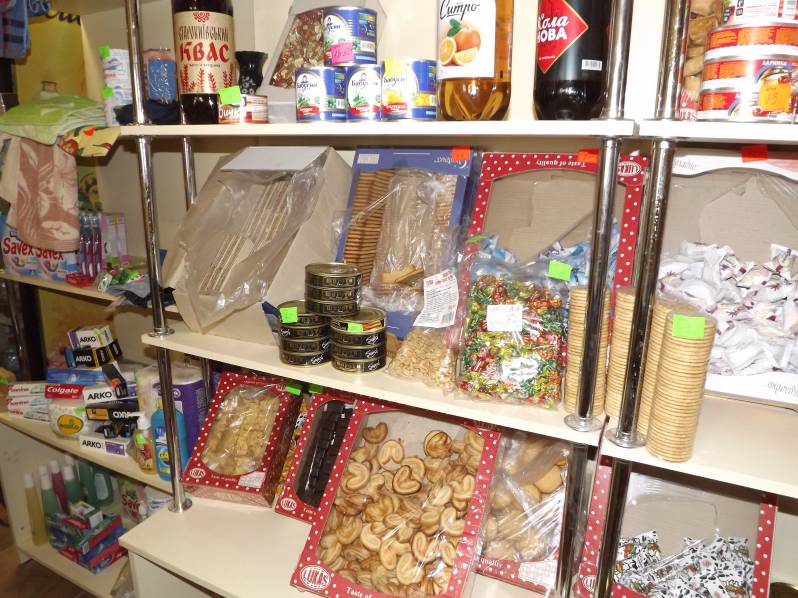
Typical for a penal institution. All necessary goods are available. Prices are not inflated, and there is the possibility of paying by bank card. Prisoners can also buy products outside the institution’s territory; participants of the visit were also assured that they can order goods that are absent in the shop.
Bath-laundry complex
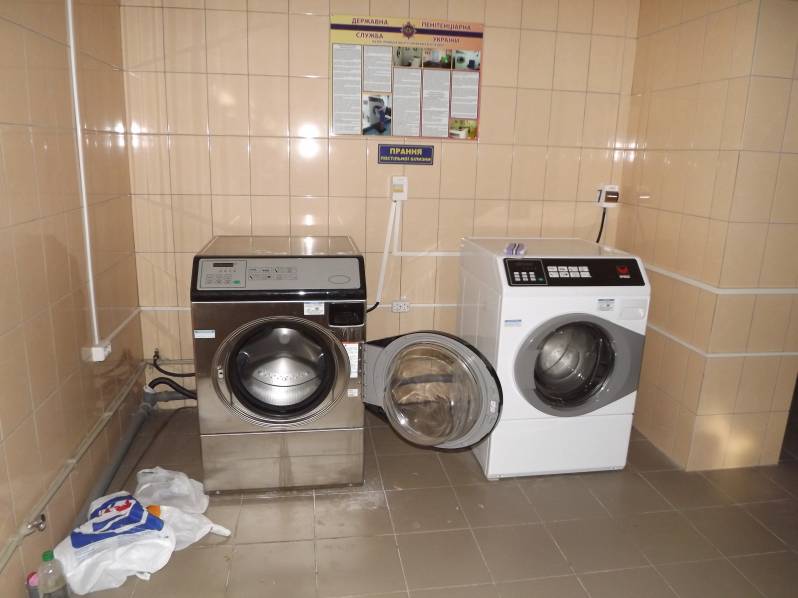
The laundry is equipped with modern washing machines. There is a specialised room for drying and a dryer.
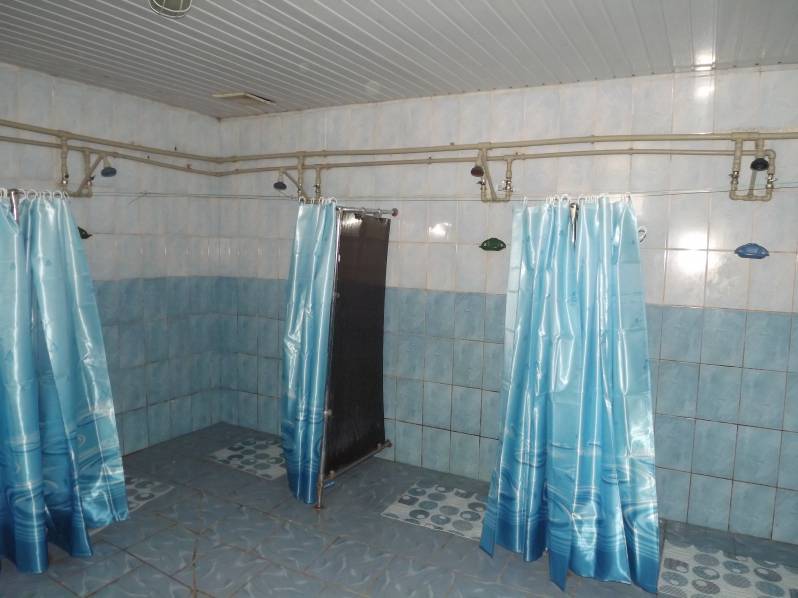
The bathhouse is renovated. Showers are separated by high partitions and curtains. Hot water and mats are available. The right to privacy is respected in the institution.
DIZO, PKT
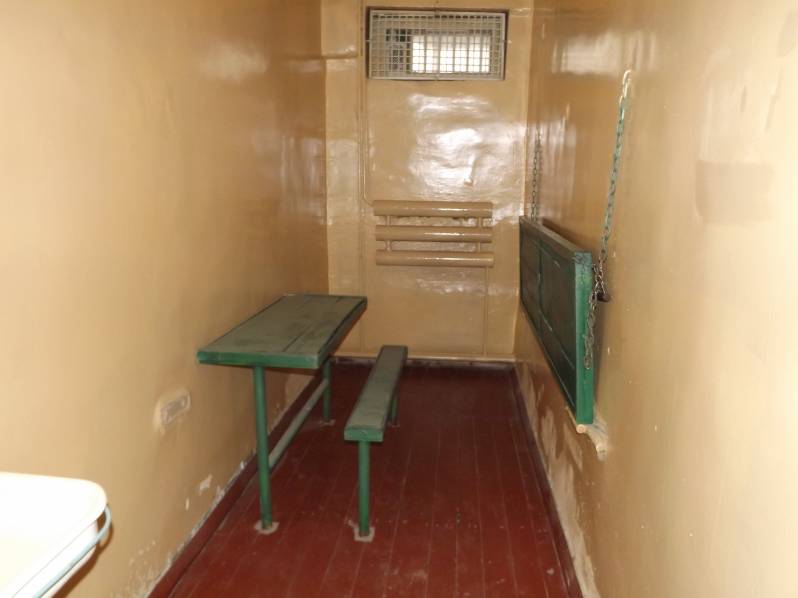
PKT is absent. At the time of the visit, there was not a single person in the DIZO. The premises are renovated. The plumbing, though not new, is tidy. In addition, one of the cells was newly equipped with a closed toilet room.
Visitation rooms
There is a children’s room, as well as luxury suites for long-term visits. The premises look clean and renovated. Prices for luxury suites are the same as in other penal institutions, at 120 UAH per person per day. The room for short-term visits has no partitions, in accordance with new standards.

Medical care
There is no outpatient clinic or medical unit. Participants of the visit familiarised themselves with the organisation of medical assistance to persons held in the institution. Preventive and anti-epidemic medical care is provided to prisoners by specialist doctors of the Konotop Central District Hospital. 11 HIV-infected persons, who are officially registered at the regional center for prevention and control of AIDS and are receiving appropriate therapy, are serving their sentences in the correctional center. A prisoner in need of medical attention signs up with a doctor in the morning, goes to the hospital under escort, where medical help is provided. In extreme cases, an ambulance is called. There were 12 such ambulance calls this year.
After a tour of the correctional center grounds, prisoners who wished to speak with the monitoring group did so without the presence of the administration. One prisoner complained about the groundless application of disciplinary penalties and the biased attitude of the administration towards him. Despite this, he refused to discuss this issue with the administration representative. The latter was explained the procedure for filing complaints and was given the phone numbers of the public reception office for receiving legal consultations in the future.
