Monitoring visit to the State Institution ‘Manevychi Correctional Colony (No. 42)’

On 5 July 2022, a monitoring group consisting of the assistant to the People's Deputy of Ukraine Kostiantyn Kasai, member of the Public Council under the Ministry of Justice of Ukraine Serhii Zuikov, assistant to the People's Deputy of Ukraine Yaroslav Yurchyshyn, Kharkiv Human Rights Protection Group (KHPG) programme coordinator Andrii Didenko, and journalist from the ‘Poryad z vamy’ (‘Beside You’) Information Agency Oleksa Yaroslavtsev, visited the State Institution ‘Manevychi Correctional Colony (No. 42)’.
The main objective of the monitoring visit was to analyse the facility’s operations during the war and to identify the institution's humanitarian needs.
The monitors were given the opportunity to visit any premises, speak with inmates under conditions of anonymity, collect and verify information, and access relevant materials with the convicts' consent, including personal files and the convicts' medical records.
The head of the institution is Lieutenant Colonel of the Internal Service Serhii Oleksandrovych Khovailo.
GENERAL INFORMATION
This is a medium-security colony for individuals who have previously served sentences in places of deprivation of liberty. The management is committed to a humane attitude towards the convicts and attempts to resolve all difficulties using its own resources.
Due to the war, the number of convicts in the correctional colony has almost doubled. At the same time, the number of staff has not increased, and despite the doubled workload, according to the institution's management, salaries have remained unchanged. The ratio of staff to convicts is 1 staff member per 2.99 convicts (including pre-trial detainees). During 2022 (data as of the time of the monitoring visit), 9 inmates and 403 convicts arrived at the institution. Also, 2 convicts died this year.
According to administration data, the average monthly salary for convicts this year is 2,482.62 Ukrainian hryvnias. The colony has a large agricultural plot which is cultivated, sown, and harvested, with the produce used to supplement the institution's special fund and address other humanitarian needs. There is a shop operating within the institution.
The colony also houses a pre-trial detention centre (SIZO) unit, which is one of the largest in terms of the number of inmates.
At the time of the monitors' visit, 13 people were in the disciplinary isolation ward (DIZO), 1 was in a chamber-type room (PKT); 6 people were receiving treatment in the medical unit of the State Penitentiary Service Centre for Healthcare (located on the premises), and 1 was in a Ministry of Health medical facility.
50 individuals are registered as living with HIV/AIDS. 13 people are registered as having suicidal tendencies. 17 people are registered as prone to self-harm. 10 people are prone to escape, and 34 are registered as persistent violators of the detention regime. 1 person has a Category I disability, 3 people have a Category II disability, and 13 people have a Category III disability.
During 2021, a total of 150 people were released. Of these, 63 were released on parole under Article 81 of the Criminal Code of Ukraine, and 17 people were transferred to a more lenient detention regime in accordance with Article 82 of the Criminal Code of Ukraine. In the current year, the total number of released individuals is 99, of whom 41 were released on parole and 11 were transferred to more lenient punishment conditions.
An ambulance was called 9 times in 2021, and 4 times in 2022. During 2021, 27 cases of bodily injury were recorded, including 3 cases upon arrival and 24 cases during the stay in the institution. As of the beginning of July 2022, 5 cases of bodily injury were recorded, all occurring during the stay in the institution.
In the current year, 5 video call visits took place (costing 58.15 hryvnias each). The institution has equipped 5 workstations with internet access for distance learning; the cost of internet access is 11.65 hryvnias for 15 minutes of use. There is also a monthly subscription available, priced at 211.77 hryvnias. In 2021, 12 long-term visits occurred, and 6 in 2022. Short-term visits totalled 182 in 2021, and 143 in the current year. The standard floor space per inmate is 2.5 square metres, and 4 square metres per convict.
Since the beginning of the year, 167 people have been tested for SARS-CoV-2 (IgG, IgM), and 4 people have recovered from SARS-CoV-2 (IgG, IgM). In total, 520 inmates/convicts have been vaccinated.
102 people submitted requests to be released for service in the Armed Forces of Ukraine; the administration supported 17 of these requests, but only one person from this list was actually released.
At the beginning of the Russian military aggression, for almost a month and a half, the administration, led by the management, remained on the premises around the clock. They organised assistance for the Territorial Defence Forces, and with the convicts' labour, they fulfilled orders for the army, sewing tactical vests, pouches, etc.

HUMANITARIAN NEEDS
The institution is in need of medical supplies and construction materials. There is a necessity for items to improve the living conditions of the convicts. In particular:
- metal tableware (deep and semi-deep plates, metal mugs, etc.);
- paint for renovation work (grey, white, and ivory colours);
- ‘Sniezka’ (white) for painting walls;
- ceramic tiles (for wall and floor finishing);
- personal items for convicts (off-season footwear, trousers, black vests);
- cement and glue;
- bedding (sheets, pillowcases, winter blankets);
- cleaning products (toilet soap, washing powder).
TRANSFERRED FROM DANGEROUS AREAS
Most of the convicts transferred to this institution arrived from the Kamianske Correctional Colony No. 101 (Zaporizhzhia region).
Convicts transferred from dangerous areas are accommodated across all residential units of the institution. According to the convicts, during the escort process, representatives of the National Guard treated them quite harshly.
The funds remaining in their personal accounts were transferred to the institution’s accounts. The convicts complain that they had incentives at their previous place of detention, but due to the lack of work at the new location, the prospect of parole is being delayed. Some convicts have problems obtaining passports due to a lack of funds, which complicates employment: without passports and tax identification numbers, it is impossible to draw up an employment contract.
Convict K., a resident of Mariupol, has not spoken to his relatives since the second day of the full-scale invasion. He has been supported by other convicts: it is impossible to establish contact even via the internet, and they do not know where their relatives are currently located.
They also require humanitarian aid in the form of goods, clothing, footwear, and essential items.
Overall, the administration is understanding of the problems faced by the transferred individuals: those who have no money in their personal accounts are given free opportunities to call their relatives. The institution's management tries to facilitate the employment of convicts.
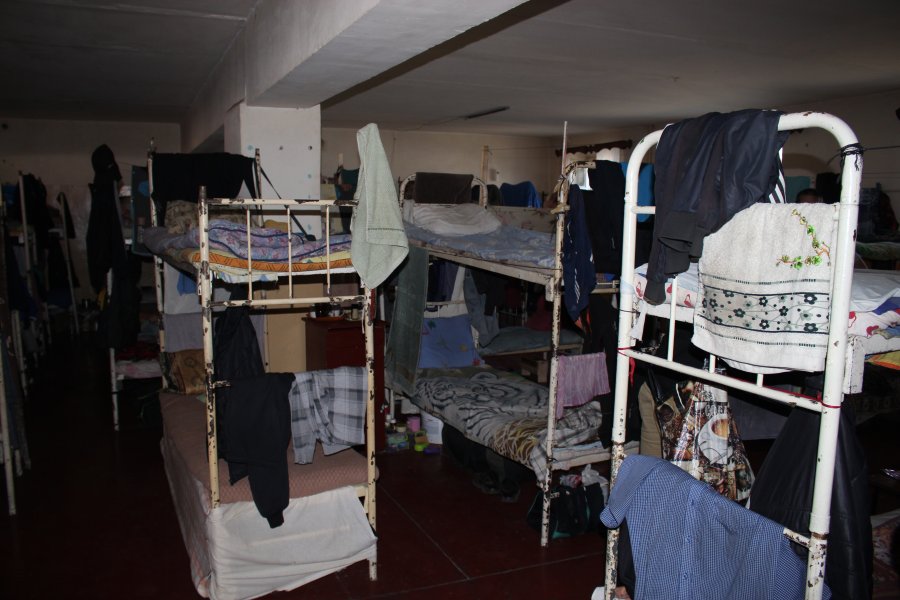
For the colony's management, the sudden doubling of the number of convicts was a certain challenge. However, organisational and utility issues are being resolved. There is a palpable atmosphere of friendliness and mutual understanding between the convicts and the staff in the institution. To ensure each convict has a bed, bunk beds are being used due to overcrowding.
Convict O. filed a complaint stating that he is serving an excessive sentence. According to him, he should have been released 4 years ago. The convict provided permission to review his personal file. It was clarified that O. was sentenced in 2015 in Russia to 7 years of deprivation of liberty. In 2017, he was transferred to the territory of Ukraine to serve the remainder of his sentence. The unserved remainder was 4 years, 10 months, and 14 days. At the same time, he received a sentence under Article 391 of the Criminal Code of Ukraine, resulting in 3 years of deprivation of liberty. By aggregating the sentence and the unserved part, he was assigned 7 years and 6 months of deprivation of liberty. Competent authorities must decide whether the sentence calculations for this convict were legal.
Some convicts who arrived from other institutions had benefits and incentives, and at their previous place of detention, they were scheduled for release. Materials regarding them were sent to the institution's commission and passed on to the court for parole or transfer to more lenient conditions of detention.
RESIDENTIAL PREMISES
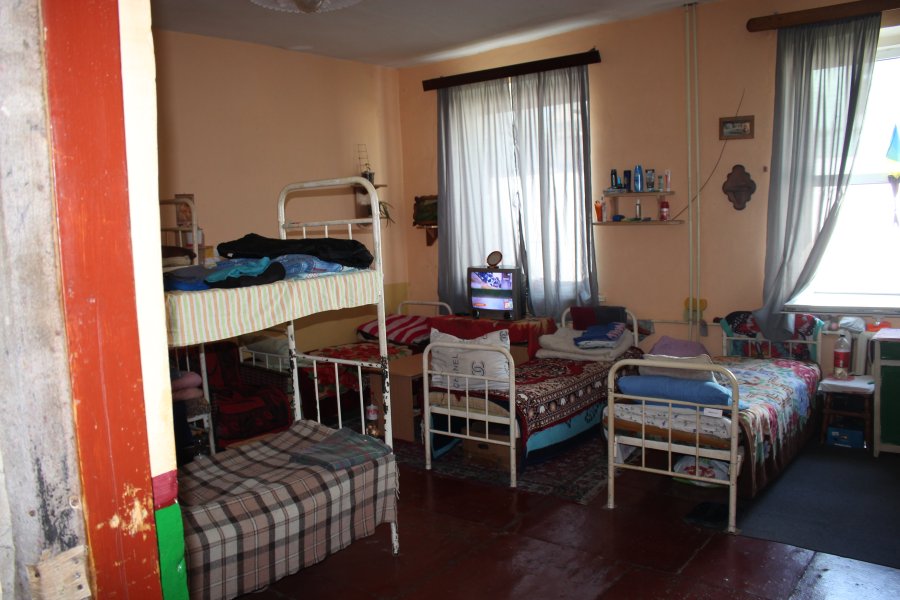
Premises have varying degrees of occupancy. They are heavily populated, with bunk and single beds.

Meeting room:
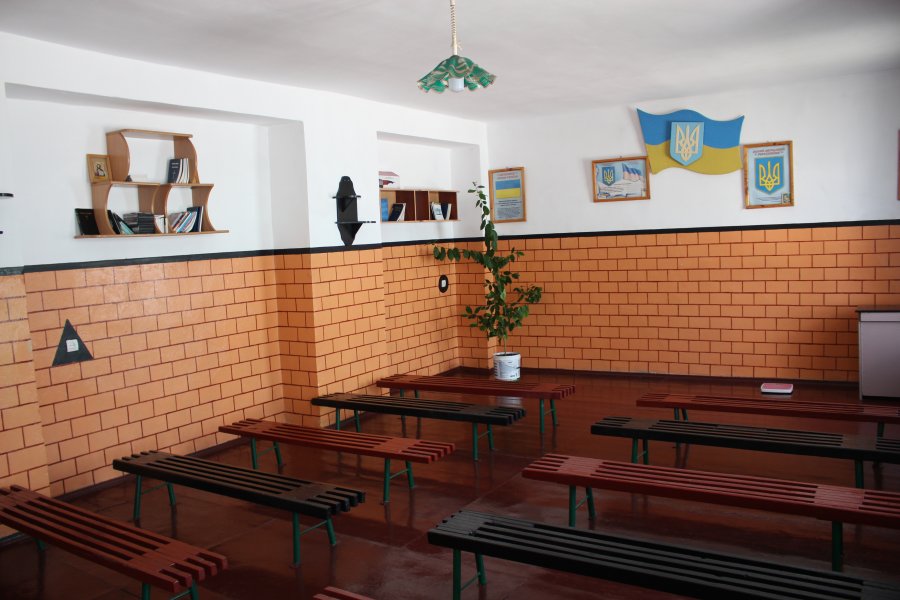
Dining room:

Washroom:
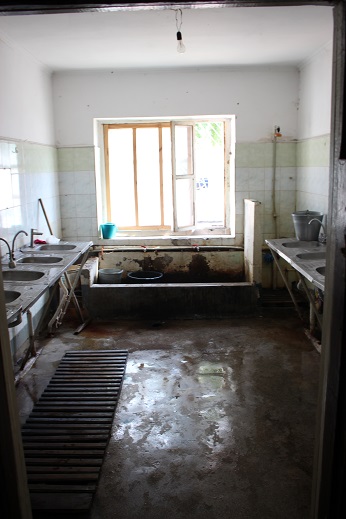
Renovation work is underway.
The premises are being converted to a cubicle system.
DIZO/PKT/DPK
Convict Z. served a 1-month disciplinary isolation ward (PKT) sentence for a conflict with the administration. Before this, he received a DIZO punishment for using a phone. He has no complaints and does not intend to appeal the disciplinary penalties.
In the DIZO cells, beds are not raised during the day.

Convict P. served a disciplinary penalty for unauthorised use of a phone. He has no complaints against the administration.
PRE-TRIAL DETENTION CENTRE UNIT
There were 45 people in the pre-trial detention centre (SIZO) unit. There are certain inconveniences regarding the escorting of prisoners who are at the investigation stage. The Lutsk SIZO was significantly overcrowded, and due to these circumstances, a SIZO unit was established at the institution. Since the beginning of the war, there have been no transfers for the SIZO. This fact is a problem, as it also affects transport to hospitals. The only way to provide emergency medical care is to call an ambulance.
Furthermore, despite the heavy load on the special department, no additional resources have been allocated. Previously, when individuals were placed in pre-trial detention, the pre-trial detainees were transferred to facilities according to territorial jurisdiction. During the war, this practice does not work, and the colony's SIZO unit has begun receiving people from Lutsk, Volyn, and Volodymyr districts. This creates a burden on the convoy and certain problems with organising prisoner transport. The problem is also that there are no transport transfers. The Kovel–Kyiv railway line has not been operating since the start of the war. There are many orders: for the hospital, or for changes to a more lenient punishment in a correction centre, but people are stuck, and it is impossible to take them away due to the lack of transport capacity. For all these needs, from the state budget, in particular, only 17,000 hryvnias were received this year, and all such expenses are also a burden on the special fund.
In the SIZO unit, there is separate accommodation for those accused for the first time and those who have previous convictions.
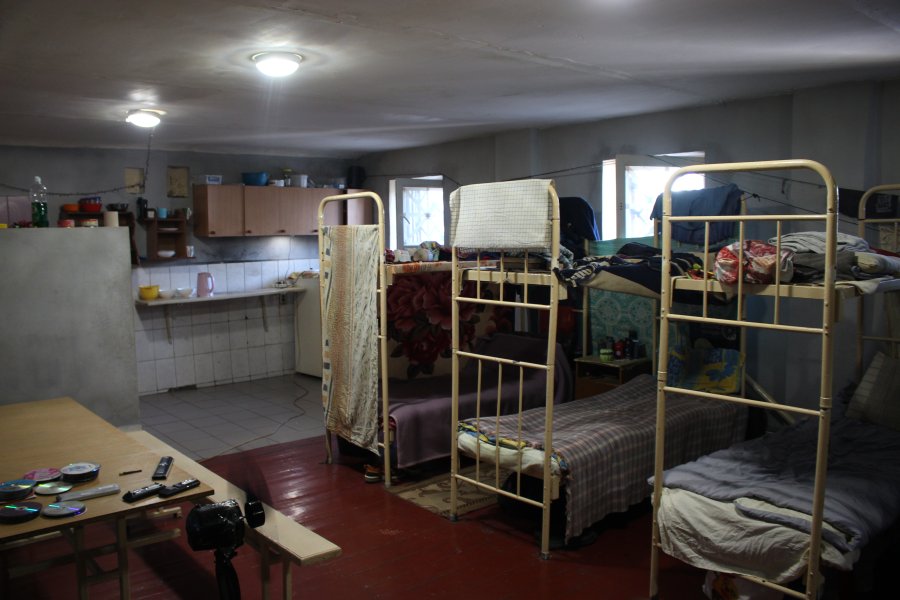
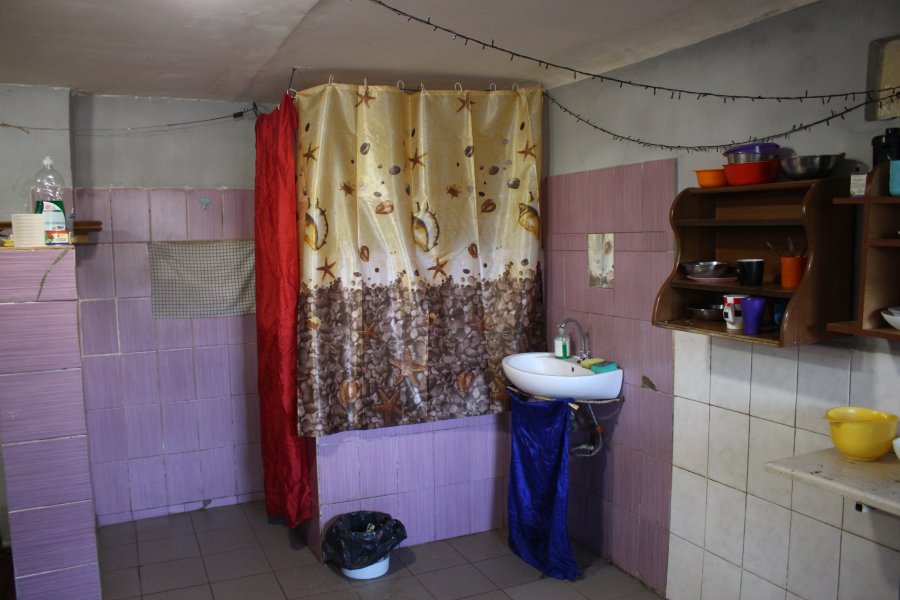
There are multi-person and small-capacity cells.

Pre-trial detainee Z. has been held in custody for the third year without a court decision.
In one of the cells, a convict was held who had received new charges under Article 309 of the Criminal Code of Ukraine. He has no complaints against the administration.
MEDICAL UNIT
The head of Medical Unit No. 42 of the branch of the State Institution ‘Centre for Healthcare of the State Penitentiary Service of Ukraine’ in the Volyn and Rivne regions (hereinafter – the medical unit) is Andrii Adamovych Makovetskyi.
There were 6 people in the facility’s inpatient ward, of whom 1 person was ill with an active form of tuberculosis.
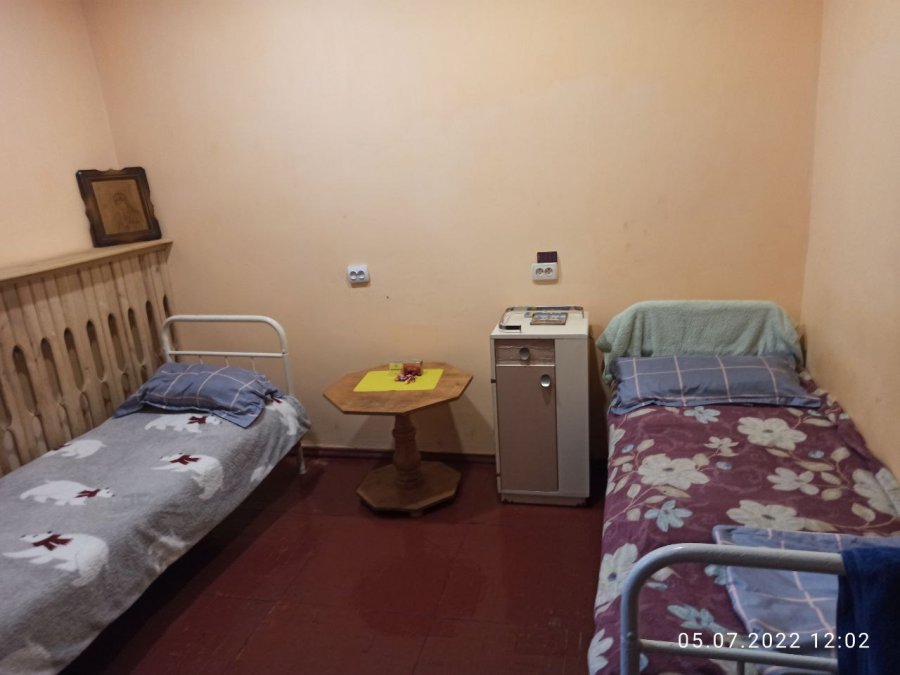
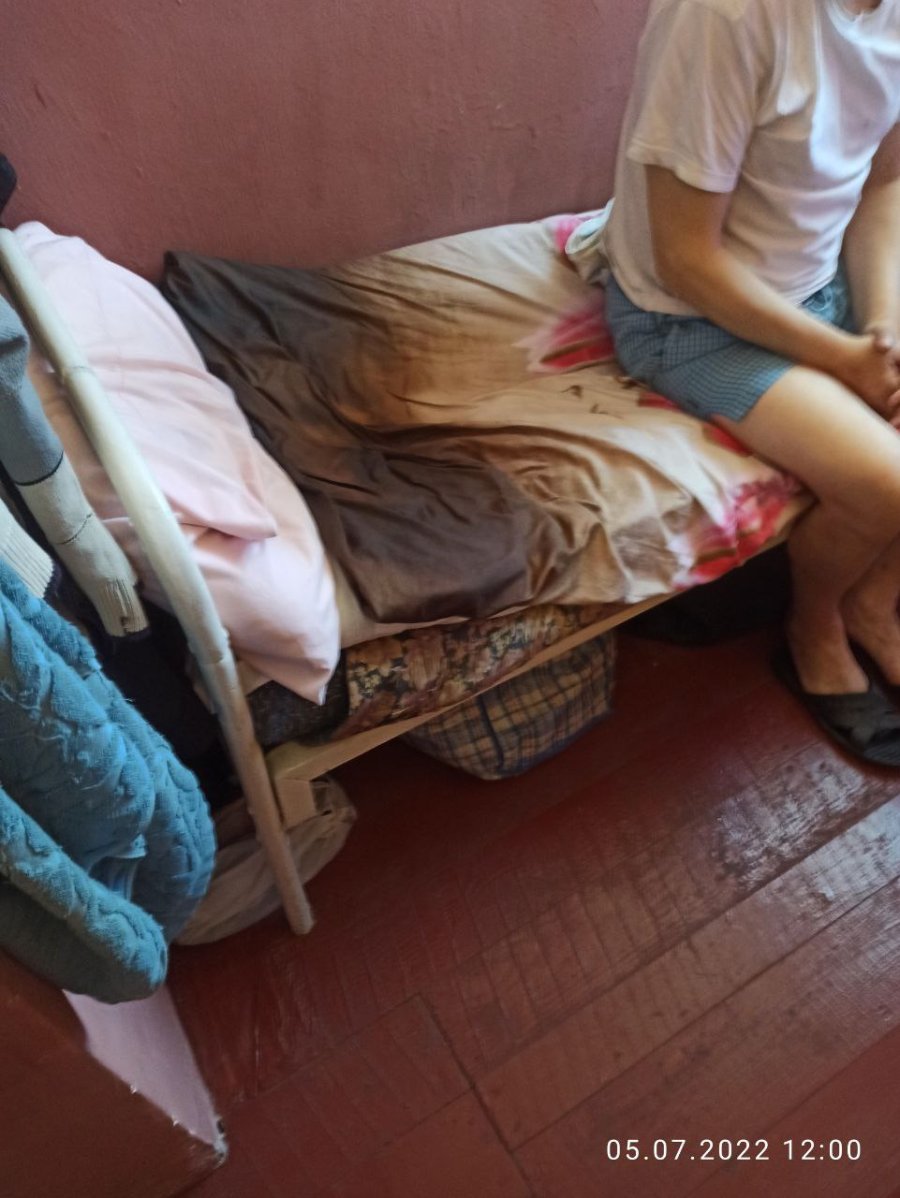
During the visit, the monitoring group inspected the premises of the medical unit without hindrance, familiarised themselves with the conditions for providing medical assistance to prisoners, and examined medical documentation. During conversations, no complaints were received from convicts regarding unlawful actions by medical staff and institution employees, including torture, or cruel, inhuman, or degrading treatment or punishment.
In the current year, 267 people underwent a preventive medical examination.
According to the bodily injury log, 5 such cases were recorded this year. During the examination of medical documentation, it was established that in some outpatient patient medical records (form 025/o), certificates were improperly compiled and photographs of existing bodily injuries were missing, as required by Chapter II, Part 9 of the Order of the Ministry of Justice of Ukraine dated 14.06.2019 No. 1769/5 ‘On Approval of the Internal Regulations of Pre-Trial Detention Centres of the State Penitentiary Service of Ukraine’.
The inpatient medical unit has: 5 wards for somatic patients, designed for 15 beds; 2 infectious isolation wards, designed for 6 beds. One isolation ward is undergoing renovation.
The medical unit contains: the office of the head of the medical unit, a paramedic reception office; a doctor’s reception office; a clinical diagnostic laboratory; and a dental office.
According to the staffing schedule provided to the monitors, the following positions are filled:
- Head of the medical unit – 1 position;
- General practitioner (part-time) – 0.5 position;
- Ultrasound diagnostic physician (part-time) – 0.25 position;
- Otolaryngologist (part-time) – 0.25 position;
- Psychiatrist (part-time) – 0.5 position;
- Senior paramedic – 1 position;
- Paramedic – 4 positions;
- Laboratory assistant (part-time) – 0.5 position;
- Dental nurse – 0.5 position;
- Pharmacist – 0.5 position;
- Junior medical nurse (internal part-time) – 0.5 position.
Vacant positions on the day of the visit included the general practitioner and dentist. The position of an infectious disease specialist is not provided for in the staffing schedule.
Conditions for accommodating persons with disabilities are absent; in particular, there are no ramps, handrails, or other similar equipment.
Furthermore, Medical and Social Expert Commission (MSEK) assessments of patients take place in their absence.
The general bathhouse is not equipped with a room for a medical worker, which is necessary for conducting examinations of convicts; therefore, the medical examination is carried out in the presence of other convicts. The shower cubicles are not equipped with curtains, which prevents convicts from exercising their right to privacy during hygiene procedures. There is no logbook for recording physical examinations conducted in the bathhouse.
There is no doctor’s office in the DIZO/PKT and chamber-type room (KDiR) premises. Consequently, the institution and the medical unit violate the convicts' rights to healthcare to the extent established by the fundamentals of the legislation of Ukraine on healthcare, with the exception of restrictions provided for by law, which are enshrined in the Constitution of Ukraine and Article 8 of the Criminal Executive Code of Ukraine.
The medical unit lacks a separate cabinet for storing medication received from relatives. Moreover, the medical documentation (medical record No. 025/o or No. 003/o) lacks statements from the convicts' relatives or other persons regarding the transfer of medicines or medical devices, which violates Clause 23 of the General Provisions of the Procedure for organising the provision of medical assistance to convicts sentenced to deprivation of liberty, which states: ‘Medicinal products and medical devices received from the convicts' relatives or other persons shall be stored in State Penitentiary Service healthcare institutions in separate cabinets and shall be registered, which shall be reflected in the record card for medicinal products, medical devices, technical and other rehabilitation means received from the convict's relatives and other persons, in the form defined in Appendix 2 to this Procedure, where the convict signs upon completion of the course of treatment’.
During the current year, 190 people were tested for HIV using rapid tests. There are 50 HIV-positive individuals on record (50 people are receiving ART therapy).
During the current year, 37 immunological examinations (CD4) and only 1 virological examination (viral load) were conducted. Thus, it can be stated that the institution does not fully monitor the antiretroviral therapy treatment, which should include monitoring the effectiveness of the treatment, adverse reactions, and adherence to treatment, in accordance with the new clinical protocol for the use of antiretroviral drugs for the treatment and prevention of HIV infection, approved by Order of the Ministry of Health of Ukraine No. 1292 dated 05.06.2019.
Substitution maintenance therapy (SMT) is not available.
Sputum microscopy and GXpert are not performed at the institution due to the lack of a laboratory; therefore, samples are sent to the laboratory of the Municipal Non-Profit Enterprise ‘Manevychi Multidisciplinary Hospital’. Furthermore, the medical unit lacks a properly equipped sputum collection point, which creates prerequisites for the spread of infectious diseases among the confined convicts and also violates Order of the Ministry of Health of Ukraine No. 287 dated 01.02.2019 ‘On Approval of the Standard of Infection Control for Healthcare Institutions Providing Care to Patients with Tuberculosis’.
In violation of Clause 8 of Clause 5 of Chapter 2 of the Procedure, the inpatient ward lacks an isolation ward for individuals with mental disorders for convicts who pose a danger to others. The absence of an isolation ward for individuals with mental disorders in the medical unit creates a dangerous environment among the convicts and puts the institution’s staff at risk.
PRODUCTION
During the survey, the convicts reported that over the last month, they received 2,700 hryvnias between the two of them after all deductions.
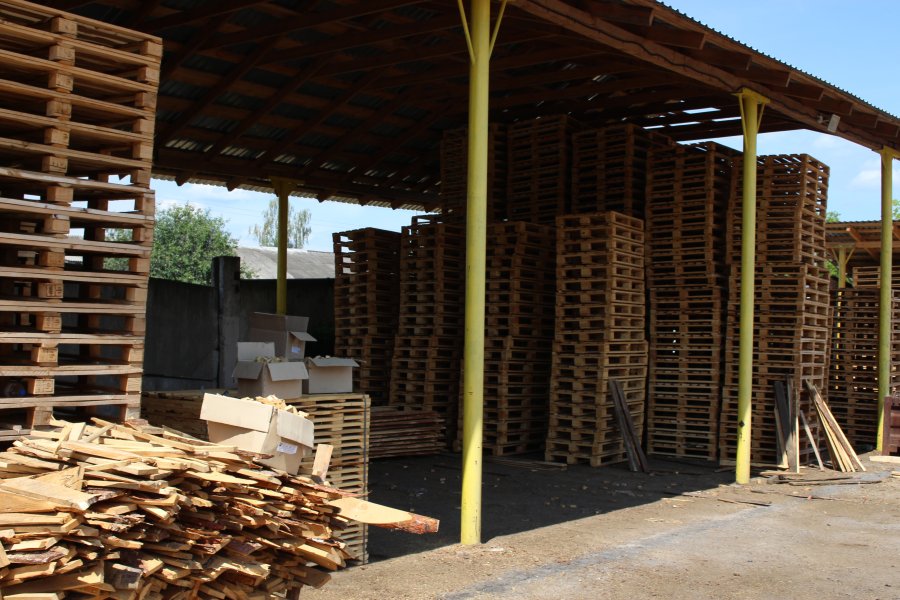
Due to martial law in the country, there are no government orders. Previously, furniture manufacturing was in operation. Today, in order not to lose production, they have switched, among other things, to the manufacture of pallets of different sizes and for different purposes.

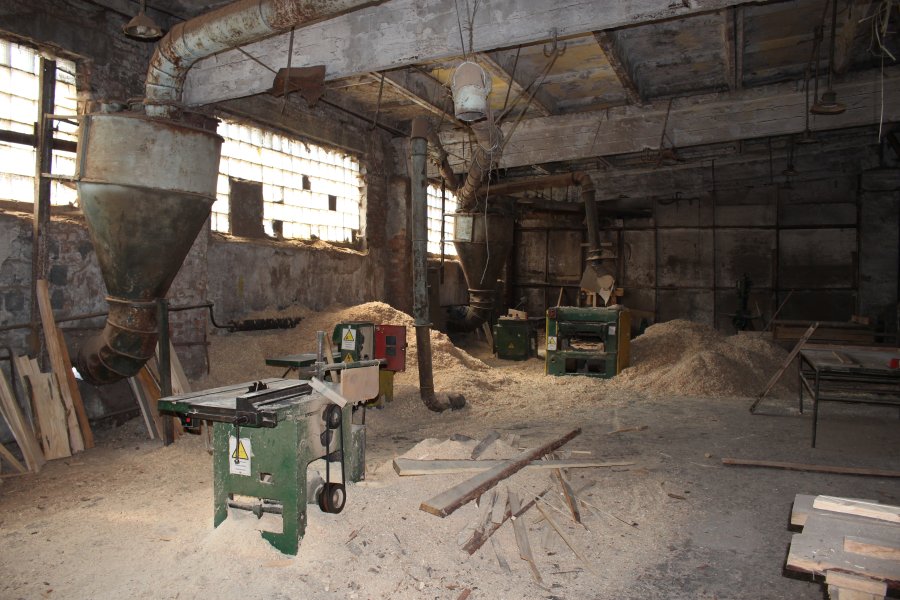
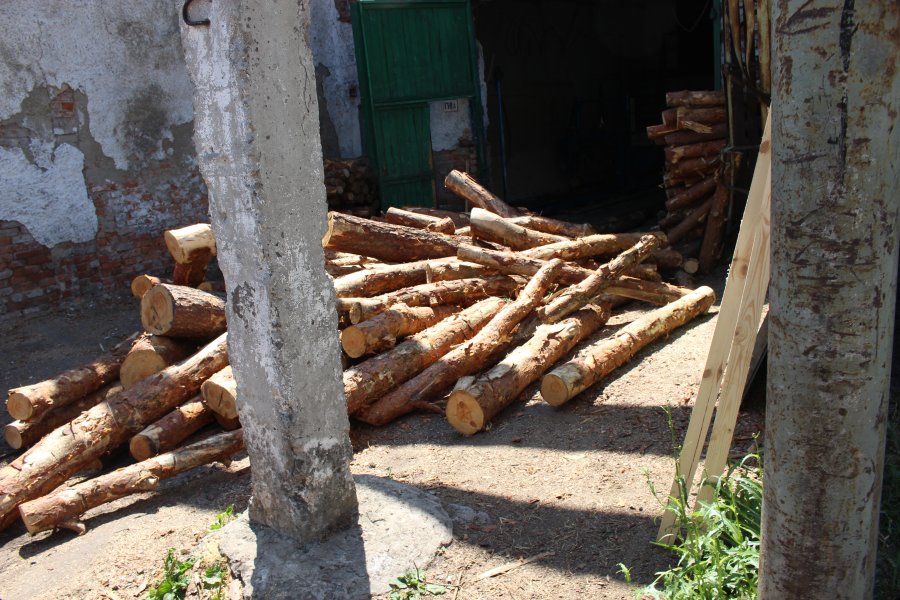
In the district, 4 forestry enterprises are involved in supplying timber.
The customers for the institution’s products include the Kamianets-Podilskyi Cement Plant, the Ivano-Frankivsk Cement Plant, Karpatnaftokhim, the Perechyn Chemical Plant, and FUTS. These are huge firms that the enterprise works with. In recent years, they produced 220,000–250,000 pallets per year, and the production itself was prepared for manufacturing up to half a million pallets per year. Before the war began, on average per season from April to October, up to 40 trucks of pallets were loaded per month. Last year, five and a half million hryvnias were paid in taxes alone. Competition was provided only by some institutions in the Kharkiv and Dnipropetrovsk regions. However, the war made its adjustments. Today, production has fallen by more than 50 per cent.
The production facility is ready to provide services to affected areas. But there is a requirement of the law – raw material procurement takes place through auctions. The legislation is structured in such a way that penitentiary system enterprises cannot compete at all. Production that effectively lacks specialists cannot be competitive. Currently, the production pays 25 per cent in taxes. At the same time, there is a shortage of personnel; there are not enough specialists – turners, welders, woodworking specialists.
At the institution, all convicts who have the desire and the trade can work in production.
There is also a vocational school attached to the institution.
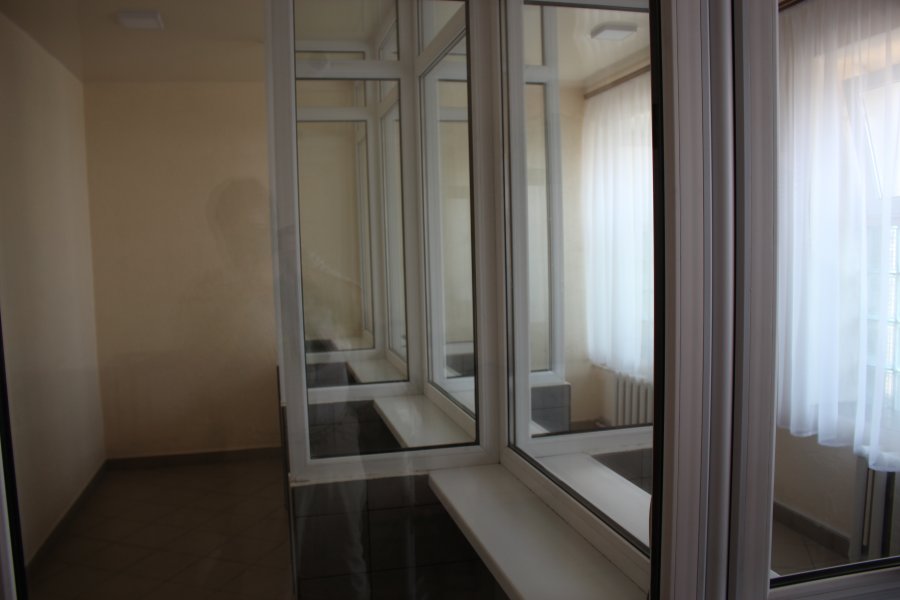
VISITING ROOM
A renovated room for short-term visits.
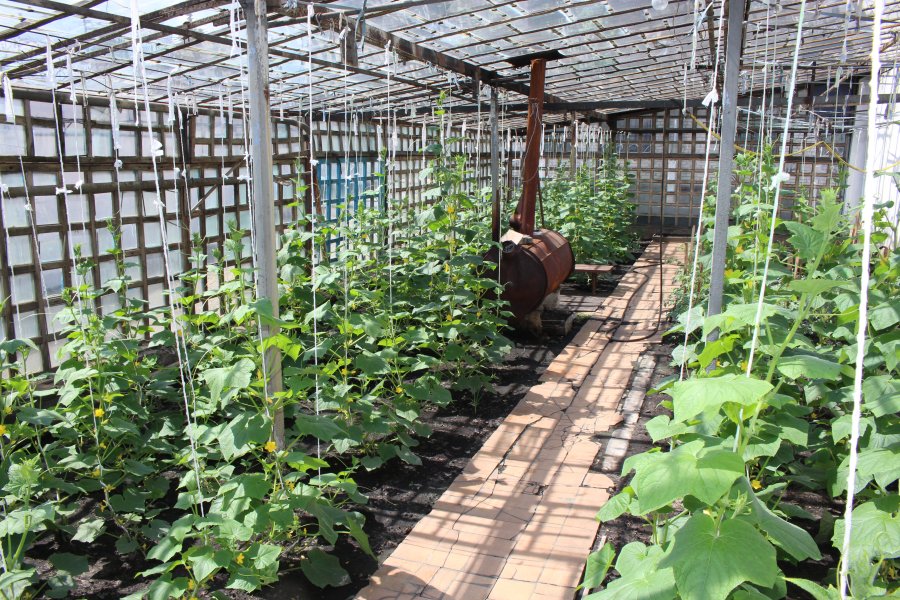
GREENHOUSES
Greens and vegetables are grown in the greenhouse.
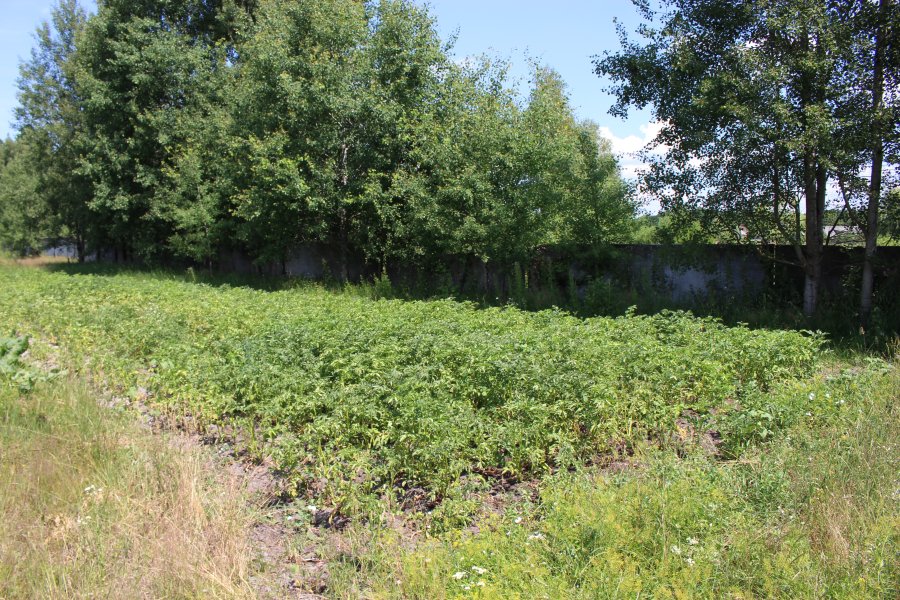
FARMING
The institution has its own farm.

LEISURE
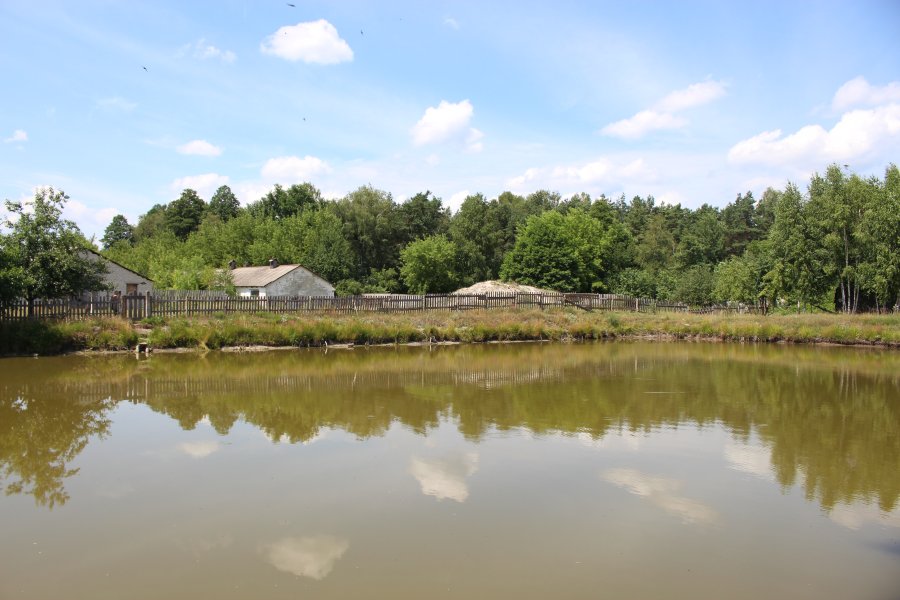
As a positive practice for organising staff recreation, the presence of a small pond can be noted. Through the efforts of the staff, conditions for fishing have been created, and there is a private apiary.