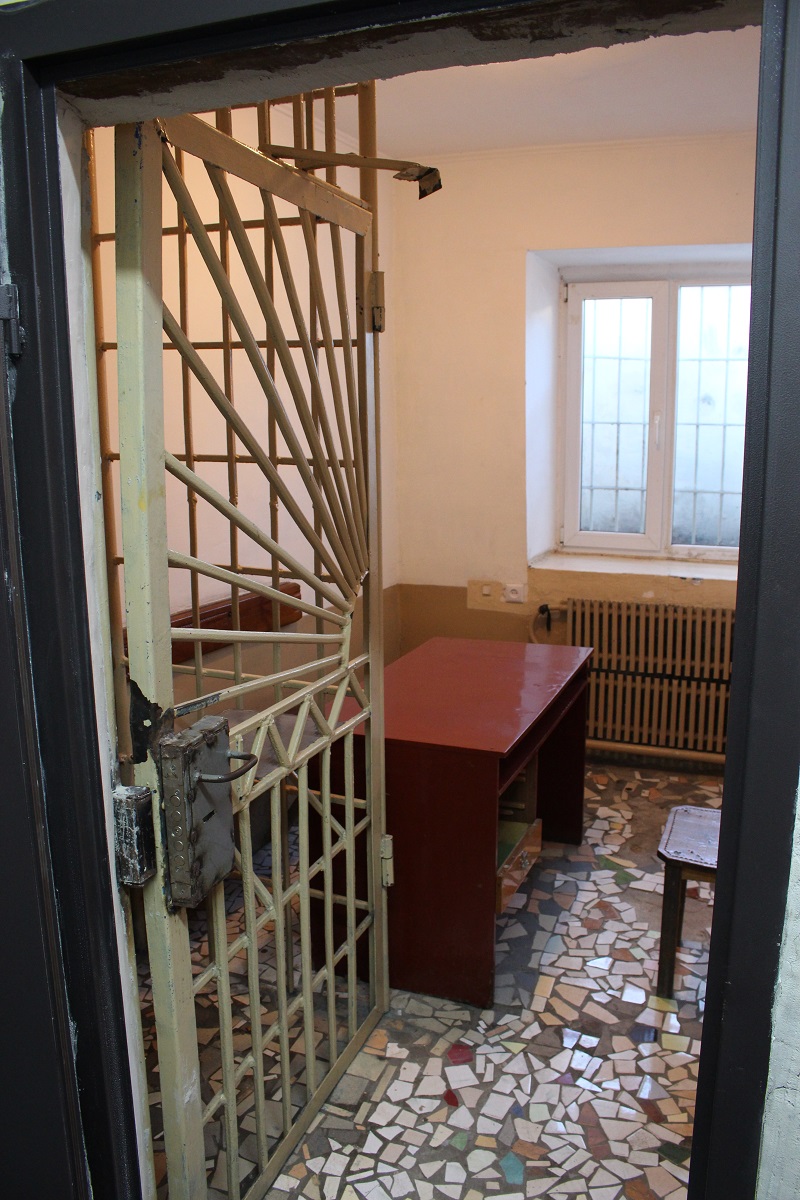
Monitoring visit to the State Institution “Kropyvnytskyi Pre-trial Detention Centre”
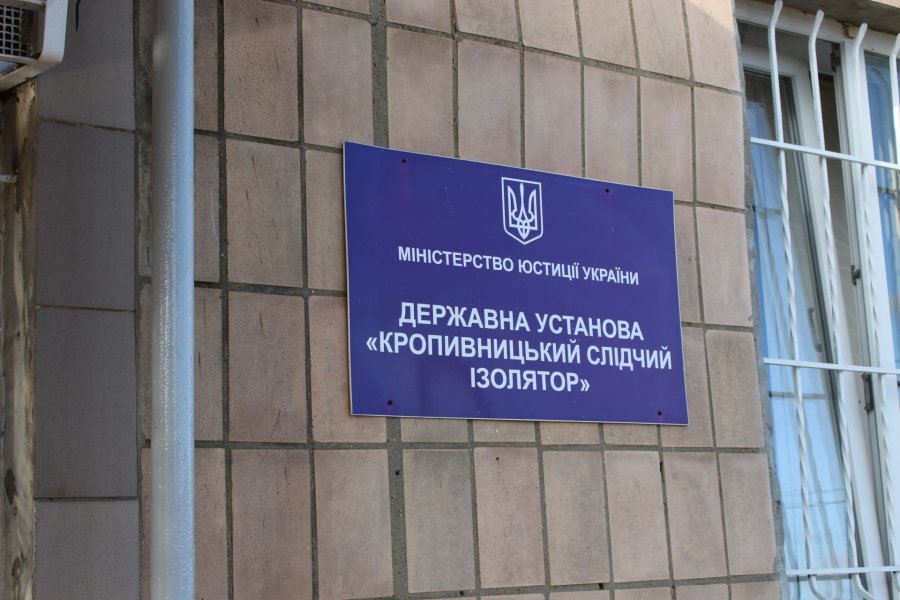
On 14 November 2022, a monitoring group consisting of an assistant to the People’s Deputy of Ukraine Kostiantyn Kasai, a member of the Public Council under the Ministry of Justice of Ukraine Serhii Zuikov, an assistant to the People’s Deputy of Ukraine Yaroslav Yurchyshyn, Kharkiv Human Rights Protection Group (KHPG) programme coordinator Andrii Didenko, and journalist Oleksii Yaroslavtsev carried out a routine visit to the state institution “Kropyvnytskyi Pre-trial Detention Centre”.
The report on the previous visit to this institution can be found via this link.
The main objectives of the monitoring visit were to analyse the institution’s operations during the war and compare the situation regarding human rights compliance with the previous visit.
The head of the institution is Lieutenant Colonel of the Internal Service Roman Serhiyovych Chabanenko.
The monitors entered the institution’s premises without obstruction, had access to all areas, and had the opportunity to communicate with representatives of the administration and convicts, including on the condition of anonymity.
The medical unit, cells of pre-trial detainees, the bath and laundry complex, the canteen, and quarantine cells were inspected.
General information
The state institution “Kropyvnytskyi Pre-trial Detention Centre” is used to hold pre-trial detainees until a court ruling enters into legal force. The institution has two buildings: an old one and a new one.
The institution has a capacity of 765 places.
Throughout 2022, 4,483 individuals were held in the institution.
In 2021, 5 individuals died; in 2022, 2.
16 convicts are employed in housekeeping work, all under employment contracts.
Two psychologists work at the institution: one to work with staff and the other to work with prisoners and convicts.
The cost of maintaining one prisoner per day is 71.14 UAH.
There is a shop operating in the institution.
At the time of the monitoring visit, 5 individuals were in solitary confinement. 11 were undergoing treatment in the medical unit. 34 individuals are registered with HIV/AIDS. 14 individuals are registered as having suicidal tendencies. 35 individuals are registered as prone to self-harm; 6 individuals are registered as flight risks; 30 individuals are registered as malicious violators of the detention regime.
In 2022, one person was released due to health reasons.
During the period of 2021 and 2022, no complaints regarding inadequate detention conditions or inadequate medical care were recorded.
In 2021, there were 6 ambulance call-outs; in 2022, there were 4.
In 2021, 38 cases of bodily injury were recorded: 17 upon arrival at the institution and 21 during their stay in the institution. In 2022, there were 25 such cases, of which 8 were upon arrival and 17 during their stay. Throughout the current year, special means were used 9 times.
There are 3 workstations in the institution with internet access for remote learning; the cost of using the internet is 200 UAH per month.
During 2021, 619 short-term visits took place; in 2022, there were 185.
Since the beginning of 2022, 354 individuals have been tested for SARS-CoV-2 (IgG, IgM); the number of vaccinated individuals among prisoners/convicts was 350 in 2021 and 126 in 2022.
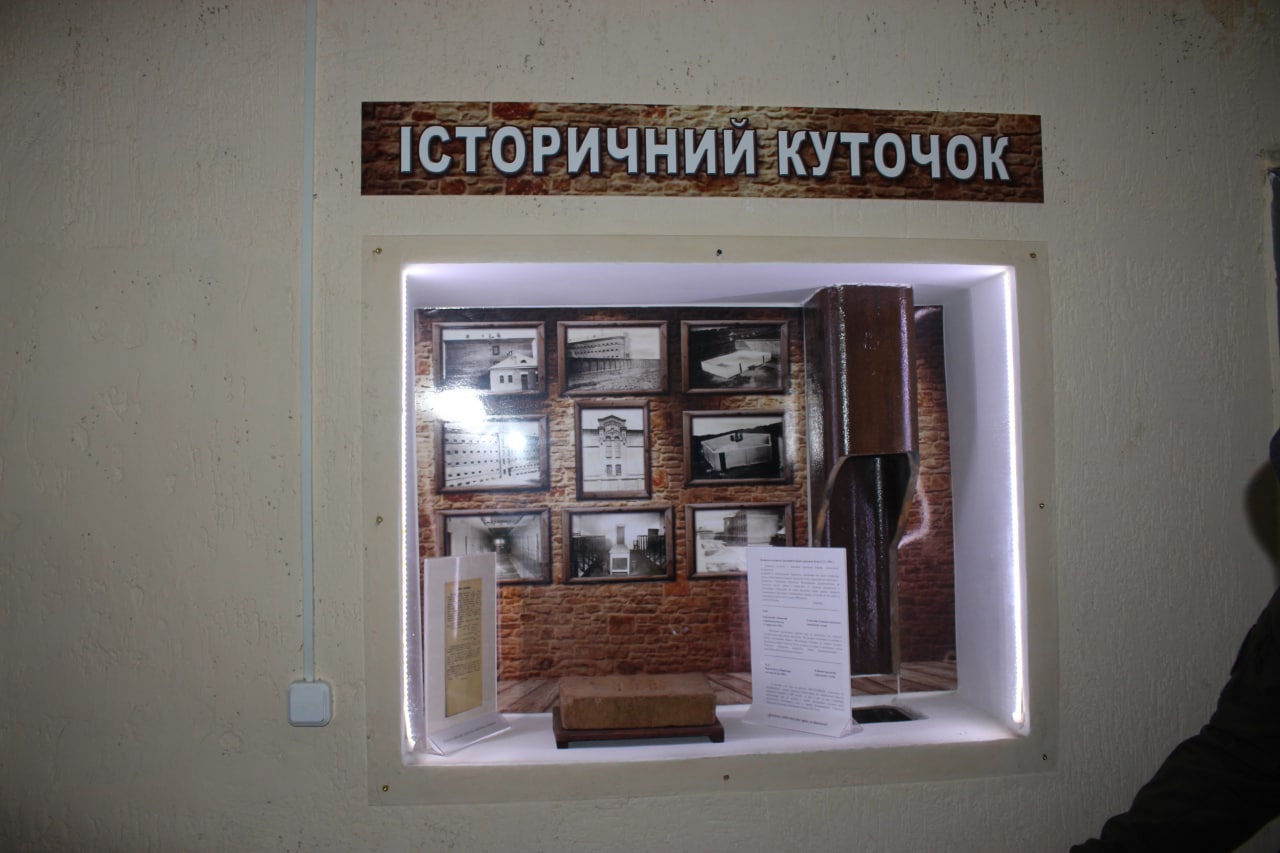
On the first floor of the old building, a historical corner has been set up featuring over a century of the prison’s history. Behind glass, there are photos and existing items from the past: a brick and a piece of ceramic pipe.
A special lens-window, which has been preserved on the floor, also reminds one of the past. It was through this window that the remains of light filtered from the already dim casemates into the basement, where prisoners were also once held.
Medical unit
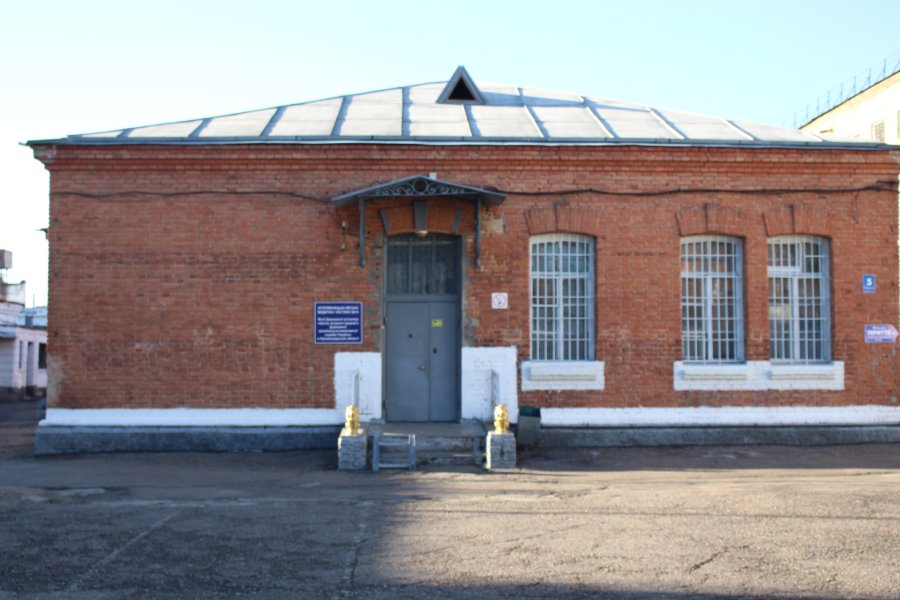
The head of the Kropyvnytskyi City Medical Unit No. 14 of the Branch of the State Institution “Health Care Centre of the State Criminal Executive Service of Ukraine” in Cherkasy and Kirovohrad regions (hereinafter referred to as the medical unit) is Valerii Livinchuk.
During the visit, the monitoring group inspected the medical unit’s premises without obstruction, familiarised itself with the conditions of medical care provision to prisoners, and had access to medical documentation.
According to the staffing table, the following positions are filled:
- head of medical unit No. 14 — 1.0 position,
- senior paramedic — 1.0 position,
- paramedic — 3.0 positions,
- general practitioner — 0.5 position,
- X-ray laboratory technician — 0.5 position,
- nurse — 1.0 position,
- disinfector — 1.0 position,
- pharmacist — 1.0 position,
- laboratory technician — 1.0 position,
- psychiatrist — 0.25 position,
- infectious disease specialist — 0.25 position,
- obstetrician-gynaecologist — 0.5 position,
- radiologist — 0.5 position,
- phthisiatrist — 0.5 position,
- dentist — 0.5 position,
- general practitioner — 0.5 position,
- dermatologist — 0.25 position.
Complaints regarding unlawful actions of medical staff and institution employees, including: torture, cruel, inhuman, or degrading treatment or punishment by prisoners and convicts were not received.
There are no vacant positions, which significantly improves the level of medical services provided to prisoners and convicts.
On the day of the visit, 18 people were in the inpatient ward, including those diagnosed with “tuberculosis”: 5 with drug-resistant TB (HRTB), 4 with newly diagnosed TB (VDTB).
During the inspection, the monitoring group established that for one patient in the inpatient ward, an inpatient medical record (Form No. 003/o) had not been opened, into which all data on treatment and diagnostics in the medical unit, including those obtained during the examination of the convicted patient, with an order sheet, are entered. Furthermore, in some inpatient medical records (Form No. 003/o), the surname of the attending physician and the head of the medical unit, and their signatures, were missing, which in turn indicates improper maintenance of medical documentation.
The medical unit’s inpatient ward, in violation of the requirements of the “Norms for the provision of bedding, special clothing and special footwear (inventory property) for prisoners undergoing treatment in medical and preventive institutions, institutions with the rights of medical facilities and in medical units at execution of sentences institutions and pre-trial detention centres”, approved by the Order of the Ministry of Justice of Ukraine dated 20.02.2012 No. 280/5, is not provided with hospital property (hospital suit, robe and shoes) for persons undergoing treatment. Consequently, persons in the inpatient ward are dressed in their daily clothes and do not have changing shoes, which does not ensure the proper sanitary state in the health care facility.
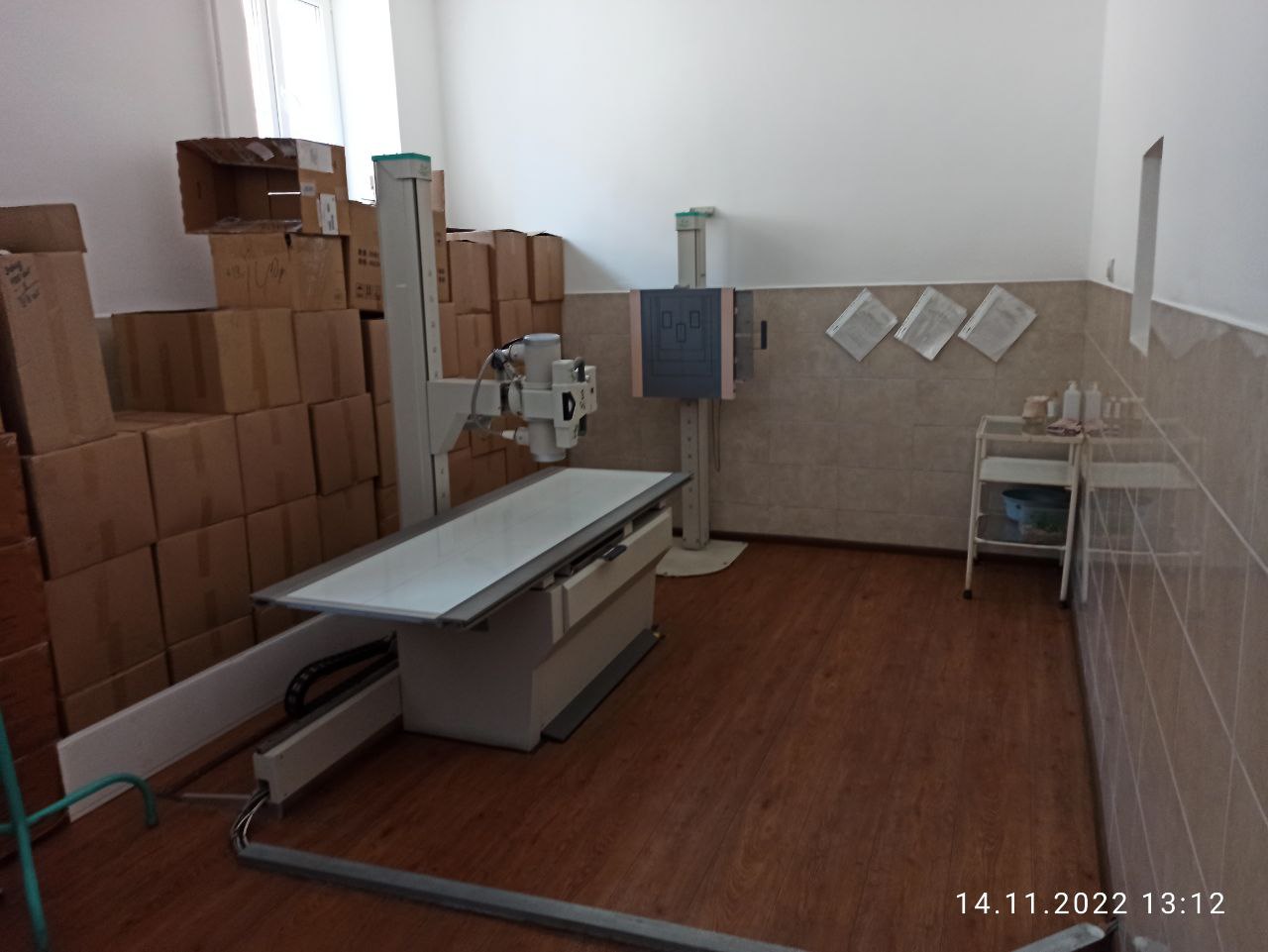
The medical unit is equipped with modern X-ray fluorography equipment; 958 examinations were conducted this year.
The dentist’s office was closed, and the request from the monitors to inspect the room and the log of convicts’ visits to the dentist was refused.
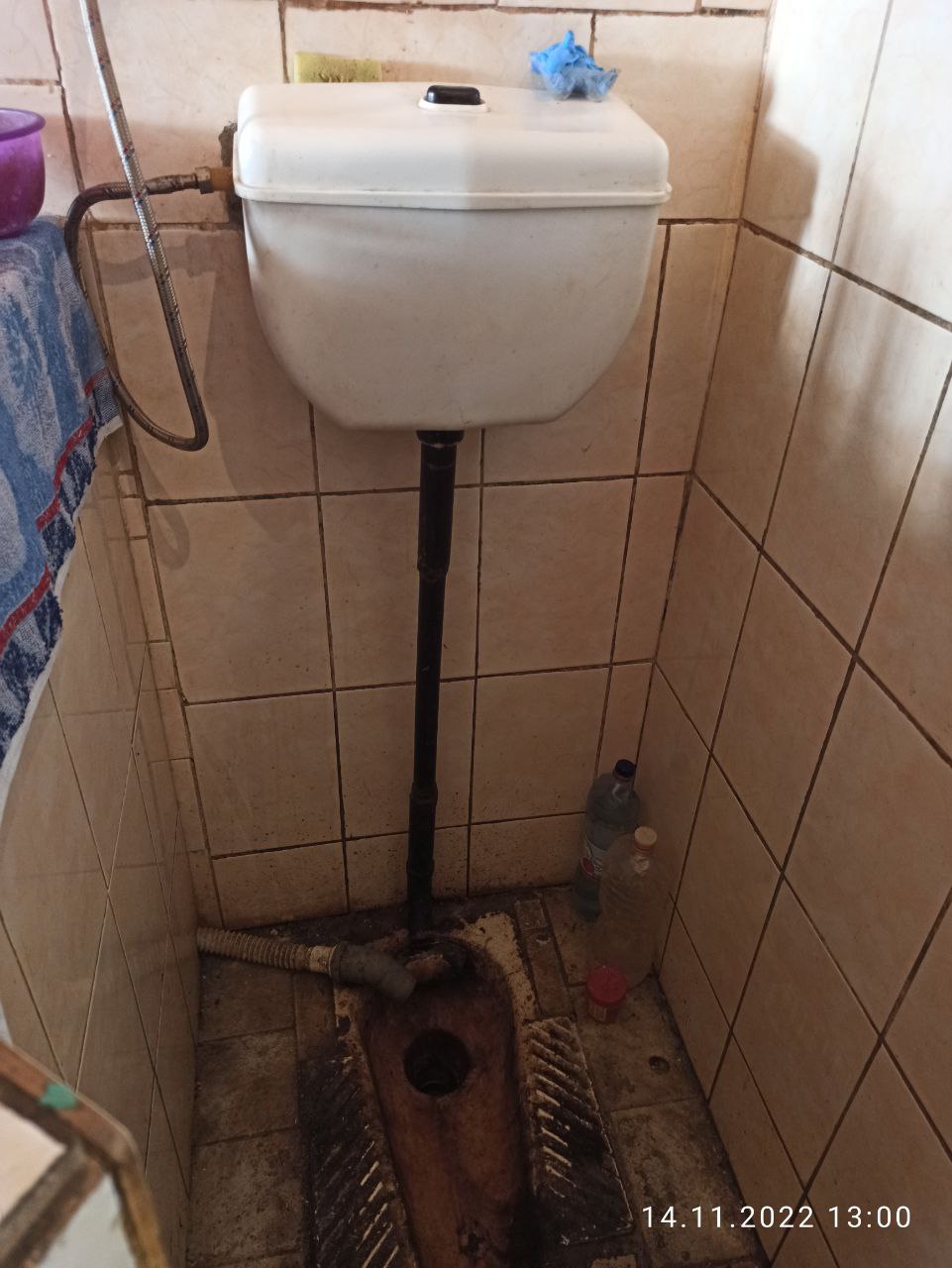
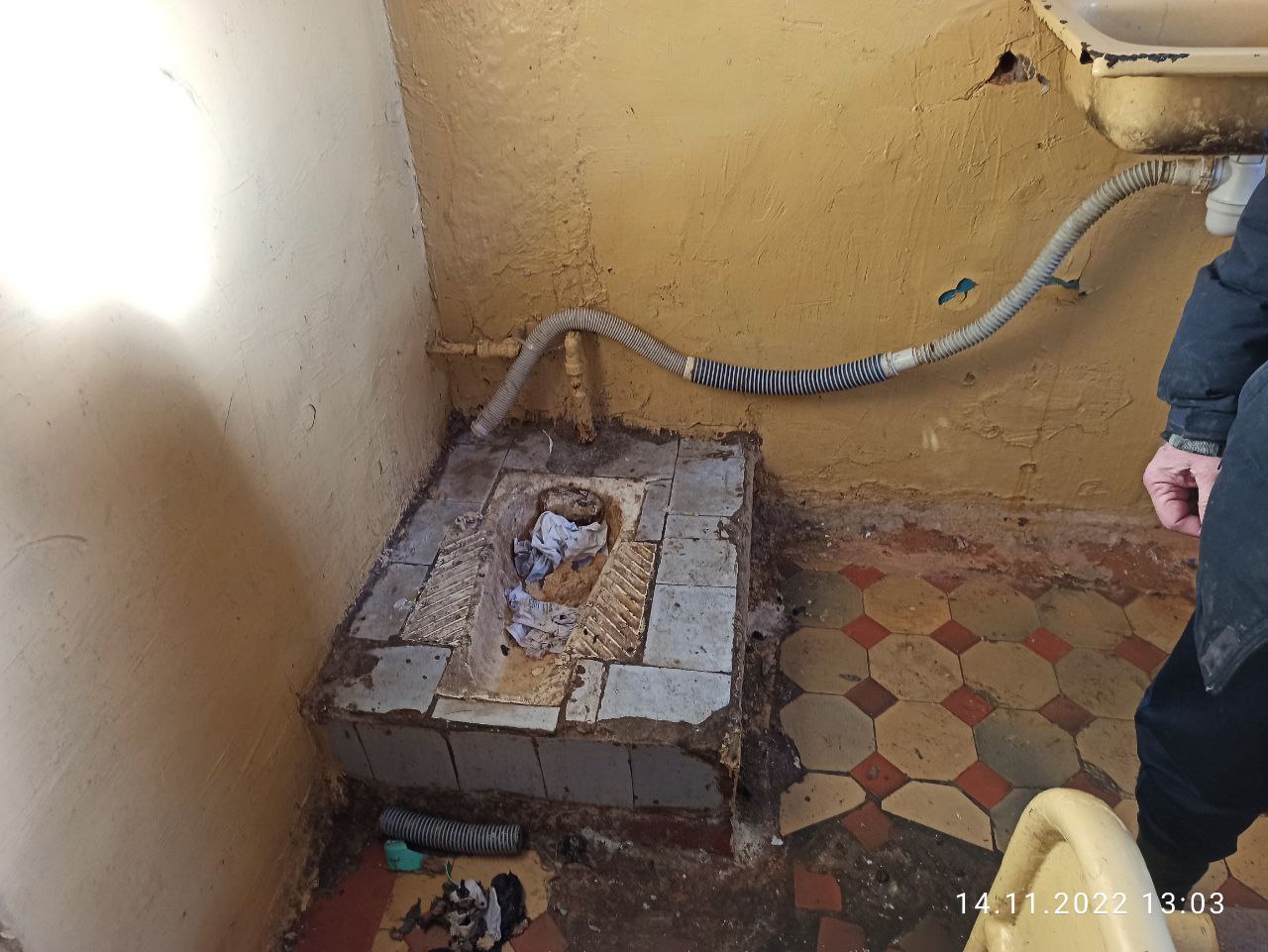
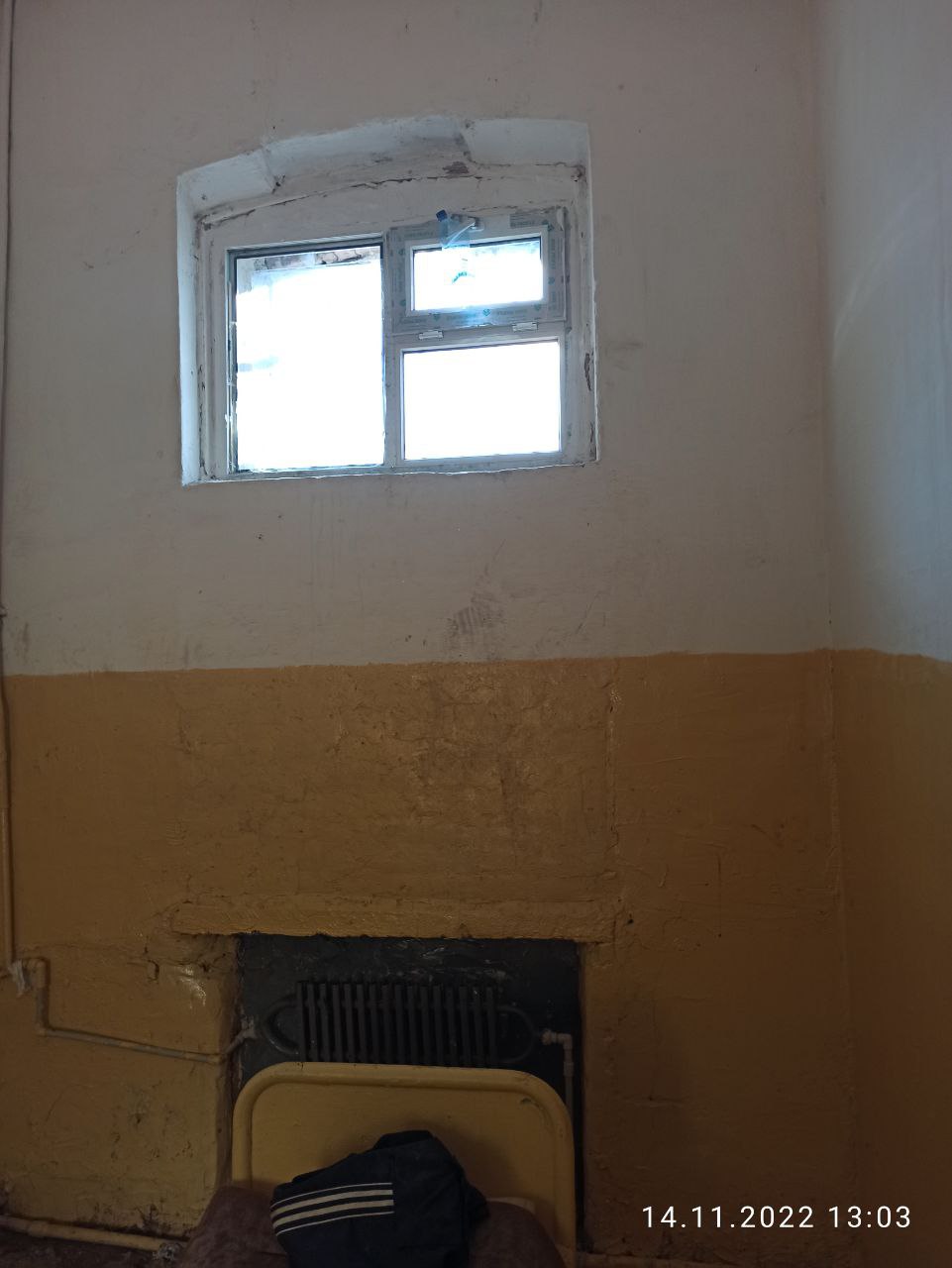
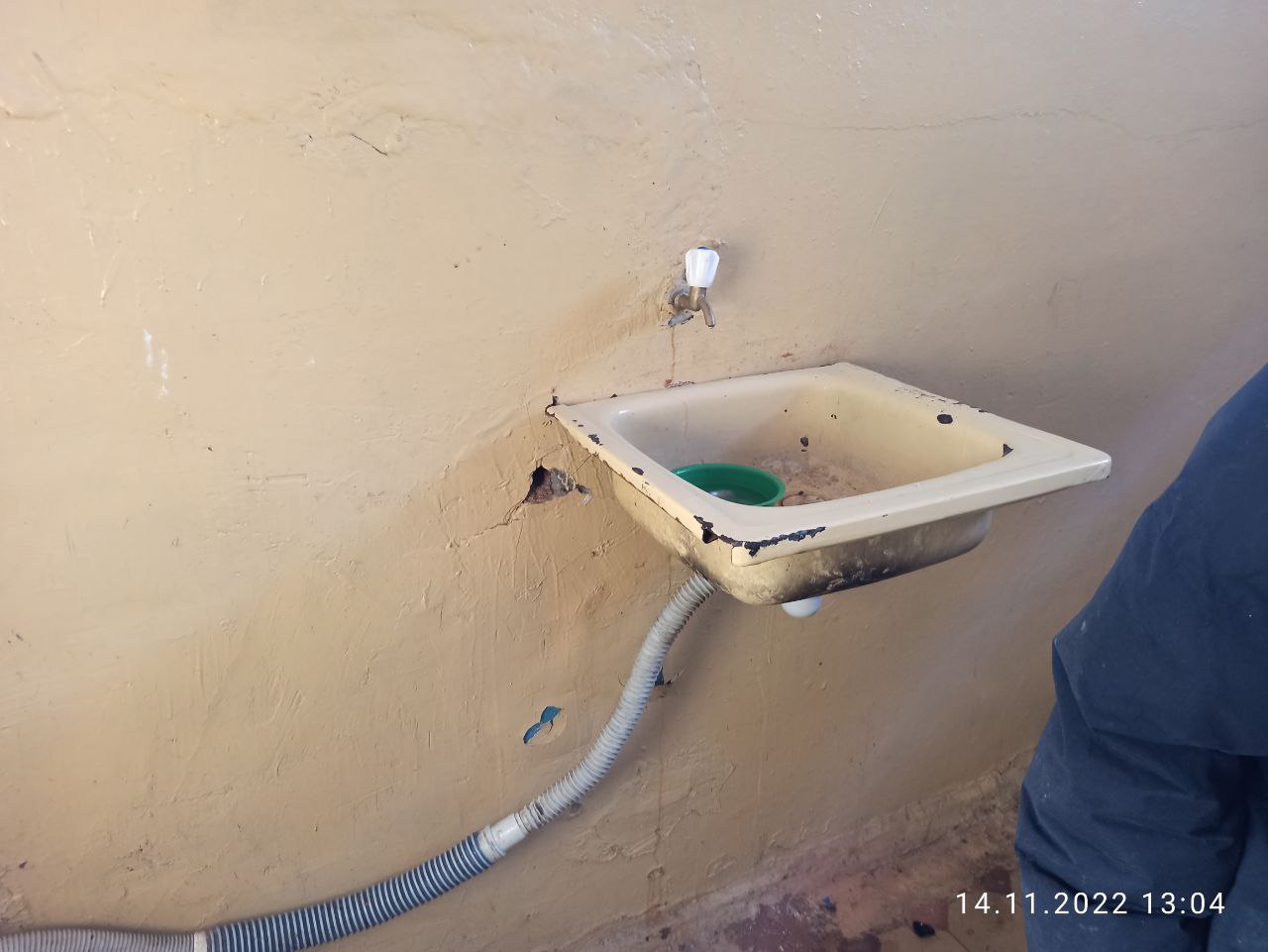
According to Article 8 of the Criminal Executive Code of Ukraine, convicts have the right to humane treatment and respect for their human dignity; convicts shall not be subjected to cruel, inhuman, or degrading treatment. At the same time, violations of the rights of prisoners to equality and respect for their dignity continue to occur in the institution. During the inspection of the medical unit premises, the monitors recorded facts of improper treatment of persons with mental disorders. Thus, in the medical unit’s isolation ward, a person with mental disorders was held in improper conditions: the bathroom was clogged with sewage, not fenced off by a wall, which grossly violates the right to privacy, practically does not fulfil its function, and requires repair with the replacement of sanitary equipment. There is no shower, no possibility to open the window independently for airing the room, there is no water in the tap, the mattress and bed linen are dirty; that is, the room does not provide proper conditions for the provision of psychiatric care and the realisation of rights, freedoms, and legitimate interests of persons suffering from mental disorders, and the living conditions of persons suffering from mental disorders are not improved in the manner prescribed by law, which contradicts Art. 5 of the Law of Ukraine “On Psychiatric Care”.
In the medical unit, 35 HIV-infected persons are under dispensary registration (35 people are receiving ART therapy). This year, 54 immunological examinations (CD4) and 50 virological ones (viral load) have been conducted. The number of rapid tests conducted this year is 647. 146 persons underwent a planned preventive medical examination.
Dispensary registration of patients with tuberculosis of group 5.1 in the medical unit, according to the head, is not maintained.
In the medical unit, a sputum collection point is not properly equipped, which creates preconditions for the spread of infectious disease among the held convicts and also violates the order of the Ministry of Health of Ukraine dated 01.02.2019 No. 287 “On Approval of the Standard of Infection Control for Health Care Institutions Providing Care to Patients with Tuberculosis”.
The medical unit lacks an infectious disease isolation ward. In addition, it is worth noting that there is no shower room in the medical unit at all. Thus, patients suffering from infectious diseases who should be in an infectious disease isolation ward, or wards for somatic patients, are deprived of the right to follow hygiene rules, or their bathing is carried out in general showers, which means the principle of isolating patients with infectious diseases is not followed, thereby creating preconditions for the spread of dermatological diseases among prisoners and convicts.
69 cases of bodily injury have been registered this year.
In outpatient medical records (Form No. 025/o), certificates are missing, but there are charts of primary fixation of bodily injuries. At the same time, there are no annexes in the form of photographs of existing bodily injuries, as provided for in clause 3 of section 1, chapter II of the joint Order of the Ministry of Justice of Ukraine and the Ministry of Health of Ukraine dated 15.08.2014 No. 1348/5/572 “On Approval of the Procedure for Organizing the Provision of Medical Care to Persons Sentenced to Imprisonment”.
Cells of pre-trial detainees
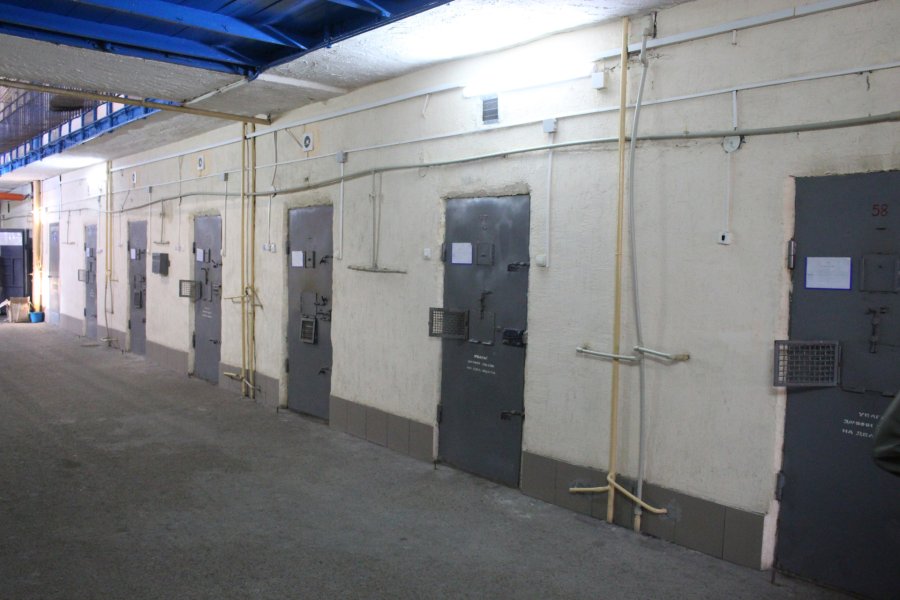
Prisoners are taken out to receive parcels.
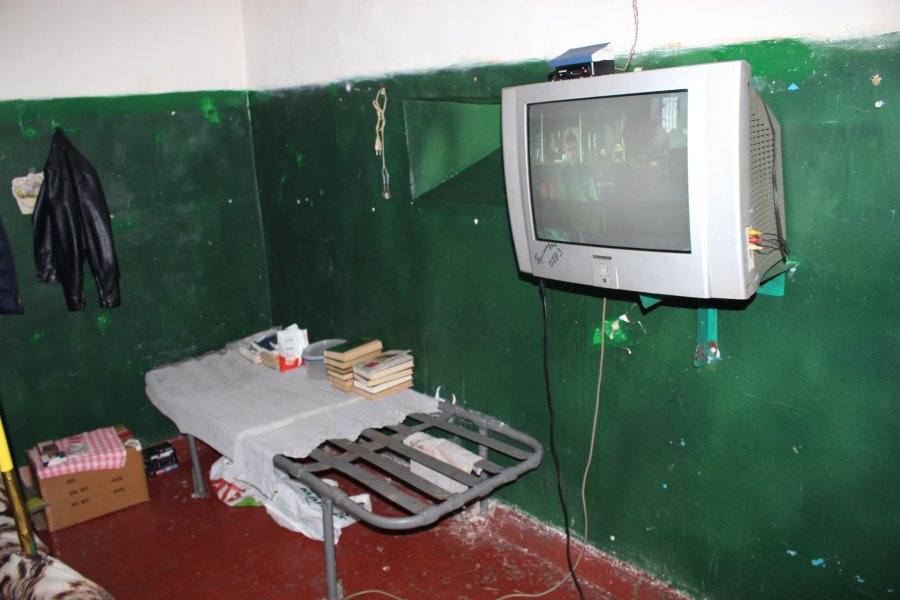
In some cells and corridors, repair work is underway. Repairs are carried out at the expense of the special fund, the maintenance of paid cells, and funds generated in the workshops.
There are tanks with drinking water in the corridors.
As a rule, the institution’s cells are designed for 15-16 persons, but there are also smaller ones for 4 people.
Solitary confinement cells
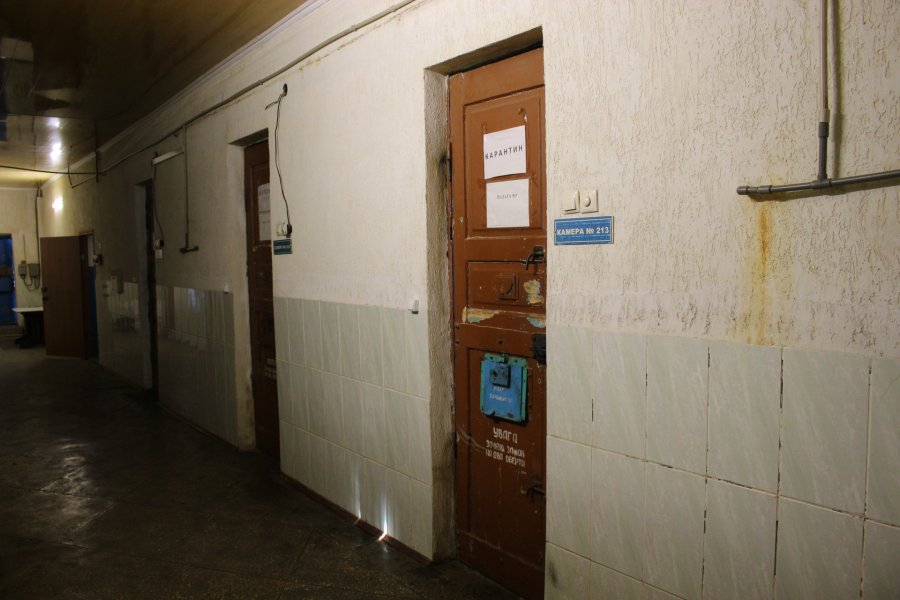
The institution is divided into two blocks, and there are solitary confinement premises in each block. Beds are not closed during the day. A room for examination by a paramedic is equipped.
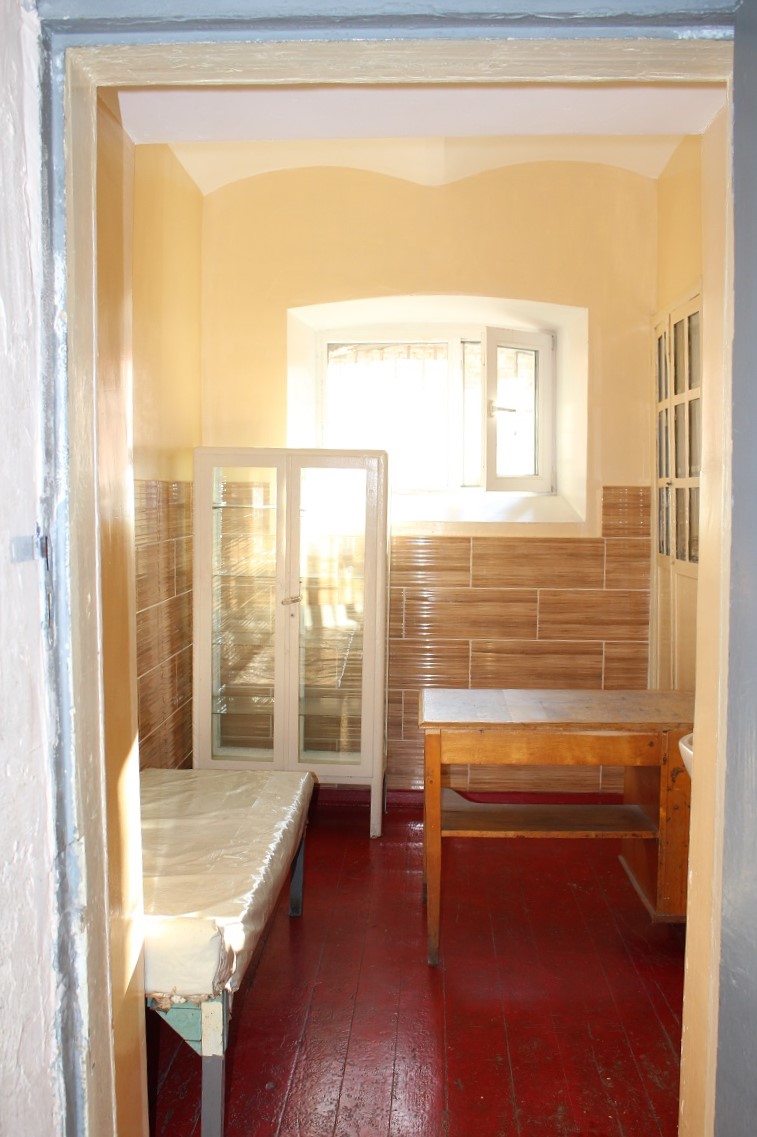
When the doors are opened, the duty officer commands “hands behind your back”.
Upon placement in a solitary confinement cell, prisoners sign to acknowledge their right to free legal aid. However, some prisoners sign without reading the documents.
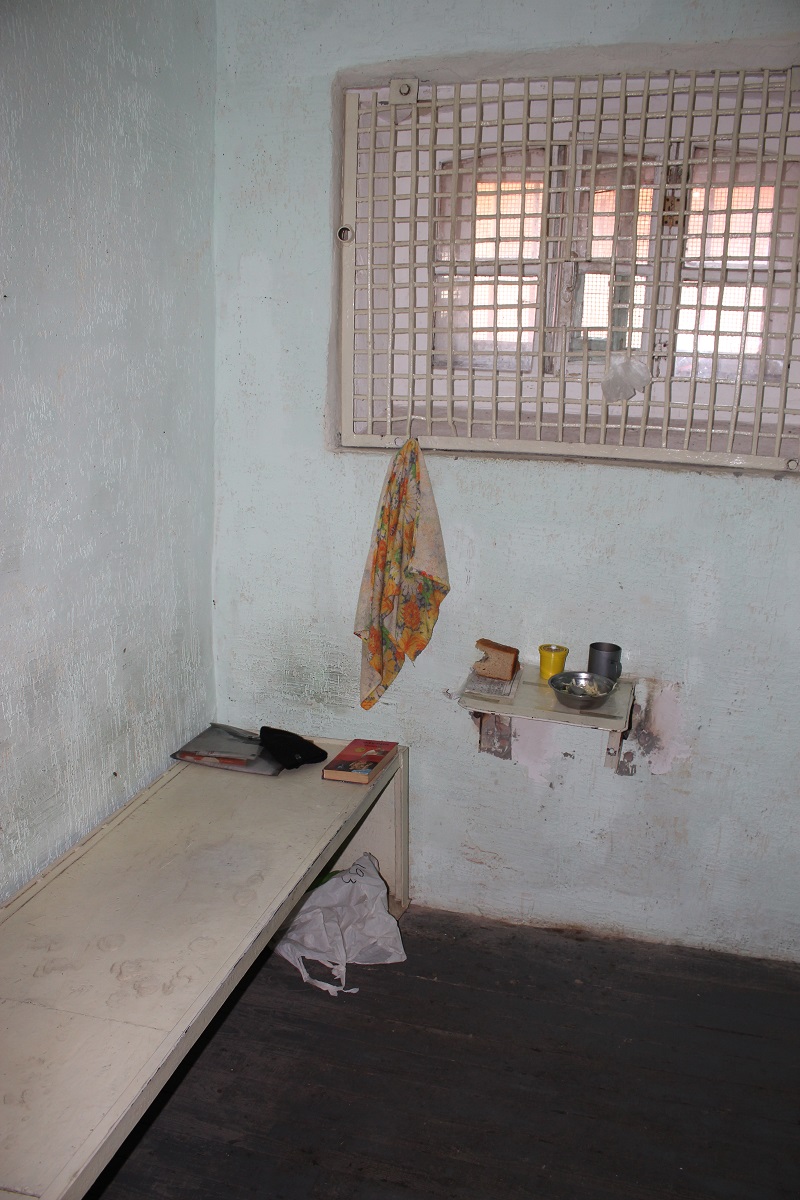
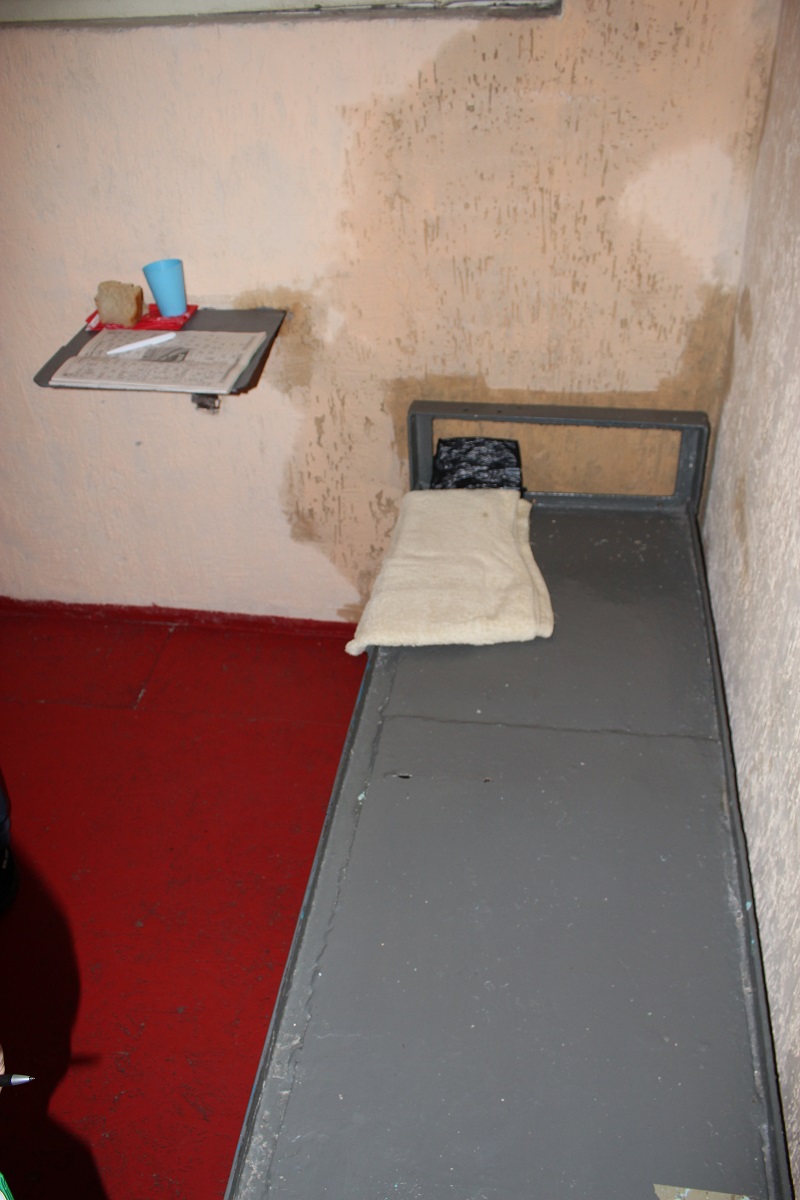
10 days in solitary confinement can be received for consuming alcoholic beverages or possessing a phone. The institution follows a practice where disciplinary punishments are not carried out immediately because, according to legislation, the application of such a penalty can take place within a month. After the commission’s decision, the offender is given time to prove themselves positively: if the prisoner continues to behave politely and does not violate the regime, the disciplinary penalty may be reviewed.
There have been cases where disciplinary penalties were appealed and even cancelled. There is also a practice of postponing the commission meeting to allow for the presence of a lawyer.
Persons serving disciplinary penalties may use the services of a lawyer upon their request.
Prisoner K. received 10 days in solitary confinement; he agrees with the punishment and has no intention to appeal the disciplinary penalty.
In the cell, there was an individual N., who is accused under Article 255 of the Criminal Code of Ukraine; he has been held there for more than a year and is in a standard cell.
Paid cell
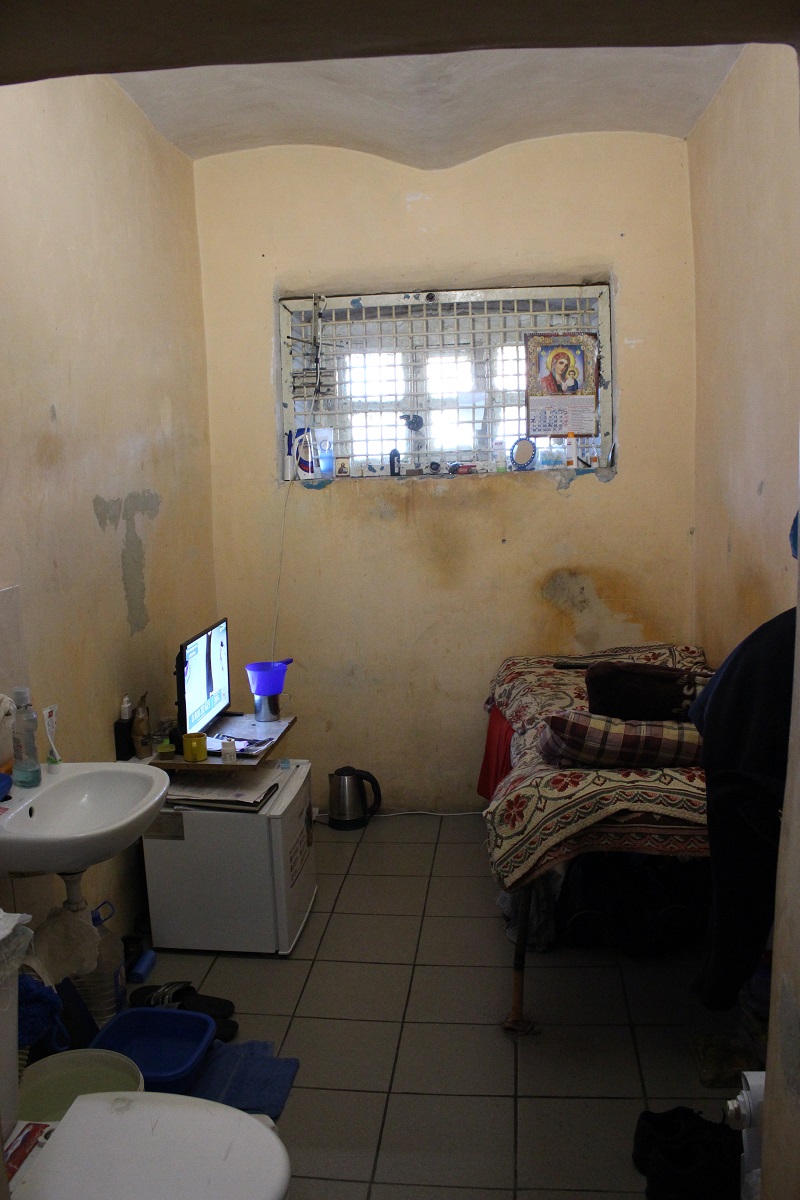
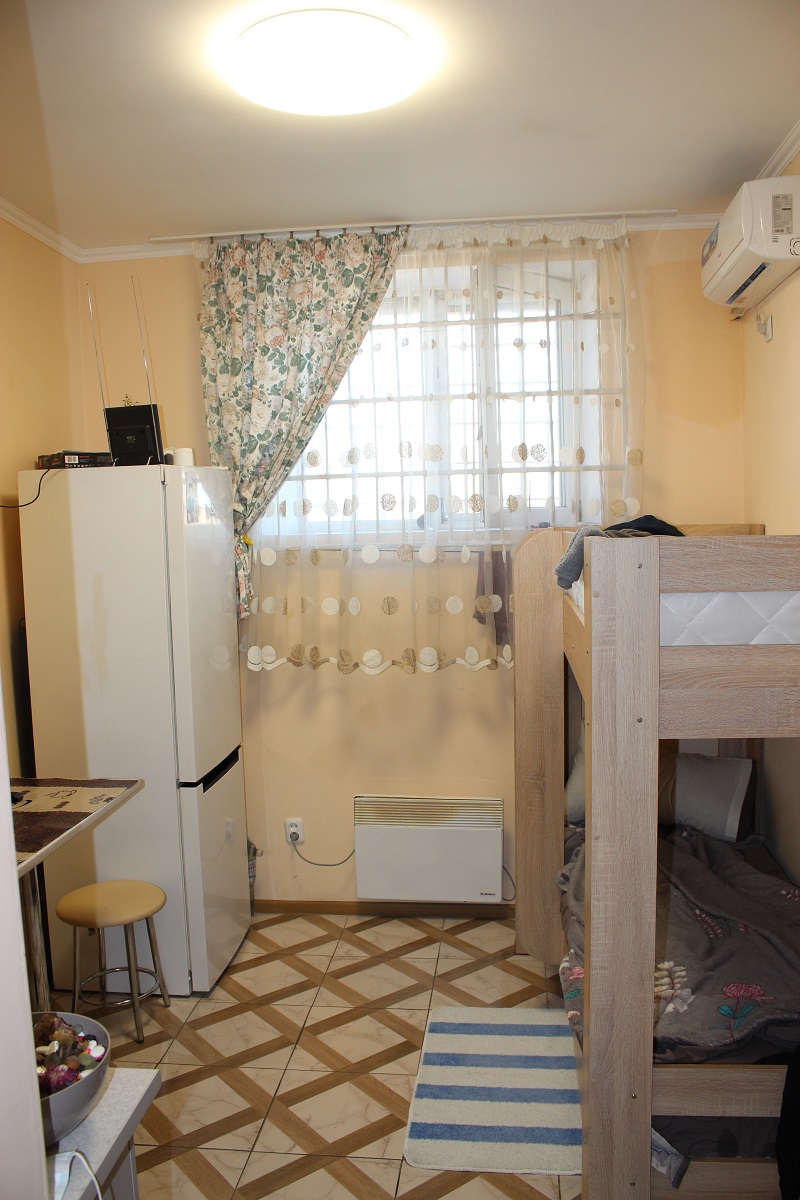
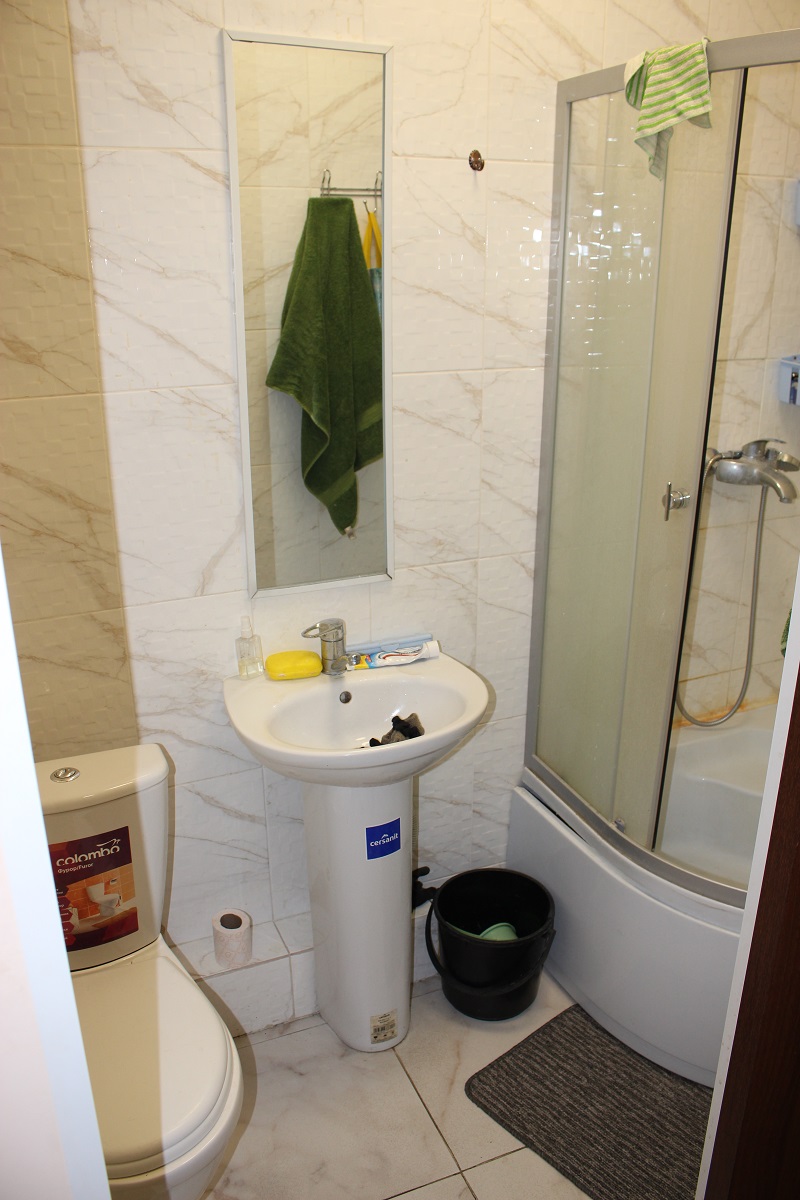
There are two paid cells in the institution, which cost 3,770 UAH per month.
Canteen
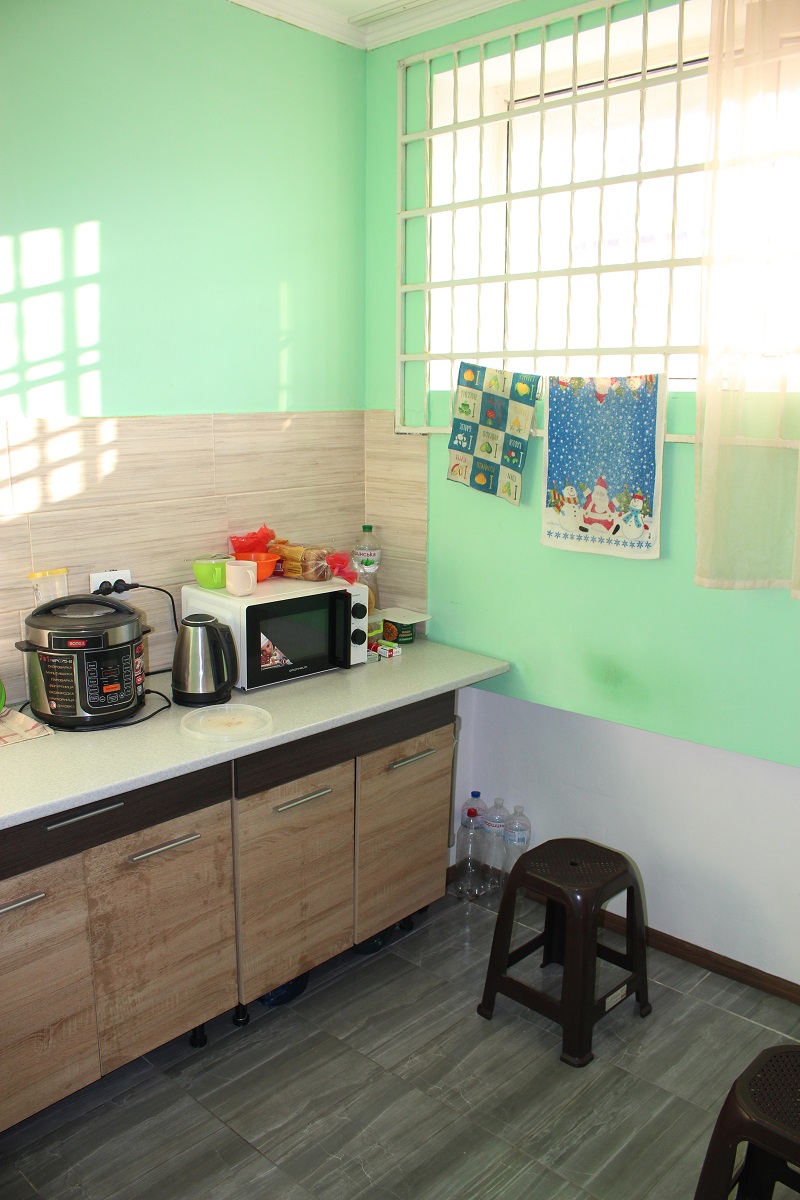
The canteen is staffed by convicts who have remained to work in the institution’s housekeeping services. These are first-time offenders convicted of non-grave crimes who have proven themselves positively.
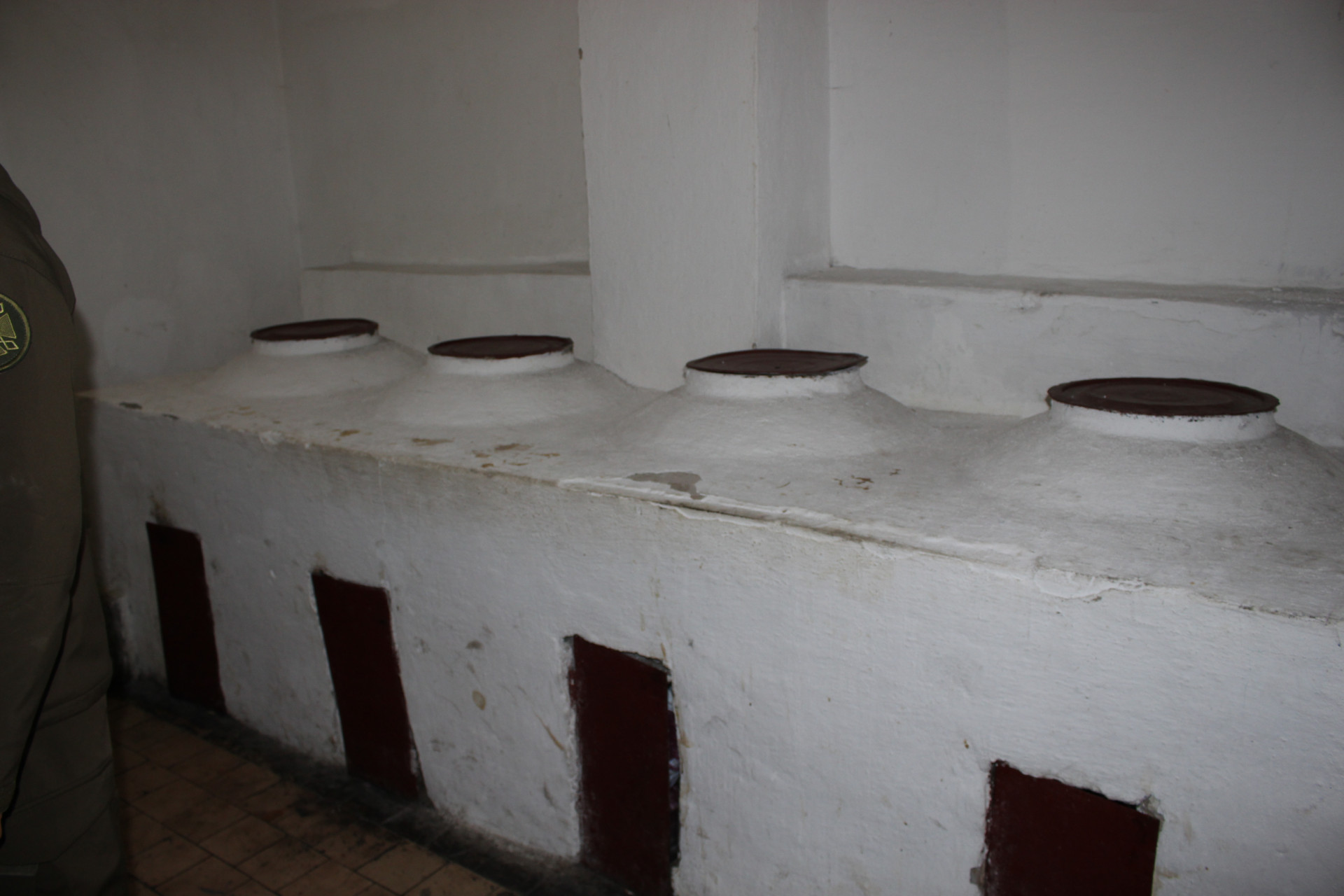
Food preparation, in the event of a power cut, is possible using firewood. In such conditions, the canteen does not stop and is capable of fully performing its functions.
There is also a generator, but it has low capacity.
There are 15 people working in the canteen. Of these, five prisoners, from among the convicts, work on a permanent basis. All the others are prisoners working on a voluntary, unpaid basis for 2 hours “for the improvement of the institution”, although legislation does not provide for a two-hour involvement “in improvement” for prisoners; such a standard applies only to convicts.
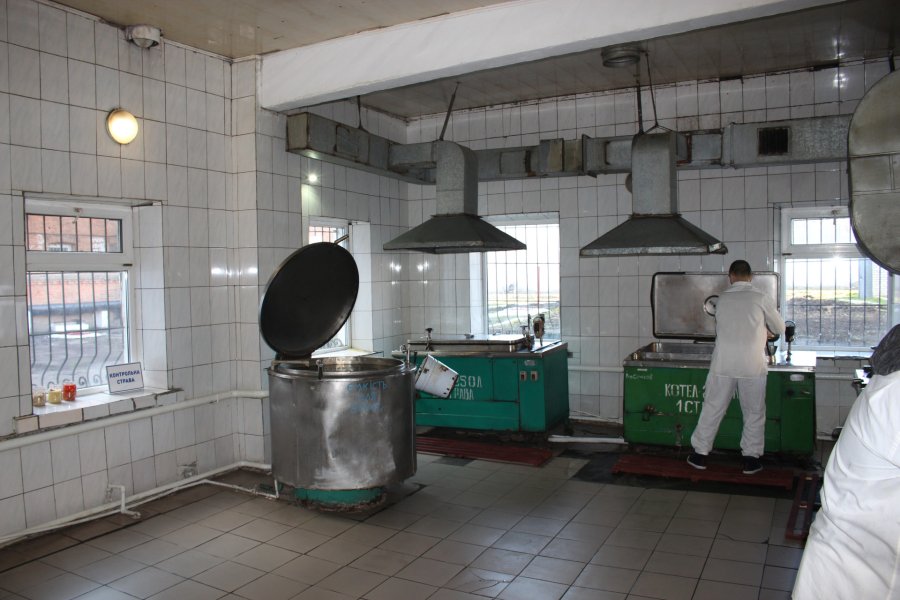
22 people were on a special diet.
Bread is baked on-site.
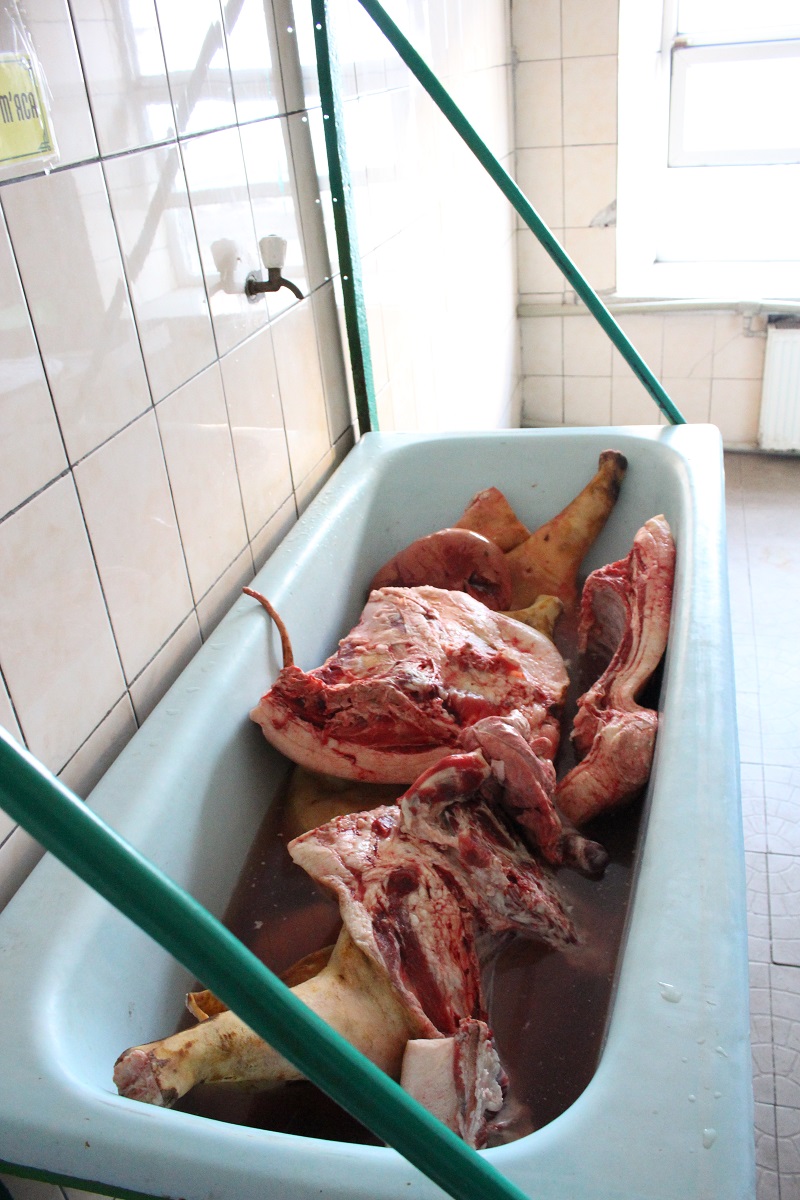
Meat processing area:
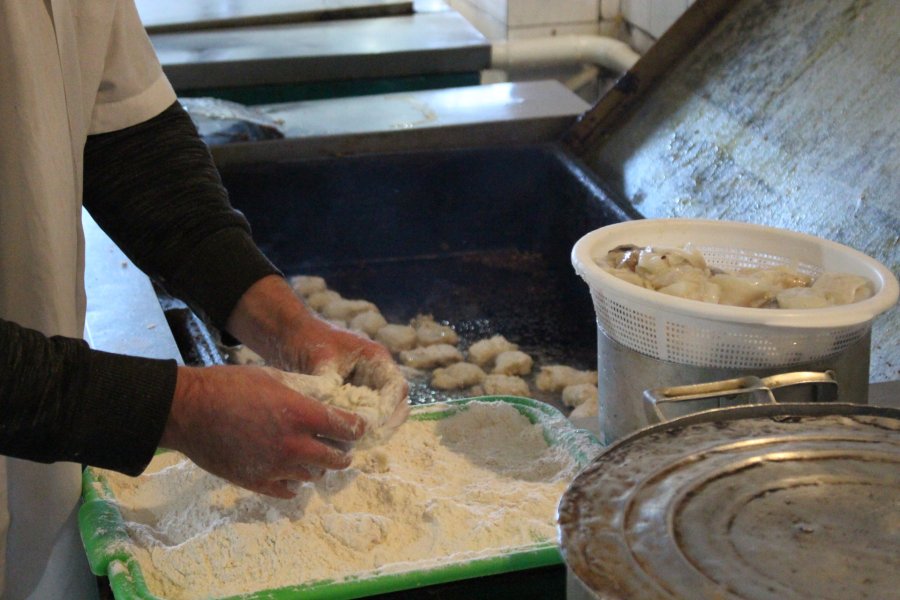
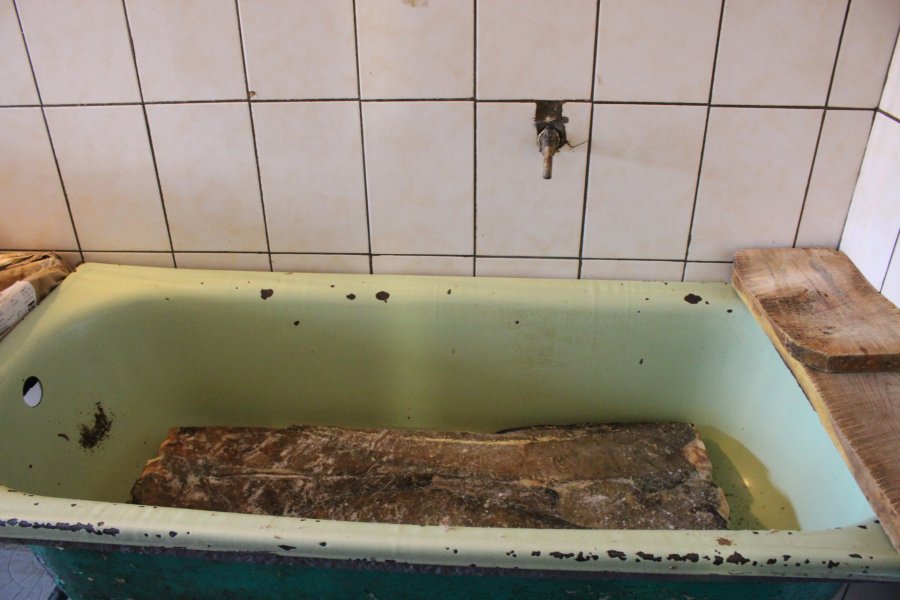
Fish processing area:
Quarantine
In the cells designated for “quarantine”, new arrivals are placed two to a cell and held for two weeks.
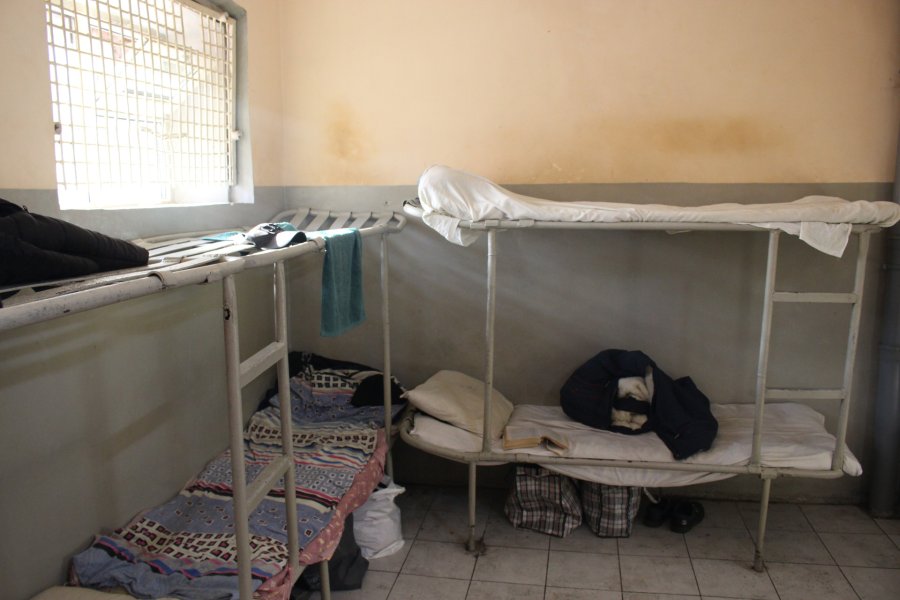
Note that the internal regulations of the pre-trial detention centre do not provide for quarantine sections.
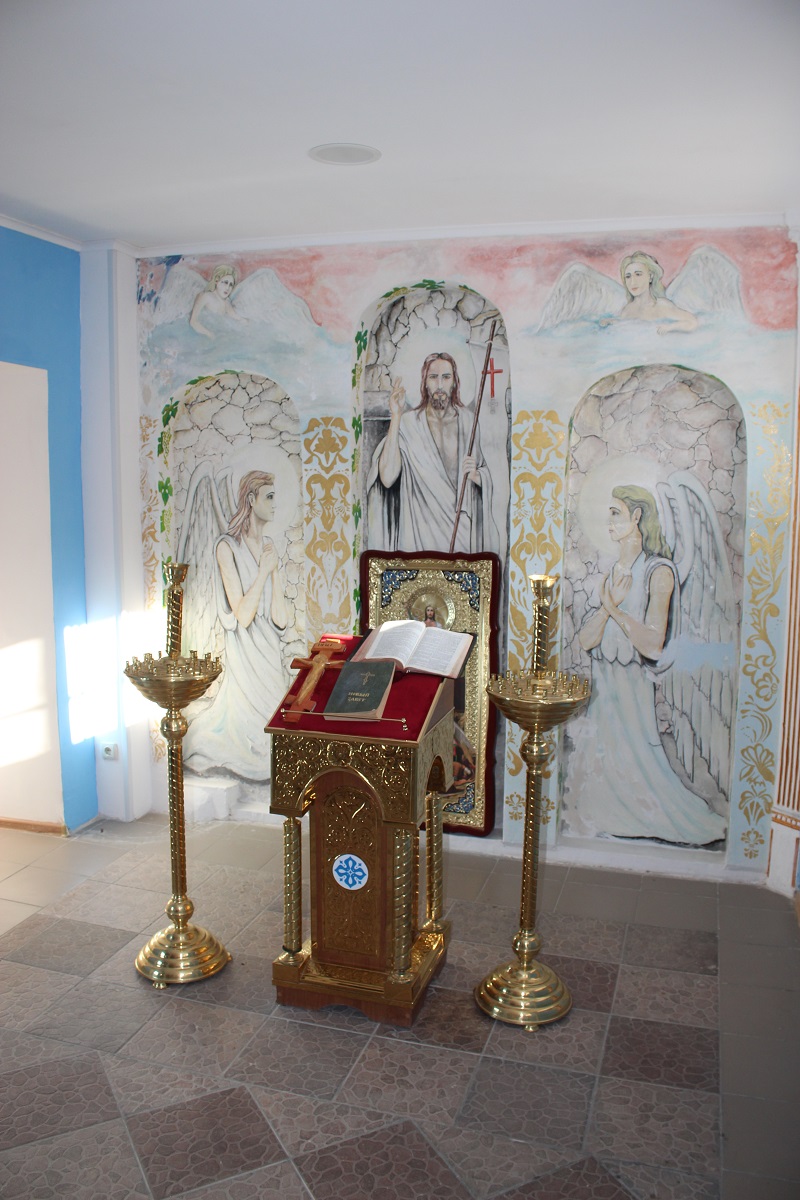
Prayer room
Internet classroom and phone calls
The administration provides prisoners with the opportunity to make phone calls, and in fact, informs investigation agencies about this.
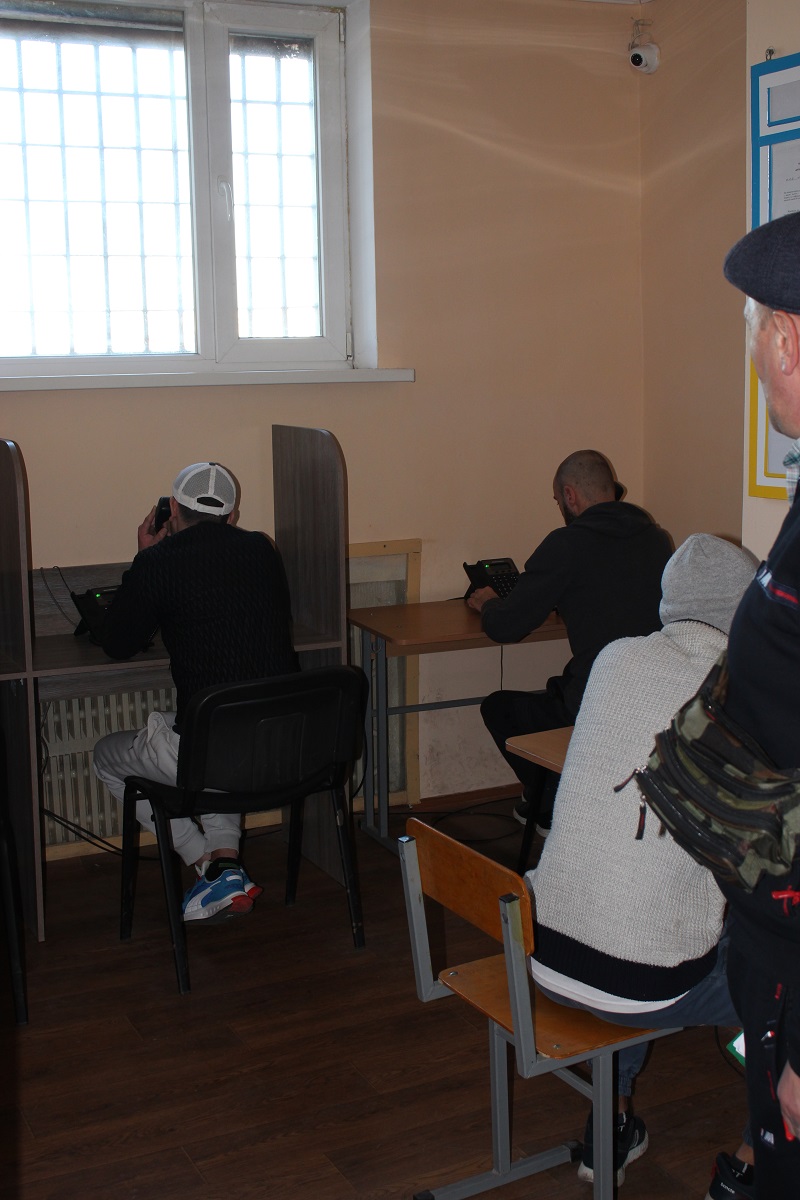
About a hundred prisoners use IP-telephony; payment for the service is made through the accounting department. Life-sentenced prisoners are kept in a special area with bars.
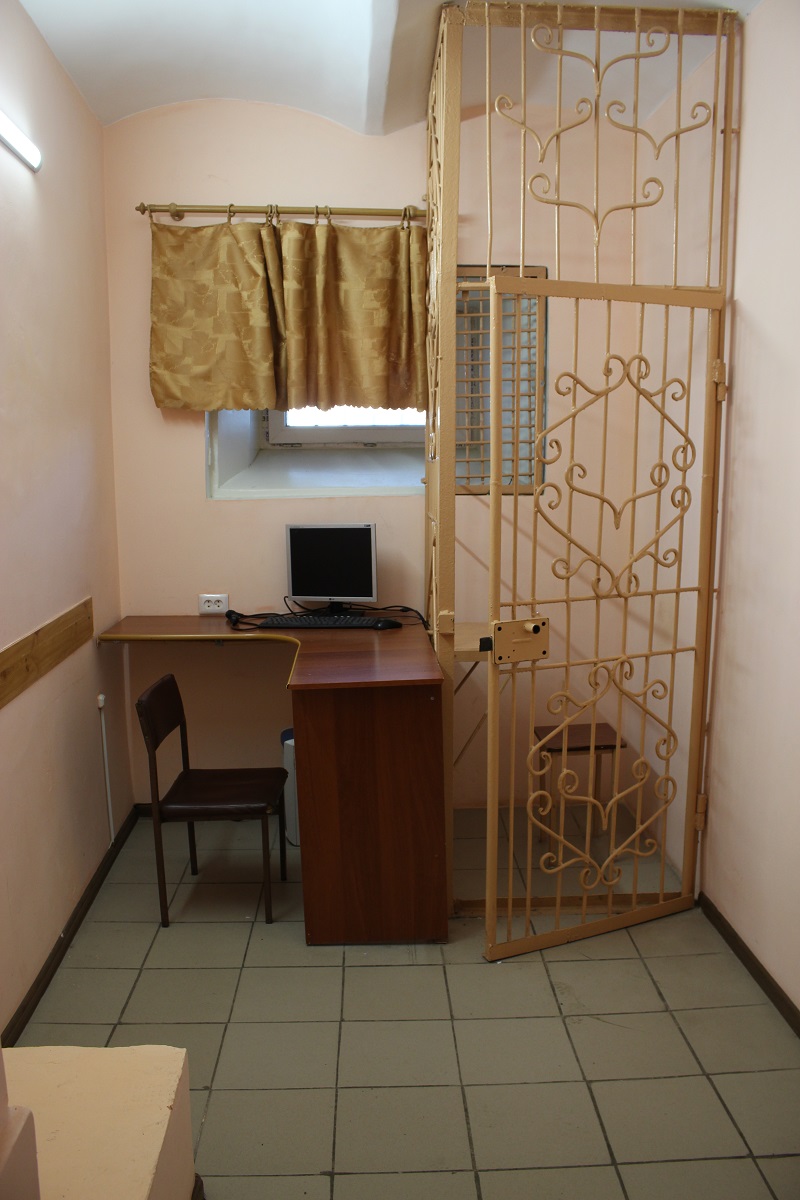
Cells for life-sentenced prisoners
Convicts stay in such cells while the process of appealing the court ruling is ongoing and while they wait for transfer to a penal institution.
Transit cells
Transit cells house convicts evacuated from dangerous regions.
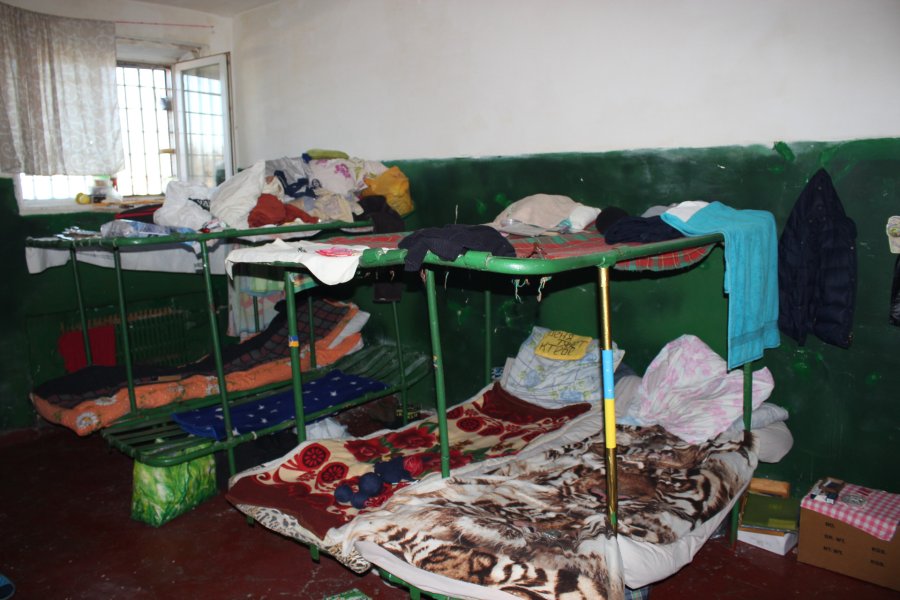
Bath and laundry complex
Out of six washing machines, three are new, and all are in use.
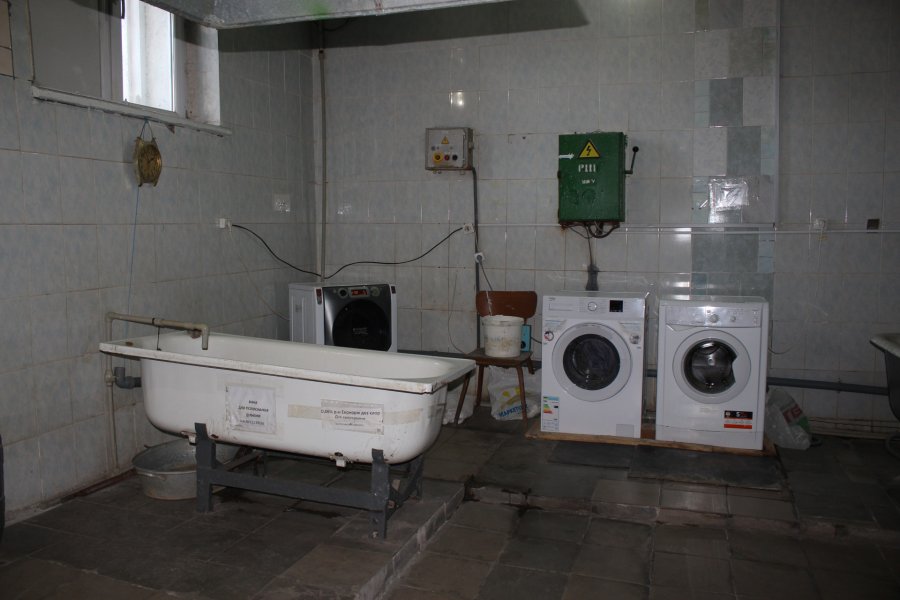
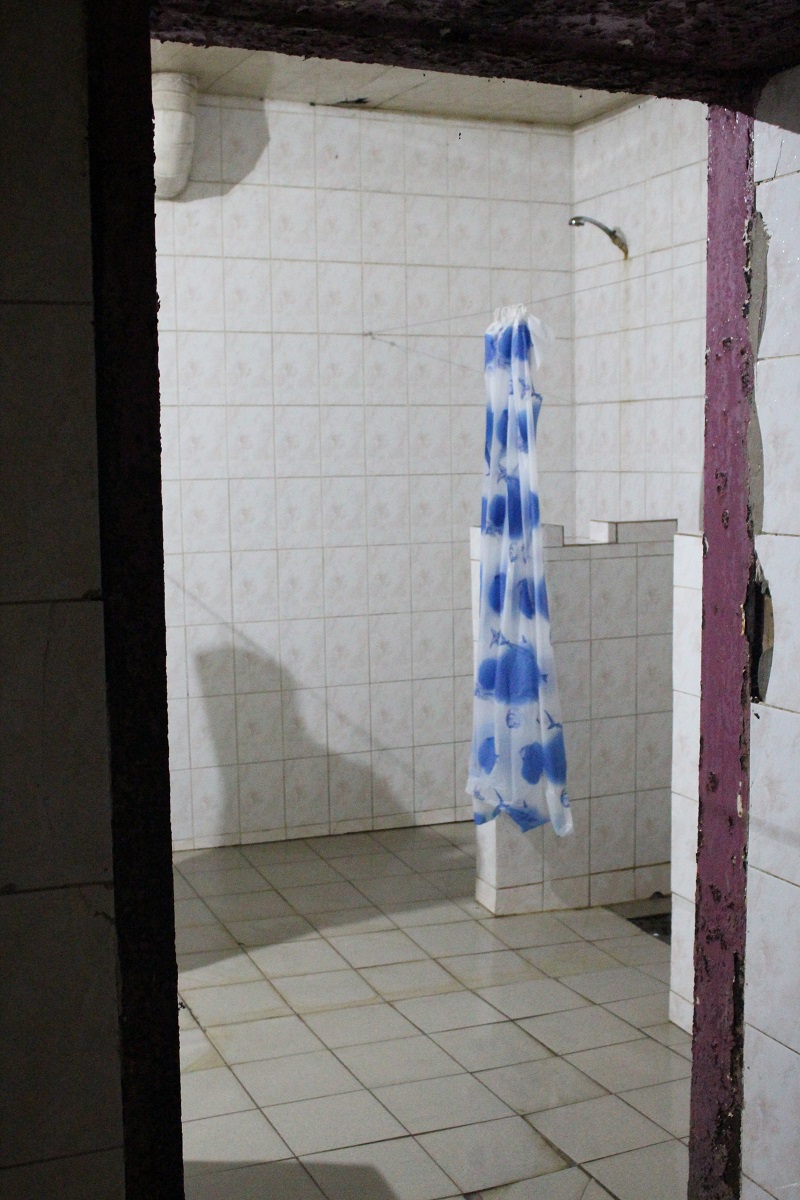
Water for bathing in the bathhouse is heated in a boiler. Prisoners and convicts have no ability to adjust the water; the stalls are separated by curtains, and rubber mats are absent.
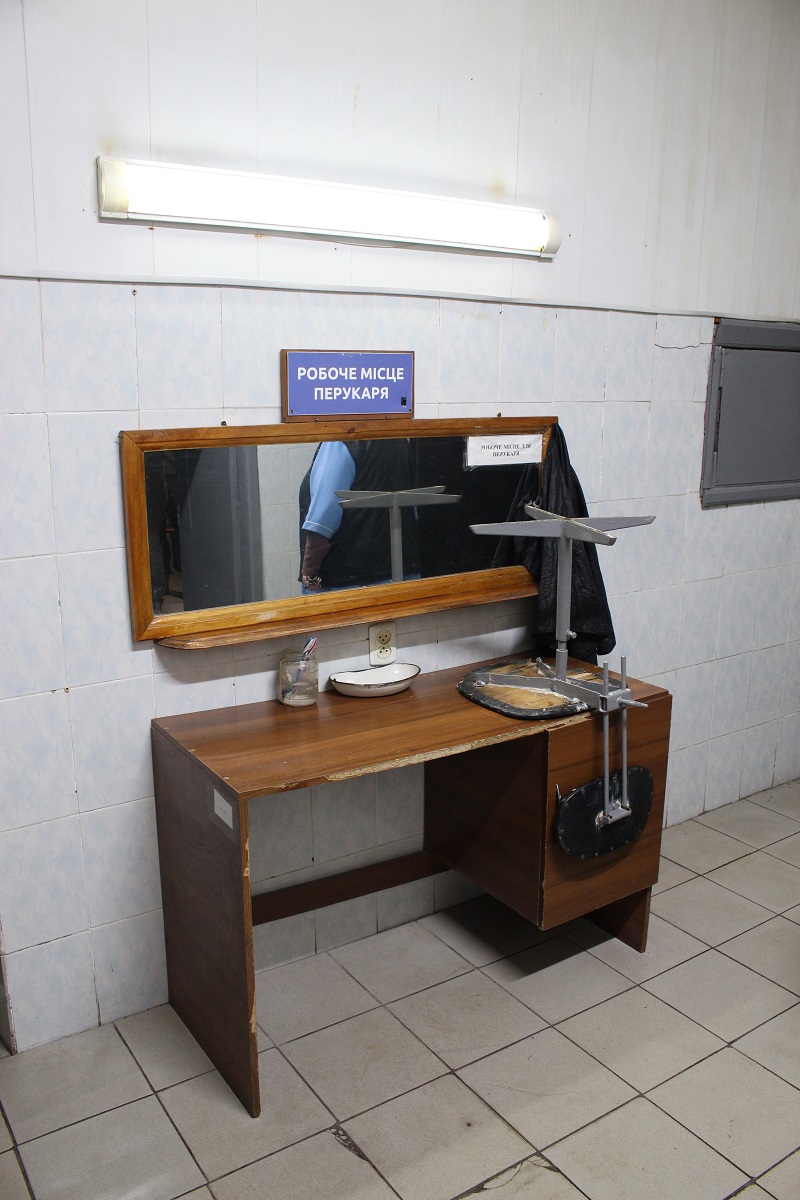
There is no paramedic’s corner, and the log of bodily injuries was not in the bathhouse. There is a barber room available.
Workshops
There is a sewing workshop operating in the institution.
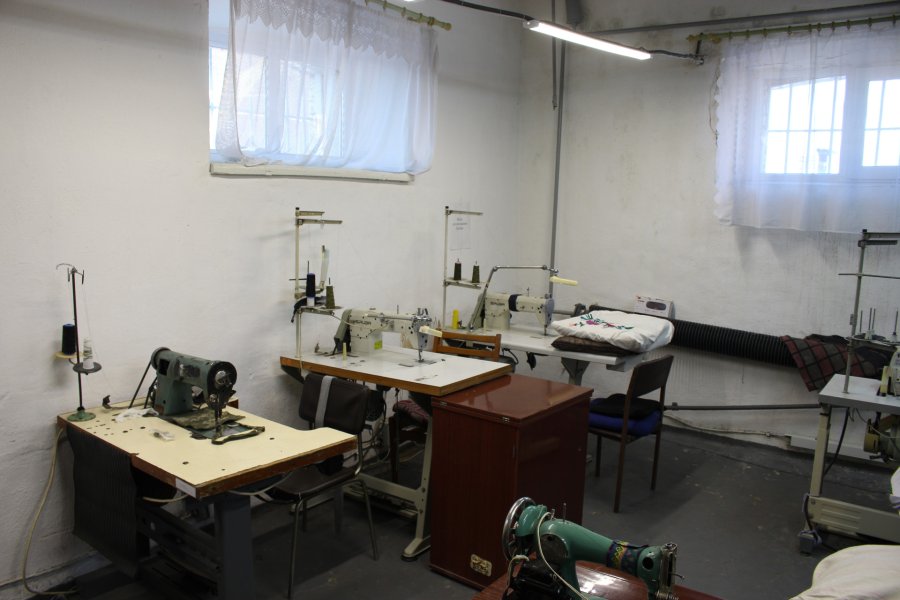
4 prisoners and one convict work here. Both convicts and prisoners work in the workshops of their own free will, with civil-law contracts concluded.
Intake unit
Upon arrival at the institution, a person spends up to 2 hours in the intake unit, where they undergo a search and examination by a doctor, and then are transferred to quarantine cells for two weeks.
A medical representative is present during the processing.
Cells for minors
Sports hall for minors:
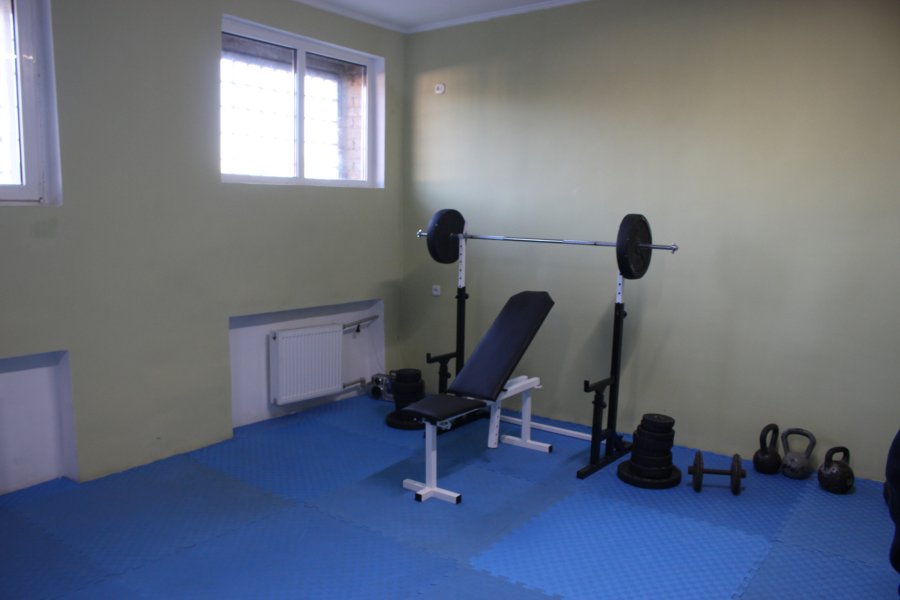
They are taken to the gym cell by cell. Thus, minors have the opportunity to play tennis and exercise on the equipment.
Housekeeping staff
In total, 12 people work here, 10 men and two women.
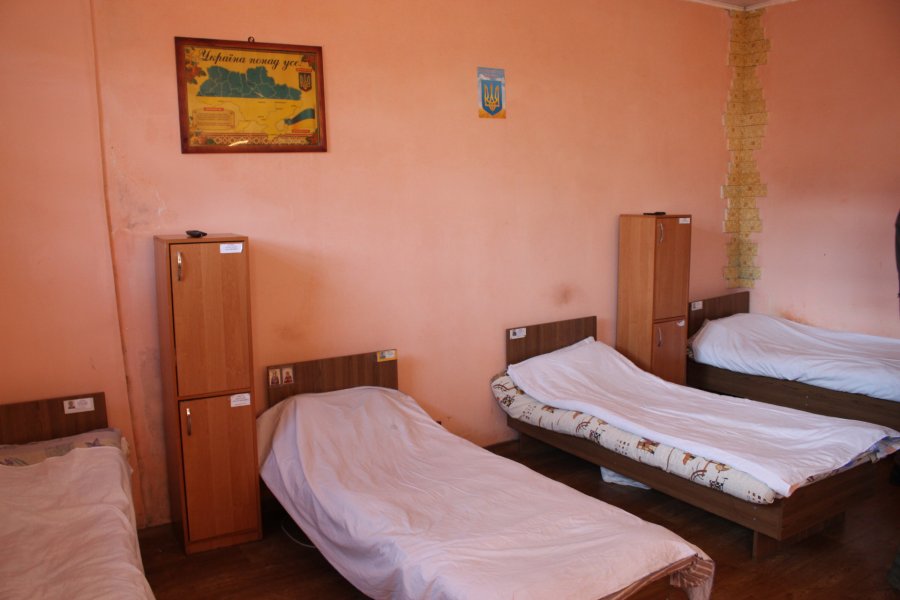
Mother and child room
A pregnant woman is staying here.
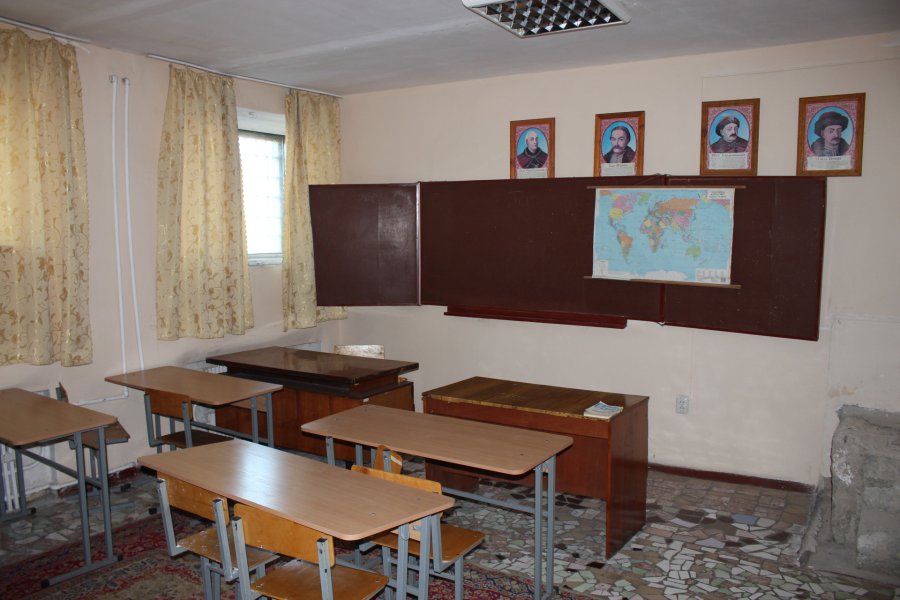
Classroom
Regardless of the number of prisoners, teachers come to teach the minors.
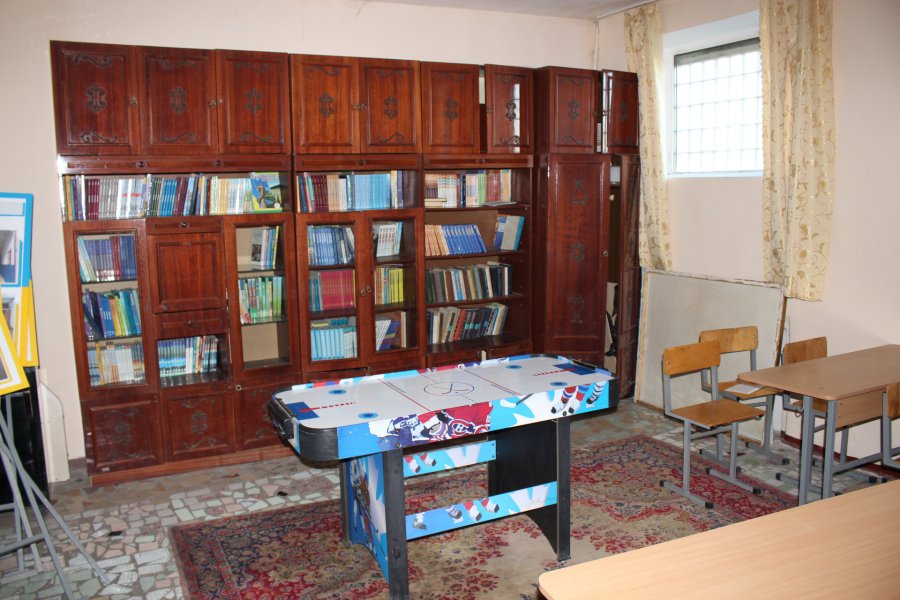
Women’s cells
Prisoner P. complained that she had been transported from the temporarily occupied territory and has no contact with relatives, and there is no money for phone calls.
Library
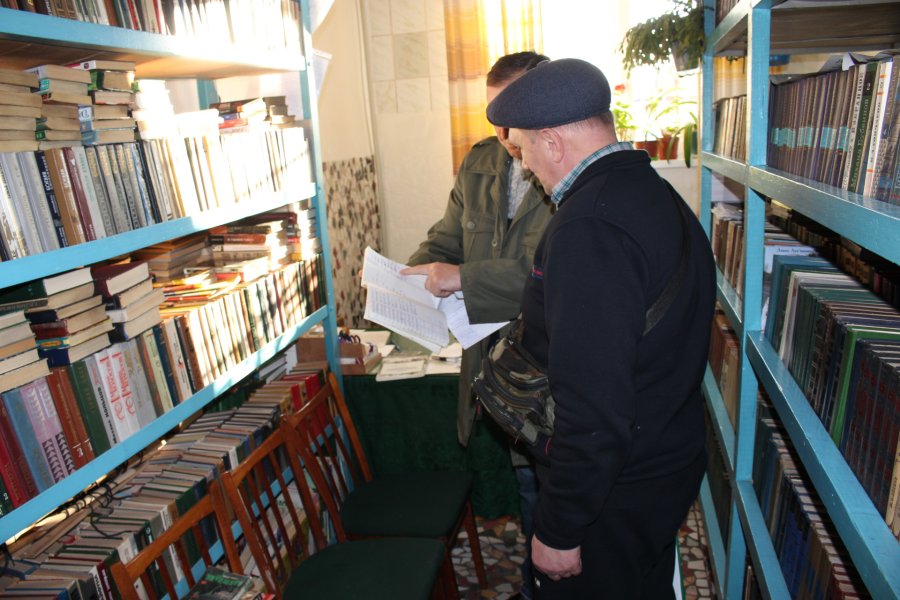
Historical books and detective novels are in highest demand; all legal literature is currently on loan. Records are kept in a log.
Shop
Persons in custody have a receipt for available funds on hand. They can order goods according to the assortment: prisoners write an application, and the products and items are delivered to the cells.
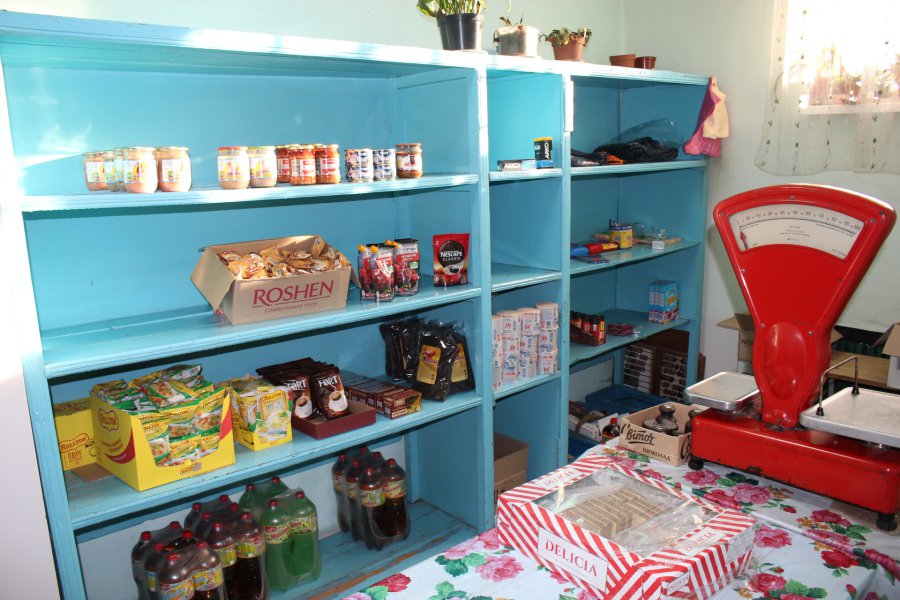
Prisoners also have the opportunity to order goods separately to their own taste.
Investigation rooms
Meetings with a lawyer take place in the investigation rooms. The panic button works; it was tested.