Report on the Results of a Monitoring Visit to State Institution ‘Ivano-Frankivsk Penal Institution No. 12’
On 11 February 2023, a monitoring group consisting of an assistant to a Member of Parliament of Ukraine, Kostiantyn Kasai; a member of the Public Council under the Ministry of Justice of Ukraine, Serhii Zuikov; an assistant to a Member of Parliament of Ukraine, Yaroslav Yurchyshyn; KHPG Programme Coordinator Andrii Didenko; and journalist for the “Poriad z vamy” [Beside You] news agency, Oleksii Yaroslavtsev, conducted a follow-up preventive monitoring visit to the state institution “Ivano-Frankivsk Penal Institution (No. 12)”.
The previous visit took place on 7 July 2022.
This year’s visit was conducted within the framework of the project “Reducing Suffering of Prisoners in the Context of the War in Ukraine”, funded by the Government of Denmark in partnership with DIGNITY — The Danish Institute Against Torture.
The purpose of the visit was to collect and analyse data regarding the observance of human rights in the penal institution.
The head of the institution is Lieutenant Colonel of the Internal Service Volodymyr Ivanovych Atamaniuk.
The monitors gained access to the institution’s premises quickly and without obstruction, and had the opportunity to visit the guard posts and any other areas, as well as speak with convicted persons, including on an anonymous basis.
According to the institution’s management, there is one member of staff for every 2.2 inmates (convicted persons). Two psychologists work at the institution. During 2022, 316 people arrived at the institution; of these, 33 were new arrivals and 64 were in transit. During 2022, 6 people died in the institution.
11 of the convicted persons are employed, 10 of whom are under employment contracts. The average monthly salary of the convicted persons is 1,200 hryvnias. There is a shop operating in the institution.
18 people are registered as HIV/AIDS positive. 19 people are registered as prone to suicide; 9 as prone to self-harm; and 5 as prone to escape.
In 2022, there was 1 complaint regarding inadequate conditions of detention and inadequate medical care; there has also been one complaint since the beginning of 2023.
2 people have group II disability, and 8 people have group III disability.
In 2022, 6 people were released, 5 of whom were on parole, and one convicted person was transferred to a less severe punishment. Since the beginning of 2023, 2 people have been released on parole.
In 2022, there were 32 ambulance calls, and since the beginning of 2023, there have been 6 such calls. In 2022, 35 cases of bodily injury were recorded: 26 occurred upon arrival, and 9 during the stay in the institution. Since the beginning of 2023, only one case has been recorded, which occurred upon arrival at the institution.
In 2022, 15 long-term and 112 short-term visits were granted. For the 2023 period, as of the time of the visit, 3 long-term visits and 21 short-term visits had been granted.
Humanitarian needs of the institution: detergents, dishes for food distribution, bed linen, and a cargo van for transporting goods and materials (up to 3 tonnes).
General Information
State Institution “Ivano-Frankivsk Penal Institution (No. 12)” functions as a pre-trial detention centre. The institution also has a maximum-security sector for those sentenced to life imprisonment.
The monitors visited the reception rooms for citizens, parcel and transfer delivery posts, rooms for visits and telephone conversations, checkpoints, the duty unit, premises and cells of the receiving ward, interrogation rooms, punishment cells, the medical unit, the maximum-security sector and cells for life-sentenced prisoners; and cells for juvenile and female detainees. The monitors reviewed the relevant logs.
However, in the institution’s medical unit, due to obstruction of the monitoring visit, an act concerning said violation was drawn up. The act was signed by the senior corps officer, Volodymyr Vasylovych Vasyliv, and the municipal medical unit paramedic, Oleksandr Mykhailovych Stadnyk.
Residential quarters for convicted persons employed in facility maintenance, the kitchen, the medical unit, and the laundry and bath complex were inspected.
The institution has a practice of using IP telephony for detainees. To do this, inmates submit an application to the head of the institution, and subsequently, they are given the opportunity to make a call within 24 hours. The investigator is notified after the call is made.
In case of power outages, there is a backup diesel generator at the institution. For civilians, an “Invincibility Point” functions at the institution in the event of electricity blackouts.
Medical Unit
According to information provided by a medical worker, the medical unit’s inpatient ward consists of 3 rooms/wards, where 8 people were present at the time of the visit, 4 of whom have mental disorders. In addition, the medical unit includes 5 isolation wards for infectious diseases, where 6 people with active tuberculosis are being held.
Due to the refusal to grant the monitoring group access to medical offices and any medical documentation regarding the organisation of the medical unit’s work and the provision of medical assistance to inmates and convicted persons, an act was drawn up regarding obstruction of the monitoring visit.
At the same time, the monitoring group received a complaint from an inmate in one of the wards regarding the failure to provide medical assistance and the lack of proper treatment.
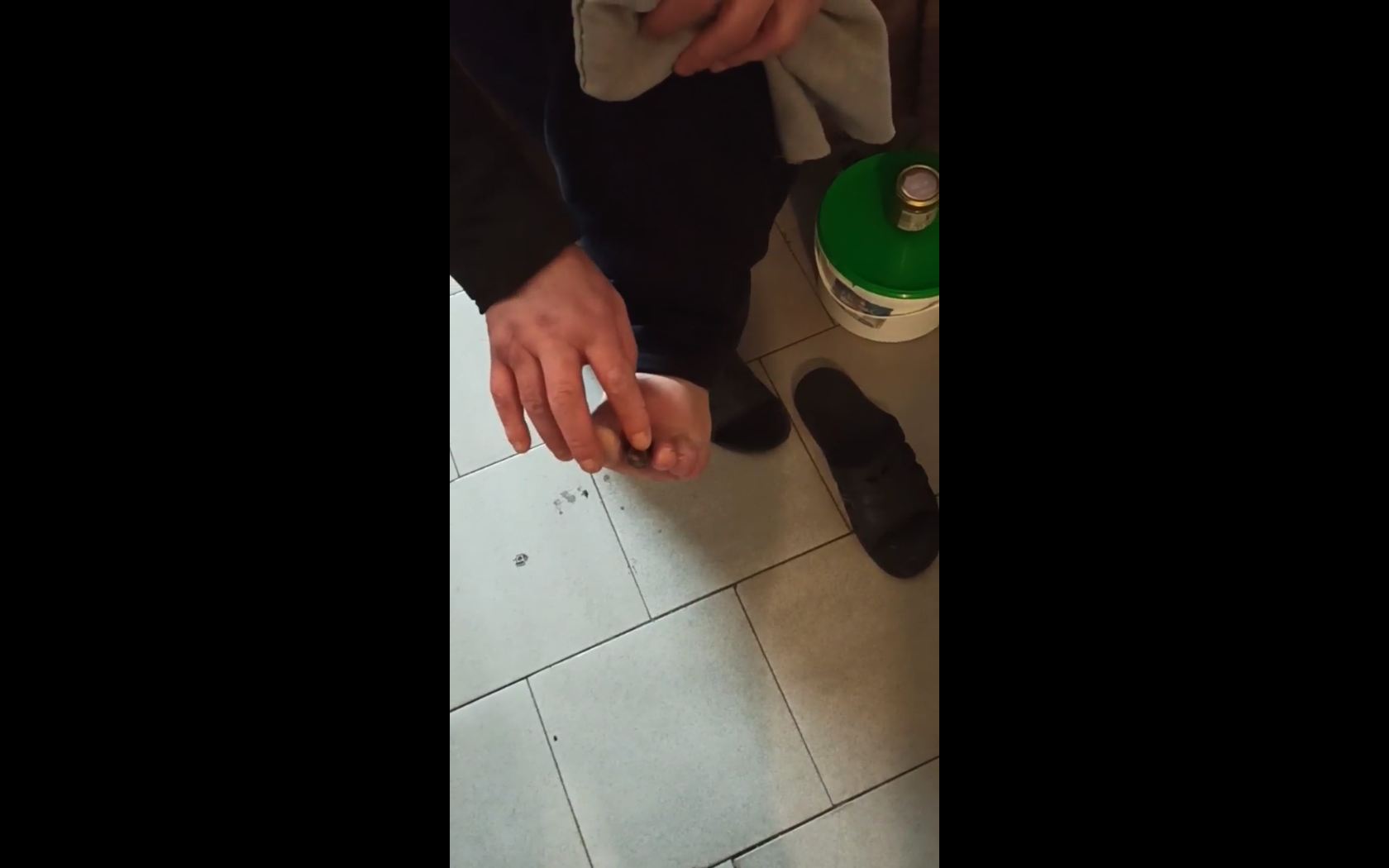
The wards are in a dilapidated state and require immediate repair.
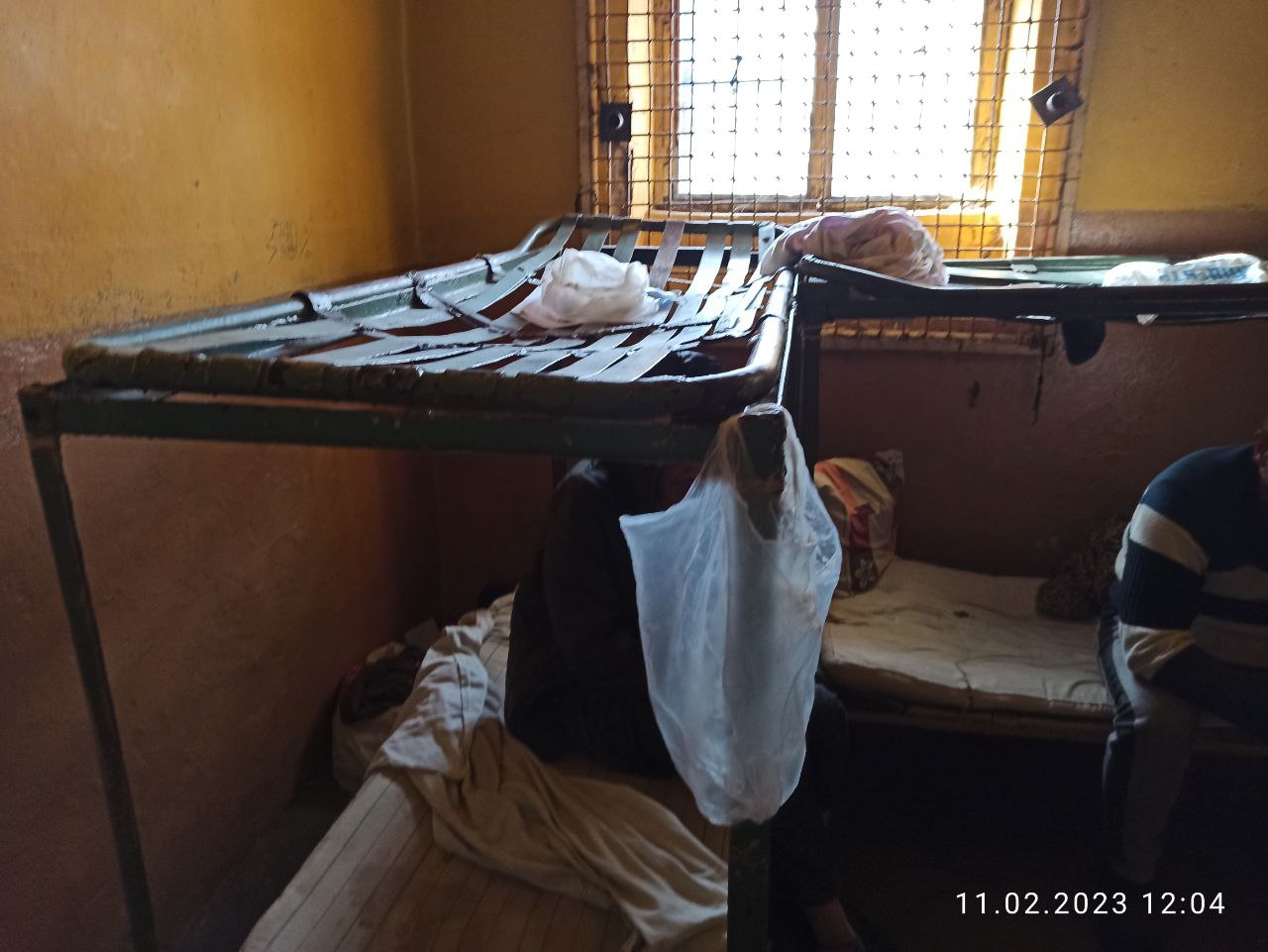
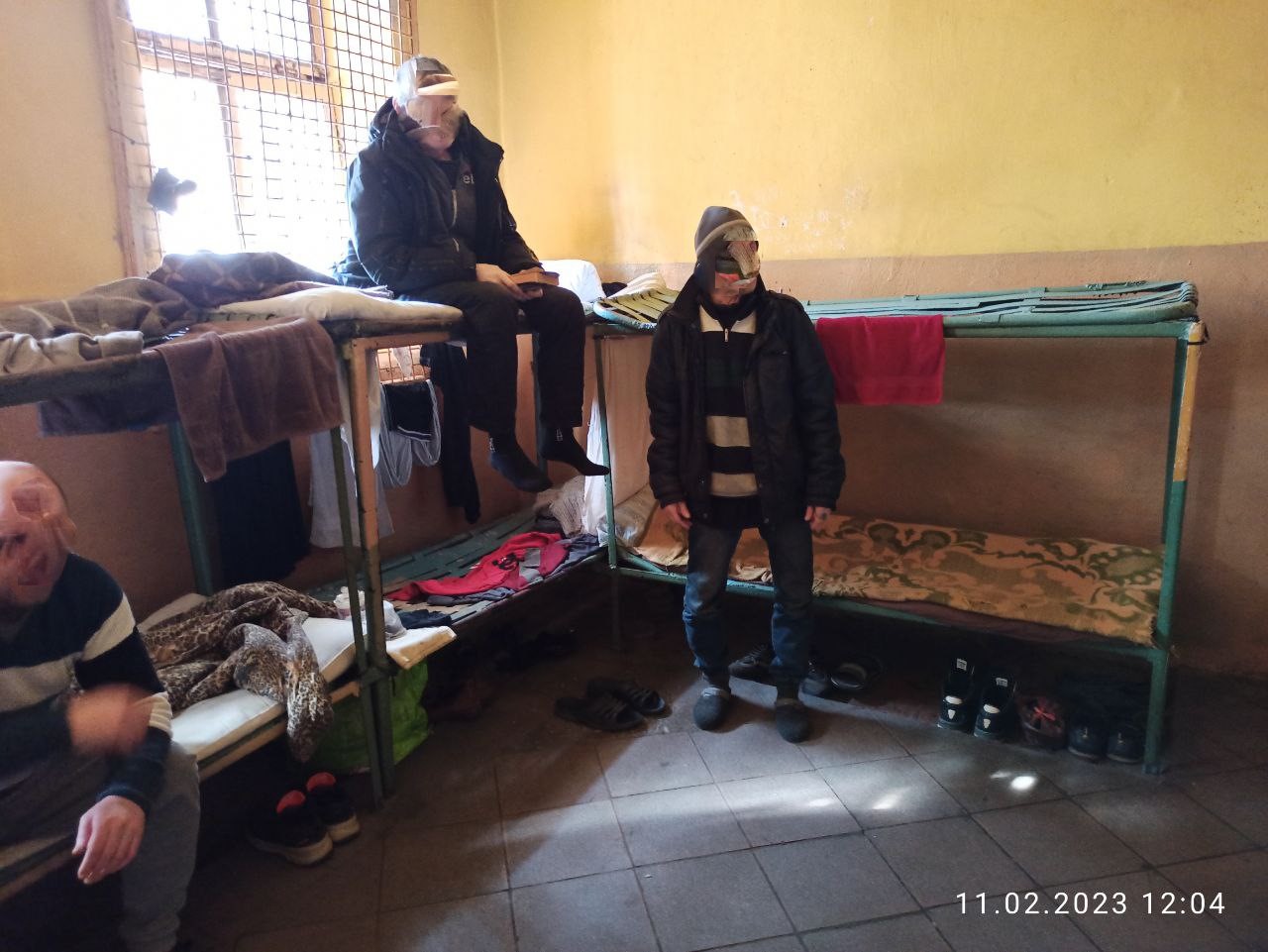
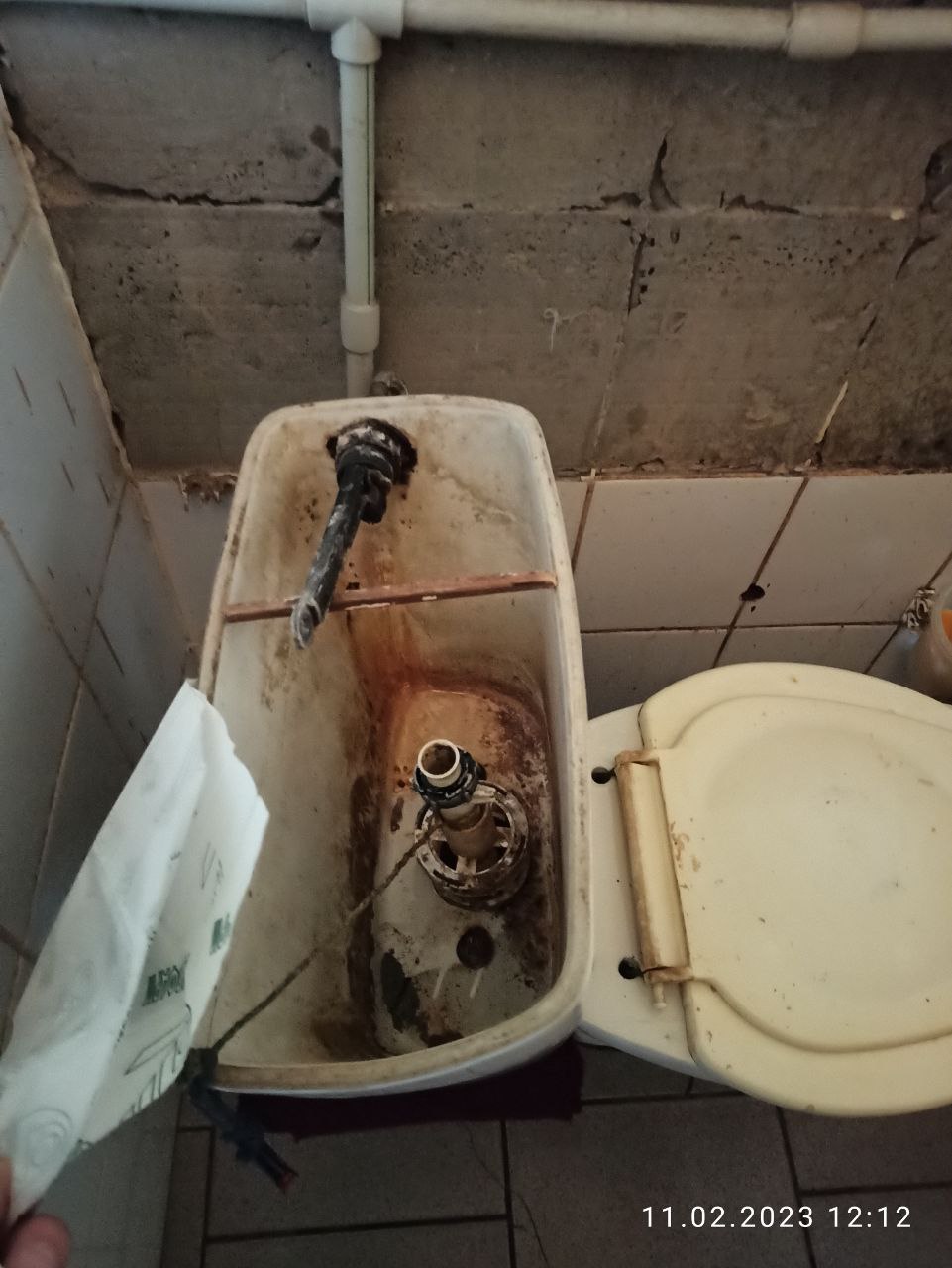
Receiving Ward
In the receiving ward, persons are held for up to two hours.
There is a toilet and a washbasin.
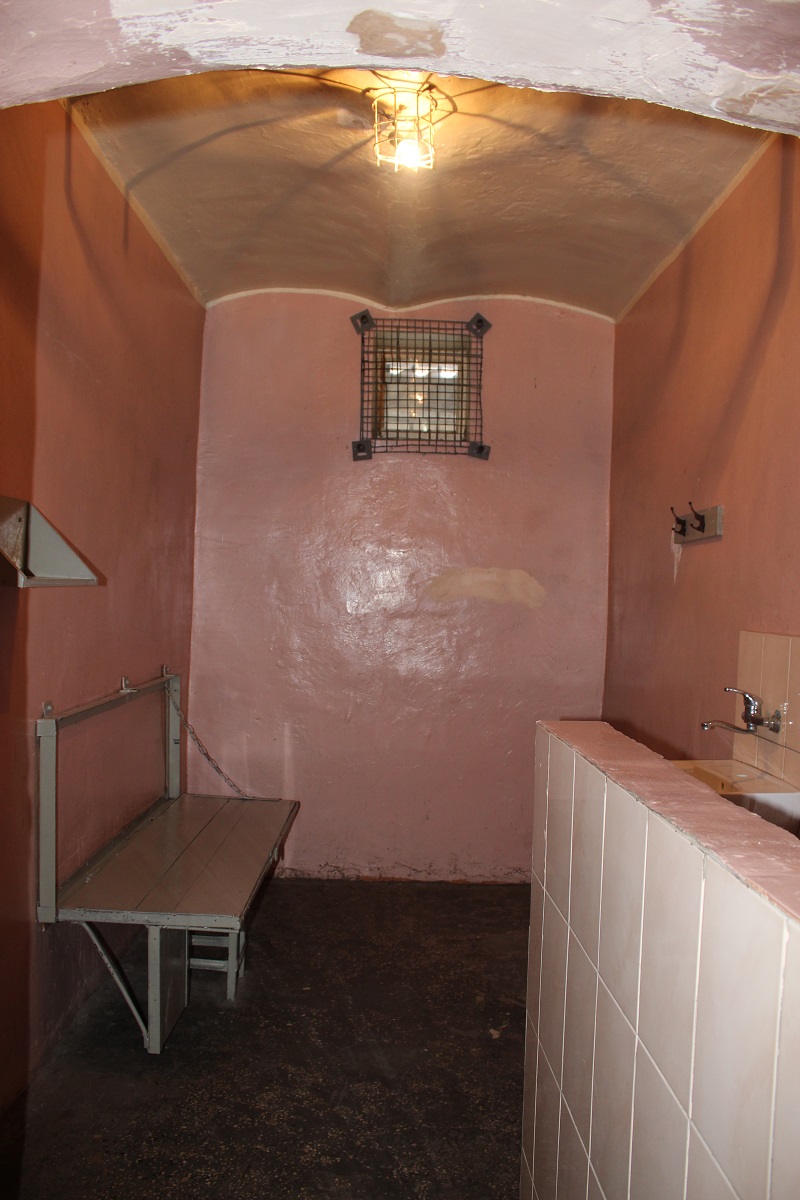
During the monitors' visit, new arrivals and persons who were leaving the institution for investigative actions were present in the ward.
There is also a paramedic’s area.
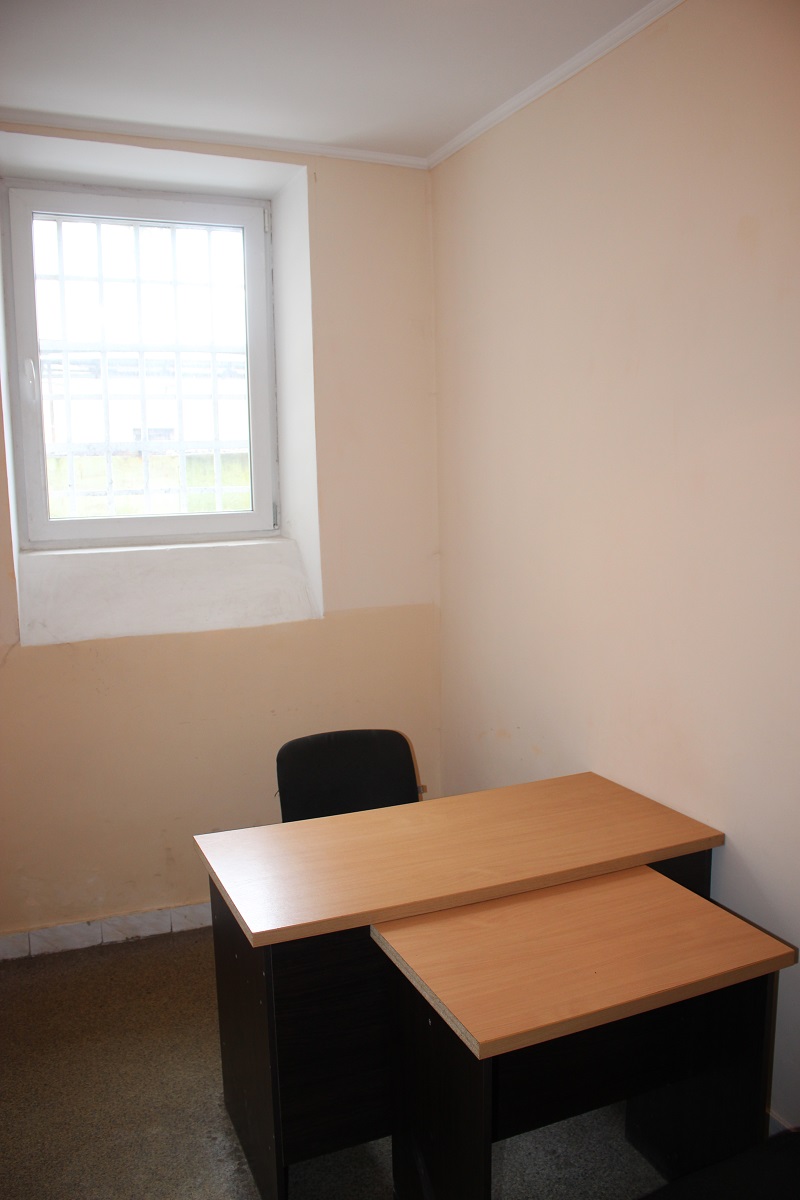
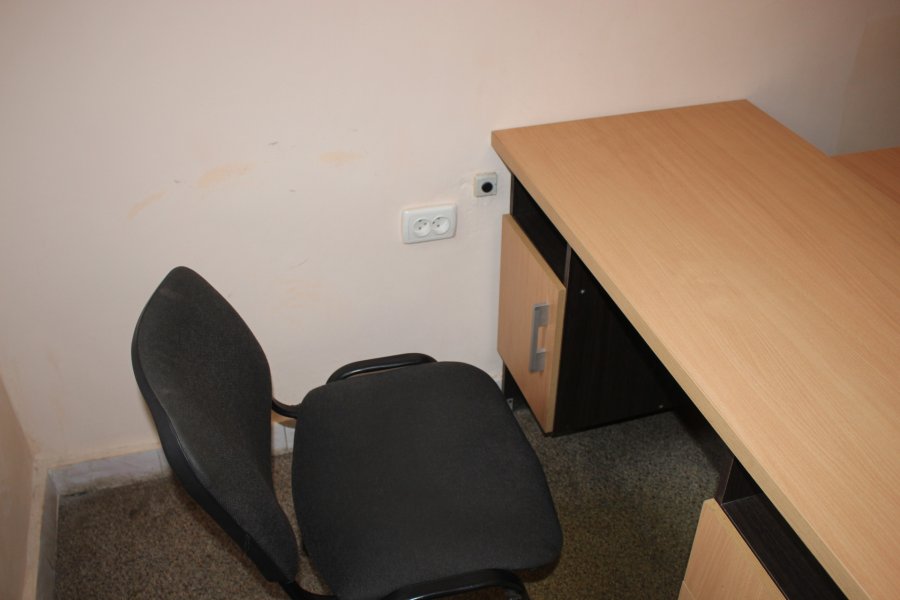
Interrogation Rooms
Cells
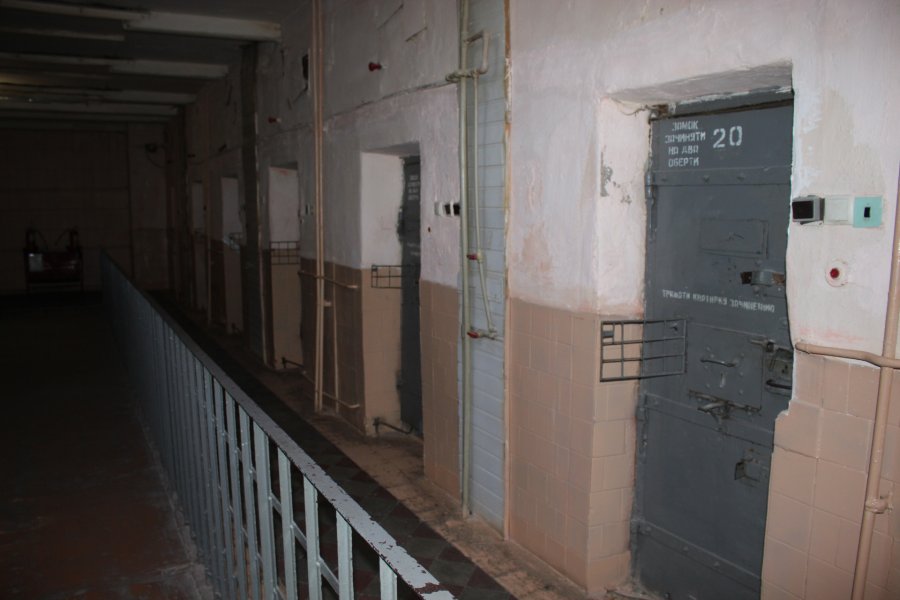
There are two types of cells for holding detainees: small cells for four people, and large cells for 12 people.
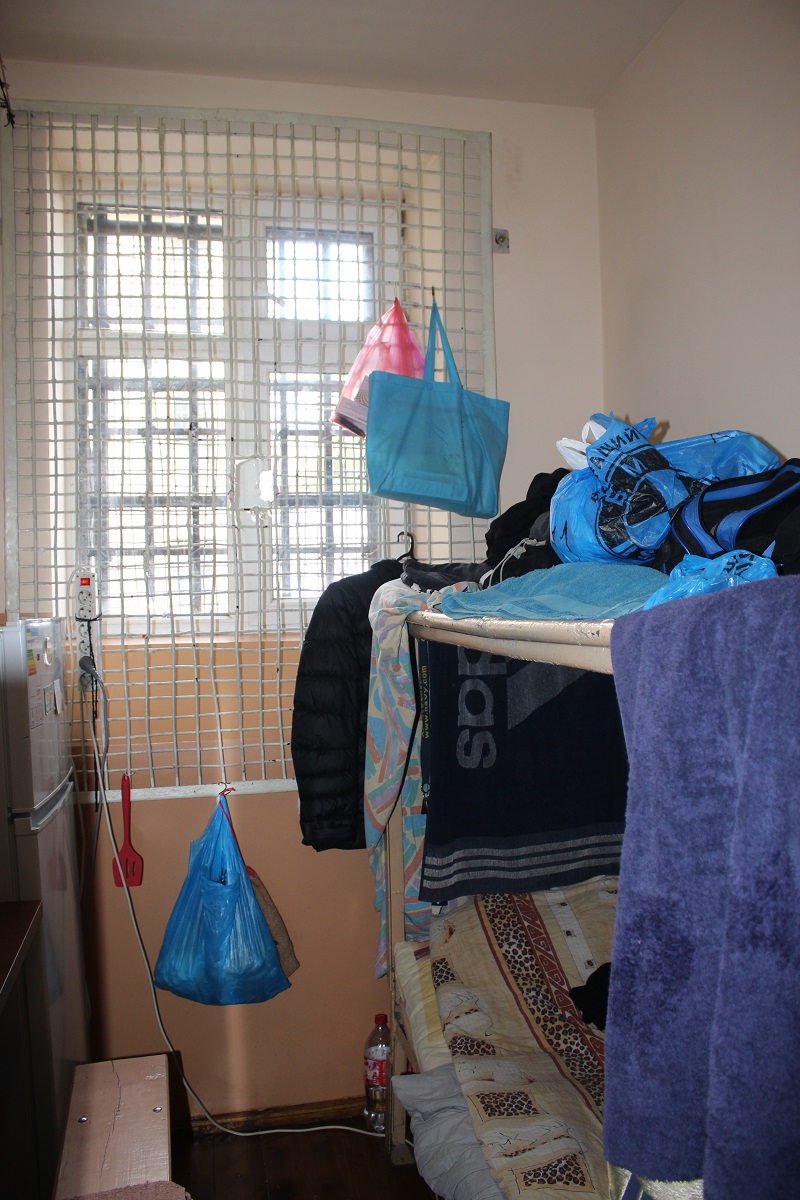
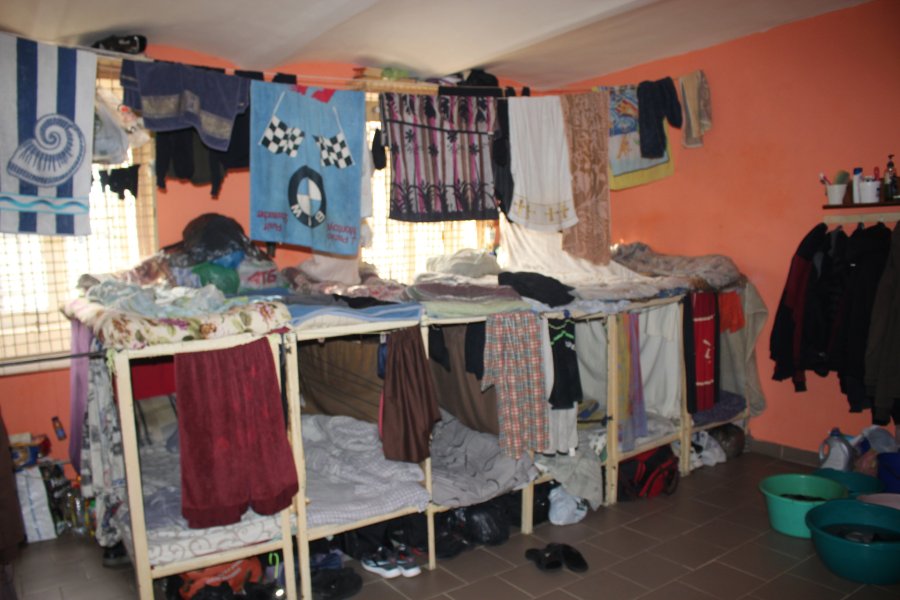
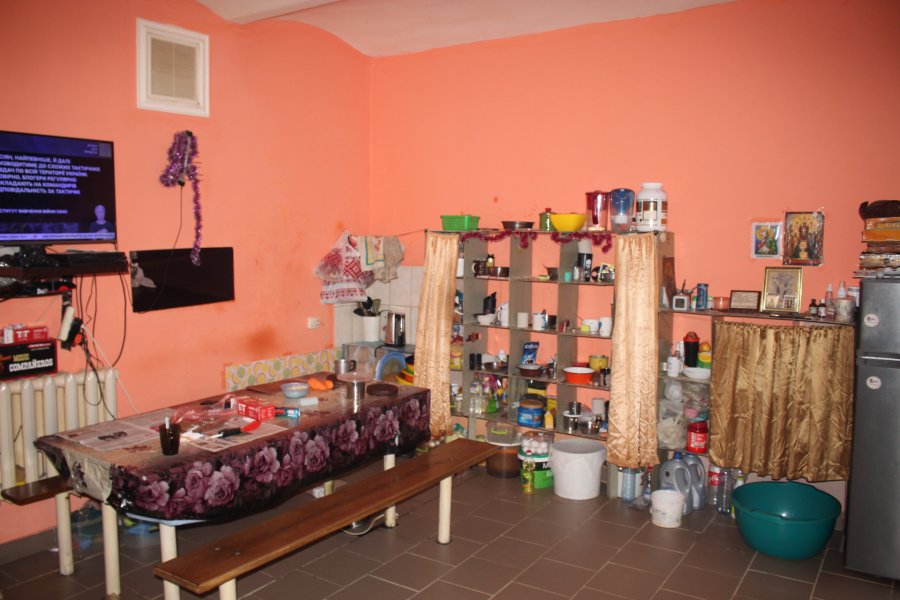
Minimum standards for the detention of remand prisoners are met.
Punishment Cell and Disciplinary Isolation Unit
As reported by the administration representatives, there have been no disciplined individuals so far this year.
Transit Cells
There is one transit cell in the institution. The cell holds prisoners from various institutions.
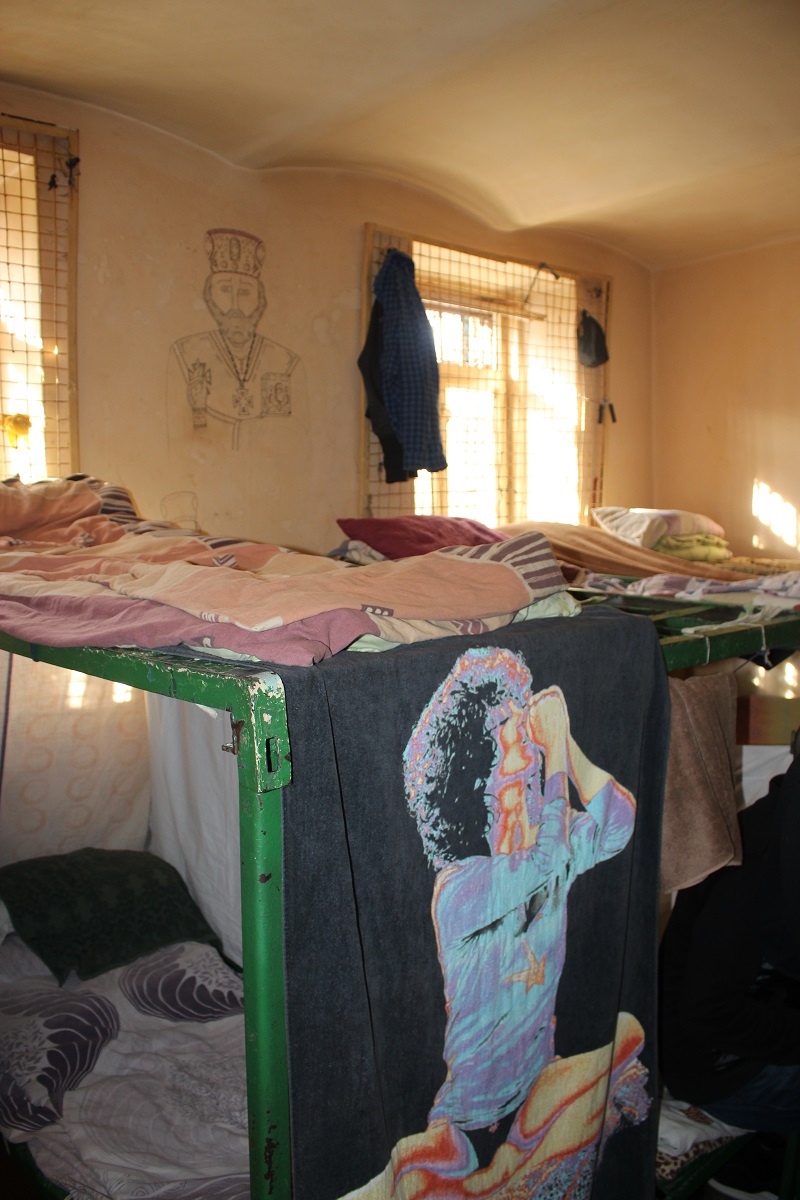
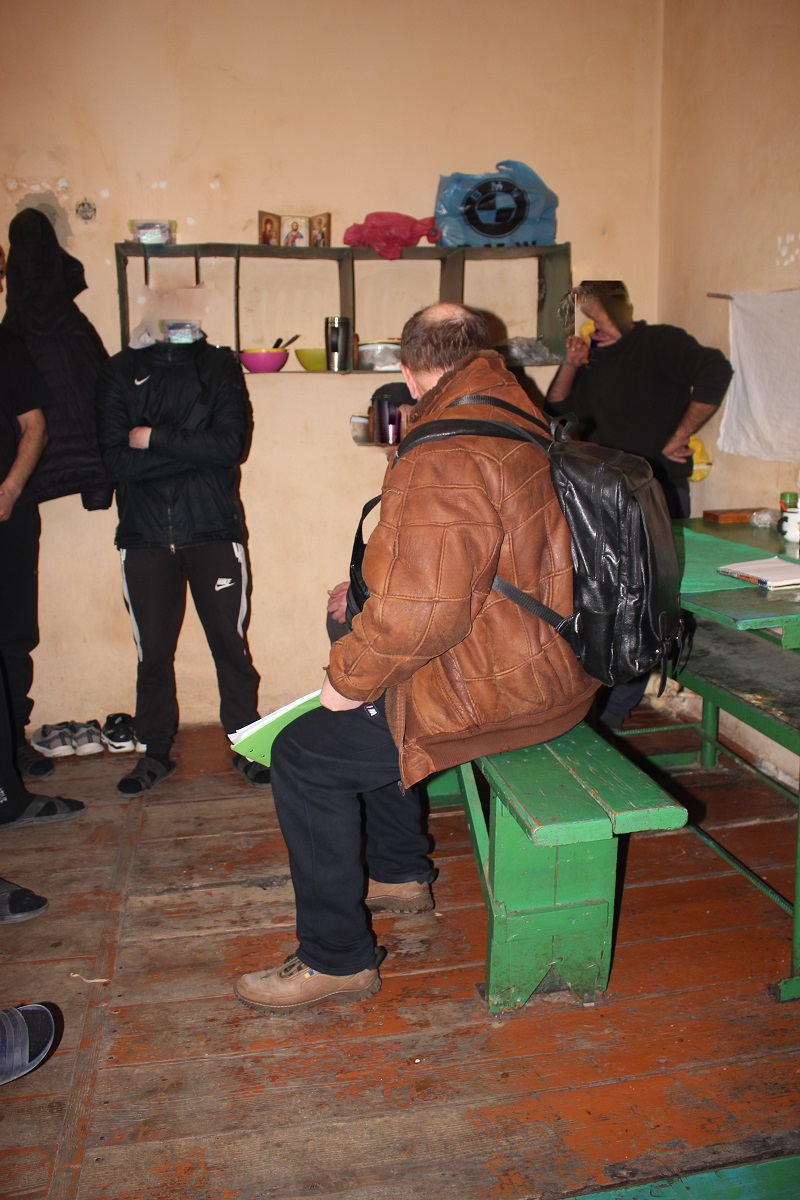
Some have been transferred from one institution to another; others are being escorted for treatment in multi-profile hospitals. Personal files are sealed. The monitors were able to speak with the convicted persons in transit on an anonymous basis. There were no complaints against the administration.
Cell for Juveniles
In the cell for juveniles, there was one young male detainee. The administration representative reported that the young man appeared to have mental disorders and is awaiting an expert evaluation.
Women’s Cells
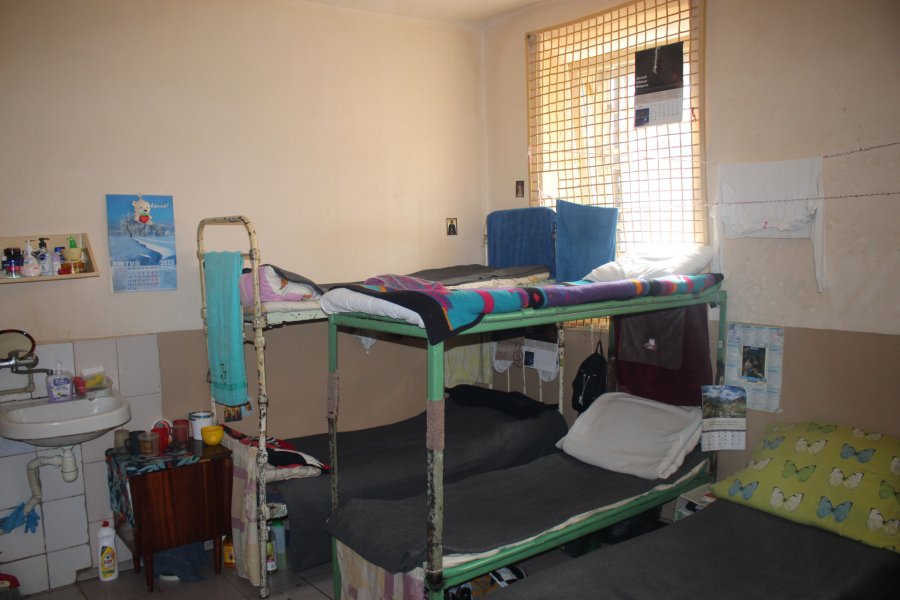
There are 22 female detainees held in the institution.
Cell for Mother and Child
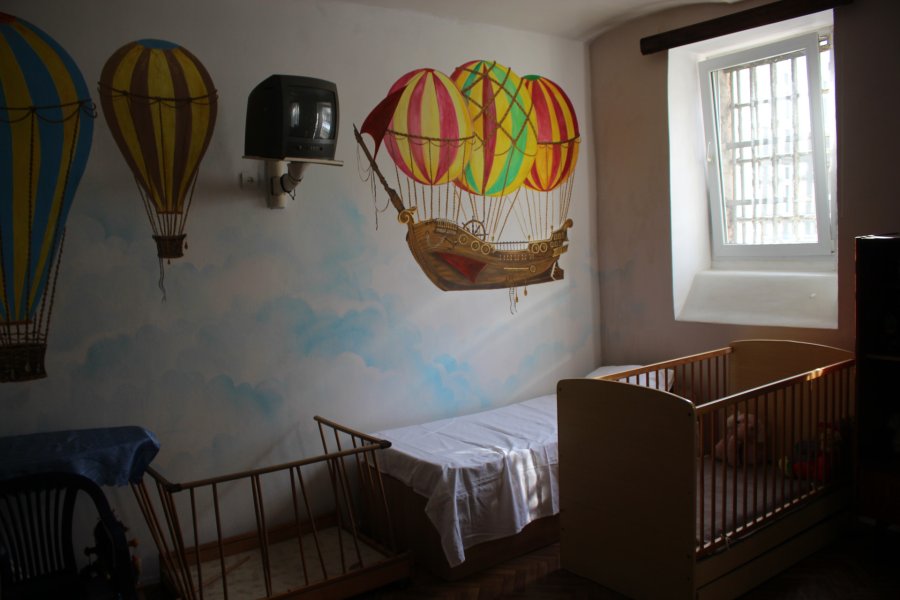
On the day of the visit, there were no women with children in the institution.
Laundry and Bath Complex
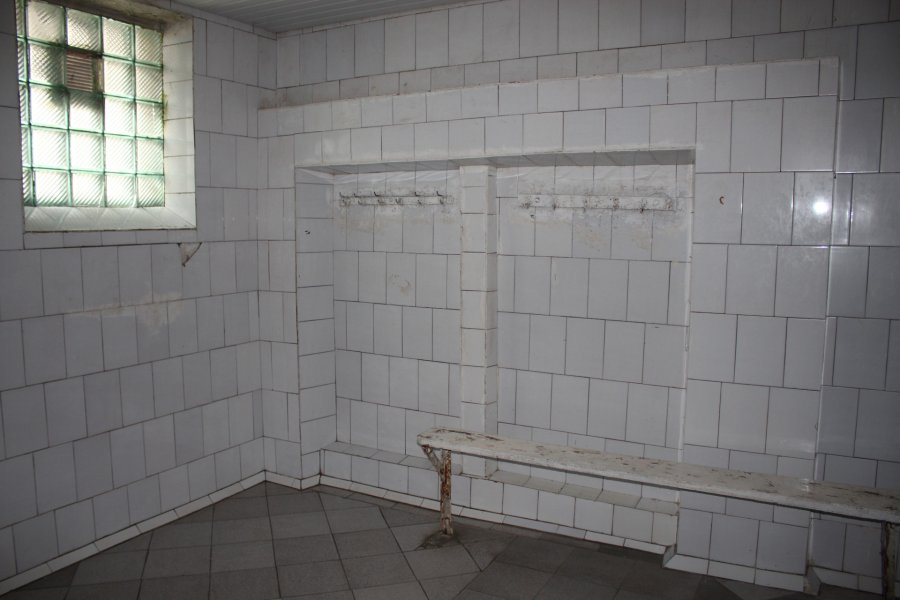
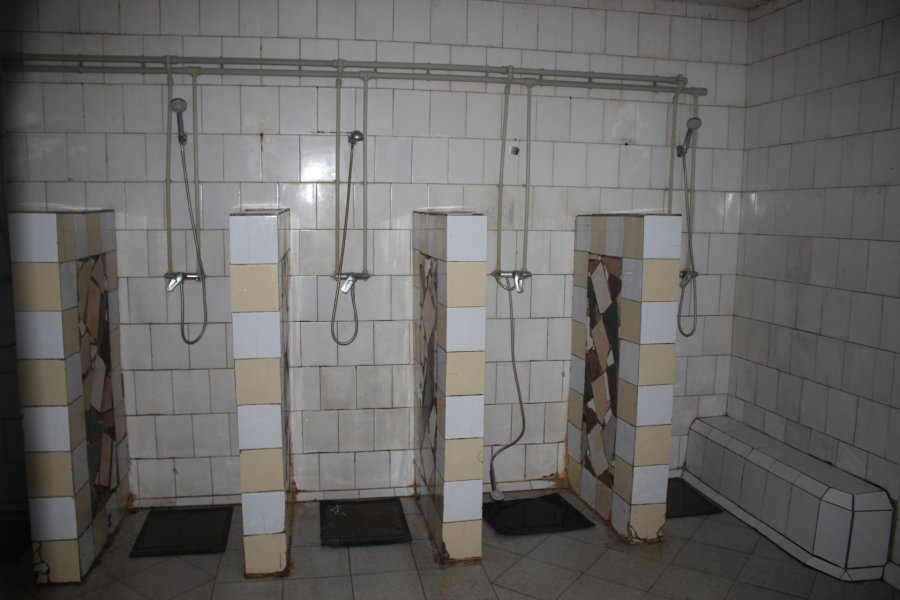
Shower cubicles are partitioned, but there are no curtains, which violates the prisoners’ right to privacy.
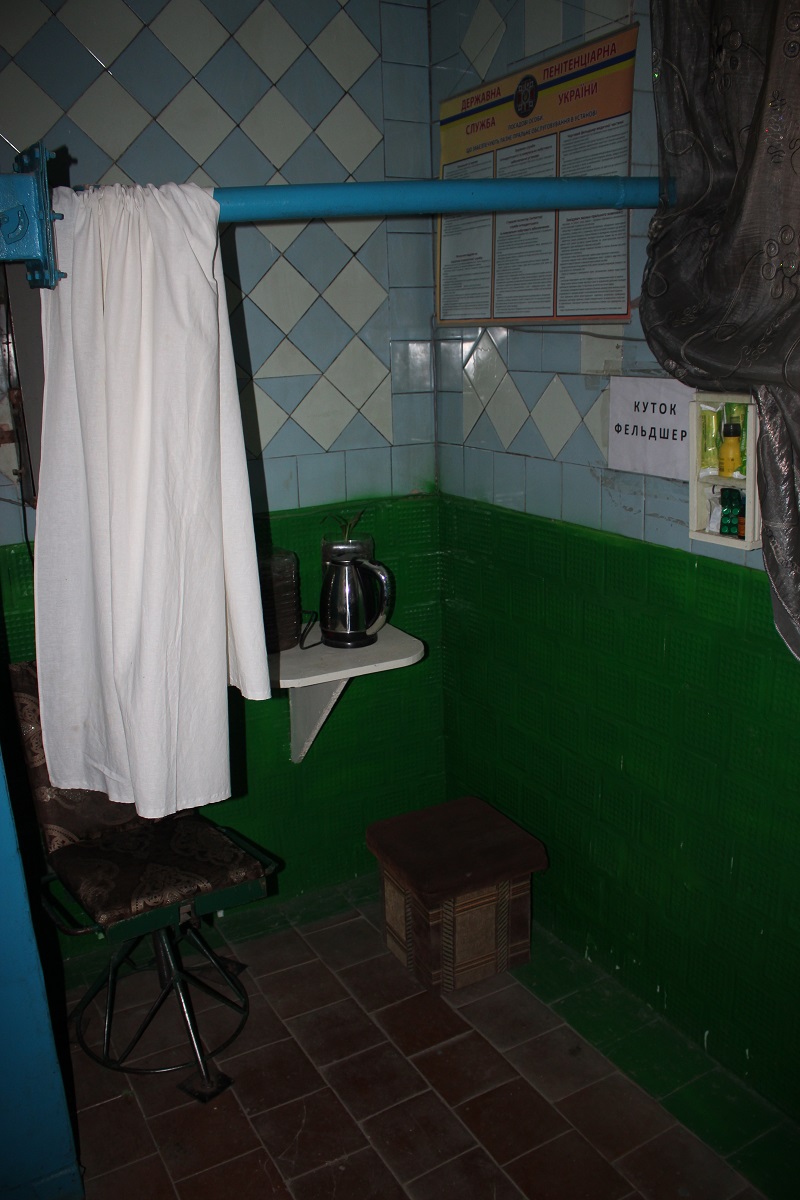
There is a paramedic’s area.
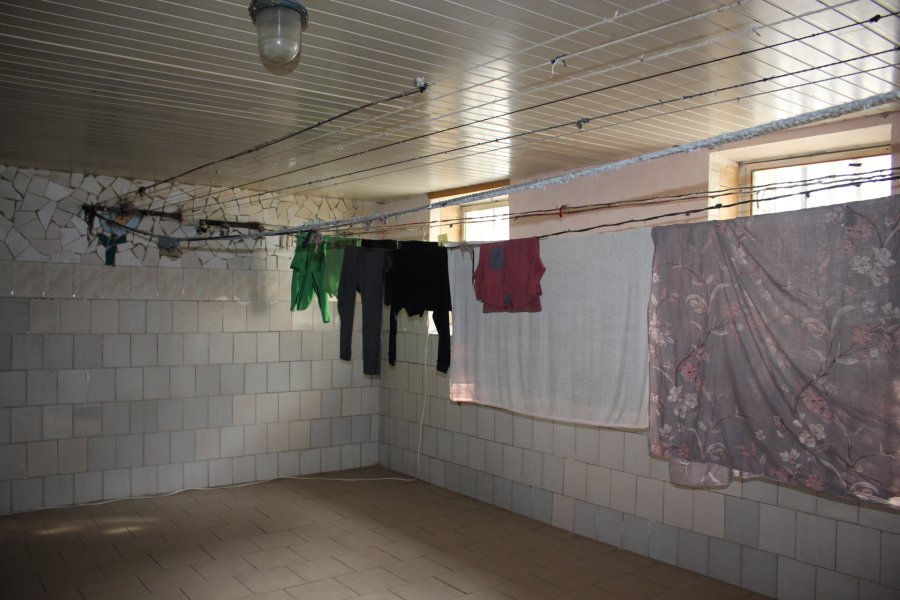
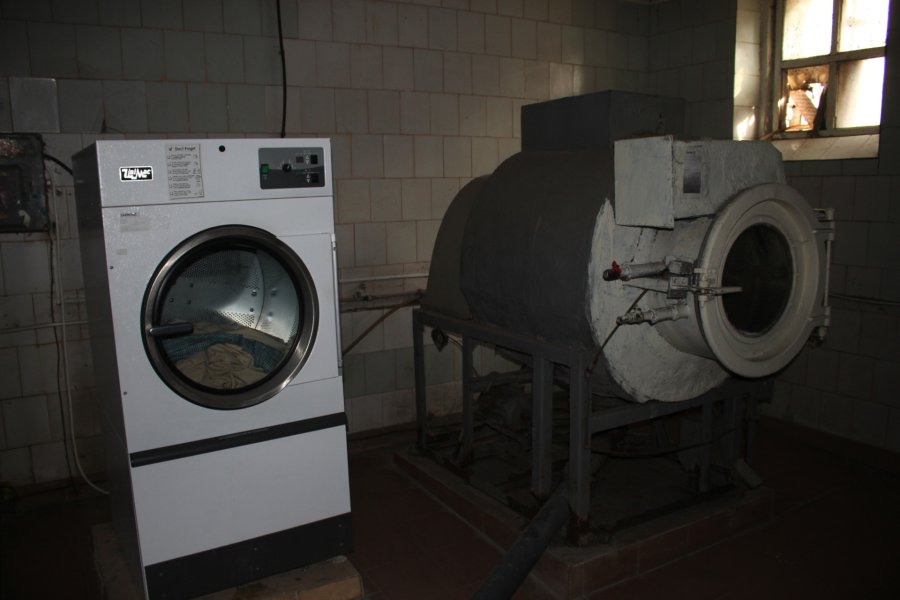
A drying room and washing machines serve the entire institution.
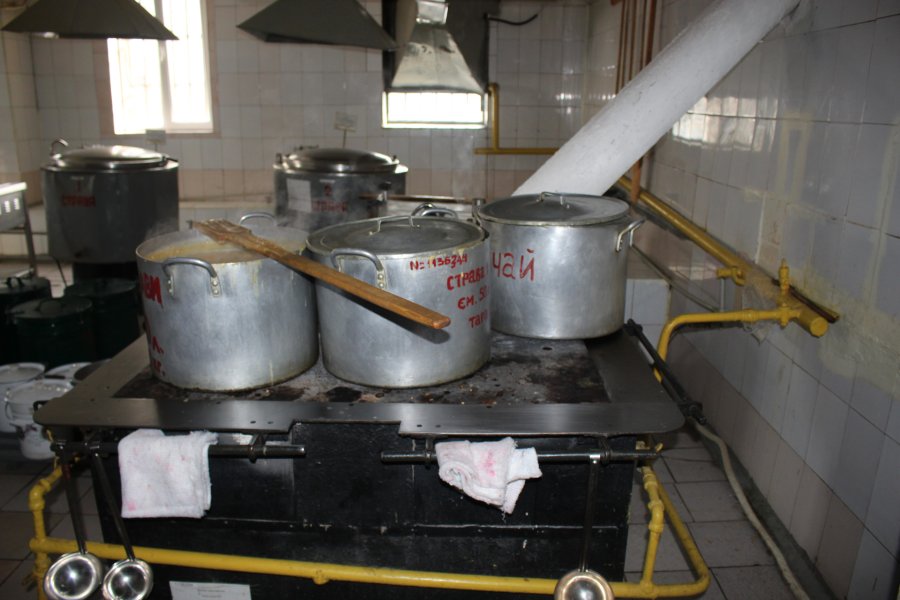
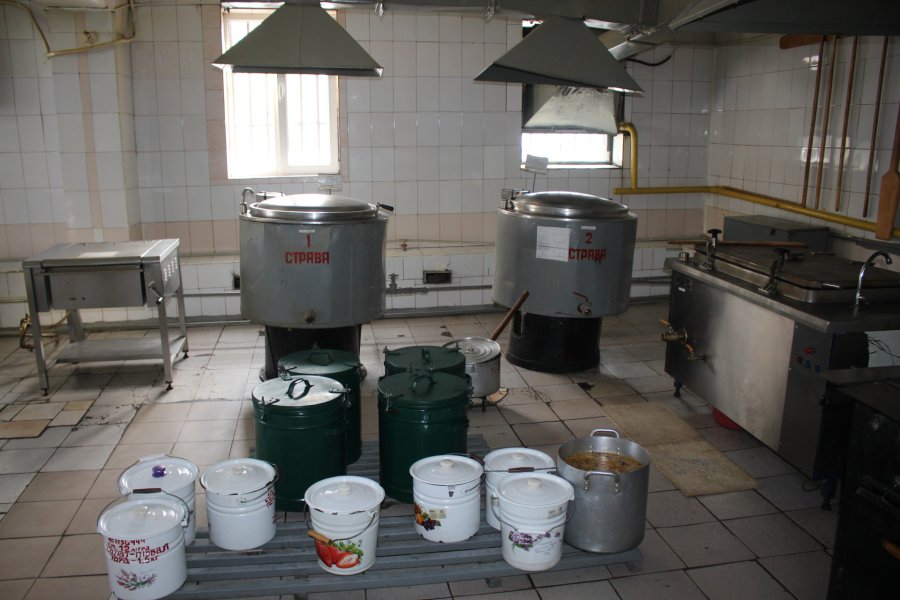
Kitchen
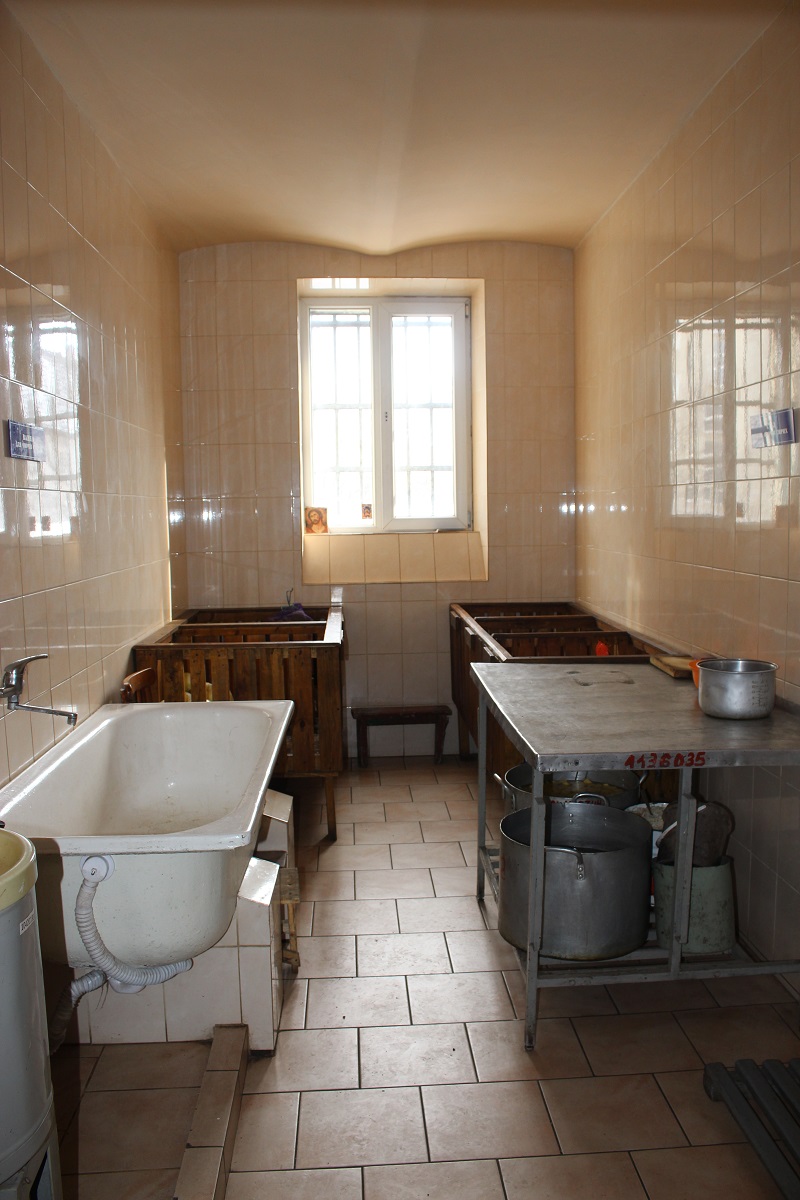
Convicted persons working under civil-labour contracts work in the kitchen.
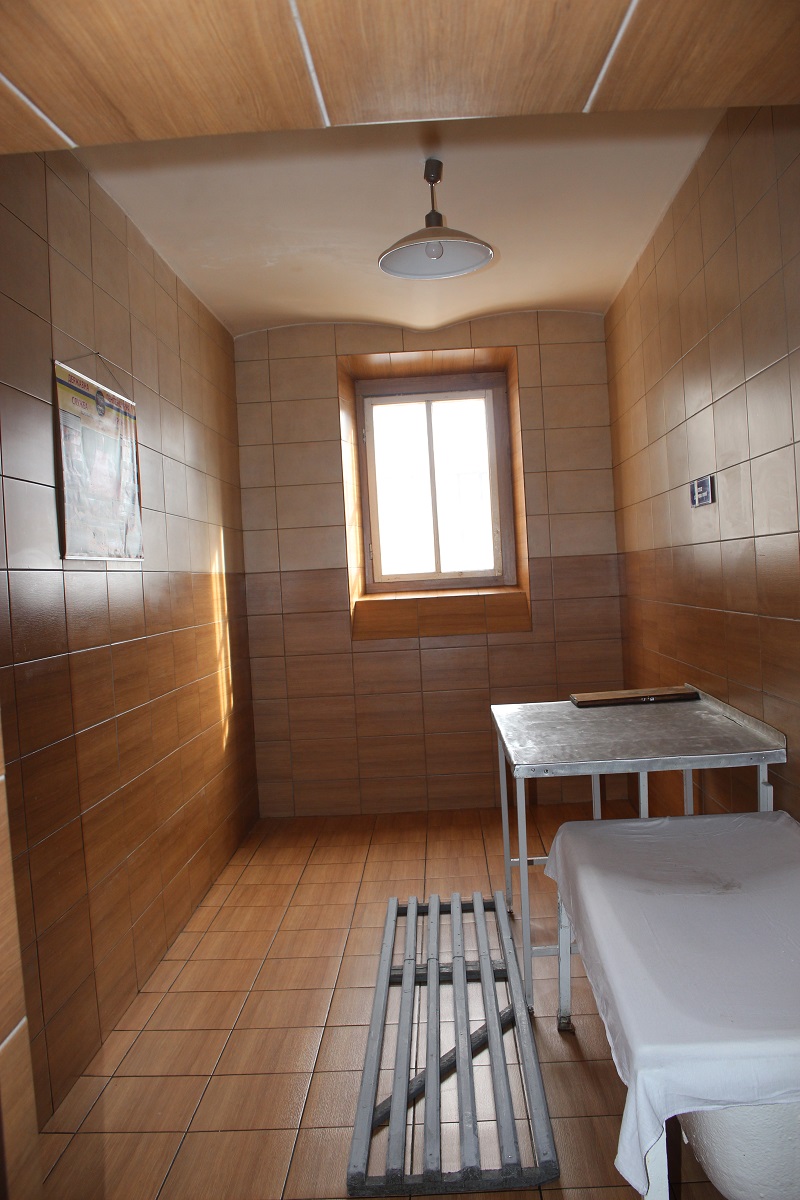
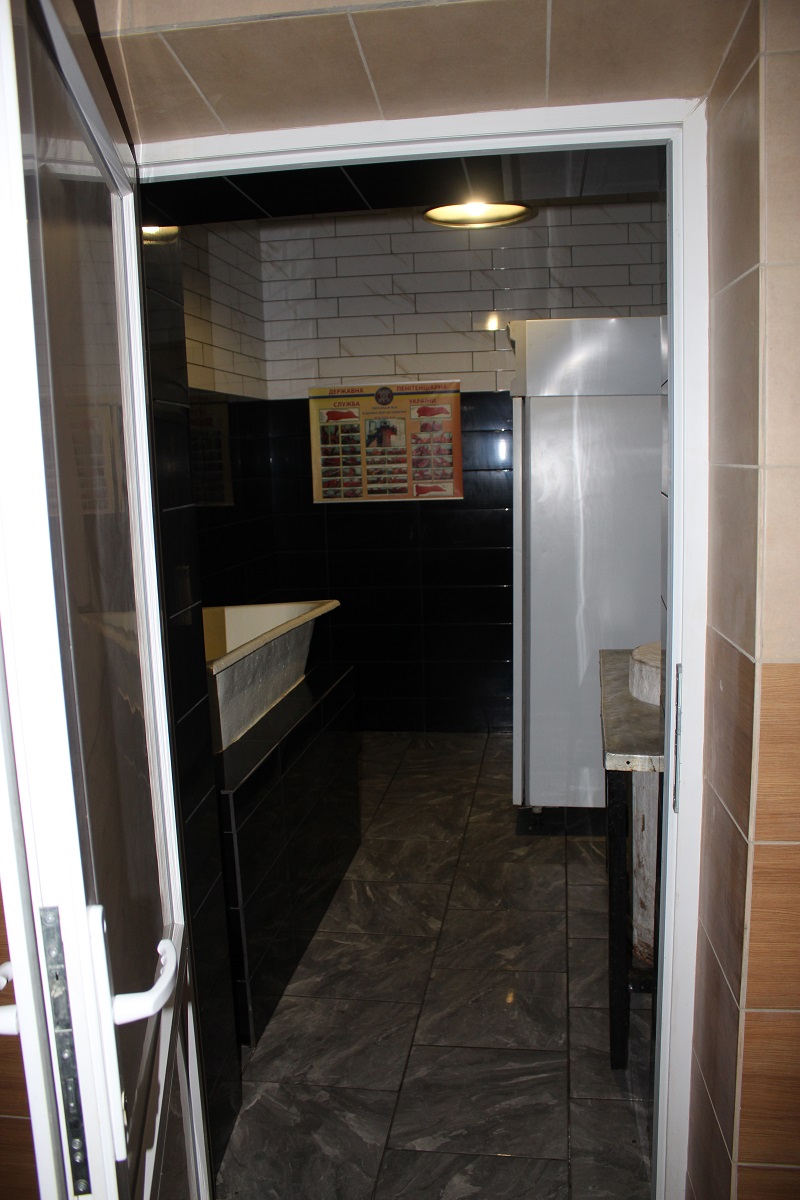
Compared to the previous visit in 2022, the monitors noted that the premises for the fish, meat, and vegetable processing departments had been renovated.
Cooking department:
Exercise Yards
There are six exercise yards, all of which are in use.
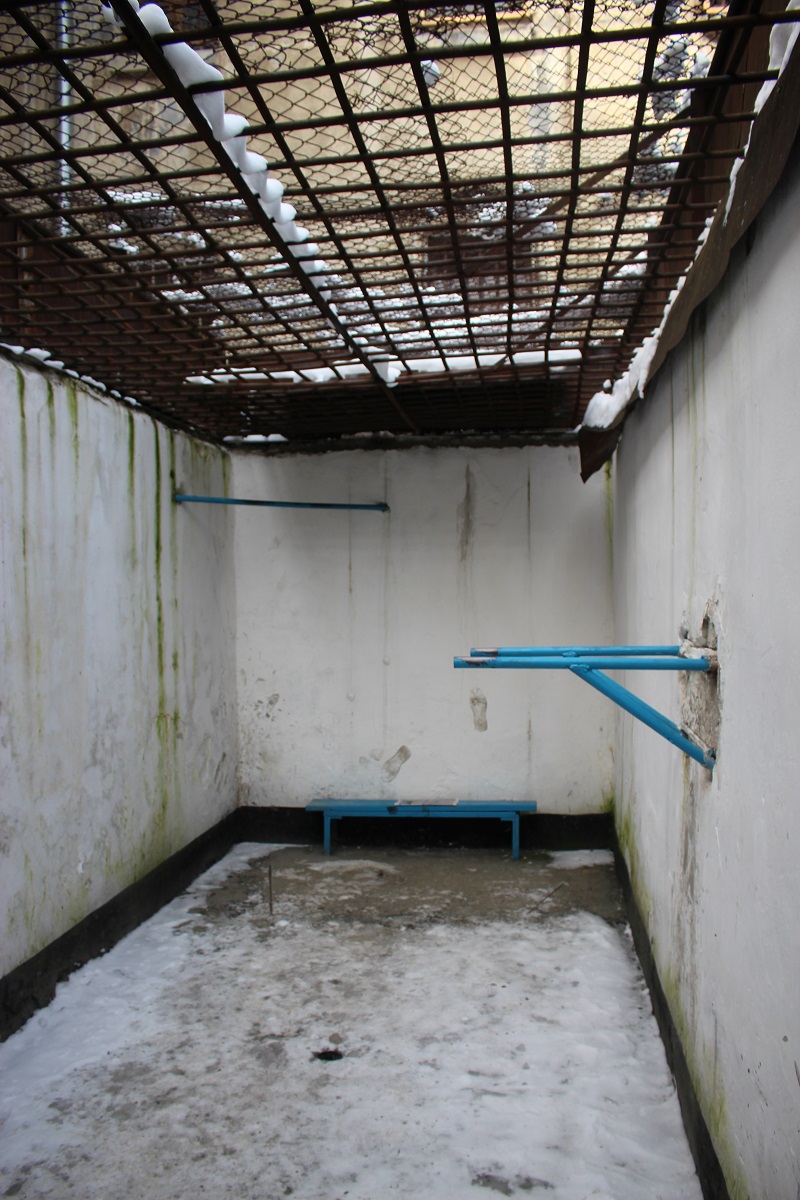
Strength training equipment is available.
Some yards have a protective canopy in case of rain.
Visiting Rooms
Renovated rooms for short-term visits:
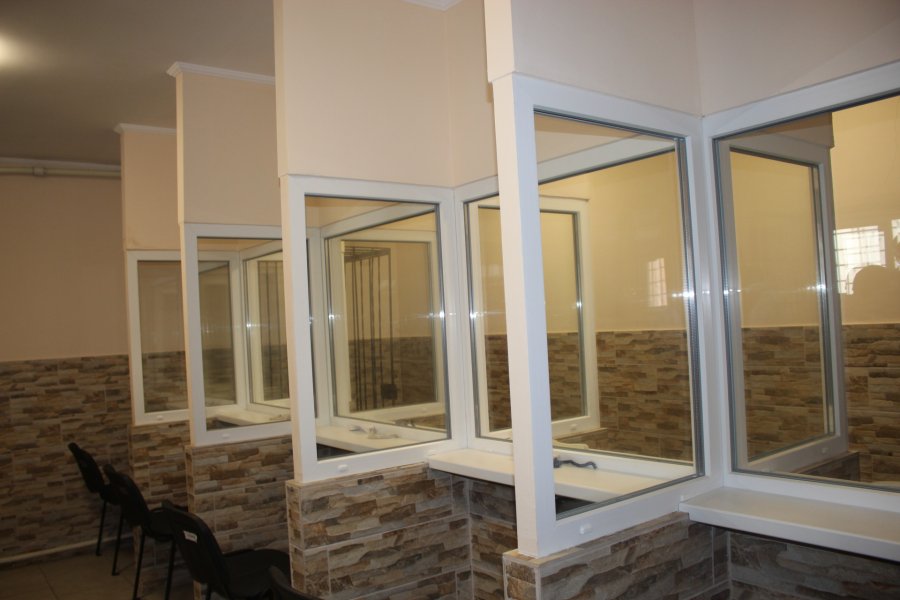
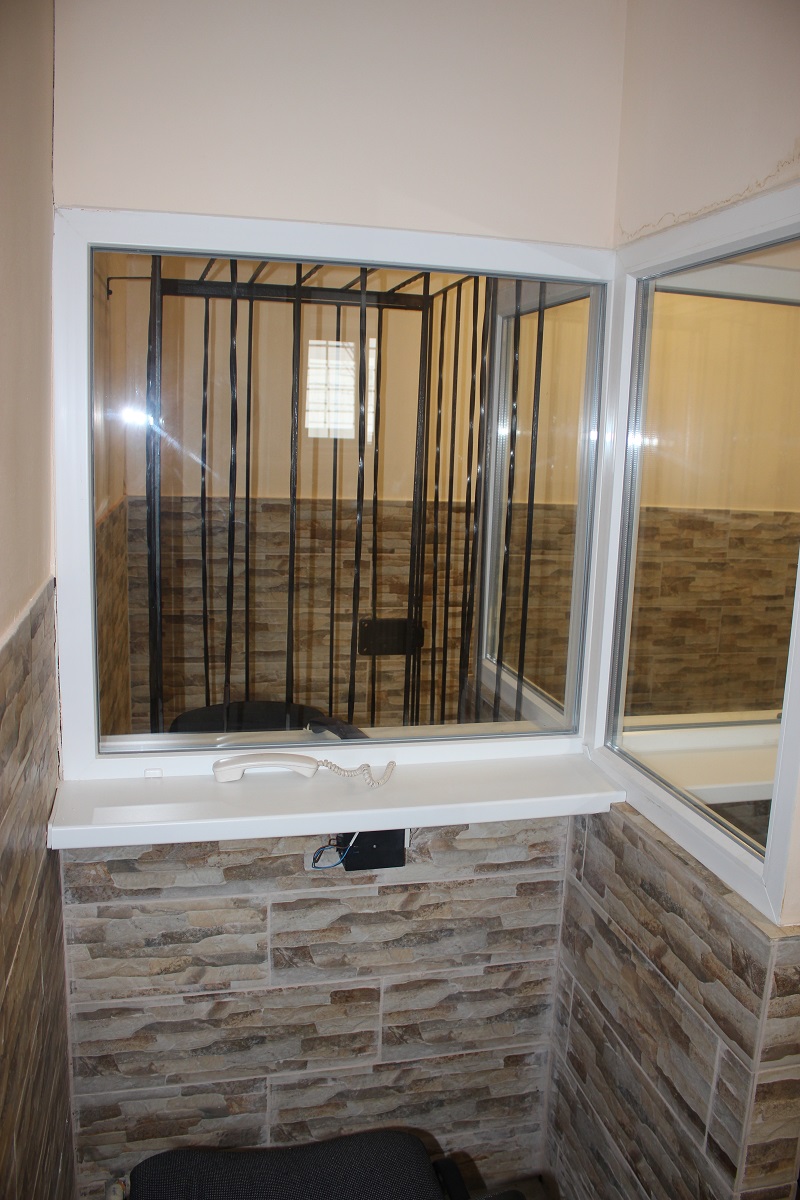
The institution practices contact visits with relatives for all categories of inmates and convicted persons, even those who have disciplinary sanctions but are not socially dangerous.
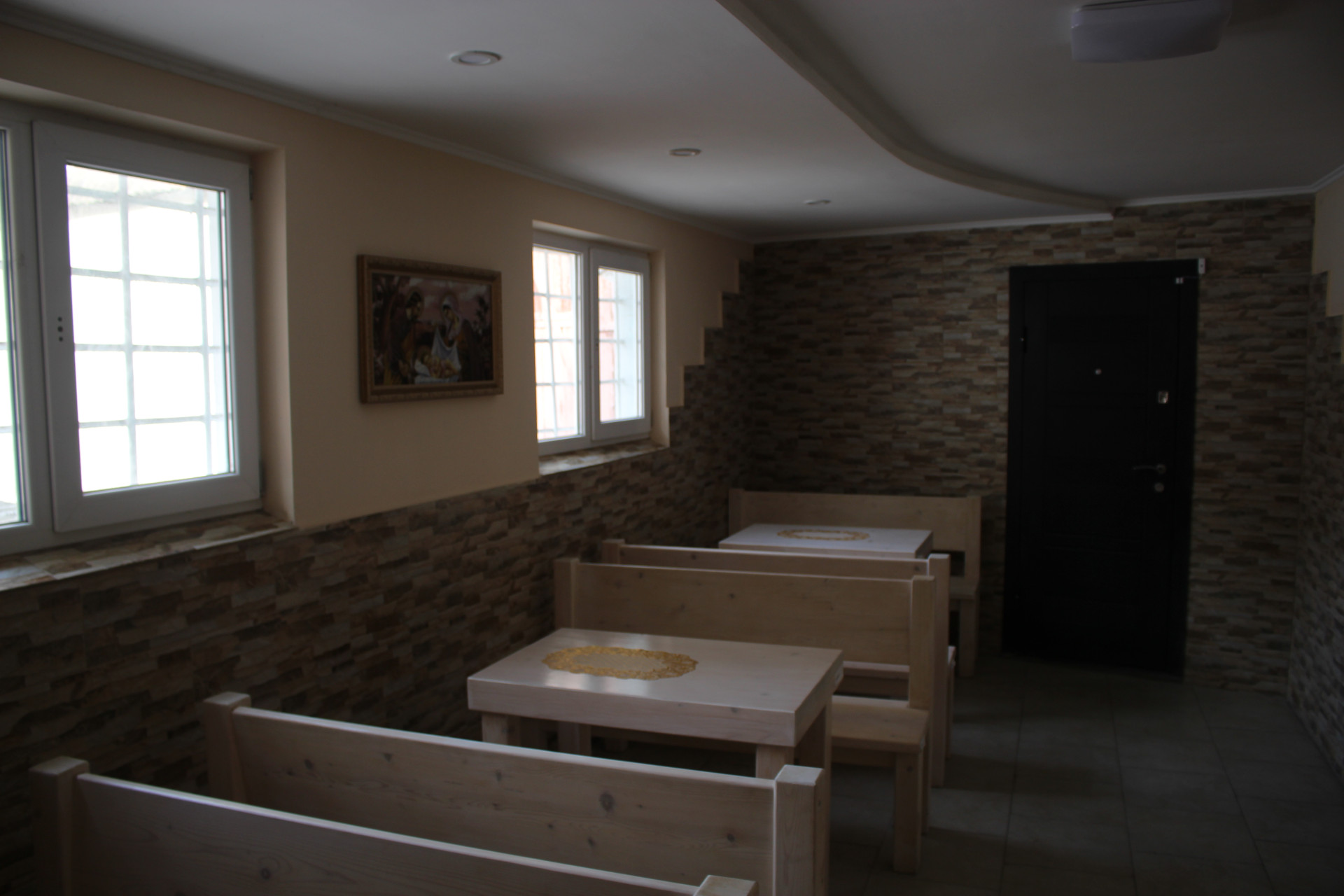
However, according to the administration, in most cases, short-term visits take place behind glass.
Parcel and Transfer Delivery Room
The room where parcels and transfers sent by post are issued.
Postal workers deliver parcels directly to the institution.