Report on the results of the monitoring visit to the Pyatykhatska Correctional Colony No. 122
On 16 September 2024, in accordance with the Optional Protocol to the Convention against Torture and Other Cruel, Inhuman or Degrading Treatment or Punishment, taking into account the provisions of the United Nations Standard Minimum Rules for the Treatment of Prisoners and the decisions of the European Court of Human Rights, and on the basis of Article 24 of the Criminal Executive Code of Ukraine — ‘Visiting penal institutions’, a group of monitors from the Kharkiv Human Rights Protection Group and the NGO ‘Protection of Prisoners of Ukraine’ conducted a visit to the state institution ‘Pyatykhatska Correctional Colony No. 122’.
The visit was carried out within the framework of the project ‘Reducing the suffering of prisoners in the context of the war in Ukraine’, funded by the government of Denmark in partnership with DIGNITY
— The Danish Institute Against Torture.
The visit was conducted by the monitors:
- Didenko Andriy Andriyovych — assistant to a People’s Deputy of Ukraine, Yaroslav Yurchyshyn, experience in monitoring visits since 2014;
- Zuikov Serhiy Yuriyovych — assistant to a People’s Deputy of Ukraine, Kostyantyn Kasai, member of the Public Council under the Ministry of Justice of Ukraine, experience in monitoring visits, specialises in issues of appropriate medical care;
- Tsvilyi Oleh Volodymyrovych — member of the Public Council under the Ministry of Justice of Ukraine, extensive experience in monitoring visits, specialises in issues of torture, and cruel, inhuman treatment.
General Information
The Pyatykhatska Correctional Colony (hereinafter referred to as PCC-122, the institution, the facility) is a medium-security correctional facility for holding men who have previously served sentences in places of deprivation of liberty.
The institution is located at the following address: Dnipropetrovsk region, Kamianske district, Krasnoivanivka village, 52170.
The institution consists of a duty unit, a residential and industrial zone, a canteen, a medical unit, a bath and laundry complex, visitation rooms, a shop, a library, a parcel receiving room, and administrative premises.
According to the administration of the institution, at the time of the visit, 237 convicts were being held in the facility, including 2 in the DIU (Disciplinary Isolation Unit), 2 in the CTP (Cell-type Premises), and 31 convicts were working in production at the time of the visit.
As part of the preparation for the visit, a request was sent to the management of the institution to clarify the circumstances regarding the sending of correspondence. The response received indicated that during the first half of 2023, convicts had sent 6 appeals to the Secretariat of the Ukrainian Parliament Commissioner for Human Rights and received 5 responses; during the first half of 2024, 1 appeal was sent and 7 responses were received; no appeals or electronic complaints were sent to human rights organisations.
The group of monitors surveyed about 111 convicts. It is worth noting that the administration does not conceal shortcomings in the institution; the management of the facility facilitated the monitoring visit in every way, which can be considered signs of openness and transparency, as well as an appropriate and adequate response to human rights violations.
Facts Identified During the Visit
During the monitoring visit, violations of national legislation requirements and non-compliance with international recommendations in the field of prisoner treatment were identified, leading to violations of the rights of convicted persons.
1. In violation of Part 1 of Article 115 of the Criminal Executive Code of Ukraine and Rule 10 of the Standard Minimum Rules for the Treatment of Prisoners, it was established that in certain living quarters of the Social and Psychological Service (hereinafter — SPS) units of the institution, the living space standard per convict is less than 4 m². For instance, in the living quarters of SPS unit No. 3, where 69 beds are located and 51 people were present, the area of the premises is 193.6 m².
Thus, the actual area per convicted person was 3.79 m². In the living quarters of SPS unit No. 4, where 60 beds are located and 52 people were present, the area of the premises is 193.6 m². Thus, the actual area per convicted person was 3.70 m².
In the sleeping quarters No. 2 of the quarantine, diagnostics, and distribution unit (hereinafter — QDD), where 11 beds are located and 6 people were present, the area of the premises is 21.0 m². Thus, the actual area per convicted person was 3.5 m².
At the same time, Paragraph 13 of the 7th General Report of the European Committee for the Prevention of Torture and Inhuman or Degrading Treatment or Punishment (hereinafter — the Committee) states that the problem of overcrowded cell facilities leads to unhygienic conditions, a constant lack of privacy, and the overloading of medical services and the institution’s infrastructure, concluding that quite often the negative impact of overcrowding resulted in inhuman or degrading conditions of detention (CPT/Inf (97) 10).
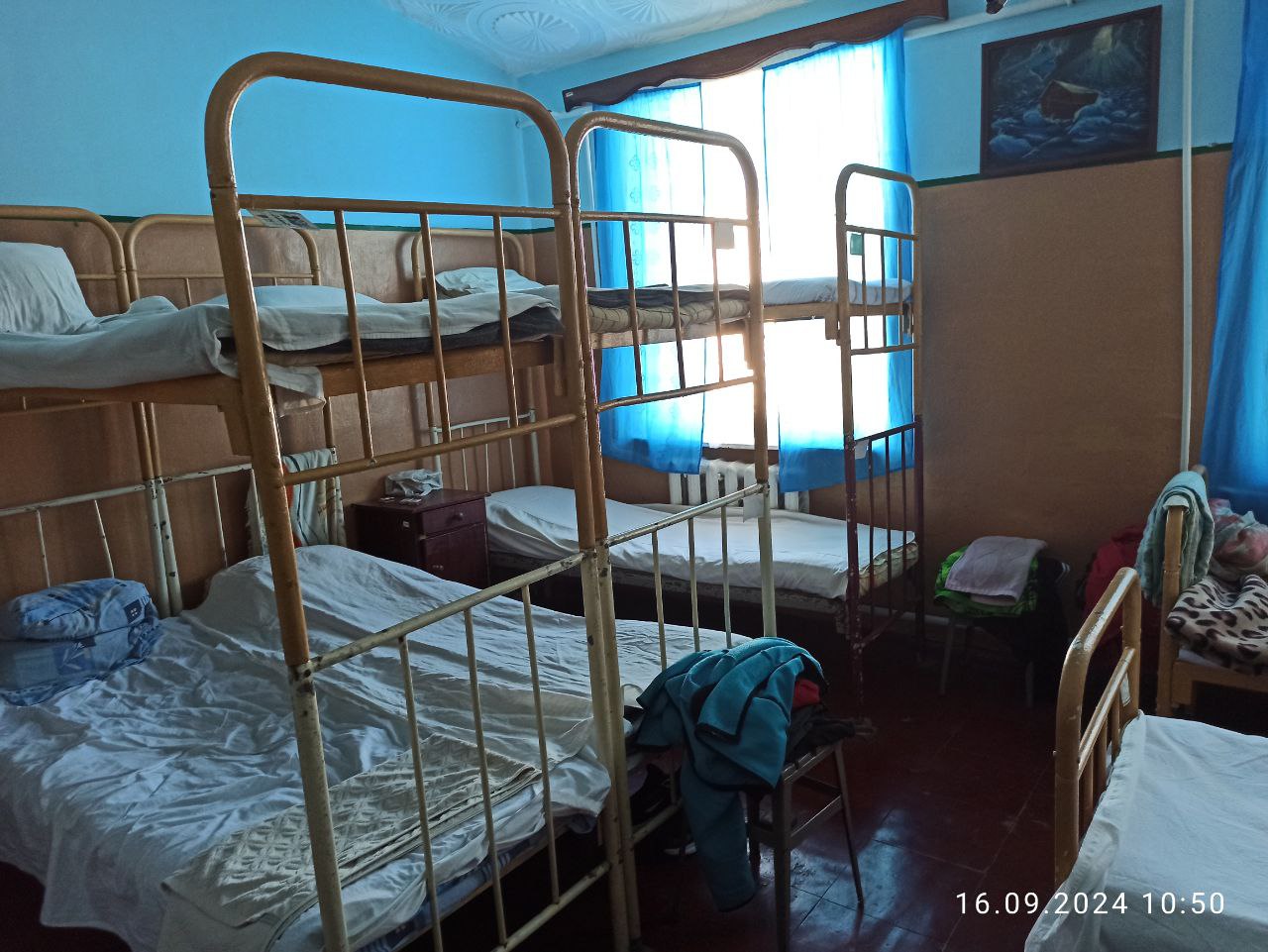
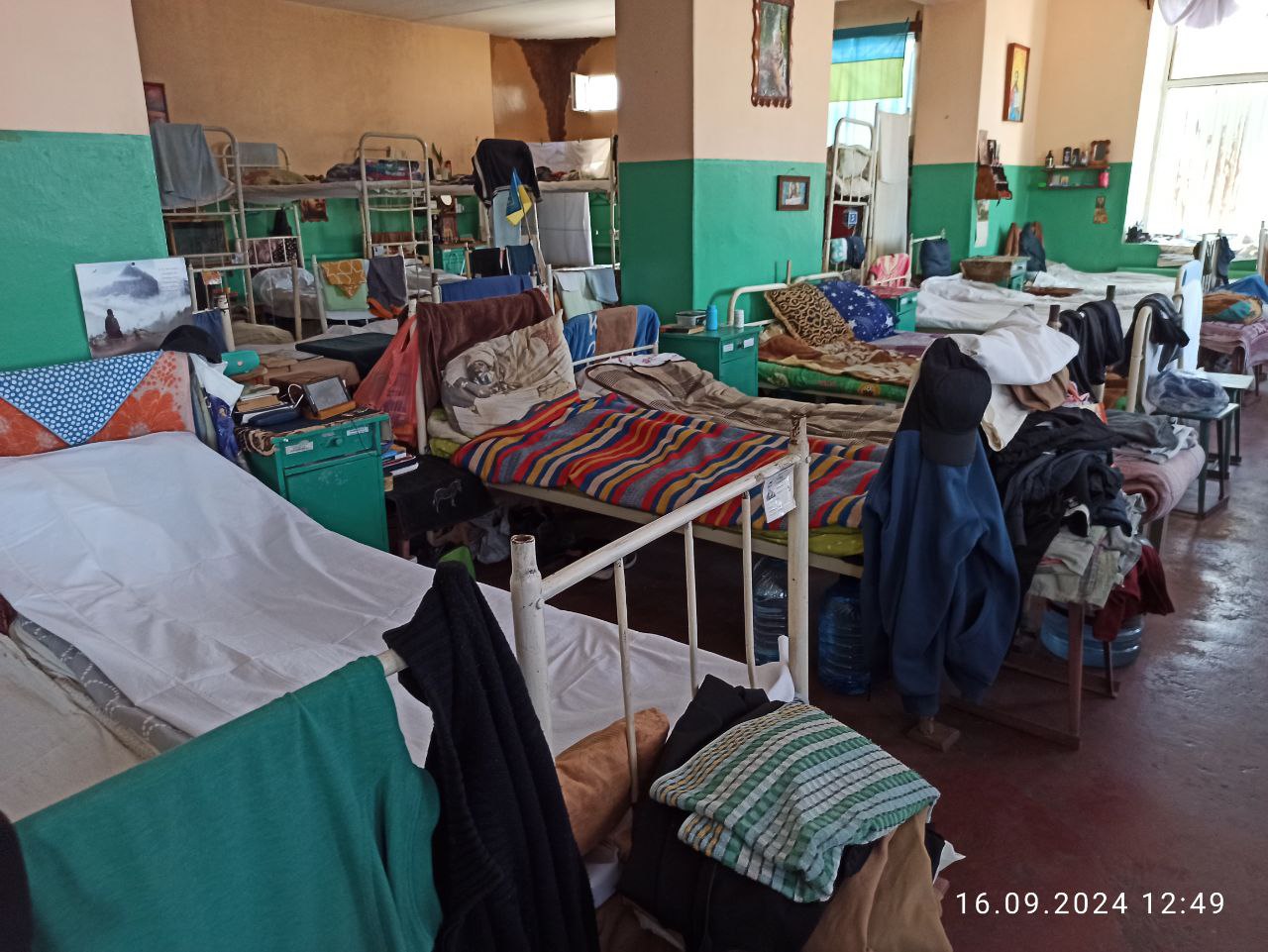
2. The equipment of the DIU unit does not meet the standards for the treatment of prisoners and the conditions of their detention according to their needs. Thus, in violation of the requirements of the ‘Norms for provision with furniture, inventory, and household items for a medium-security correctional colony’, approved by the order of the Ministry of Justice of Ukraine dated 27.07.2012 No. 1118/5 (hereinafter — Provision Norms), the unit lacks a number of premises, namely: a room for admitting convicts by the administration and medical staff, a room for storing the exchange fund of bedding, clothing, and special workwear, a room for storing personal belongings of convicts, and a changing room.
Similar violations were established in the quarantine, diagnostics, and distribution unit (hereinafter — QDD). In particular, the following premises are missing: a room for educational work, a room for storing the exchange fund of bedding, clothing, and special workwear, a storage room for the temporary keeping of dirty bedding, clothing, and special workwear, a utility room, and a drying room. The absence of these premises and their proper arrangement leads to a violation of sanitary and hygienic standards.
Thus, improper organisation of the storage of personal belongings makes it difficult to maintain cleanliness and order in the premises where convicts are held, which worsens the overall sanitary situation in the institution. Furthermore, the absence of a room in the DIU for the medical examination of convicts, which results in medical examinations being conducted in cells, indicates that confidential information regarding the health status of convicted persons is being obtained by institution staff and other persons among the convicts during medical examinations, manipulations, or procedures.
This violates the requirements of Article 39-1 of the Law of Ukraine ‘Fundamentals of the legislation of Ukraine on healthcare’ regarding the right of individuals to confidentiality of information about their state of health, and Clause 9 of Section I of the ‘Procedure for the organisation of medical care for persons sentenced to deprivation of liberty’, approved by the joint order of the Ministry of Justice of Ukraine and the Ministry of Health of Ukraine dated 15.08.2014 No. 1348/5/572 (hereinafter — Procedure).
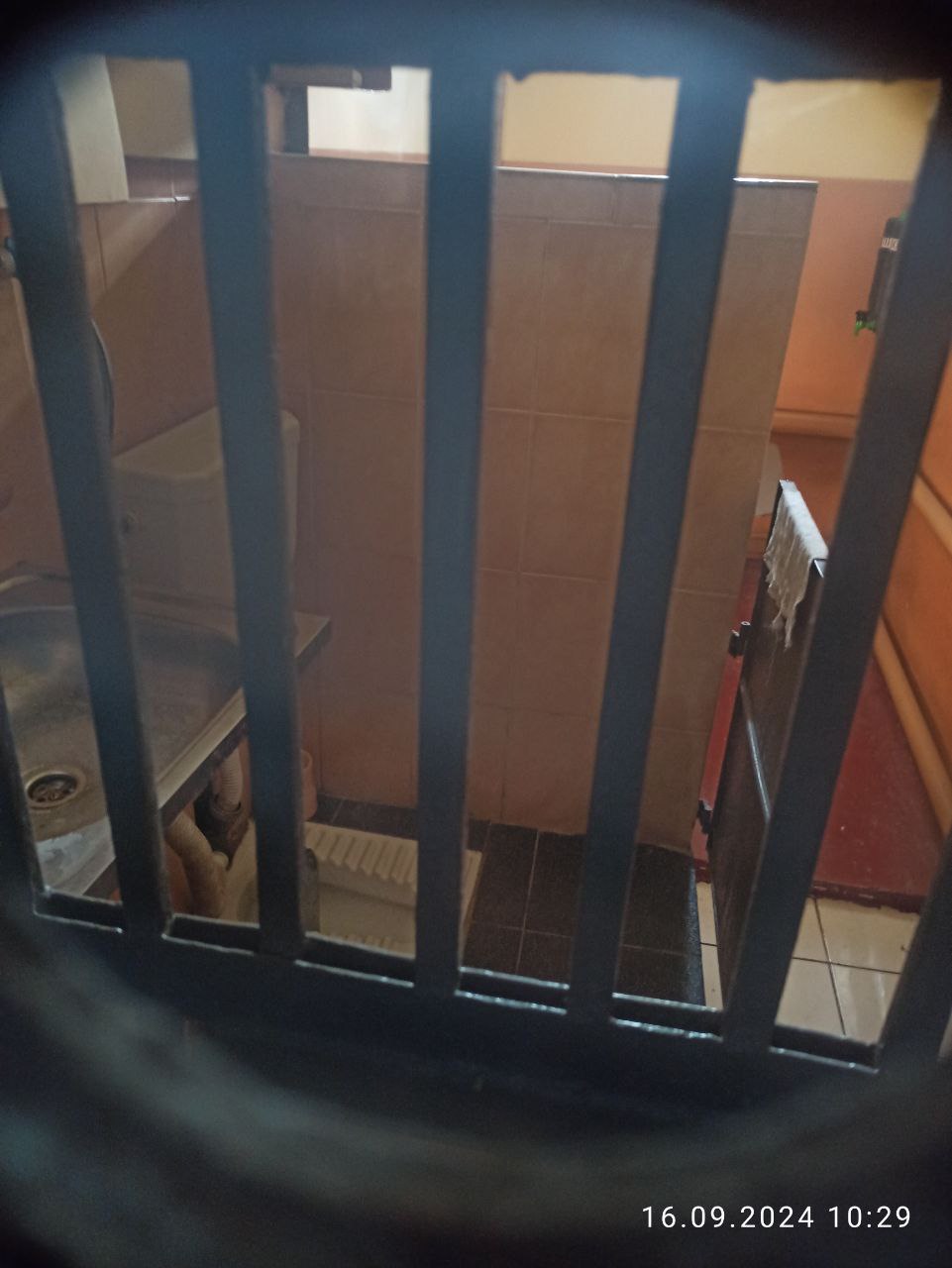
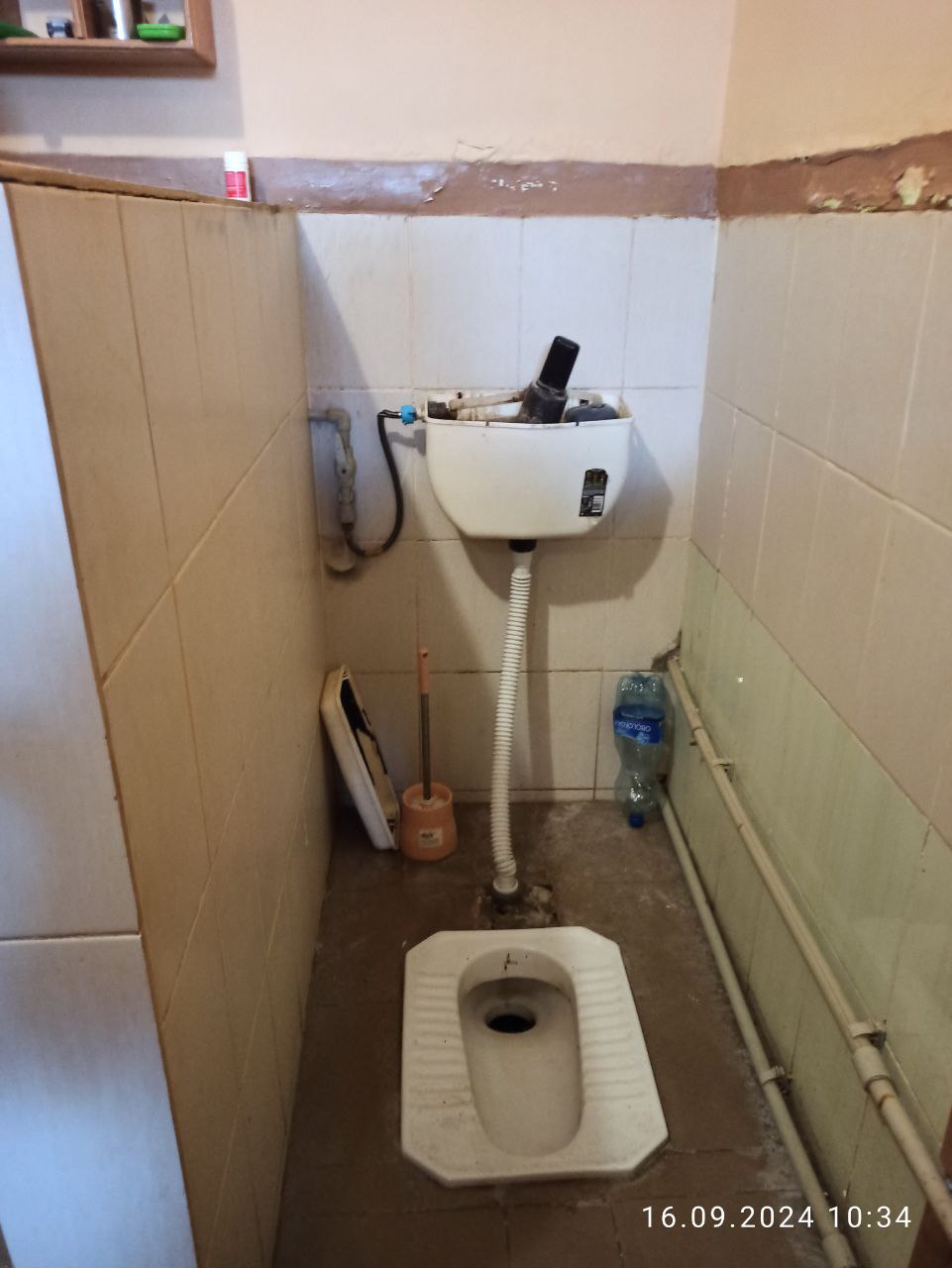
3. The monitoring group established violations of Article 8 of the Convention for the Protection of Human Rights and Fundamental Freedoms, which ensures the right to respect for private life, in the cell premises of the DIU unit. Specifically, through the observation window of the cell door, sanitary facilities are visible that are not fenced off with sufficient partitions and are not equipped with doors, which prevents privacy, violating the requirement of Rule 19.3 of the European Prison Rules.
At the same time, in the report of the Government of Ukraine following the 2023 visit, the Committee called upon the Ukrainian authorities to take necessary measures to improve material conditions of detention, in particular, to keep all places where convicts and detainees are held, including sanitary facilities, in a proper state of repair and hygiene, and to conduct regular and frequent disinfestations; to ensure sufficient access to natural light and ventilation in the cells, and to fully equip internal sanitary facilities with partitions (i.e., from floor to ceiling). (CPT/Inf (2024) 20) paragraph 58).
4. During the visit to the dormitories of the Social and Psychological Service (hereinafter — SPS) units, it was established that the living conditions of convicts in some of them are unsatisfactory and violate their right to decent detention conditions. Thus, in violation of the requirements of the Provision Norms, the living premises of SPS units No. 3 and 4 are not provided with a sufficient number of bedside tables as determined by the Provision Norms.
In addition, SPS units No. 3 and 4 lack a number of premises, namely: a room for storing food, a room for storing the exchange fund of bedding, clothing, and special workwear, a storage room for the temporary keeping of dirty bedding, clothing, and special workwear, a utility room, and a drying room.
5. According to Clause 3.1 of the ‘Instruction on working conditions and wages of persons sentenced to restriction of liberty or deprivation of liberty’, approved by the order of the Ministry of Justice of Ukraine dated 07.03.2013 No. 396/5, work is performed on a voluntary basis on the basis of a civil law contract or an employment contract concluded between the convict and a natural person-entrepreneur or legal entity for whom the convicts perform work or provide services.
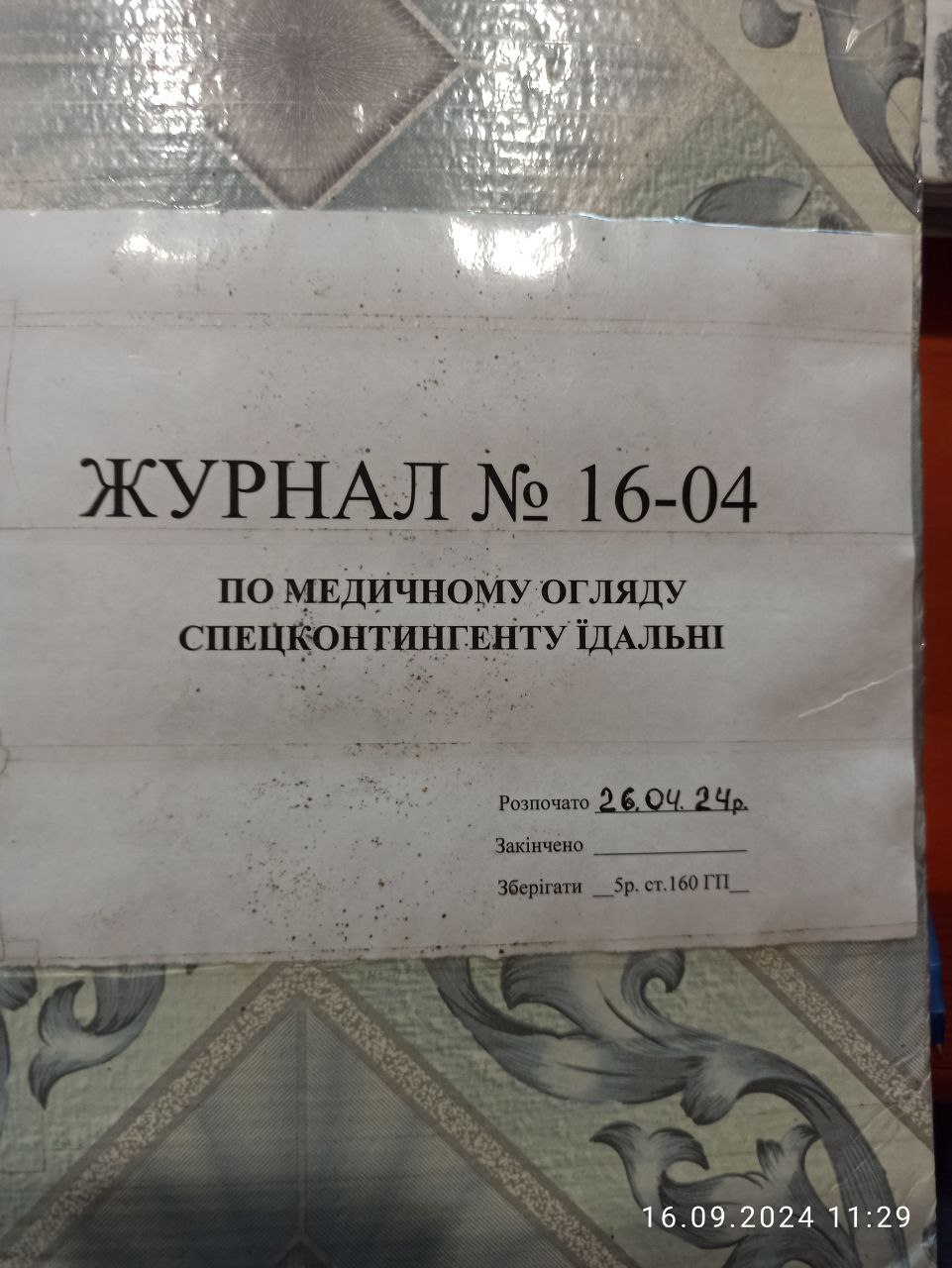
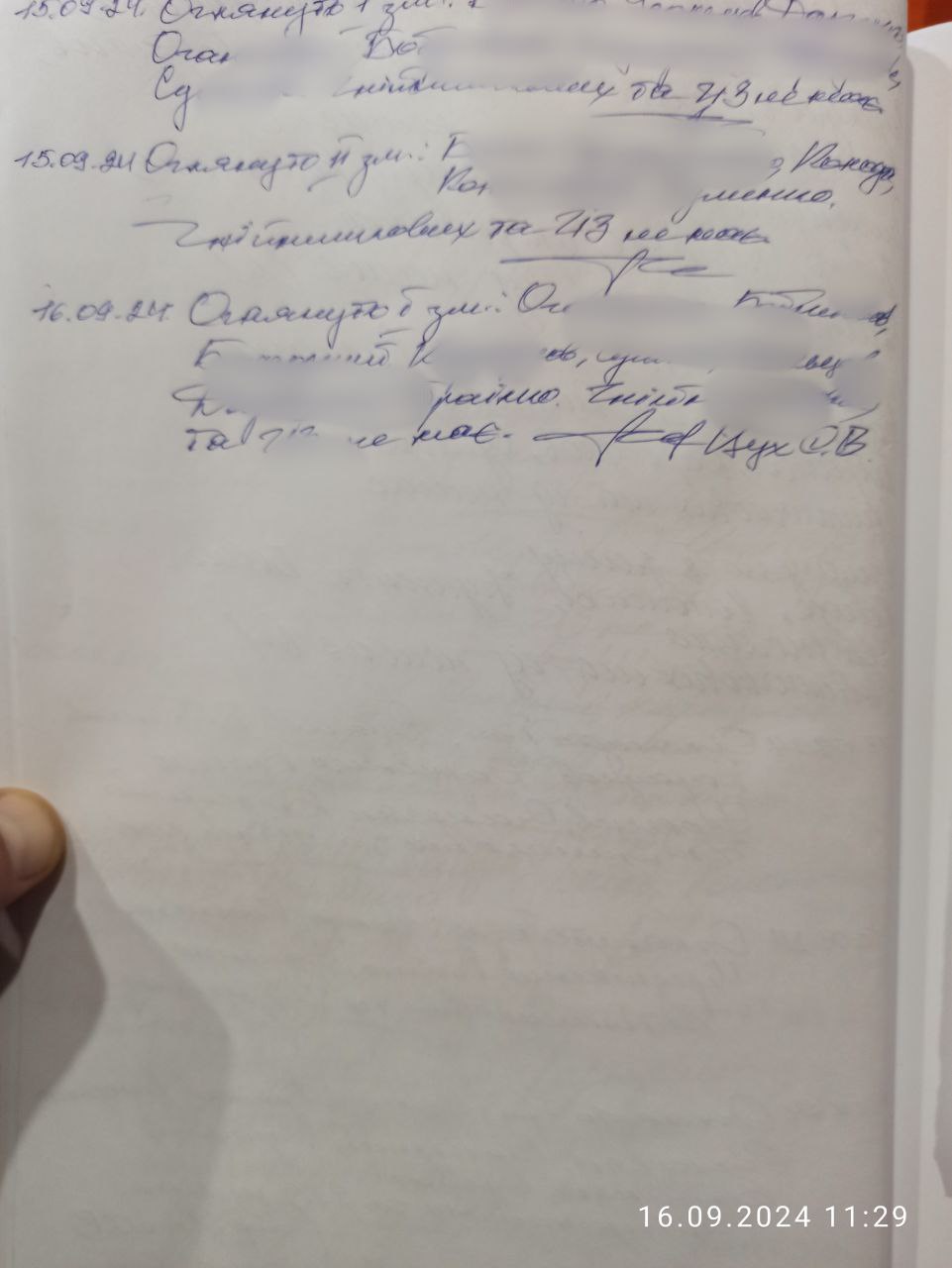
At the same time, it was established that the institution’s administration has been using the labour of convicts in positions of kitchen staff without payment for six months. Thus, while examining documentation, in particular, the ‘Register for medical examination of the special contingent of the canteen’, it was established that a daily medical examination was conducted before the start of work for convict O., who has been a worker in the food unit from April 2024 to 16.09.2024.
6. The monitoring group established a number of violations in the organisation of bath and laundry services for convicts and detainees. In violation of Clause 2.14 of Section II of the ‘Regulation on the organisation of bath and laundry services for persons held in penal institutions and pre-trial detention centres’, approved by order of the Ministry of Justice of Ukraine No. 849/5 dated 08.06.2021 (hereinafter — Regulation), the institution does not provide hairdressing services to convicts and detainees.
In violation of the requirements of the Provision Norms, the laundry lacks rooms for drying and ironing linen, a room for mending and storing clean linen, a laundry staff room, and a shower and toilet for employees.
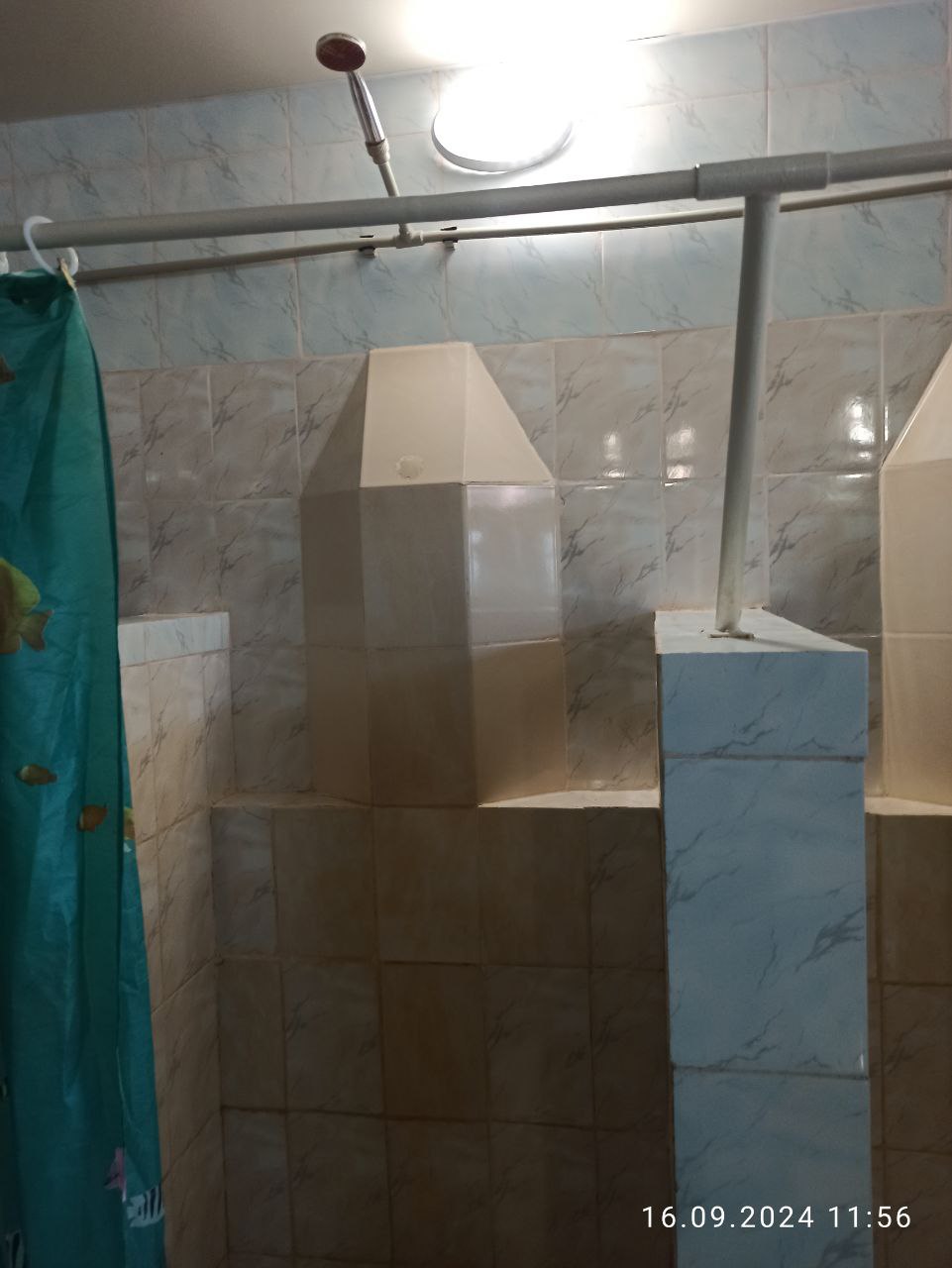
In violation of Clause 2.6.2 of Section II of the Regulation, shower heads are not equipped with taps for hot and cold water, due to which convicts, while performing hygiene procedures, are unable to regulate the water temperature in the shower.
7. According to official documentation, the staff vacancy rate in the institution is 22 positions, or 11.4% of the standard staff headcount. At the same time, in the report of the Government of Ukraine following the 2023 visit, the Committee emphasised that ensuring a positive climate in a penitentiary institution requires the presence of a professional team of staff who must be present in sufficient numbers at any given time in places of detention.
Insufficient staffing can only increase the risk of violence and intimidation among convicts. A shortage of frontline staff also undermines the quality and level of activities offered to convicts and jeopardises the prospect of preparation for release and social rehabilitation. In this regard, the Committee calls on the Ukrainian authorities to take decisive measures to significantly increase the number of staff in Ukrainian penitentiary institutions where a low staffing level is observed, in order to strengthen the presence of security and supervision service staff inside the institutions. It is also necessary to take measures to put an end to 24-hour shifts for staff on duty. (CPT/Inf (2024) 20) paragraph 93).
Medical Unit No. 122 of the branch of the State Institution ‘Centre for Healthcare of the State Criminal-Executive Service of Ukraine’ in the Dnipropetrovsk and Donetsk regions
Head of Medical Unit No. 122 of the branch of the State Institution ‘Centre for Healthcare of the SCES of Ukraine’ in the Dnipropetrovsk and Donetsk regions — Shcherbata Yu.S.
During the visit, the monitoring group studied the medical documentation and examined the premises of the medical unit for their compliance with the requirements of the legislation of Ukraine and international standards, and identified shortcomings in the work of the medical unit.
1. According to Clause 2 and Clause 3 of Chapter III, Section II of the ‘Procedure for the organisation of medical care for persons sentenced to deprivation of liberty’, approved by joint order of the Ministry of Justice of Ukraine and the Ministry of Health of Ukraine dated 15.08.2014 No. 1348/5/572 (hereinafter — Procedure), a general practitioner (or general practitioner — family doctor), a psychiatrist, and a dentist must participate in the preventive medical examination.
At the same time, positions for a general practitioner — family doctor and a psychiatrist are vacant in the medical unit, which indicates the incompleteness of the primary and preventive medical examination, due to which convicts and detainees do not receive proper medical care.
This violates Clause 38 of the recommendations of the European Committee for the Prevention of Torture and Inhuman or Degrading Treatment or Punishment (CPT/Inf(93)12-part) (hereinafter — Committee), which states that medical services in places of deprivation of liberty must be able to provide medical care and treatment, as well as an appropriate diet, physiotherapy, rehabilitation, or any other special care at the same level as that offered to patients in civilian medical facilities. Provision must be made for medical, auxiliary medical, and technical staff, as well as appropriate premises, equipment, and facilities.
2. In violation of Clause 4 of Section I of the Procedure, the medical unit does not provide daily round-the-clock duty of medical workers. At the same time, according to Clause 34 of the Third General Report of the Committee's recommendations, while in detention, persons deprived of liberty must have access to a doctor at any time, regardless of the regime of their detention. (CPT/Inf(93)12-part).
3. A convict approached the monitoring group with complaints of epileptic seizures. At the time of the visit, the specified convict was not provided with proper treatment. Thus, for a long time, the convict's treatment plan has not been reviewed, and no follow-up examinations have been conducted, due to which he requires a medical examination by a neurologist and a psychiatrist. Furthermore, it was established that the institution's administration regularly imposes disciplinary penalties on the convict for refusing to clean, refusing to perform maintenance work in the institution, and refusing to follow the commands to ‘Wake up’, ‘Lights out’, etc.
The convict explains his actions, which are qualified by the administration of the institution as a violation of the established order of serving the sentence, by the deterioration of his health in connection with the illness. At the same time, due to the absence of specialist doctors on the medical unit staff, the institution's administration is not provided with medical recommendations that could serve as a basis for exempting the convict from certain duties provided for by the ‘Internal Order Rules of Penal Institutions’, approved by the order of the Ministry of Justice of Ukraine dated 28.08.2018 No. 2823/5 (hereinafter — IOR PI) in connection with the deterioration of his health.
During the visit, the issue of his hospitalisation and examination at the ‘Dnipro Multidisciplinary Hospital No. 4’ of the branch of the State Institution ‘Centre for Healthcare of the SCES of Ukraine in the Dnipropetrovsk and Donetsk regions’ was resolved.
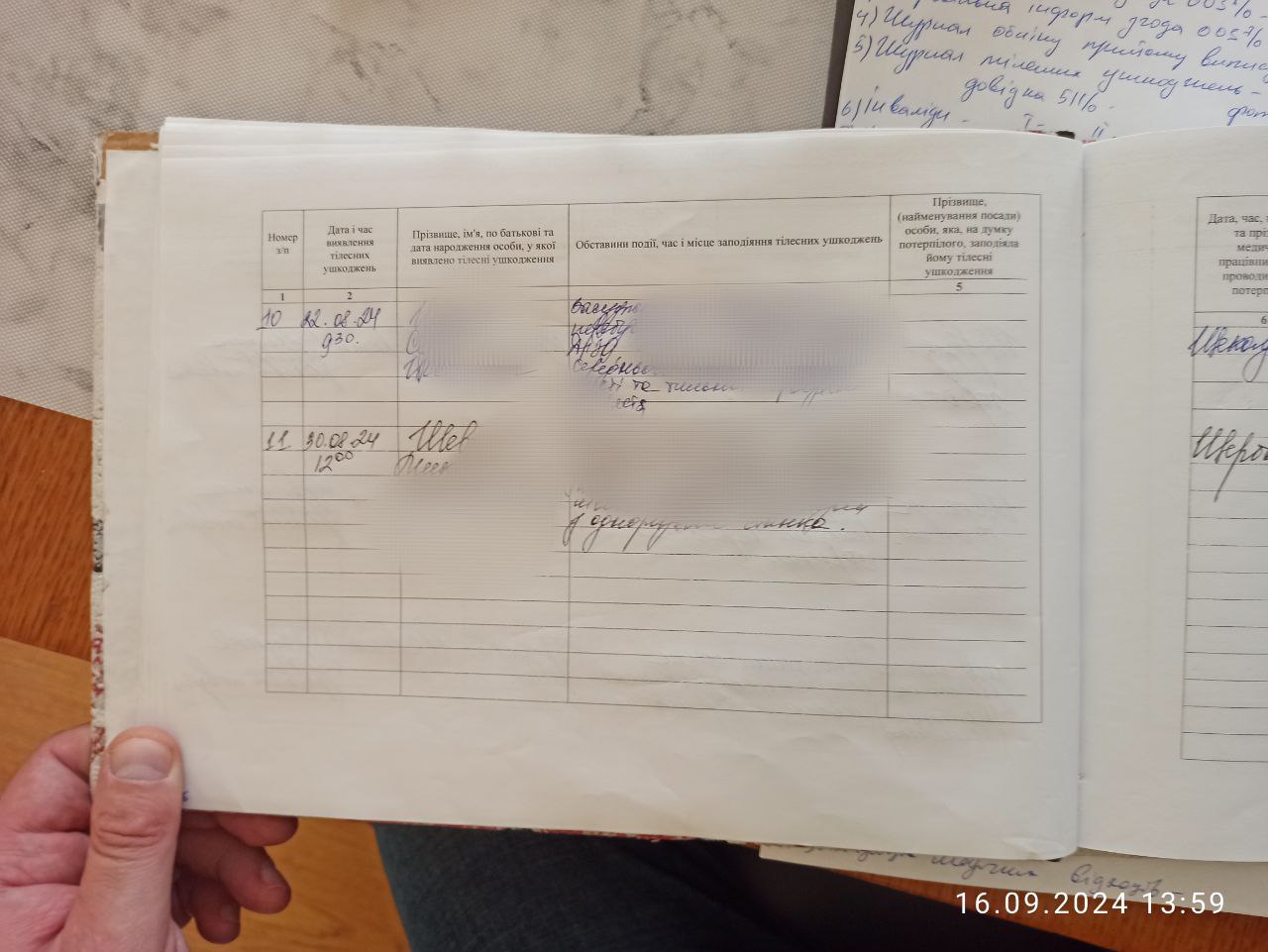
4. In violation of the requirements of Clause 3 of Section I, Chapter II of the joint Order of the Ministry of Justice of Ukraine and the Ministry of Health of Ukraine dated 15.08.2014 No. 1348/5/572 ‘On approval of the Procedure for the organisation of medical care for persons sentenced to deprivation of liberty’, medical personnel do not compile certificates in which the nature of bodily injuries, their size, and location are described in detail.
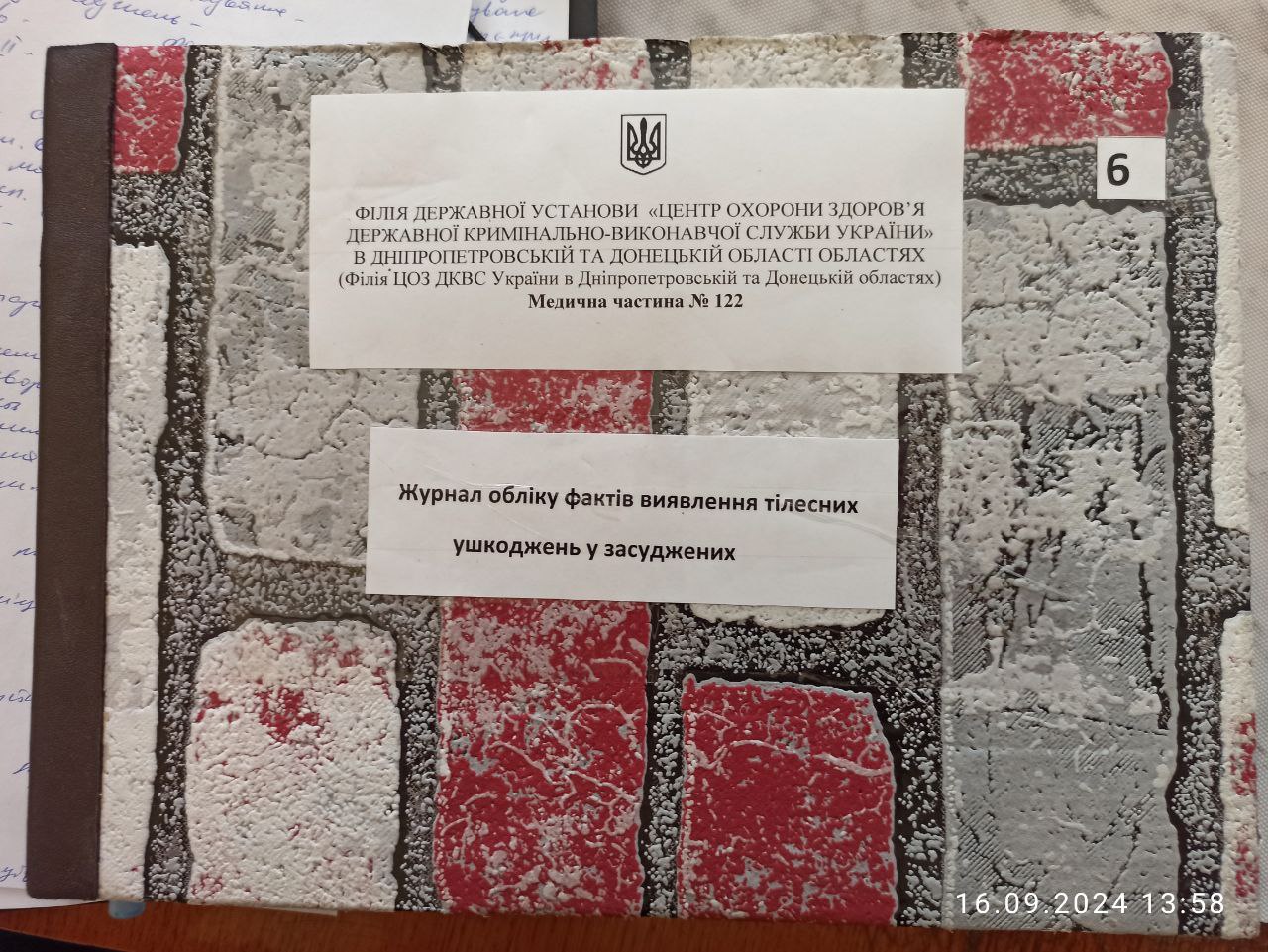
In particular, it was established that the outpatient medical record 025/o of convict Sh. lacks a certificate recording bodily injuries, although information about the fact of the detection of his bodily injuries was entered into the ‘Register of records of facts of detection of bodily injuries in convicts’ according to the patient registration serial number No. 11.
In violation of the requirements of Clause 3 of the ‘Instruction on filling out the form of primary accounting documentation No. 511/o “Certificate of recording bodily injuries”’, approved by the order of the Ministry of Health of Ukraine on 02 February 2024 No. 186, copies of the certificate form No. 511/o are not attached to the primary accounting documentation form No. 025/o ‘Medical card of an outpatient’, but are stored separately.
At the same time, the lack of proper recording of bodily injuries does not comply with Clause 60 of the recommendations of the Third General Report of the Committee, which states that medical services in places of detention can contribute to the prevention of violence against persons held in custody by systematically registering bodily injuries, as well as, if necessary, by informing the relevant authorities. (CPT/Inf(93)12-part).
5. In accordance with the requirements of Clause 7 of Part 1 of the Resolution of the Cabinet of Ministers of Ukraine dated 22 December 2023 No. 1394 ‘Some issues of implementing the programme of state guarantees for medical services to the population in 2024’, the National Health Service of Ukraine (NHSU) pays for medical services provided based on paper referrals for patients held in penal institutions or pre-trial detention centres of the State Criminal-Executive Service, until the healthcare facilities of the State Criminal-Executive Service create the technical capability to issue electronic referrals.
However, due to the lack of declarations concluded by convicts with a primary healthcare physician, they do not have the opportunity to receive the necessary medical services at the expense of the NHSU, which leads to a violation of the requirements of paragraphs 4 and 5 of Article 4 of the Law of Ukraine ‘Fundamentals of the legislation of Ukraine on healthcare’.
6. The medical unit has not organised the provision of opioid substitution therapy (hereinafter — OST) for persons with mental and behavioural disorders due to opioid use, in accordance with the ‘Procedure for conducting opioid substitution therapy for persons with mental and behavioural disorders due to opioid use’, approved by the order of the Ministry of Health of Ukraine dated 27.03.2012 No. 200.
Drug-dependent persons are not provided with social and psychological support, cognitive-behavioural therapy (CBT), relapse prevention, motivational interviewing, self-help groups, etc.
Thus, these individuals are deprived of the opportunity to receive OST, which violates their right to choose methods of treatment in accordance with Article 38 of the Law of Ukraine ‘Fundamentals of the legislation of Ukraine on healthcare’.
At the same time, the Committee in its report following the 2023 visit to Ukraine notes that entering a penitentiary institution is an opportunity to solve the problem associated with drugs, and therefore it is important that appropriate assistance be offered to all interested persons; therefore, appropriate medical care should be available in all institutions.
Assistance offered to such persons should be diverse; substitution therapy programmes for persons with drug addiction should be combined with genuine psychosocial and educational programmes for persons with opioid dependence who are unable to stop drug use. Furthermore, access to OST programmes in institutions should be easily available and managed by prison doctors, who should undergo special training on issues related to drug use. (CPT/Inf (2024) 20) paragraph 86).
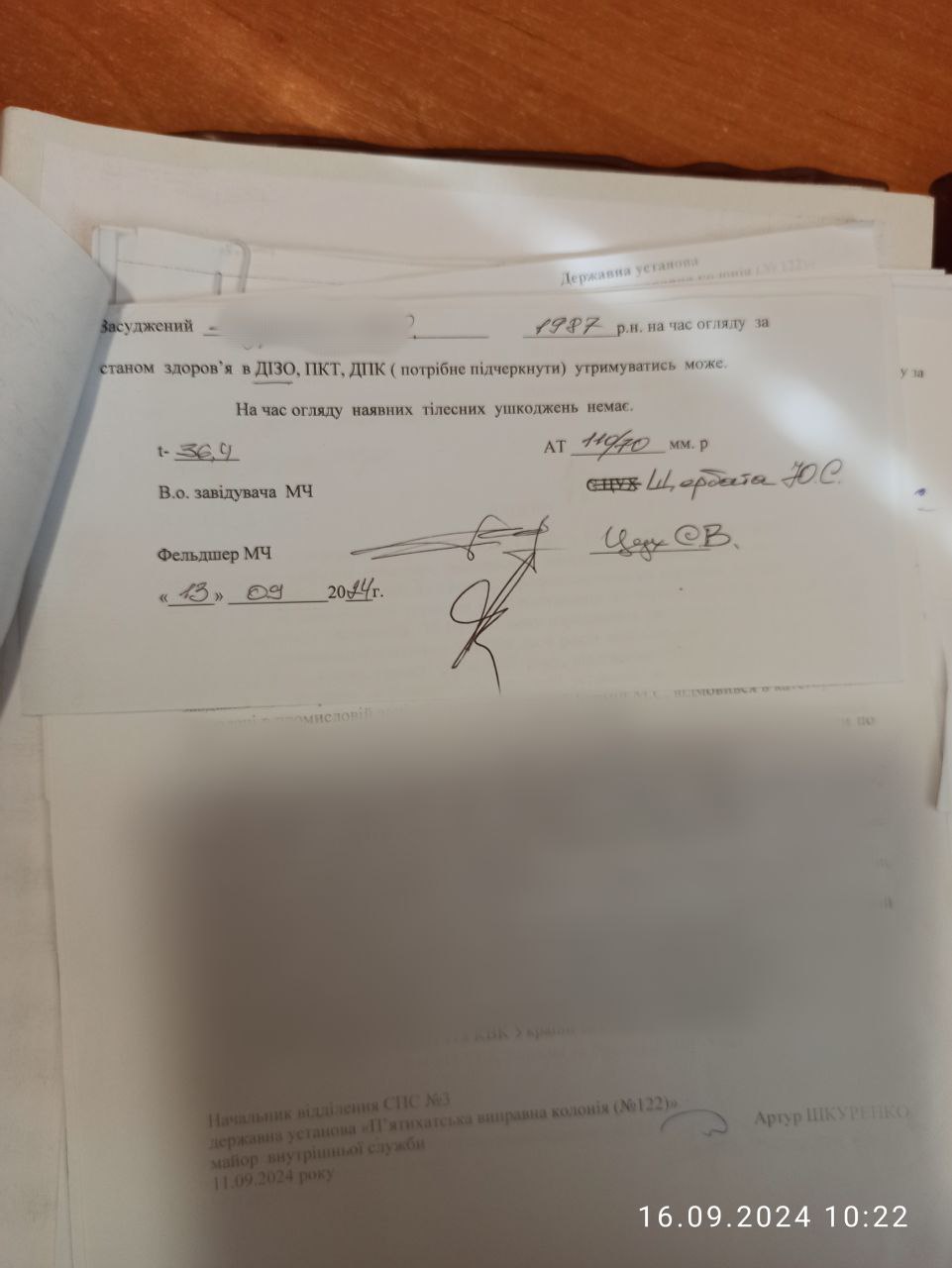
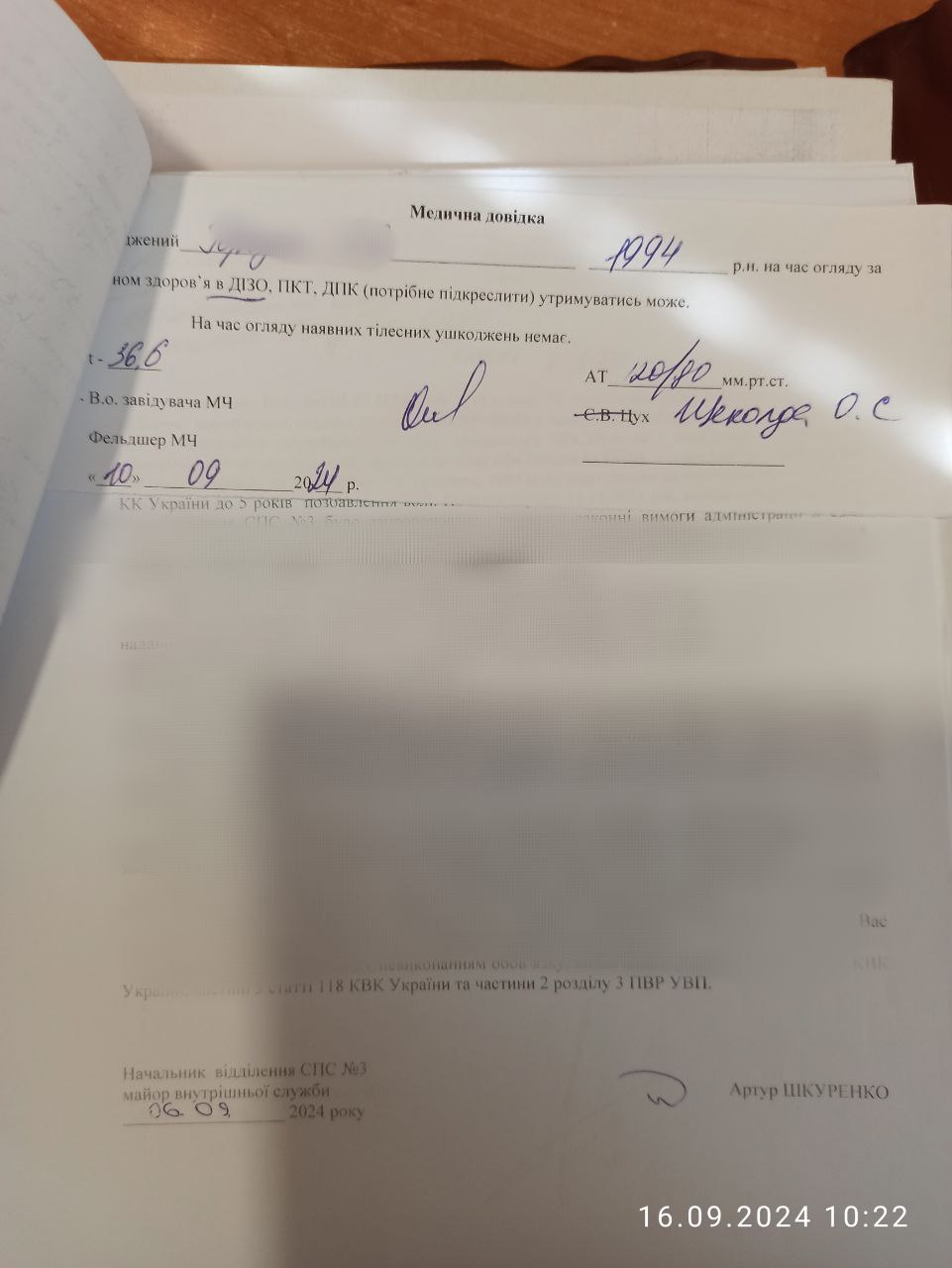
7. During the inspection of the DIU unit, the monitors established that when a convict is placed in a disciplinary isolation unit, it is common practice to attach a medical certificate to the file, which contains information about the state of health and, according to the conclusion of which, the convict can be held in the DIU, CTP, or PUNISHMENT CELL. Discovered facts prove that the institution's staff possess confidential information regarding the health status of convicts who are in the DIU unit.
This violates the requirements of Article 39-1 of the Law of Ukraine ‘Fundamentals of the legislation of Ukraine on healthcare’ regarding the right of individuals to confidentiality of information about their state of health. At the same time, the Committee has repeatedly emphasised that the obligation of prison doctors to certify the fitness of convicts to serve a disciplinary penalty is unlikely to contribute to the development of positive relationships between doctor and patient. In principle, medical personnel should never participate in any part of the decision-making process regarding the application of any type of solitary confinement, unless this measure is applied for medical reasons.
On the other hand, medical personnel must be very attentive to the condition of convicts who are in solitary confinement. Medical personnel must be immediately informed of each such placement and must visit the convict immediately after placement, and then regularly, at least once a day, and provide him with prompt medical care and treatment if necessary. Medical personnel must inform the institution's administration if the health of the convict is under serious threat due to solitary confinement. (CPT/Inf (2024) 20) paragraph 104).
8. According to Clause 7 of Chapter III, Section II of the Procedure, convicts working at food facilities (except for jobs related to the positions of sellers, managers of food and clothing warehouses, storekeepers) and the processing industry, in children's homes, secondary education institutions, vocational training units in special educational colonies, medical units (feldsher posts) and hospital facilities of the SCES (except for work related to the provision of medical care), laundries, baths, rooms for long-term visits, dormitories, clubs, at water supply and sewage facilities, and sites for animal breeding and raising, undergo mandatory preliminary and preventive medical examinations in accordance with the resolution of the Cabinet of Ministers of Ukraine dated 23 May 2001 No. 559 ‘On approval of the list of professions, production and organisations, whose employees are subject to mandatory preventive medical examinations, the procedure for conducting these examinations and issuing personal medical books’. For each convict of this category, a primary accounting documentation form No. 1-OMK ‘Personal medical book’ is opened, approved by the order of the Ministry of Health of Ukraine dated 21 February 2013 No. 150, registered with the Ministry of Justice of Ukraine on 23 April 2013 under No. 662/23194.
At the same time, the monitoring group recorded the absence of personal medical books for 2 canteen workers and the lack of examination results in medical documentation, which are conducted by specialist doctors (including laboratory, clinical, and other studies), necessary for admission to work at food facilities.
9. During the inspection of the defibrillator's functionality, it was established that the expiry date of the electrodes had passed. At the same time, the Committee recommended that medical services in all visited prisons (and all other penitentiary institutions in Ukraine) be equipped with equipment for saving lives by doctors (Committee Report on the results of the 2017 visit to Ukraine, (CPT/Inf (2018) 41) paragraph 87).
10. In violation of the ‘Procedure for organising medical care at the primary, secondary (specialised), and tertiary (highly specialised) levels using telemedicine’, approved by the order of the Ministry of Health of Ukraine dated 19.10.2015 No. 681, the medical unit staff are deprived of the ability to make requests for telemedicine consultations and receive advice for the provision of medical care to convicts due to technical reasons.
11. Dispensary supervision is provided for 19 persons with disabilities. Of these, group II — 1 person; group III — 18 persons. At the same time, in violation of the requirements of the Law of Ukraine ‘On rehabilitation of persons with disabilities in Ukraine’, persons with disabilities do not receive proper diagnostic, treatment, and rehabilitation measures in the presence of information confirming a persistent impairment of body functions caused by diseases or consequences of injuries that lead to restrictions on normal life activities.
During the study of the convicts' medical documentation, it was established that 3 persons with disabilities do not have individual rehabilitation programmes (hereinafter — IRP). In addition, IRP recommendations are not being implemented, due to which they do not receive proper diagnostic, treatment, and rehabilitation measures in the presence of information confirming a persistent impairment of body functions caused by diseases and consequences of injuries that lead to restrictions on normal life activities.
12. In violation of Clause 37 of the Resolution of the Cabinet of Ministers of Ukraine No. 285 dated 2 March 2016 ‘On approval of Licensing conditions for conducting economic activities in medical practice’, the medical unit lacks a document confirming free access to buildings and premises of the medical institution for persons with limited mobility, the obtaining of which is mandatory.
13. In violation of the ‘State sanitary and anti-epidemic rules and norms regarding the handling of medical waste’, approved by order of the Ministry of Health of Ukraine dated 08.06.2015 No. 325, the branch of the State Institution ‘Centre for Healthcare of the State Criminal-Executive Service of Ukraine’ in the Dnipropetrovsk and Donetsk regions has not concluded an agreement with a specialised institution for the disposal of medical waste, due to which proper collection, sorting, and disposal of medical waste has not been organised in the hospital since the beginning of 2024.
14. In violation of the requirements of the ‘Standards of medical care for chronic hepatitis C in adults’, approved by the order of the Ministry of Health of Ukraine dated 15.01.2021 No. 51, not all persons suspected of having viral hepatitis C undergo PCR testing, due to which they do not receive the necessary treatment, which may lead to a deterioration of their health and the spread of the specified infectious disease among convicts and detainees. In addition, on the day of the visit, drugs for the treatment of viral hepatitis C were absent from the medical unit's pharmacy.
15. In violation of the ‘Measures and means for preventing infection during patient care’, approved by the order of the Ministry of Health of Ukraine dated 03.08.2020 No. 1777, the medical unit is equipped with only one isolation ward for infectious patients, which makes it impossible to place patients with dangerous infectious diseases separately from each other and from other convicts.
16. During communication with convicts and inspection of the medical unit's premises, it was established that medical staff continue the systematic practice of conducting medical examinations and medical procedures through bars.
At the same time, the Committee criticises excessive security measures and considers such practices unacceptable as they infringe upon the dignity of prisoners, hinder the development of proper relationships between medical personnel and the patient, and, possibly, interfere with the establishment of an objective medical conclusion. (Committee Report on the results of the 2009 visit to Ukraine (paragraph 129.CPT/Inf (2011) 29), in 2012 (paragraph 50.CPT/Inf (2013) 23).
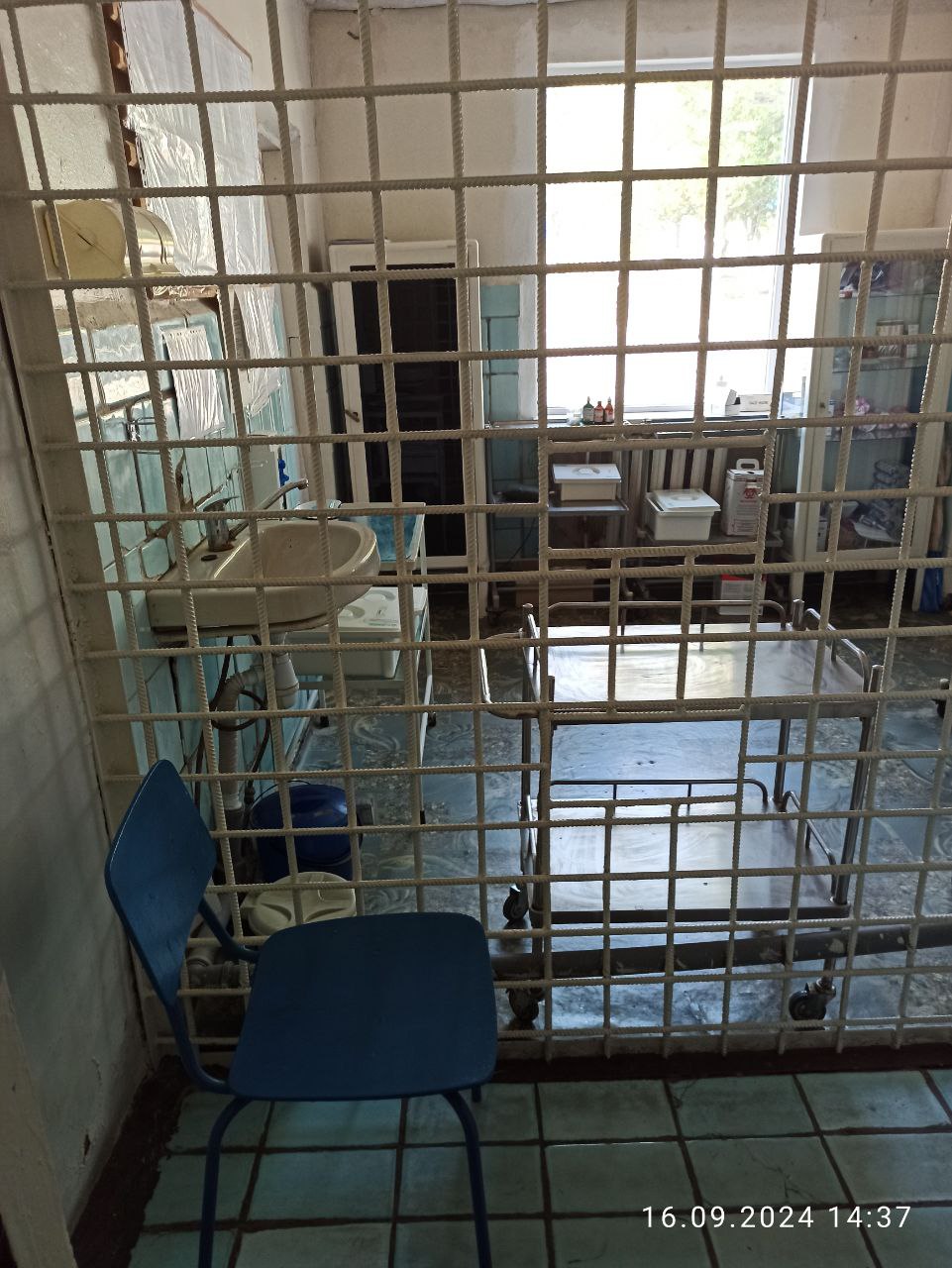
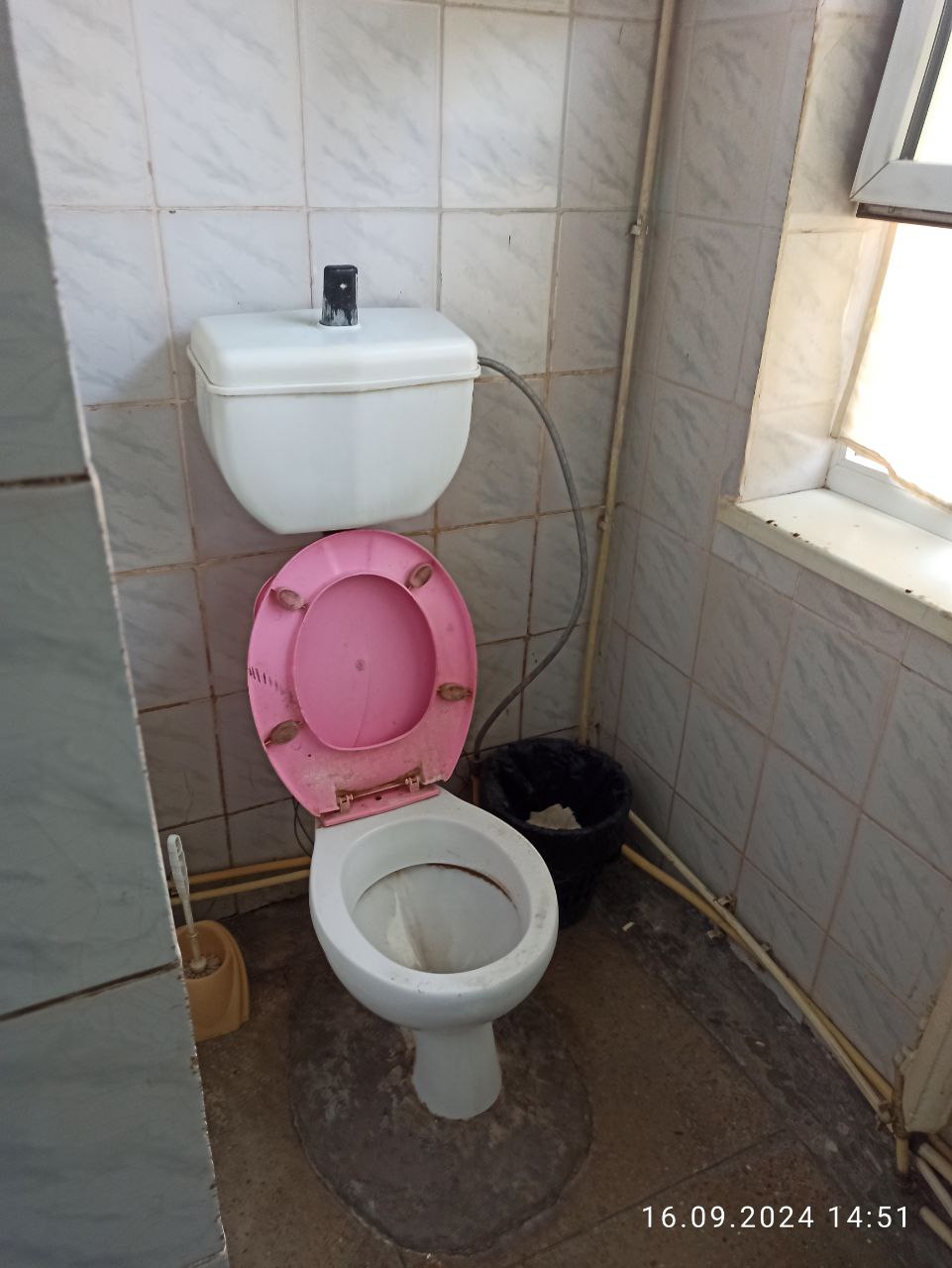
17. In violation of the requirements of Rule 19.3 of the European Prison Rules, the sanitary facility in the isolation ward for infectious patients is not fenced off, due to which the right of convicts to privacy is not observed.
18. In violation of the requirements of the ‘Table of equipment for one workstation of a dentist and dental technician’, approved by the order of the Ministry of Health of Ukraine dated 11.04.2005 No. 158, the medical unit lacks a dental X-ray machine, which makes it impossible to conduct in-depth dental examinations of convicts and does not ensure the timely provision of proper dental care.
In addition, the monitoring group established that the dental office is not provided with filling material, and among the types of dental care, only tooth extraction is practised, which limits the patients' right to receive proper dental care.
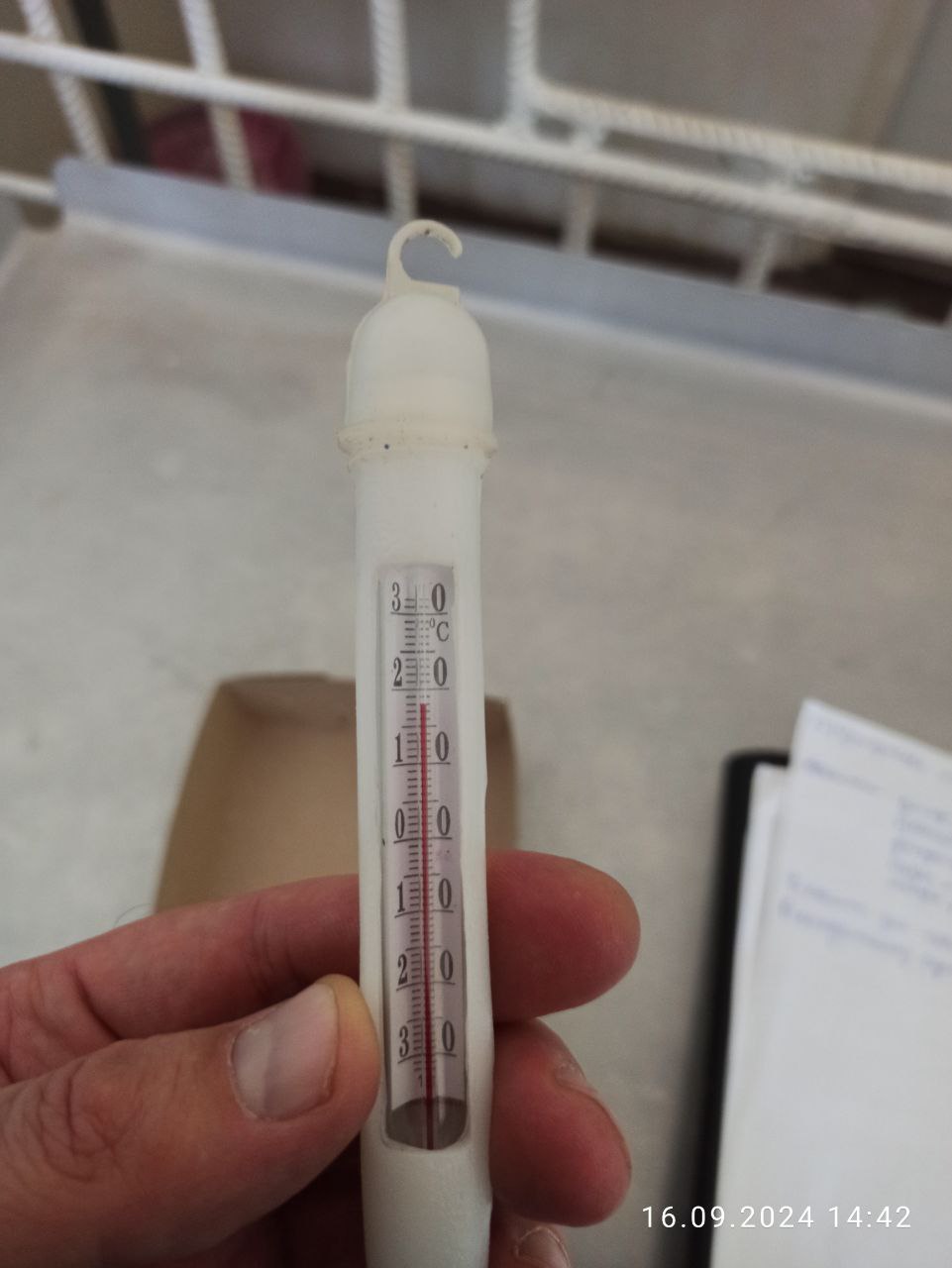
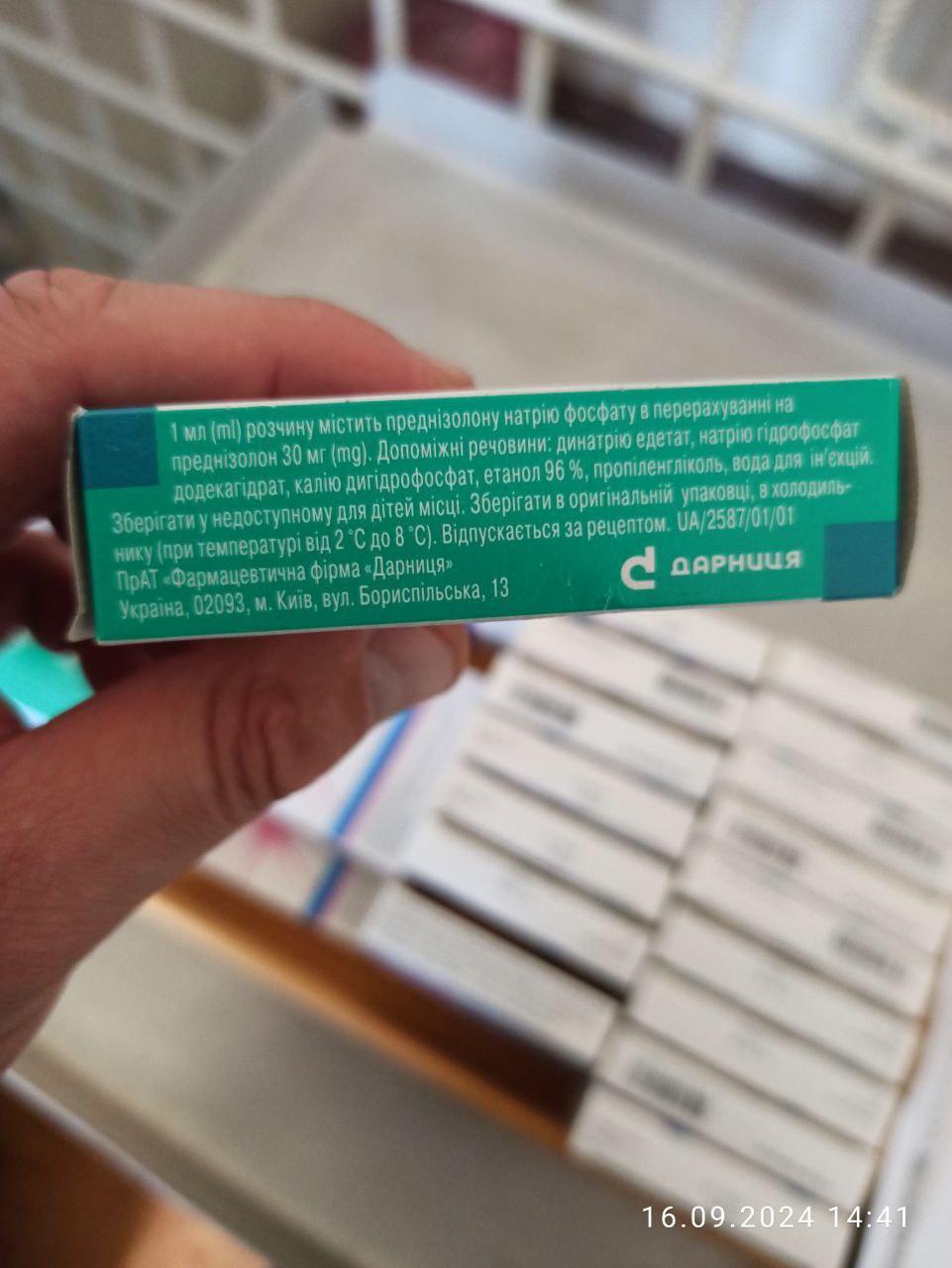
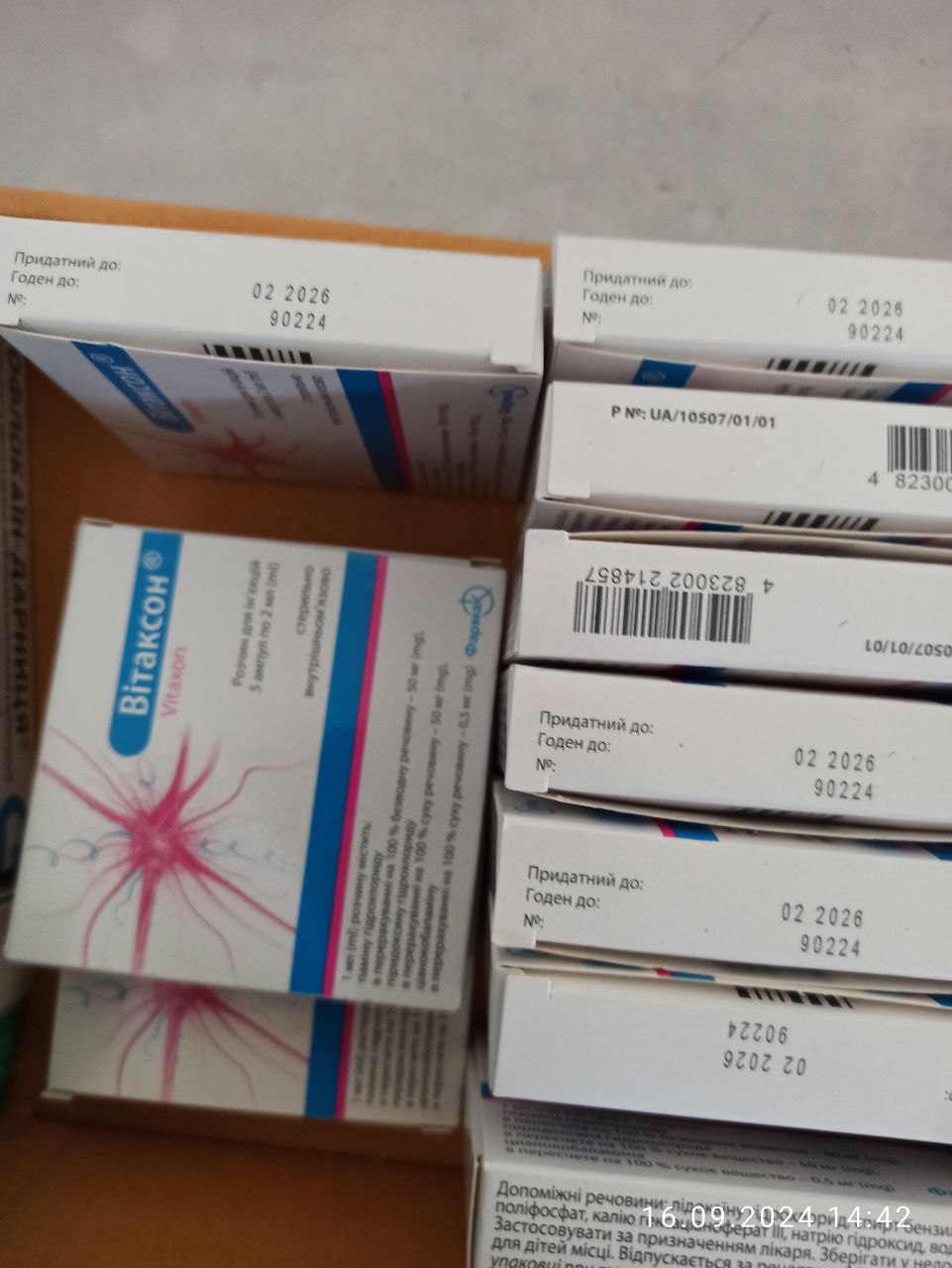
19. In violation of the requirements of the order of the Ministry of Health of Ukraine dated 16.12.2003 No. 584 ‘On approval of the Rules for storage and quality control of medicinal products in medical and preventive institutions’, medicinal products are stored without taking into account the temperature regimes specified by manufacturers. Thus, in the room for storing medicines in the refrigerator, the medicinal products ‘Vitaxon’ and ‘Prednisolone’ were recorded, the storage conditions for which cannot exceed a temperature higher than 8°C. At the same time, the temperature in the refrigerator, according to thermometer readings, reached 18°C.
20. In violation of the ‘Fire Safety Rules in Ukraine’, approved by the Ministry of Internal Affairs of Ukraine dated 30.12.2014 No. 1417, the premises of the medical unit are not equipped with fire extinguishing systems and fire alarms.
Recommendations:
1. Ensure proper detention conditions for convicts, taking into account minimum living space standards per person;
2. Provide premises in the DIU/QDD units in accordance with the Provision Norms;
3. Cease the practice of video surveillance in sanitary facilities of the DIU unit;
4. Ensure proper living conditions in SPS units, taking into account the Provision Norms;
5. Cease the practice of using unpaid labour;
6. Ensure proper bath and laundry services;
7. Take measures aimed at eliminating identified human rights violations and preventing torture, and other cruel, inhuman, or degrading treatment and punishment in Medical Unit No. 122 of the branch of the SI ‘Centre for Healthcare of the SCES of Ukraine’ in the Dnipropetrovsk and Donetsk regions;
8. Staff the medical unit with specialist doctors according to needs;
9. Ensure control over the proper maintenance of medical documentation in accordance with the ‘Procedure for the organisation of medical care for persons sentenced to deprivation of liberty’, approved by the joint order of the Ministry of Justice of Ukraine and the Ministry of Health of Ukraine dated 15.08.2014 No. 1348/5/572, and other regulatory legal acts;
10. Fulfil the requirements of Clause 37 of the Resolution of the Cabinet of Ministers of Ukraine No. 285 dated 2 March 2016 ‘On approval of Licensing conditions for conducting economic activities in medical practice’;
11. Ensure the conduct of individual rehabilitation for persons who need it;
12. Ensure the provision of proper psychiatric medical care in accordance with the Law of Ukraine ‘On psychiatric care’;
13. Cease the practice of doctors certifying the health status of convicts and detainees upon their placement in the DIU/CTP unit;
14. Ensure timely and proper recording of bodily injuries in convicts;
15. Cease the practice of conducting medical examinations and medical procedures for convicts and detainees through bars;
16. Provide convicts with agreements with doctors who provide primary medical care in healthcare facilities of the Ministry of Health of Ukraine;
17. Ensure proper accounting of preventive examinations;
18. Ensure proper medical examination of persons working with food products and the issuance of personal medical books;
19. Ensure proper disposal of medicinal products and medical devices;
20. Ensure proper medical care for persons suffering from viral hepatitis C;
21. Equip the fire safety system in accordance with established requirements;
22. Ensure the proper operation of the telemedicine complex for doctors to make requests for telemedicine consultation;
23. Ensure the possibility of receiving opioid substitution therapy based on a diagnosis of mental and behavioural disorders due to opioid use;
24. Replace the pads for the external automated defibrillator;
25. Take measures to ensure proper storage of medicinal products;
26. Ensure the equipment of the necessary number of isolation wards for infectious patients.