The SBI's view of the right to information: ‘Don't get in the way of our work!’
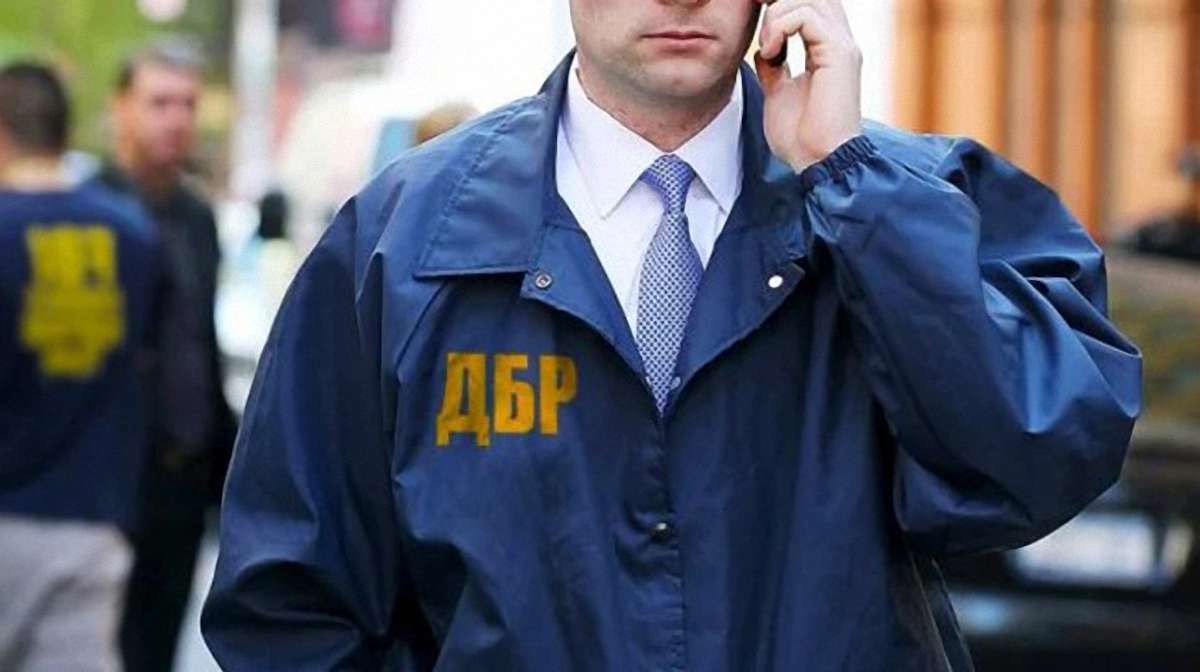
In April 2025, during the presentation of Ukraine's Seventh Periodic Report to the UN Committee against Torture, a member of the Ukrainian Government delegation, a representative of the State Bureau of Investigation (SBI), cited as one of the state's significant achievements the creation of a specialised unit that investigates crimes involving torture and other ill-treatment of people by law enforcement officers and judges.
The SBI's official website contains no information about this unit, and I did not know its exact name. I therefore sent a request for information to the SBI's central office, asking in particular for the unit's contact telephone number and email address, the full name of its head, and the procedure for submitting complaints of torture and other forms of ill-treatment committed by law enforcement officers to that investigative unit.
In response, the SBI sent a reply which cited the Law ‘On the State Bureau of Investigation’ and the relevant Presidential Decree. It set out what information is classed as information for official use within the central office and territorial departments of the SBI, and it provided an extract from the list of such information which, in the SBI's view, was relevant to the subject of my request. The reply also included general information already available on the SBI website.
I had to submit a second request, pointing out that the information I needed was by no means included in that list and was public information that ought to be openly accessible. At this point the SBI's legal machine sprang into action.
In response to the request I was sent a written lecture on information law. The lawyers (undoubtedly it was prepared by ‘legal professionals’) demonstrated their knowledge of the case law of the European Court of Human Rights. They referred in particular to the so-called ‘three-part test’, the position of Ukraine's higher courts, the Law ‘On Access to Public Information’ and a number of provisions of the Law ‘On the SBI’. These included the prohibition of unlawful interference in the SBI's activities, which my request had supposedly encroached upon. They also cited the List of information constituting information for official use, the existence of ‘potentially specific substantial harm’ from disclosing the requested information, and so on. Moreover, presumably to mock the requester, the reply stated that openness of the SBI's activities to society and to democratic civilian oversight is one of the fundamental principles of the SBI's organisation and work. Finally, the reply concluded that the requested data constituted restricted information and that there were therefore no grounds for providing it. One got the impression that whoever drafted this reply either had nothing better to do or felt obliged to prove that they were not earning their salary for nothing.
Overflowing with gratitude for this legal ‘crash course’, I did not abandon my intention of obtaining the information from the SBI. After all, one does not need to be a lawyer, or to analyse the legislation and case law, to understand that information about an investigative unit whose task is to investigate torture should not be concealed from the public. I had to draft a statement of claim asking the court to declare the SBI's actions unlawful and to oblige it to provide me with an answer, and then file it with the administrative court.
The SBI's statement of defence considerably broadened my horizons in the field of access to public information. In particular, I learnt that the right of access to information is not absolute. I learnt that, under the Constitution of Ukraine, this right may be restricted in connection with the introduction of martial law in Ukraine. I also learnt that SBI officers carry out measures to prepare and ensure the defence of Ukraine, so restricting access to information for official use serves the interests of national security, territorial integrity and public order and is aimed at preventing adverse consequences for those interests. I derived extraordinary pleasure from studying this masterpiece of casuistry, yet I still heard no answer to my questions. How does all this relate to my request? What threat to all these state interests did a request about the work of a torture investigation unit pose? And how, under martial law, did the right not to be subjected to torture, which unlike most other human rights is absolute, cease to be a matter of public interest? A certain pattern also came to mind: every time the authorities violate human rights, they invariably invoke the Constitution to prove that black is white, or perhaps to convince themselves that they are right.
On 11 February 2026 the Kharkiv District Administrative Court, in case No. 520/32689/25, declared unlawful the State Bureau of Investigation's failure to provide the requested information. It ordered the SBI to reconsider the request on its merits and to provide the requested information in accordance with the Law ‘On Access to Public Information’, taking into account the court's findings in the case.
This court decision naturally wounded the pride of those who had not wished to answer the request. The SBI lodged an appeal, forcing the appellate court to spend time considering the appellant's utterly far-fetched arguments. In the appeal, the SBI's lawyers displayed even more imagination in defending their position. There were numerous references to the case law of the Supreme Court and its Grand Chamber, and a systematic analysis of ECtHR case law combined with provisions of the Constitution of Ukraine and the Law ‘On the Legal Regime of Martial Law’. Certain passages of the appeal are simply a model of the vacuous style of drafting procedural documents: ‘Analysing the requested information in light of the provisions of the Law of Ukraine “On Access to Public Information”… 1) providing the requested information regarding SBI employees may pose a direct threat to their life and health owing to the high likelihood of criminal offences being committed against them in the event of a threat of temporary occupation’. One cannot help recalling the courtroom speech of a famous lawyer of bygone days about an old woman who stole an old teapot worth thirty kopecks and thereby, supposedly, irrevocably finished off a state that had existed for over a thousand years. It is a pity that people with such literary talent and creativity waste their gifts on writing tedious legal texts.
Another of the appellant's arguments was that the court of first instance had supposedly obliged the SBI ‘to create an individual procedure for the requester to contact a structural unit of the SBI and to define an algorithm for his further actions, contrary to the mechanism established by the SBI's internal regulatory and administrative acts’. Yet the request had been answered only partially, and the information about the above-mentioned unit and its head, among other things, had not been provided. In these circumstances it was perfectly clear that the court had obliged the SBI to fulfil the request in full, not to create some ‘algorithm’.
On 27 August 2026 the Second Administrative Court of Appeal dismissed the SBI's appeal. But the SBI did not stop in its absurd desire to prove itself right, or more precisely, to prove its superiority in status over an ordinary individual who had had the audacity to take a powerful law enforcement agency to court. A new SBI lawyer (the SBI had a different representative at each level of the courts) prepared and filed a cassation appeal with the Supreme Court. The quintessence of this appeal was an argument already put forward in the earlier appeal. It held that the disputed request concerned not existing information but the creation of new ‘desired’ information, which amounted to a demand not for ‘access’ to public information but for its ‘production’. It also held that the courts of first and appellate instance had supposedly obliged the SBI ‘to develop an algorithm for a person to submit a report of a criminal offence to a specific head of a unit of the SBI's Main Investigation Department’. This inevitably raises the question: did the person who drafted this appeal ever actually read the request? After all, general information about submitting a crime report to the SBI had been provided in the reply to the request, and it is also available on the SBI website. Naturally, the appeal contained the stock references to the rule of law in terms of legal certainty and the predictability of court decisions, and its text was peppered with references to domestic case law. What is more, the author of the cassation appeal, apparently believing the SBI to be a special addressee of the rule-of-law principle, put forward the brilliant idea that a breach of this principle adversely affects the work of the SBI in particular. As a procedural ground for the appeal, the cassation appeal cited, among other provisions, paragraph 2(c) of Part 5 of Article 328 of the Code of Administrative Procedure of Ukraine: the case is of significant public interest or of exceptional importance to the party filing the cassation appeal.
Undoubtedly, an indulgence from the Supreme Court allowing it to refuse to answer requests at its own discretion would be of exceptional importance to the SBI. However, the panel of judges of the Administrative Cassation Court within the Supreme Court did not accommodate these wishes and, on 15 October 2025, refused to open cassation proceedings. It found that the appellant had not adduced specific facts showing significant public interest in this particular case in these specific circumstances. The cassation court also observed that the appellant had not set out any circumstances indicating that the case was of exceptional importance. Nor had it identified any claims giving grounds to consider that the case mattered for a uniform understanding and application of the law for the parties to the dispute. The court added that review by the cassation court is intended to ensure the consistency of case law, not to offer an opportunity for ‘review for review's sake’.
The SBI had also relied, as a ground for cassation appeal, on the lower courts' failure to take into account a conclusion on the application of a legal provision in similar legal relations set out in a Supreme Court ruling. On this point, the cassation court noted that a formal reference to Supreme Court rulings, quoting individual paragraphs of those rulings, does not show that the lower courts in this case applied substantive law without regard to the Supreme Court's conclusions on its application. Such a reference cannot be regarded as proper substantiation of a ground for cassation appeal.
Thus an end was put to the attempts to ‘put in his place’ an ordinary person who had dared to enter into a dispute with a state authority.
Yet even after the first-instance decision had entered into force, the SBI continued to show ‘who is master in the house’. It provided information on the head of the unit dealing with torture investigations but did not state the unit's exact name, which I did not know, acting on the principle of ‘what I can't eat, I'll at least take a bite out of’. Moreover, the lion's share of the reply again consisted of numerous extracts from legislation that were not, and could not have been, the subject of the request. I had to make yet another request for the exact name of this unit. The SBI presumably feared paying further court fees in a possible new case, in which its position would be knowingly unfounded and its prospects correspondingly poor. This time it finally gave a substantive answer (see the scanned copy of the reply below).
Summing up this case, I would note that at least four lawyers in total took part in the administrative proceedings in courts at three levels, with the SBI fielding a new representative at each. One may conclude from this that the case was a matter of principle for this body. It reflects a general trend in the country towards wholesale violation of human rights and enormous corruption: attempts to restrict as far as possible the rights of individuals and legal entities, in this case the right of access to information. On the other hand, one has to observe that a state authority can afford to spend its own human resources on pointless court proceedings, which amounts to a kind of misuse of funds. It also causes additional harm to the state by burdening the courts with unnecessary work, when all it needed to do was provide a third-of-a-page answer to a simple request for information.
One involuntarily asks oneself: why is it that when people enter public service, in any position, even the lowest, they are guided not by the duty to uphold the laws of Ukraine and serve its people? Why are they guided instead by the awareness that they have become holders of power, whose purpose is to demonstrate that power, and their difference in status, at every opportunity? Of course, all authorities are made up of individuals, and, as is known from the media, there is no body in Ukraine that does not violate people's rights or, worse still, commit crimes. This evidently explains the stubborn unwillingness of all power structures to provide information about their activities, even where the law says access should not be restricted. It took more than a year to obtain an answer to the simplest request for information that is obviously public.
Combating torture and other forms of cruel treatment is one of the strategic priorities of our state. In this sense, information about the work of the unit investigating torture crimes is undoubtedly of significant public interest. Concealing information about the investigation of torture in no way serves the public interest, nor does it accord with the fundamental principles of the SBI's work.
It would seem that the SBI could devote more resources to actually investigating these crimes, rather than to concealing the name and contact details of the unit that is supposed to investigate torture. After all, the effectiveness of this work remains extremely low, at roughly 10% of the total number of registered crimes. Measured against the total number of complaints of such crimes, for which the SBI keeps no official statistics, it is two orders of magnitude lower still. In other words, its effectiveness is close to zero.
Many thanks to the honourable judges who protected the rights of an ordinary member of society against the arbitrariness of the authorities, which tried to refute common sense by means of legal contortions.
The decision in case 520/32689/25 can be viewed in the Unified State Register of Court Decisions of Ukraine at: https://reyestr.court.gov.ua/.