Report on the results of the monitoring visit to Zhytomyr Correctional Colony No. 4
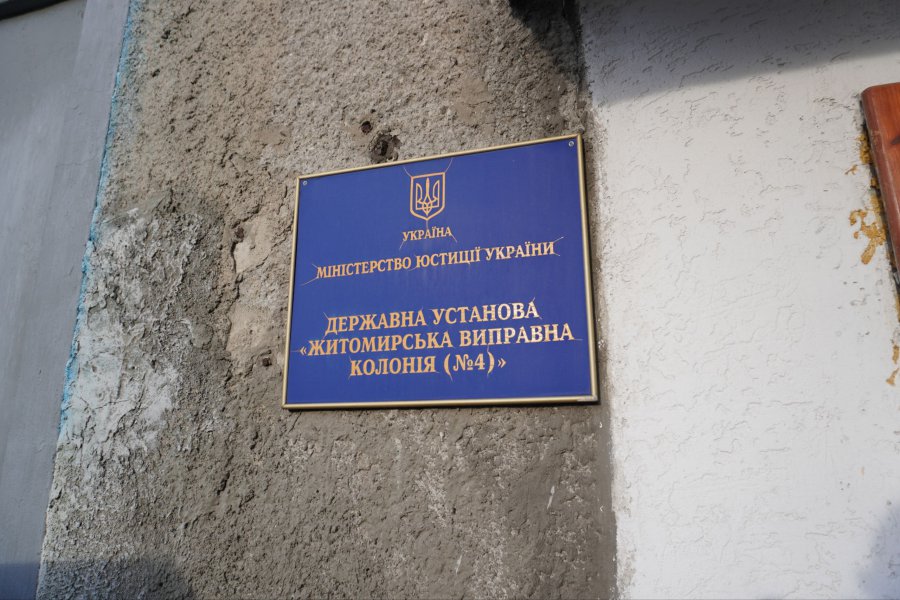
On 14.11.2025, in accordance with the Optional Protocol to the Convention against Torture and Other Cruel, Inhuman or Degrading Treatment or Punishment, taking into account the provisions of the United Nations Standard Minimum Rules for the Treatment of Prisoners and the rulings of the European Court of Human Rights, and on the basis of Article 24 of the Criminal Executive Code of Ukraine — ‘Visiting correctional facilities’, a group of monitors from the Kharkiv Human Rights Protection Group and the NGO ‘Protection of Prisoners of Ukraine’ carried out a visit to the state institution ‘Zhytomyr Correctional Colony (No. 4)’ (ZhCC-4, institution, facility, colony).
A routine unannounced visit was conducted, during which all objects of the institution were examined.
The previous visit took place on 30.04.2024:
During preparation for the visit, the monitors used materials from complaints by prisoners and their relatives, as well as materials from previous reports.
The visit was conducted within the framework of the project ‘Reducing Prisoner Suffering in the Context of the War in Ukraine’, funded by the government of Denmark in partnership with DIGNITY (Danish Institute Against Torture).
The visit was carried out by the following monitors:
- Andrii Didenko — assistant to People’s Deputy of Ukraine Yaroslav Yurchyshyn, programme coordinator of the Kharkiv Human Rights Protection Group, has experience with monitoring visits since 2014, an NPM monitor, member of the NPM advisory council;
- Serhii Zuikov — assistant to People’s Deputy of Ukraine Kostiantyn Kasai, member of the public council under the Ministry of Justice of Ukraine, member of the non-governmental organization ‘Protection of Prisoners of Ukraine’, an NPM monitor, has many years of experience with monitoring visits;
- Oleh Tsvilyi — member of the public council under the Ministry of Justice of Ukraine, head of the non-governmental organization ‘Protection of Prisoners of Ukraine’, has significant experience with monitoring visits, specializes in issues of torture, cruel and inhuman treatment.
In 2024-2025, individual planned repair and infrastructure measures were carried out in the institution, which indicates the existence of positive practices regarding the improvement of material and living conditions; however, the results of the monitoring visit indicate complex and systemic violations of prisoners’ rights.
In particular, violations of conditions of detention and facts of improper treatment were established, namely: overcrowding and failure to meet living space standards, inadequate material and living and sanitary-hygienic support, a lack of privacy in sanitary facilities, a shortage of premises and equipment stipulated by standards, violations in the organization of work with newly arrived prisoners, the use of ‘orderlies’ (dnuvalni) without proper legal registration and payment for labour, the delegation of control functions to prisoners and granting access to confidential information, stigmatizing practices, the formal nature of information provision, including for foreigners, improper conditions and procedural violations during detention in DISO/PKT, unsanitary conditions in individual residential premises, violations of catering and bath-laundry service procedures, problems with the use of special means and compliance with staff conduct standards, the restrictive nature of short-term visits, a significant staff shortage, the unsatisfactory state of one of the shelters, and, in effect, limited and formal access for prisoners to the Internet.
Furthermore, violations of the right to work and social protection were recorded, in particular the dominance of civil law contracts with signs of substituting employment relationships, the involvement of prisoners in permanent work without proper registration, the absence of a staffing schedule in the canteen, improper accounting of working time and wages, the absence of safety guarantees and compensation for hazardous working conditions, as well as violations in the sphere of medical support: improper documentation of bodily injuries, absence of necessary diagnostic equipment, violations of the procedure for maintaining medical documentation, improper conditions of infectious and psychiatric isolation, limited access to treatment and prevention of infectious diseases, absence of OAT programmes and psychosocial support, non-compliance with the rights of persons with disabilities, limited access to dental care, absence of telemedicine, emergency aid means, and proper fire safety measures in the medical unit.
General Information
ZhCC-4 is a medium-security correctional colony for holding men who have been sentenced to imprisonment for the first time for committing grave and especially grave crimes.
The institution is located at: 172 Nezalezhnosti Avenue, Zhytomyr, Zhytomyr Region, 10001, Ukraine.
The state institution ‘Zhytomyr Correctional Colony (No. 4)’ belongs to the oldest penitentiary institutions of the Zhytomyr region. Its creation dates back to 1933 and is associated with the formation of a network of correctional labour colonies of the Soviet period, oriented towards the isolation and labour exploitation of prisoners. In the pre-war years, the institution functioned within the NKVD system of the Ukrainian SSR as part of a punitive-labour model of sentence execution. During the Second World War, the colony’s work was disrupted, and after the liberation of Zhytomyr in 1944, its activity was restored in the conditions of post-war reconstruction with the gradual restoration of residential, production, and administrative objects.
In the post-war and later Soviet period, the colony repeatedly underwent organizational changes in accordance with the evolution of legislation and the system of penitentiary bodies, functioning as a general-regime correctional labour colony with a distinct production orientation. After the declaration of Ukraine’s independence, the institution was integrated into the national penitentiary system. A significant part of the infrastructure was formed in the mid-20th century, which determines the institution’s historical continuity but simultaneously creates challenges regarding compliance with modern standards of treatment of prisoners and human rights adherence.
At the time of the visit, the head of the institution was Colonel of the Internal Service Oleksandr Yosypovych Bochkovskyi.
The facility consists of the duty unit, the QDD unit (quarantine, diagnostics, and distribution unit), SPS units (Social and Psychological Service), a canteen, DISO premises (disciplinary isolation cell), PKT (cell-type premises), DPK (high-security unit), a pre-trial detention unit (SIZO), a medical unit, a bath and laundry complex, visitation rooms, a shop, a library, a room for receiving parcels, as well as administrative premises.
According to data from the institution’s administration, the authorized staff headcount is 343 positions. The actual staff headcount is 207 positions. The total staff shortage for the institution is 136.5 authorized units.
The planned capacity of the facility is 1,240 persons. The actual number of persons held in the institution is 1,104. There are 4 SPS units operating in ZhCC-4. One psychologist works at the facility.
During 2025, 634 persons arrived at the colony. During 2024, 17 persons died; during 2025, 2 persons died.
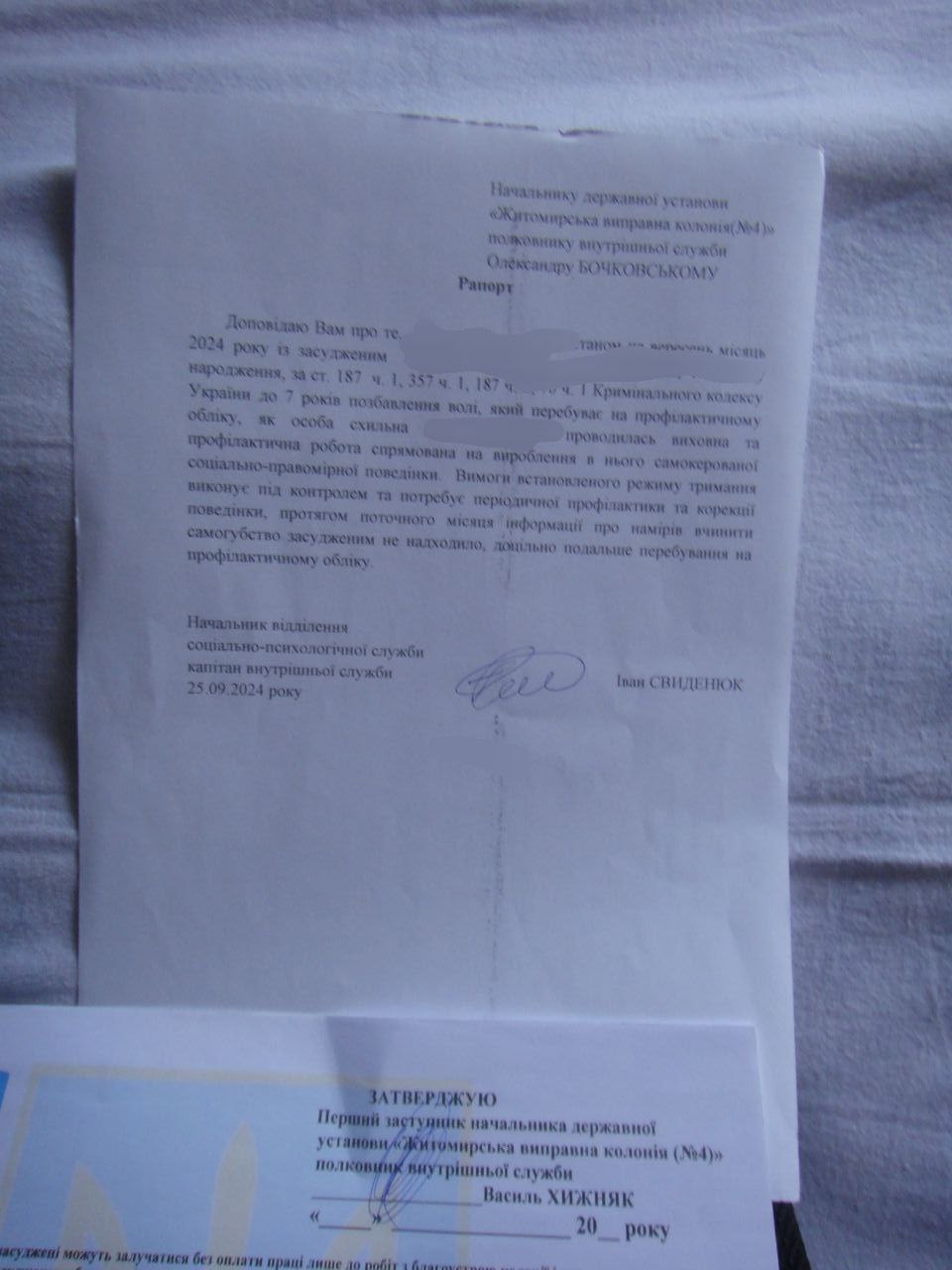
Registered on operational and preventive records: persons prone to suicide — 26; prone to self-harm — 28 persons; prone to escape — 6 persons; malicious violators of the detention regime — 28 persons.
During 2024-2025, not a single person submitted a complaint regarding improper conditions of detention or improper provision of medical care.
36 persons have disabilities, of which 10 persons are in group II and 26 persons are in group III.
Prisoners do not own tablets for personal use. 81 email addresses have been registered in the institution.
During 2024, 11 cases of bodily injuries received while in the institution were recorded. During 2025, 10 cases of bodily injuries were recorded, of which 1 was upon arrival and 9 were while in the institution.
The monitoring group interviewed about 310 prisoners during the visit to production facilities, workshops, SPS units, disciplinary and utility rooms, in the format of general conversations with the provision of consultations, answers to questions, surveys regarding possible human rights violations, as well as individual communication with specific individuals, including on conditions of anonymity.
Positive Experience
In fulfillment of the strategic goal ‘Creating proper conditions of detention for prisoners and persons in custody’, defined by the Strategy for Reforming the Penitentiary System for the period until 2026, planned measures aimed at improving material and living conditions and the general environment of prisoner detention were carried out at the SI ‘Zhytomyr Correctional Colony (No. 4)’ in 2024–2025.
The institution’s administration implemented a series of infrastructure and repair works aimed at increasing the level of safety, functionality, and suitability of residential and auxiliary premises for operation. In particular, partial repair of asphalt surfacing was carried out in the residential and production zones, and the facades of dormitories, the club, the bath-laundry complex, gates, and local unit fences were painted.
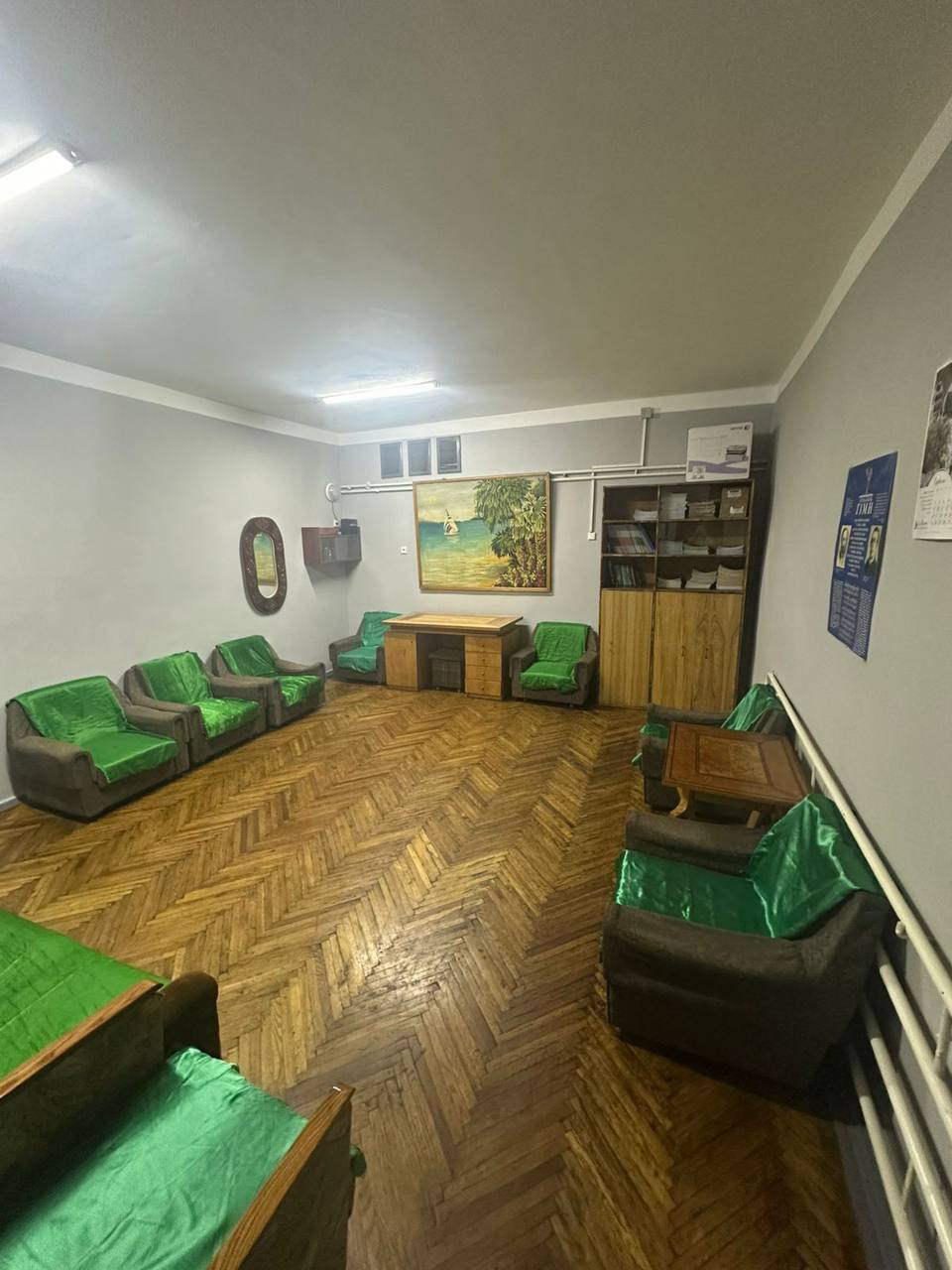
In the psychological centre, cosmetic repairs of the psycho-emotional relief room were completed with the replacement of lighting with LED. Repairs of the roof of dormitory No. 3 were carried out, entrance doors in the social rehabilitation unit were replaced, and information stands in the SPS units were updated.
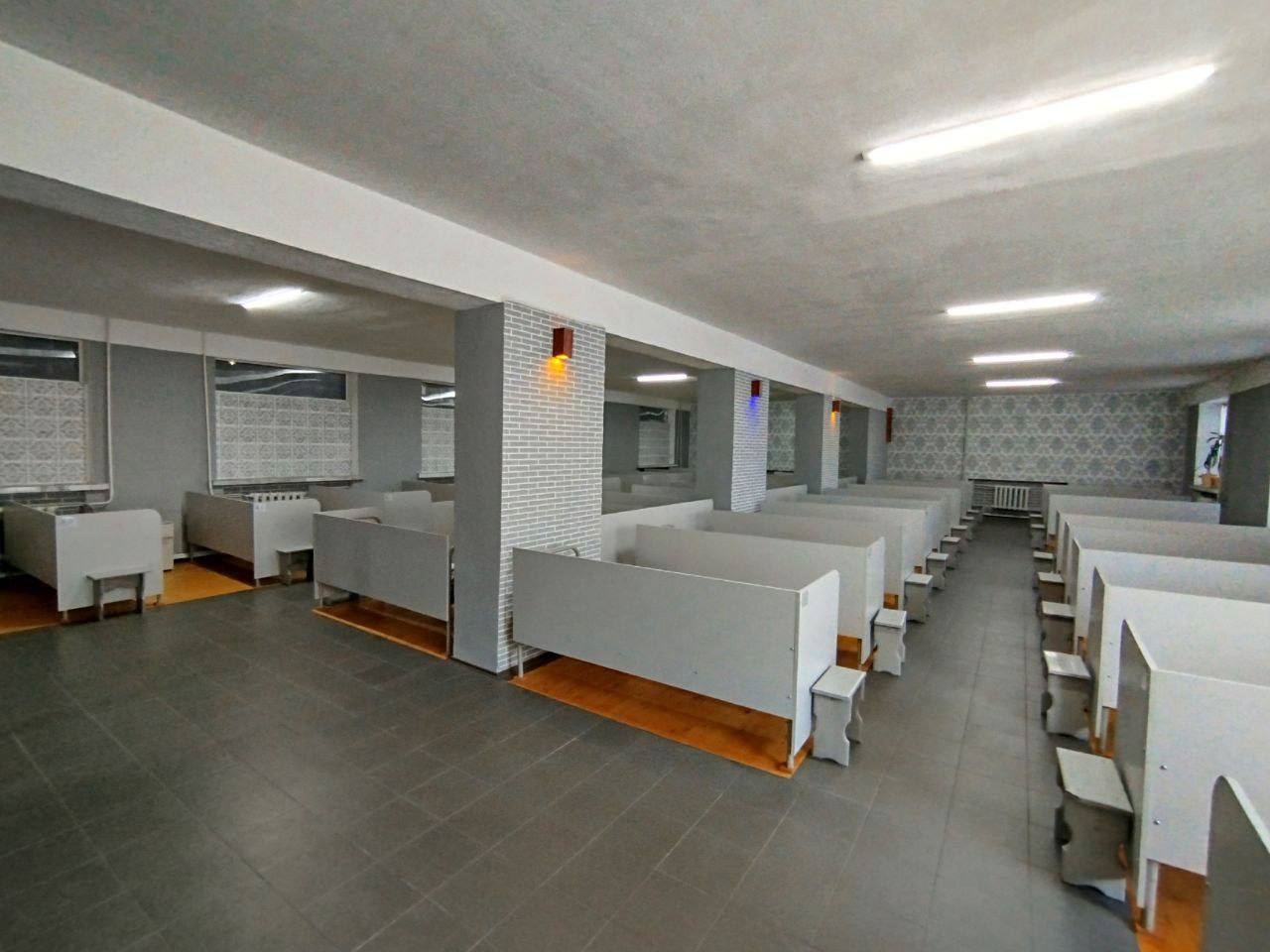
In 2025, planned repairs of dormitory No. 5 were started and are ongoing, within the framework of which window and door replacements were carried out, foundation insulation, partial roof repairs, updating of floors and residential equipment, and the arrangement of sanitary facilities continues.
Individual measures were aimed at ensuring normative living space and improving the state of engineering networks. In dormitory No. 8, works are being conducted on retrofitting premises into bedrooms with the aim of complying with the living space standard per prisoner. In 2025, the replacement of obsolete heat pipelines in dormitories, the administrative building, and visitation rooms was carried out, which contributes to increasing the reliability of the heat supply system.
Collectively, the indicated measures testify to the existence of consistent steps in the institution aimed at improving the conditions of detention and material and living support of prisoners.
Violations of national and international legislation identified
During the monitoring visit, violations of national legislation requirements and non-compliance with international recommendations in the field of prisoner treatment were identified, leading to violations of the rights of prisoners.
1. The layout of the QDD unit does not meet the standards for the treatment of prisoners and the conditions of their detention, taking into account individual needs. Thus, in violation of the first part of Article 115 of the Criminal Executive Code of Ukraine (hereinafter — CEC of Ukraine), as well as point 13 of the UN Standard Minimum Rules for the Treatment of Prisoners, it was established that in the residential premises of the QDD unit, the actual number of sleeping places exceeds the permissible limit, which makes it impossible to ensure the living space norm per person established by legislation (not less than 4 m²).
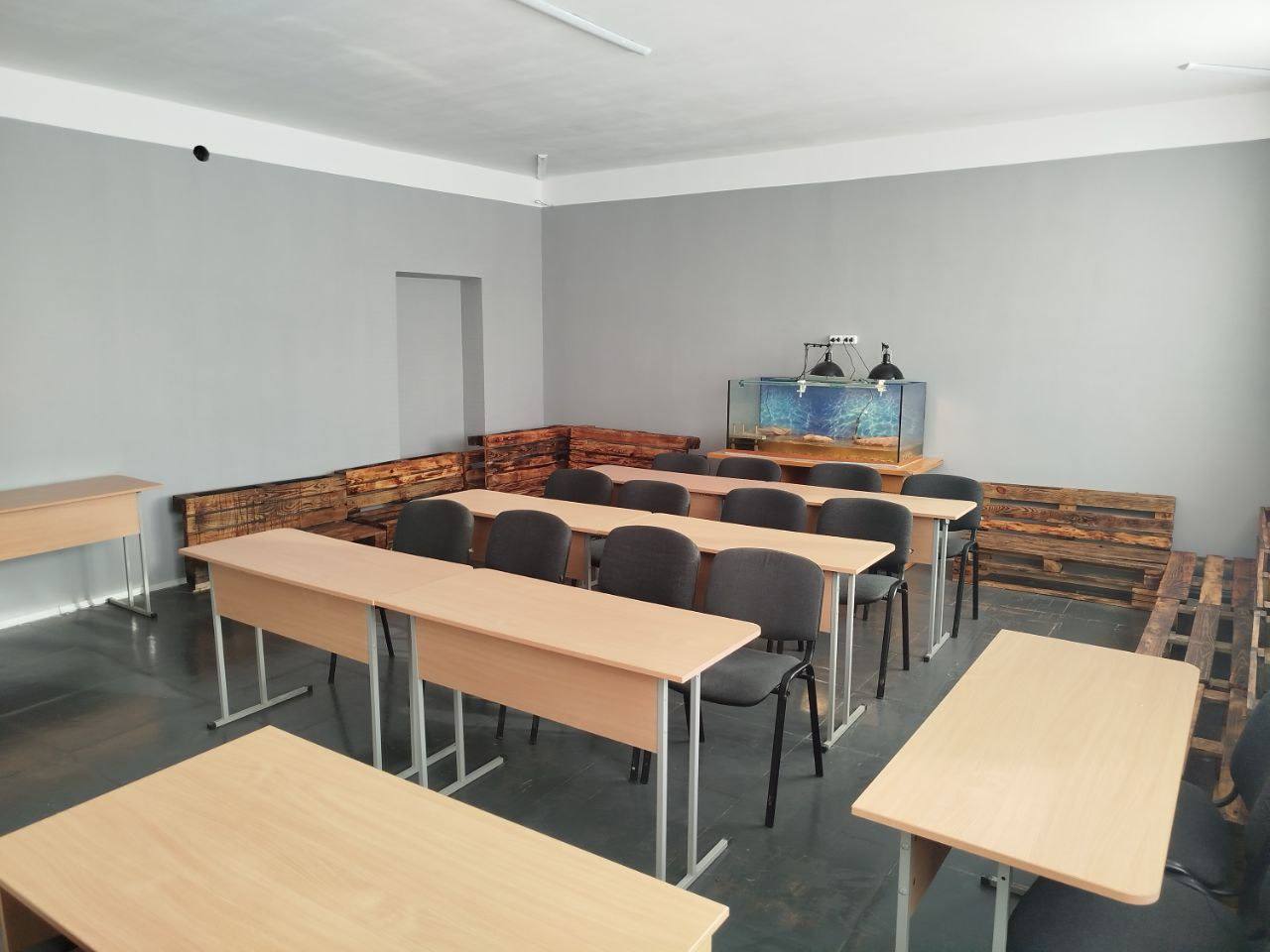
Specifically, in residential premise No. 1, where 10 beds are located, the area is 32.06 m², due to which the actual area per prisoner is 3.20 m². Furthermore, in connection with a shortage of residential premises and sleeping places for newly arrived prisoners in the QDD unit, the administration and staff of the institution made a decision to install 20 additional sleeping places in the educational work room with a room area of 28.48 m². Thus, the actual living space per prisoner is 1.42 m², which is a gross violation of legislative requirements regarding conditions of prisoner detention.
In point 13 of the Seventh General Report of the European Committee for the Prevention of Torture and Inhuman or Degrading Treatment or Punishment (hereinafter — the Committee), it is noted that the problem of overcrowded cell premises leads to unhygienic conditions, a constant lack of privacy, and overloading of medical services and the institution’s infrastructure, and also often results in inhuman or degrading conditions of detention for prisoners (CPT/Inf (97) 10).
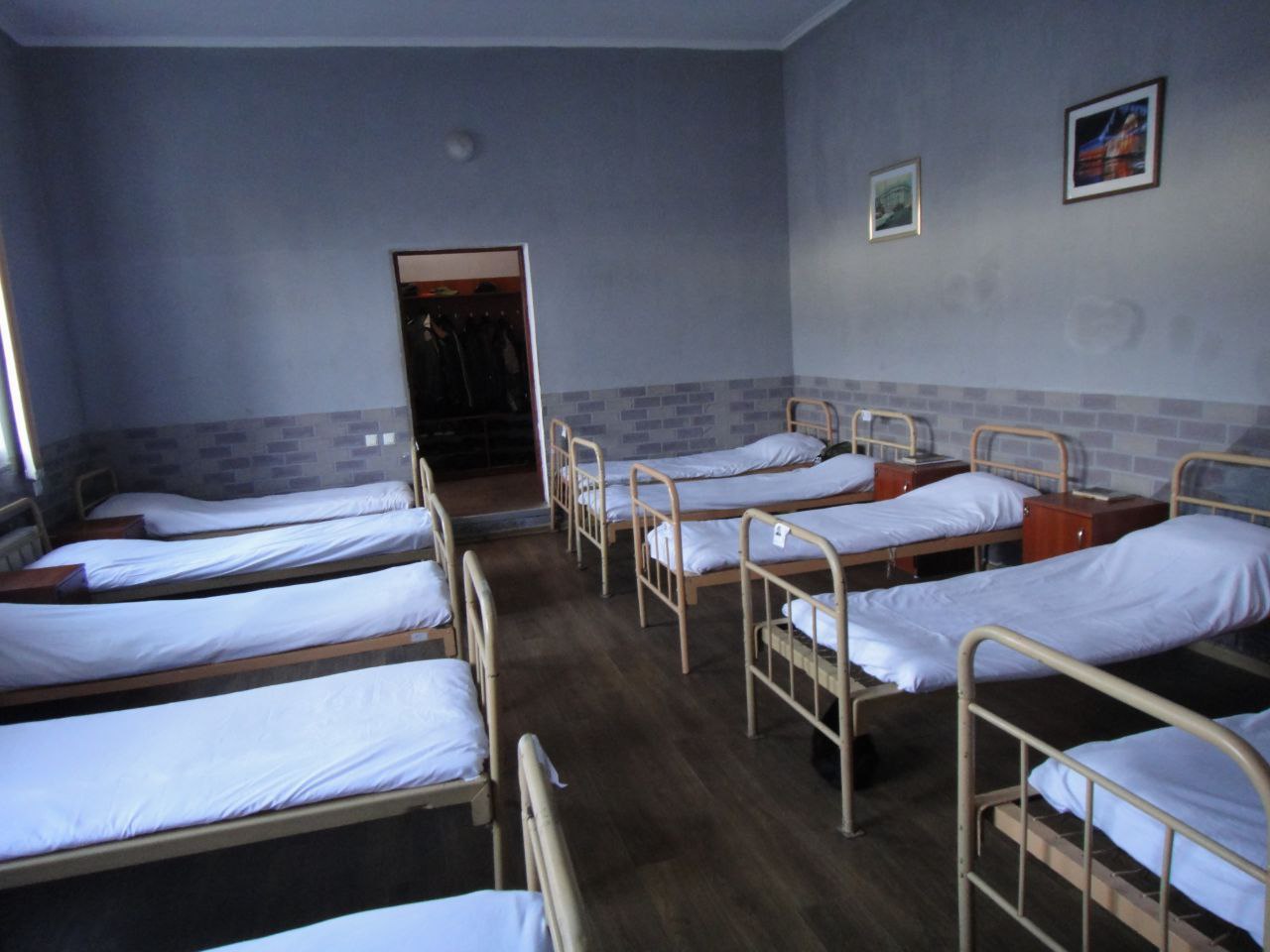
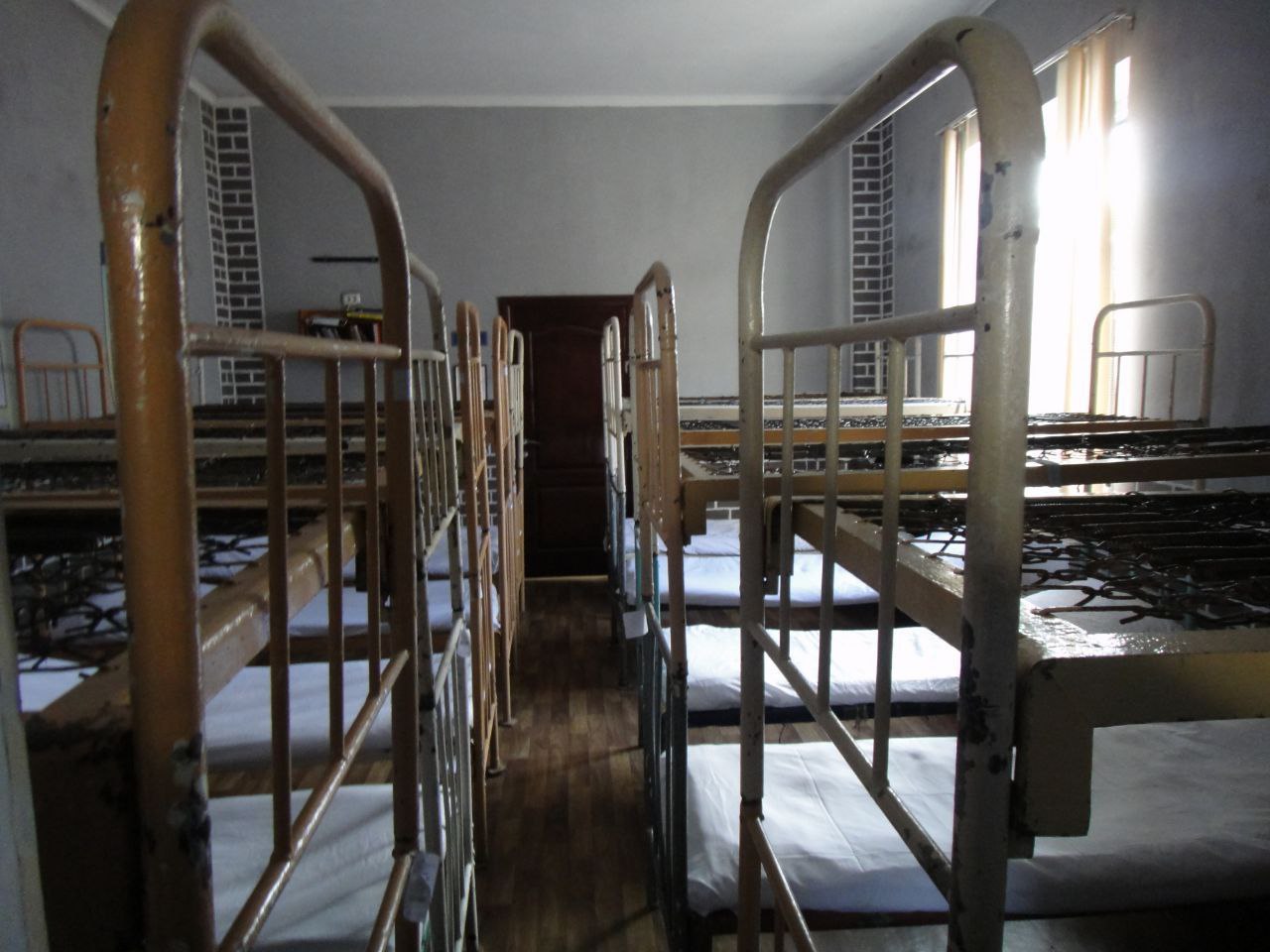
2. The monitoring group established that the material and living support of the QDD unit does not meet the established regulatory requirements. Thus, in violation of the Standards of Provision with furniture, inventory, and household items for a medium-security correctional colony, approved by order of the Ministry of Justice of Ukraine dated 27.07.2012 No. 1118/5 (hereinafter — Standards of Provision), the unit lacks the following premises: educational work room; room for storing the exchange fund of bedding, clothing, and special protective clothing; storeroom for the temporary storage of dirty bedding, clothing, and special protective clothing; cloakroom; utility room; drying room.
Furthermore, residential premises are not equipped with a sufficient number of bedside tables and stools in accordance with established standards. The washroom is not equipped in accordance with the requirements of the Standards of Provision, in particular, a shower cabin with a mixer and a shower head on a flexible hose is absent, due to which proper conditions for maintaining the prisoners’ personal hygiene are not ensured.
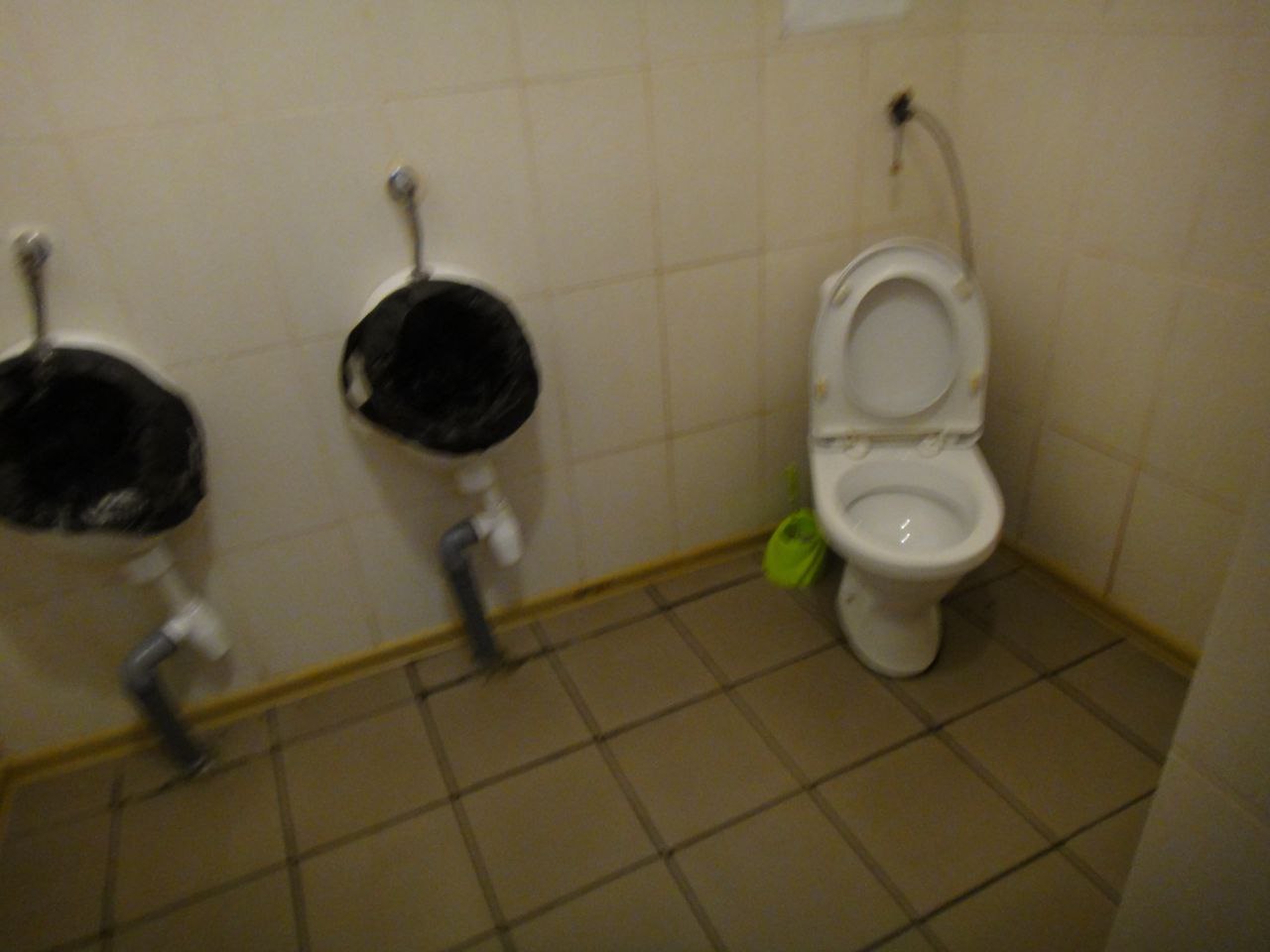
At the time of the visit, there were 22 newly arrived persons in the QDD unit; at the same time, there is only one toilet cabin, which contradicts the Standards of Provision, which stipulate one cabin per 12 persons, creates unsanitary conditions, and violates the right to respect for dignity.
The absence of the specified premises and the under-equipping of residential premises with furniture create conditions that do not meet living standards, make proper adherence to sanitary-hygienic requirements impossible, and complicate the maintenance of cleanliness and order in the places where prisoners live. Such a state of household organization negatively affects the general sanitary state of the institution and may pose a risk to the health of persons held within it.
3. In violation of the requirements of rule 22.5 of the European Prison Rules, rule 22.2 of the UN Standard Minimum Rules for the Treatment of Prisoners, and the Standards of Provision, the residential premises of the unit are not provided with drinking water tanks with a capacity of 15 litres with a tap, lid, mug, and basin. The restroom is not equipped with sufficient partitions and doors that ensure the possibility of privacy, which violates rule 19.3 of the European Prison Rules and rule 15 of the UN Standard Minimum Rules for the Treatment of Prisoners.
At the same time, in the report to the Government of Ukraine on the results of the 2023 visit, the Committee called on the Ukrainian authorities to take necessary measures to improve material conditions of detention, in particular: to keep all places where prisoners and detainees are housed, including sanitary premises, in a proper state of repair and hygiene; to ensure regular and frequent disinfestation; to ensure sufficient access to natural light and ventilation in cells; to fully equip internal sanitary premises with partitions (i.e., from floor to ceiling) (CPT/Inf (2024) 20, point 58).
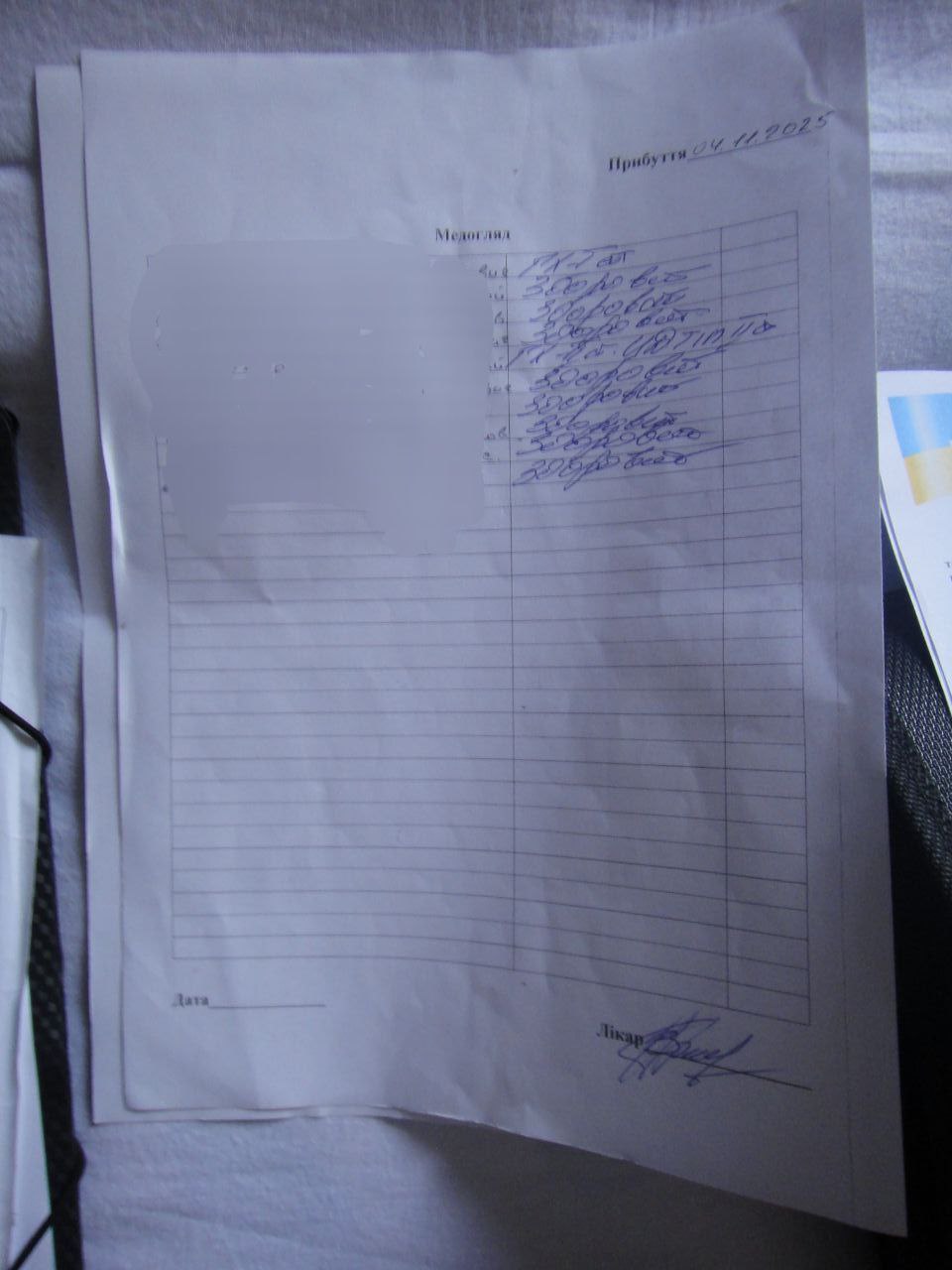
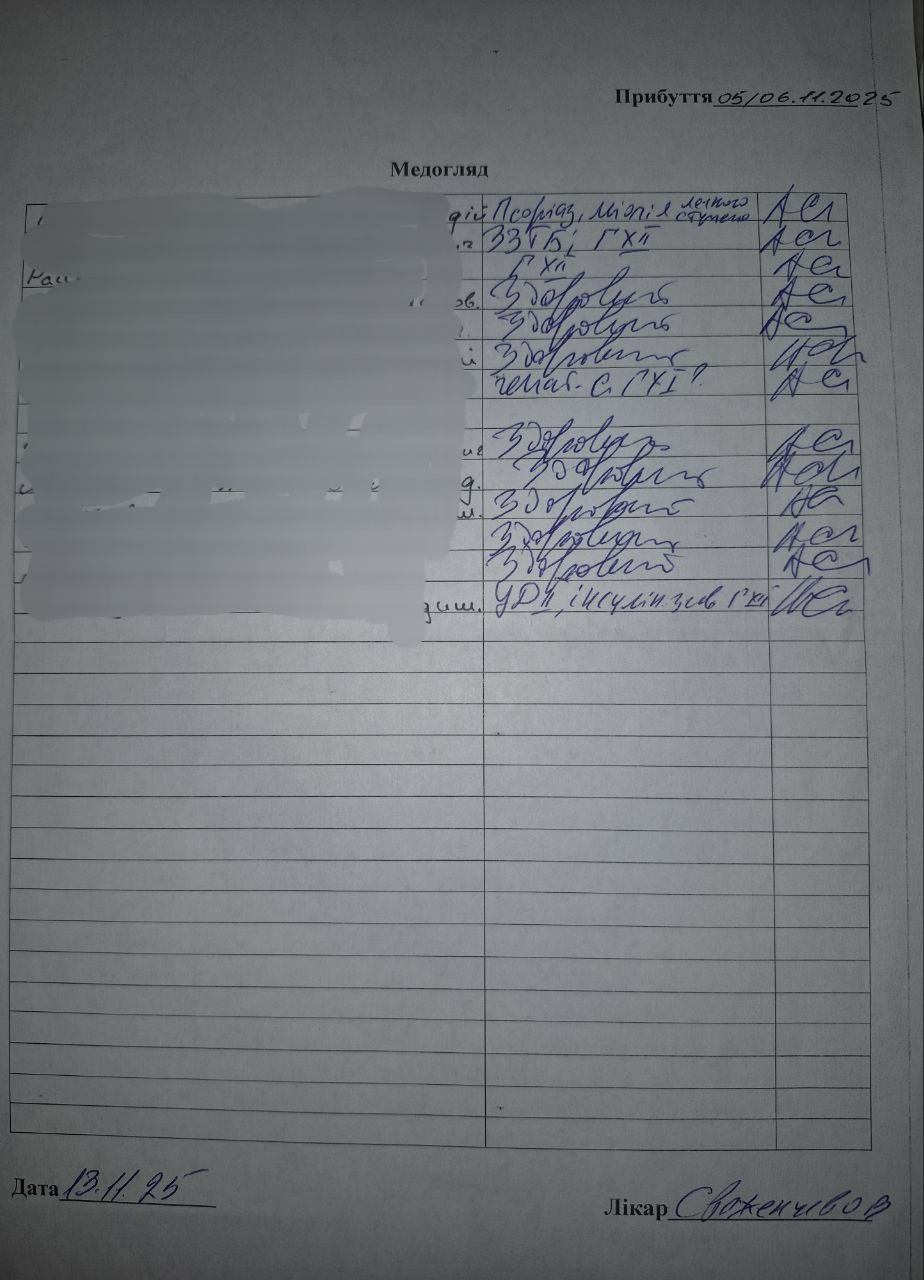
4. The monitoring group established that the institution’s administration and staff do not ensure proper organization of work with newly arrived prisoners. In violation of the ninth paragraph of the first part of Article 8 and the first part of Article 118 of the Criminal Executive Code of Ukraine, facts were recorded of institution staff involving two prisoners in the performance of work in the QDD unit without the conclusion of an employment contract and without pay. In particular, the mentioned prisoners were engaged in performing the duties of ‘orderlies’.
Furthermore, it was established that the aforementioned prisoners had the opportunity to remain in the QDD unit around the clock, were provided with assigned sleeping places, and could independently visit the canteen and the Social and Psychological Service (hereinafter — SPS) unit, to which they were formally assigned. In effect, the institution’s administration and staff delegated functions of constant supervision over newly arrived prisoners placed in the QDD unit to these ‘orderlies’, as well as control over their compliance with the daily schedule, which is inadmissible and contradicts legislative requirements.
It was also established that the mentioned prisoners performed work included in the official duties of the head of the QDD unit. In particular, they carried out the collection and storage of information necessary for filling in the diaries of individual work with prisoners. Thus, in the bedside table of one of the prisoners, official documentation was discovered, among which contained information about the results of medical examinations and the presence of chronic diseases of prisoners who arrived at the institution on 04.11.2025, 05.11.2025, and 06.11.2025. This information, which is of a confidential nature, is subject to entry by the head of the QDD unit into section IV ‘Information on health status, physical features’ of the diaries of individual work with prisoners.
Such actions contradict the requirements of Article 96 of the Criminal Executive Code of Ukraine, point 4 of section II of the Internal Rules of Correctional Facilities, approved by order of the Ministry of Justice of Ukraine dated 28.08.2018 No. 2823/5 (hereinafter — IRCF), Article 39¹ of the Law of Ukraine ‘Fundamentals of the Legislation of Ukraine on Healthcare’ regarding the right of a person to confidentiality of health status, as well as point 2 of section I of the Regulation on the Quarantine, Diagnostics, and Distribution unit, approved by order of the Ministry of Justice of Ukraine dated 04.11.2013 No. 2300/5, registered with the Ministry of Justice of Ukraine under No. 1864/24396 (hereinafter — Regulation on the QDD unit).
In the report on the results of the visit to Ukraine in 2020, the Committee expressed serious doubts regarding the practice of using certain prisoners as ‘orderlies’ who perform functions of control over other prisoners in living quarters and on production and report any events and regime violations to staff. Therefore, the Committee noted with concern during this visit that this practice remained. Moreover, unfortunately, despite specific recommendations previously provided by the Committee, the practice of using ‘orderlies’ is also officially provided for by the Internal Rules of Correctional Facilities.
As previously emphasized, the Committee considers any partial abdication of responsibility for order and security in prisons, which lies with the institution’s custodial staff, to be unacceptable. Such a practice exposes more vulnerable prisoners to the risk of ill-treatment and exploitation by other prisoners. The Committee calls on the Ukrainian authorities to take all necessary steps, including of a legislative nature, to put an end to this practice. No prisoner (in any penitentiary institution in the country) should have power over other prisoners (CPT/Inf (2020) 40, point 27).
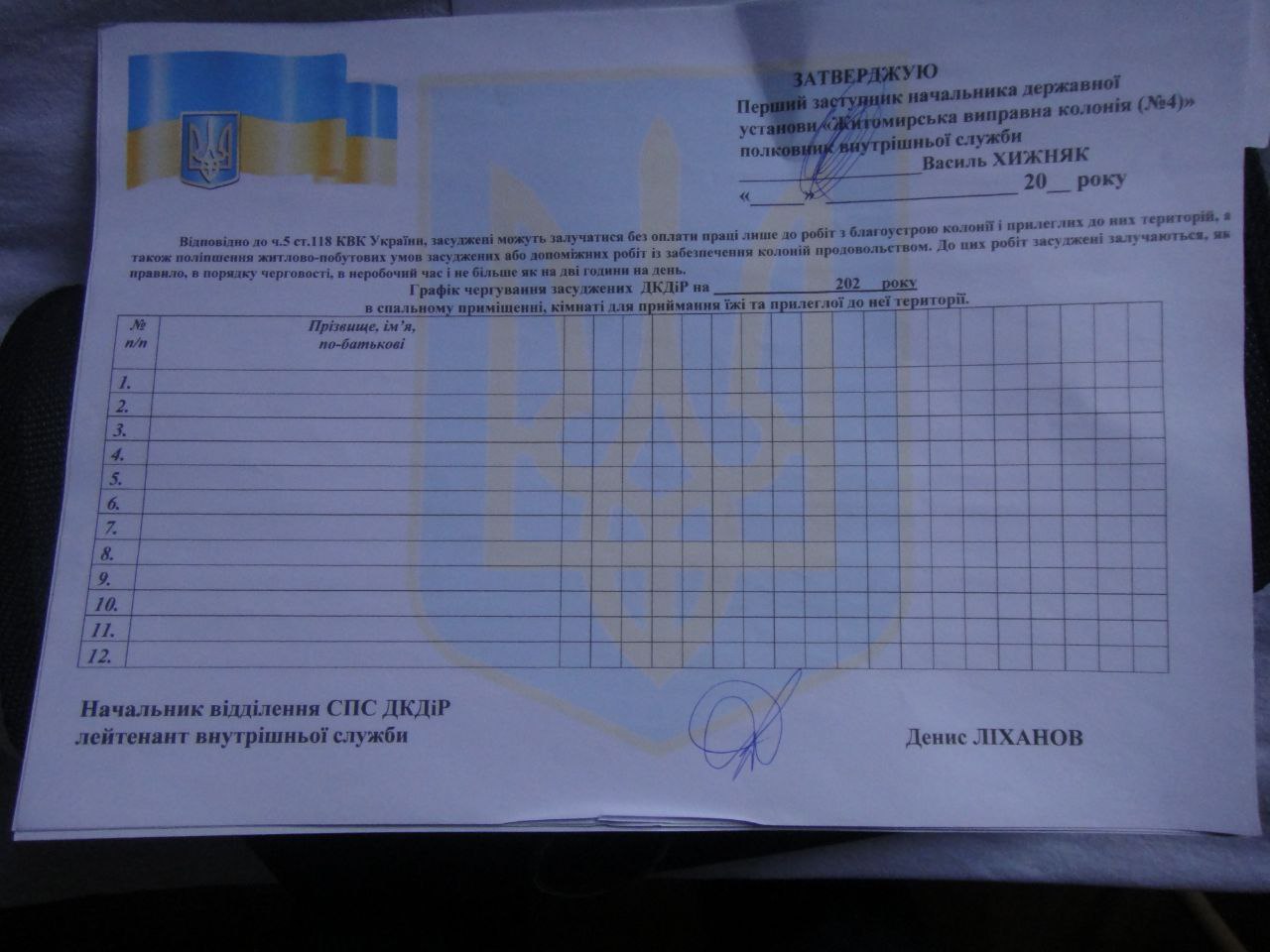
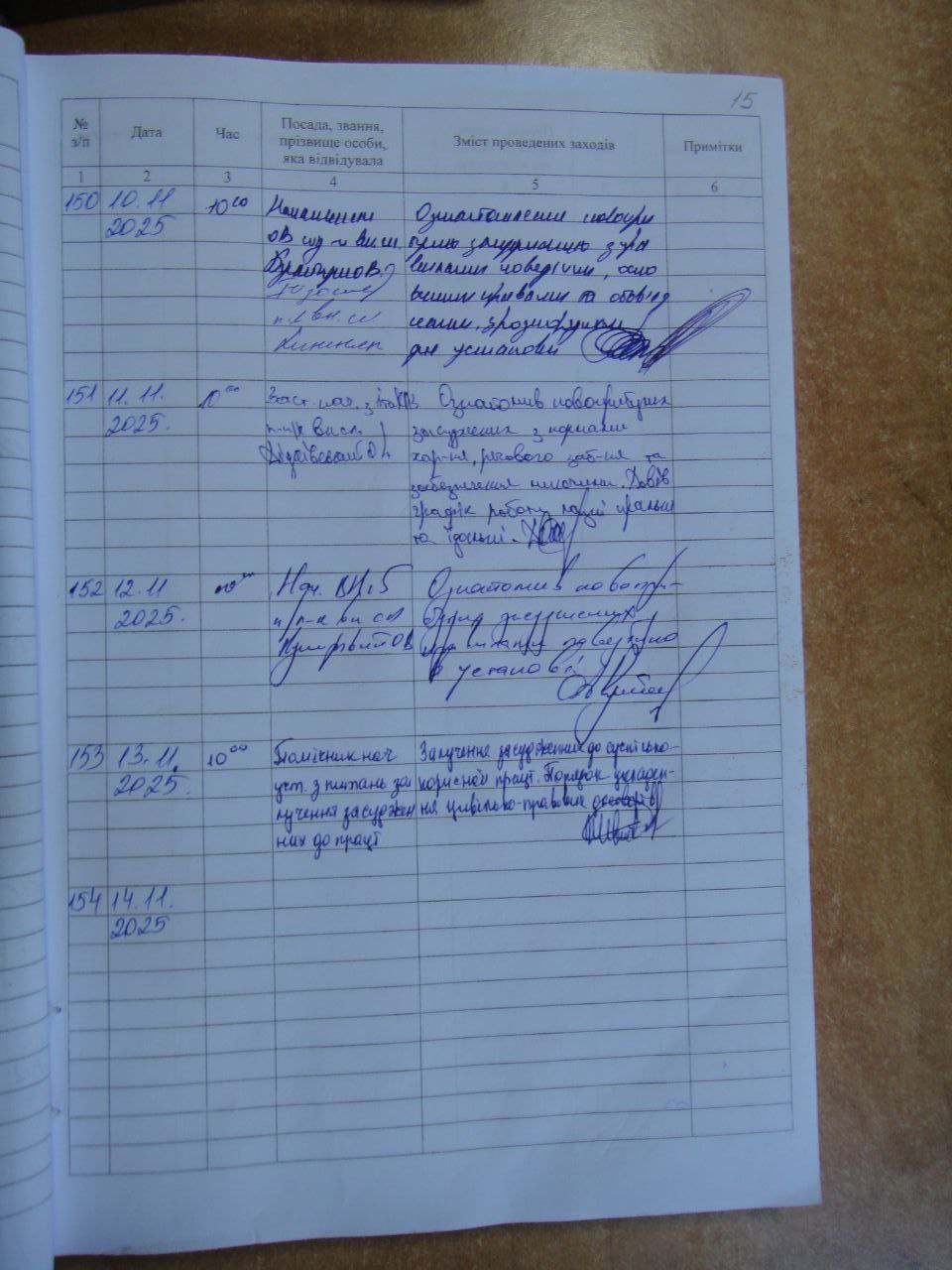
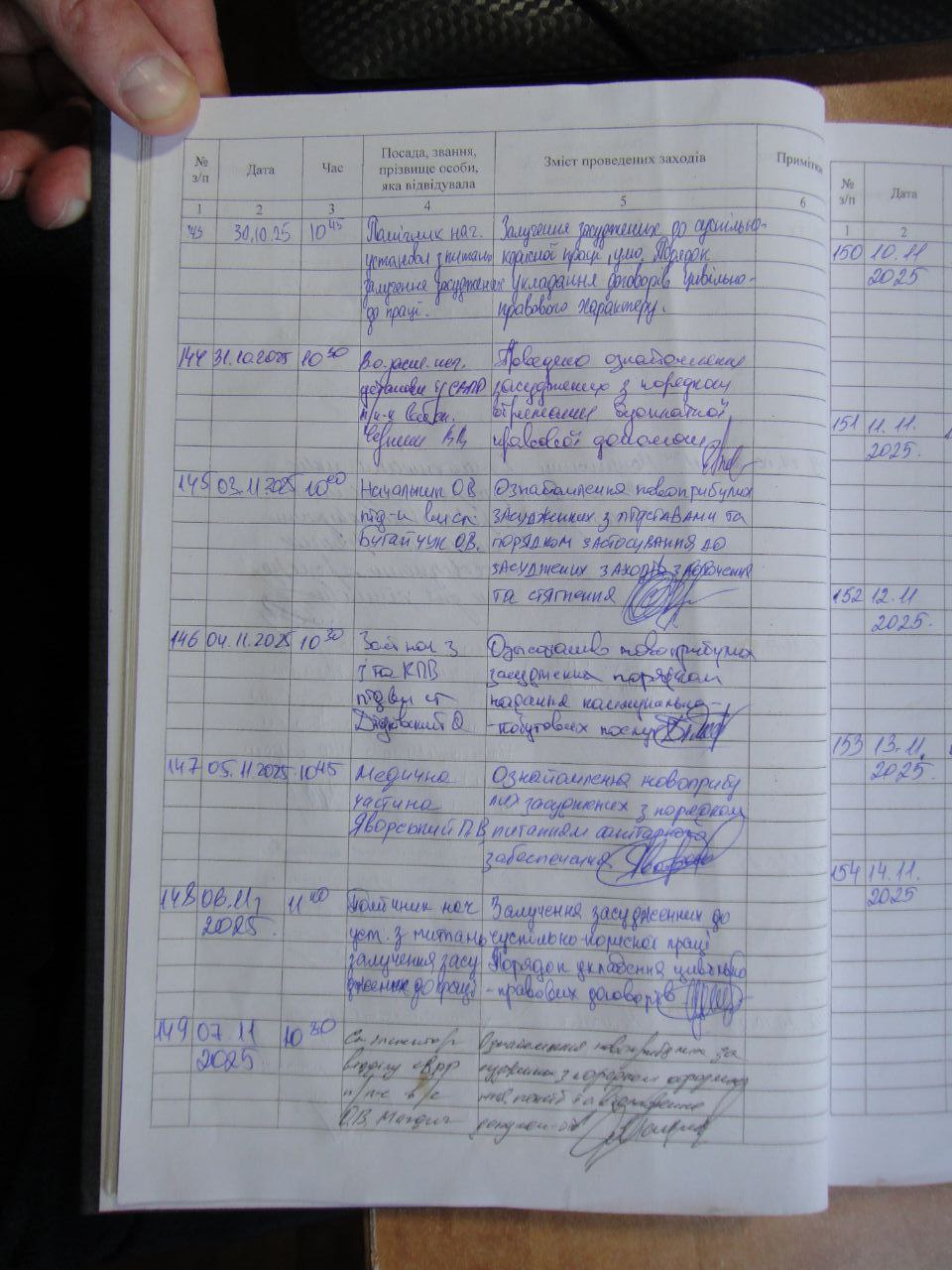
5. The planning of measures for the orientation programme for newly arrived prisoners is carried out in violation of the requirements regarding the frequency (not less than once a week) of visits to the QDD unit by each member of the working group. Thus, in the period from 03.11.2025 to 14.11.2025, according to the logbook of visits to the QDD unit by representatives of the administration, it was established that measures with newly arrived prisoners were conducted by only 7 members of the working group out of 13, which does not comply with the requirements of point 5 of section II of the Regulation on the QDD unit.
6. In violation of point 1 of section II of the Regulation on the QDD unit, the head of the financial support and accounting department — chief accountant — is not included in the working group for organizing work with newly arrived prisoners.
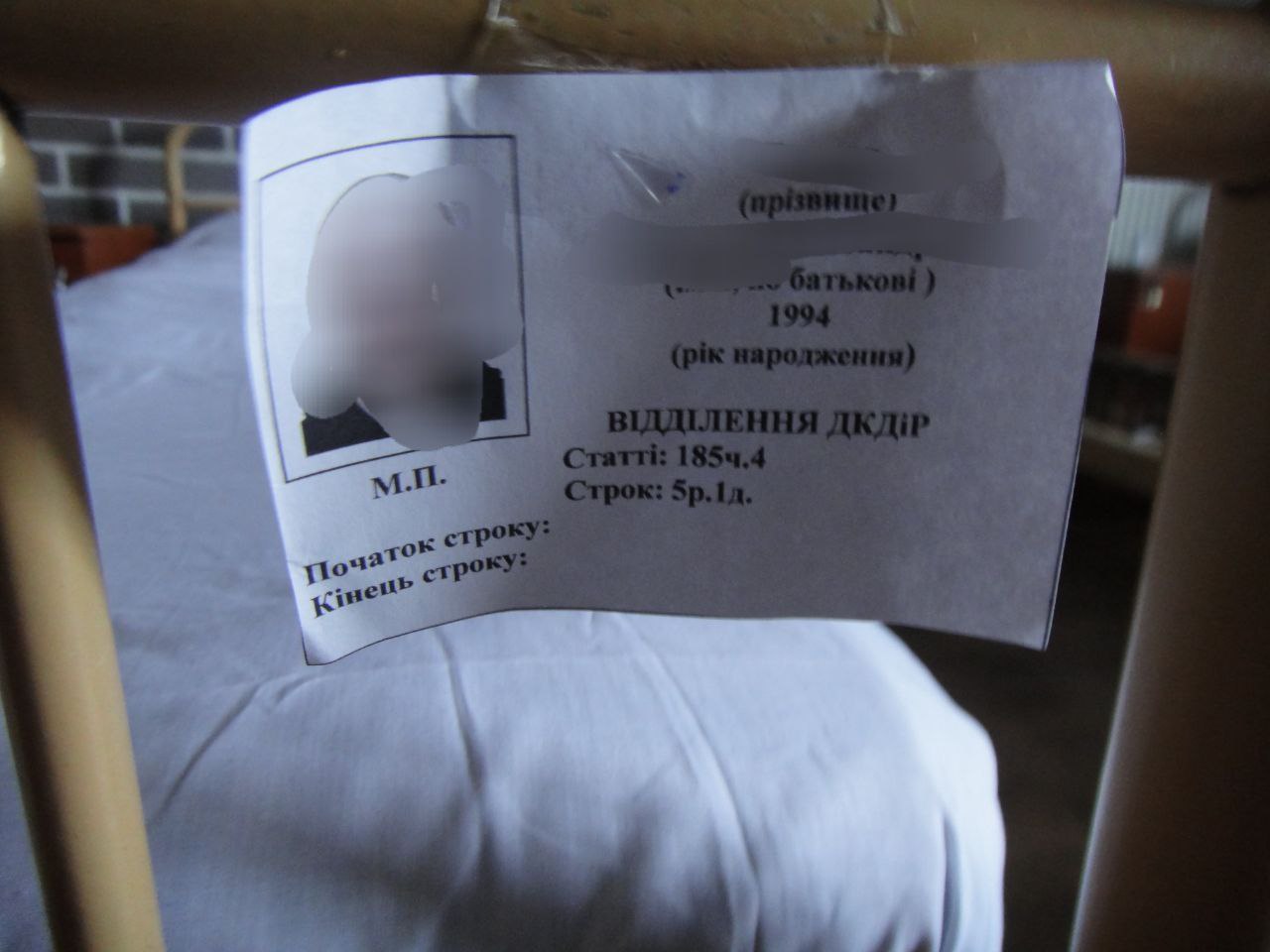
7. During the visit to the QDD unit, it was established that name cards were placed on prisoners’ beds in the sleeping premise, indicating a short description of the crimes committed by the individuals occupying these beds. In the report on the results of the visit to Ukraine in 2020, under similar circumstances, the Committee noted that this practice should be stopped, as it serves no reasonable purpose other than stigmatization, and results in the deterioration of relations between prisoners and prison staff (CPT/Inf (2020) 40, point 52).
8. In accordance with point 1 of section V of the Internal Rules of Correctional Facilities (hereinafter — IRCF), during their stay in the quarantine, diagnostics, and distribution unit, prisoners are provided with the requirements of the Criminal Executive Code of Ukraine, the Criminal Procedure Code of Ukraine, the Criminal Code of Ukraine, as well as regulatory legal acts regulating the procedure and conditions of serving sentences, against their signature, in the form according to Appendix 6 to these Rules.
At the same time, during the visit to the QDD unit as of 14.11.2025, the presence in the unit of a foreigner, M., a citizen of the Republic of Sudan, who arrived at the institution on 06.11.2025, was established. During a confidential conversation, the mentioned prisoner reported that he does not speak the languages in which the corresponding information materials are provided. Meanwhile, a copy of such materials in Arabic, which he speaks, was not provided to him, due to which the familiarization with them was of a formal nature.
The aforementioned also contradicts rule 54 of the United Nations Standard Minimum Rules for the Treatment of Prisoners (the Nelson Mandela Rules), according to which every prisoner upon arrival at a penitentiary institution must be promptly provided with written information about: a) penitentiary legislation and internal rules of the institution; b) his/her rights, in particular the procedure for obtaining information, access to legal advice, and procedures for filing petitions or complaints; c) his/her obligations and possible disciplinary penalties; d) other information necessary for adaptation to the conditions of detention.
Furthermore, in accordance with rule 55.1 of the Nelson Mandela Rules, the specified information must be provided in the languages most frequently used, taking into account the institution’s population, and in case of non-understanding, translation must be provided.
Failure to comply with the stated requirements indicates a violation of the prisoners’ right to receive information, guaranteed by Articles 34 and 57 of the Constitution of Ukraine.
9. The state of outfitting of the DISO/PKT premises does not fully comply with the established standards for the treatment of prisoners and does not ensure proper conditions of detention, taking into account their needs. Thus, in violation of the requirements of the Standards of Provision, the DISO/PKT lacks necessary premises, in particular: a room for storing the exchange fund of bedding, clothing, and special protective clothing; a storeroom for the temporary storage of dirty bedding, clothing, and special protective clothing; a barber’s shop. The absence of such premises or their improper outfitting leads to a violation of sanitary-hygienic standards.
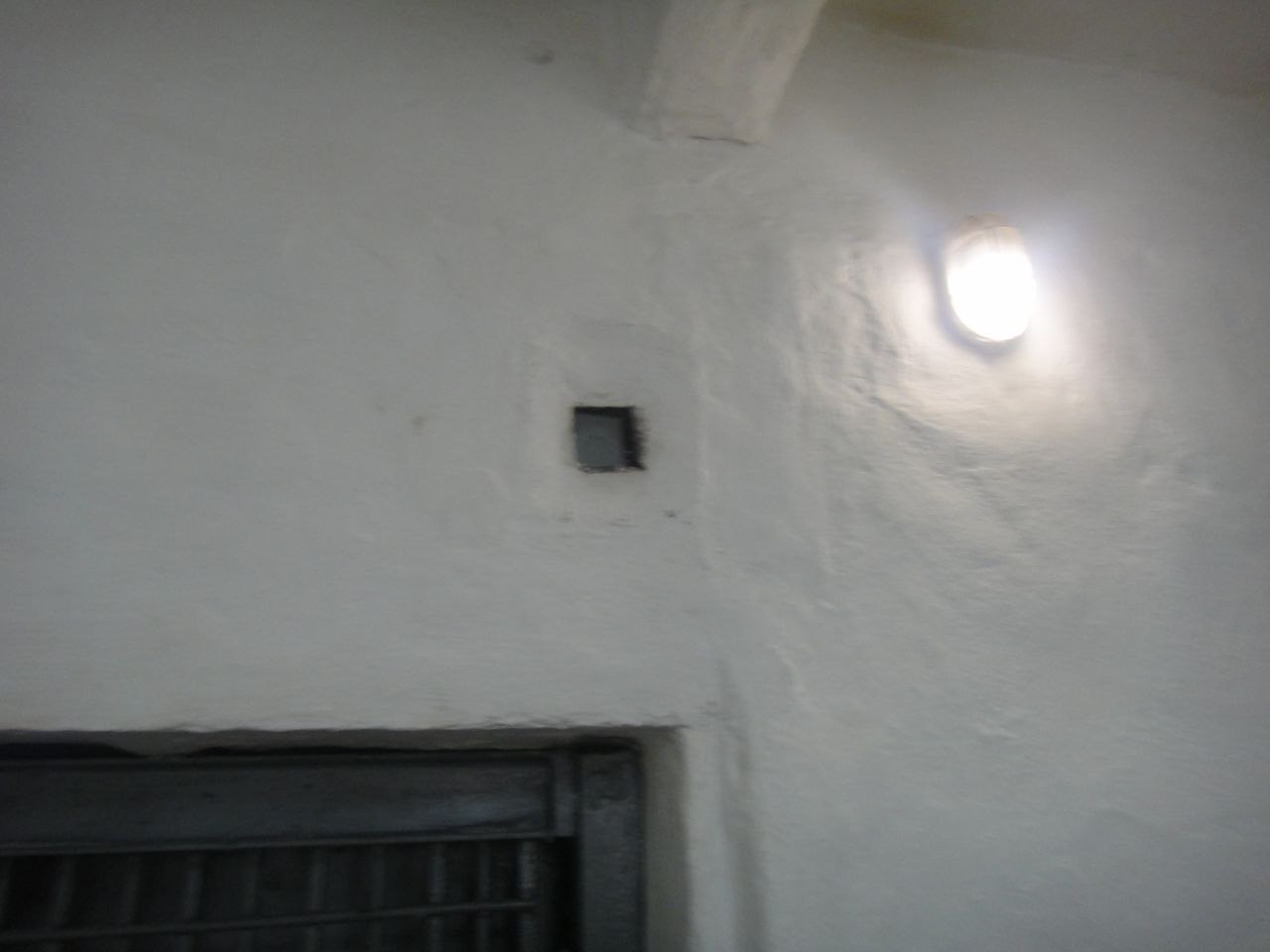
10. Due to the small size of the windows in the DISO/PKT cell premises, a sufficient level of natural lighting is not ensured, as a result of which natural light practically does not penetrate into the premises. Such a state creates additional psychological pressure on prisoners due to the lack of visual contact with the outside world. The aforementioned does not comply with the requirements of rule 18.2 (a) of the European Prison Rules and rule 14 (a) of the United Nations Standard Minimum Rules for the Treatment of Prisoners (the Nelson Mandela Rules).
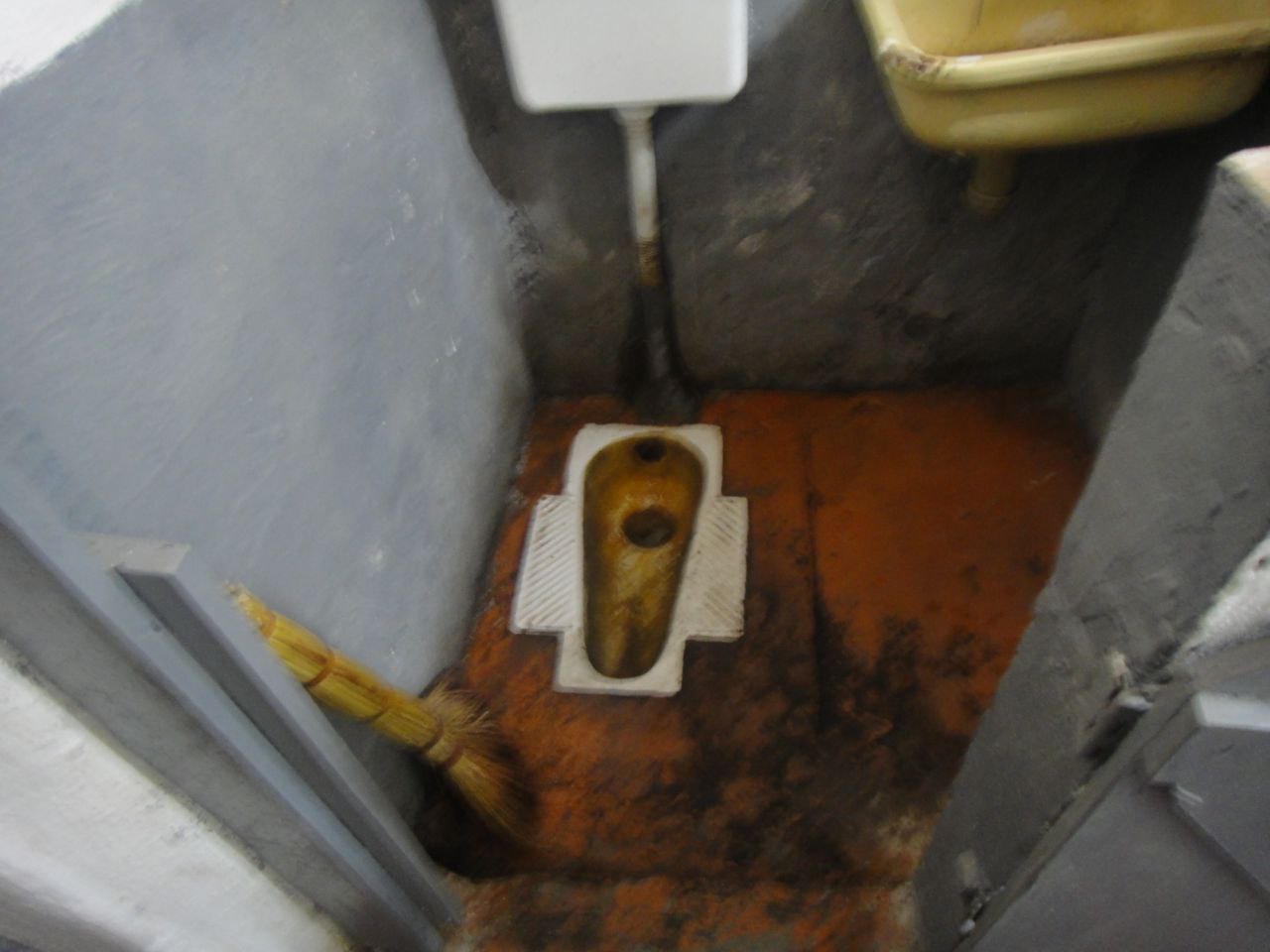
The restrooms in the DISO cell premises are not equipped with sufficient partitions that ensure the possibility of privacy, which violates rule 19.3 of the European Prison Rules and rule 15 of the UN Standard Minimum Rules for the Treatment of Prisoners. Individual cell premises require repair work, which contradicts Article 115 of the Criminal Executive Code of Ukraine.
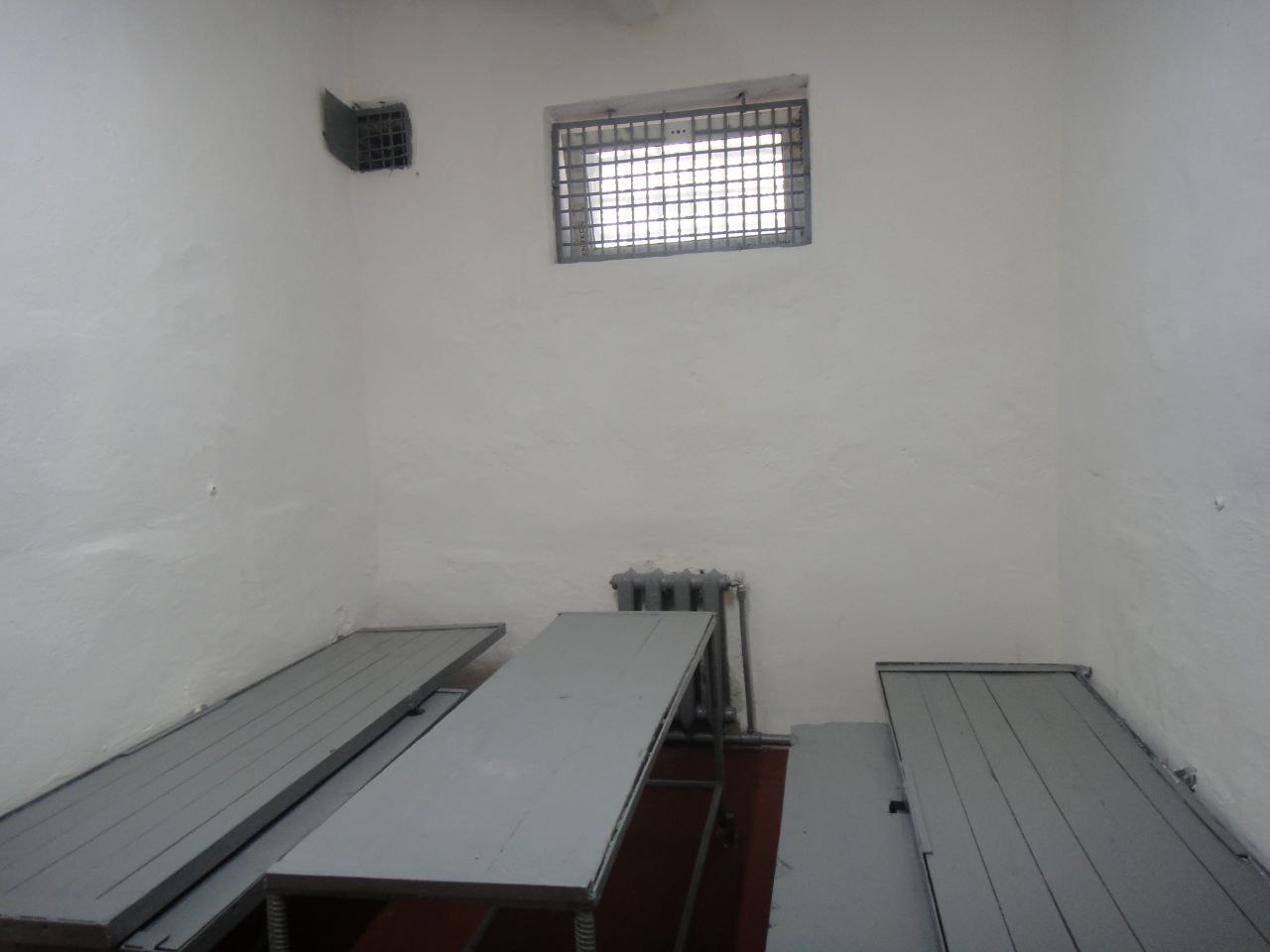
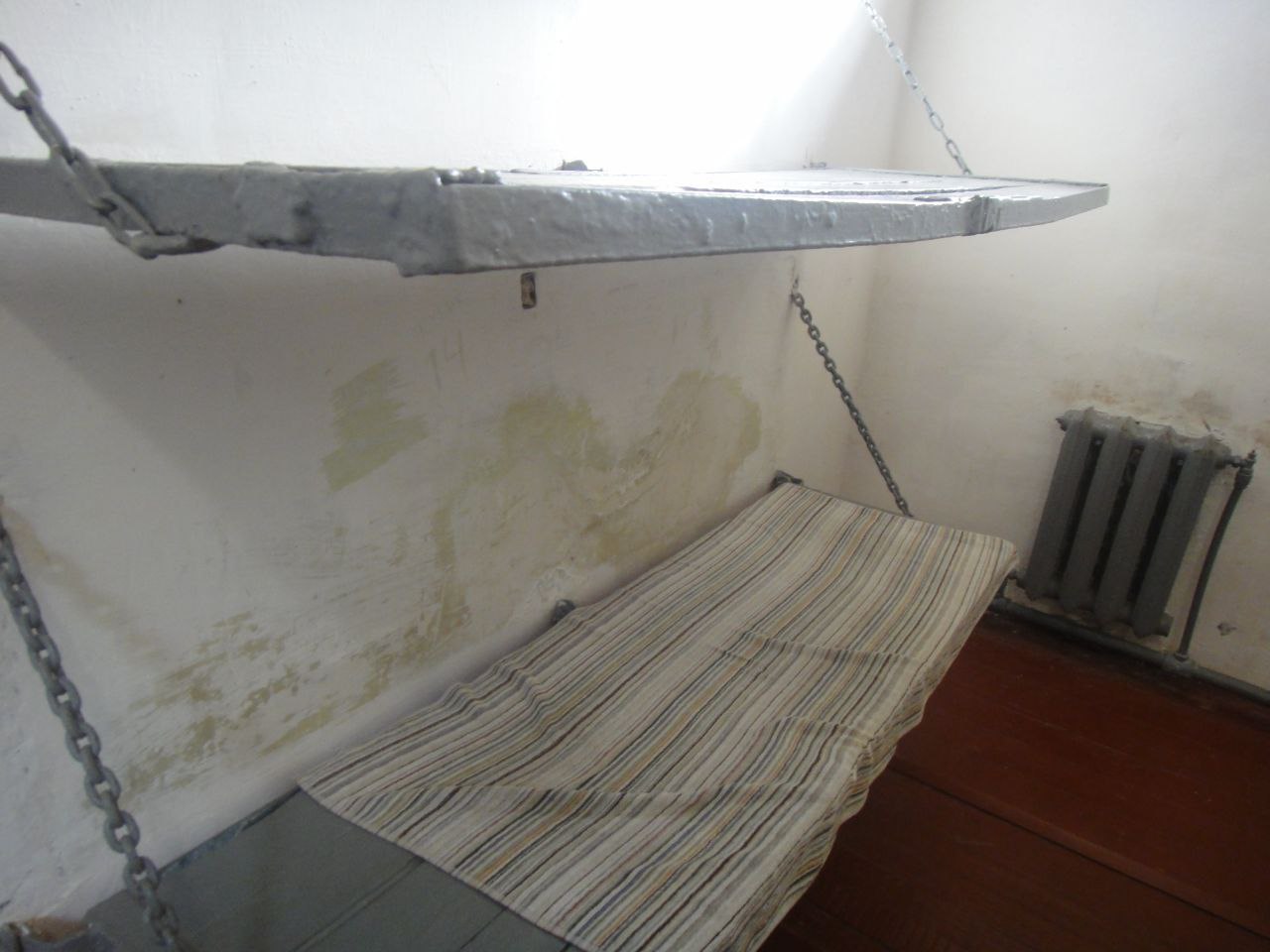
11. Radiophication is absent in the DISO/PKT cell premises, which contradicts the requirements of point 3 of section XX of the IRCF and point 63 of the UN Standard Minimum Rules for the Treatment of Prisoners.
12. During the visit to the DISO/PKT, it was established that for prisoners who were serving disciplinary penalties, the institution’s administration did not issue a copy of the decision on the application of the penalty with an indication of the possibility and procedure for its appeal, which contradicts Article 135 of the Criminal Executive Code of Ukraine.
At the same time, in the report to the Government of Ukraine on the results of the 2023 visit, the Committee recommends taking measures in Ukrainian penitentiary institutions to ensure that prisoners to whom a disciplinary penalty has been applied systematically receive a copy of the corresponding decision. Furthermore, prisoners should be informed of their right to access a lawyer in the context of disciplinary proceedings (CPT/Inf (2024) 20, point 103).
13. Point 1 of section XXIII of the IRCF defines that the supervision of prisoners is a system of measures aimed at ensuring the serving and execution of criminal penalties in the form of restricted liberty and imprisonment, life imprisonment, and arrest through 24-hour and constant control over the behaviour of prisoners in their places of residence and work, the prevention and suppression of unlawful actions on their part, and the ensuring of the requirements of prisoner isolation and the safety of the staff of correctional facilities.
Thus, during the inspection of the DISO cell premise, a video surveillance camera was recorded. At the same time, in its 2012 report, the Committee criticized excessive interference with privacy through the installation of video cameras in prisoners’ living premises: ‘The CPT agrees that video surveillance in cells can be a useful safeguard in certain cases, for example, when a person is considered to be of concern regarding the risk of self-harm or suicide, or if there is specific suspicion that the prisoner is carrying out certain actions in the cell that could jeopardize safety.
However, any decision to use video surveillance regarding a specific prisoner must always be based on an individual assessment of real risks and must often be reviewed on a regular basis. Video surveillance is a serious interference with the private life of prisoners and makes the regime even more repressive, in particular when applied over a long period’ (CPT/Inf (2013) 23, point 52).
14. During the inspection of the dormitories of SPS units No. 5, 6, the absence of restrooms in residential premises was identified, due to which prisoners are forced to use an outdoor toilet, which is in an unsanitary condition. The restrooms are not equipped with sufficient partitions and doors, which does not ensure privacy of use, thereby violating rule 19.3 of the European Prison Rules.
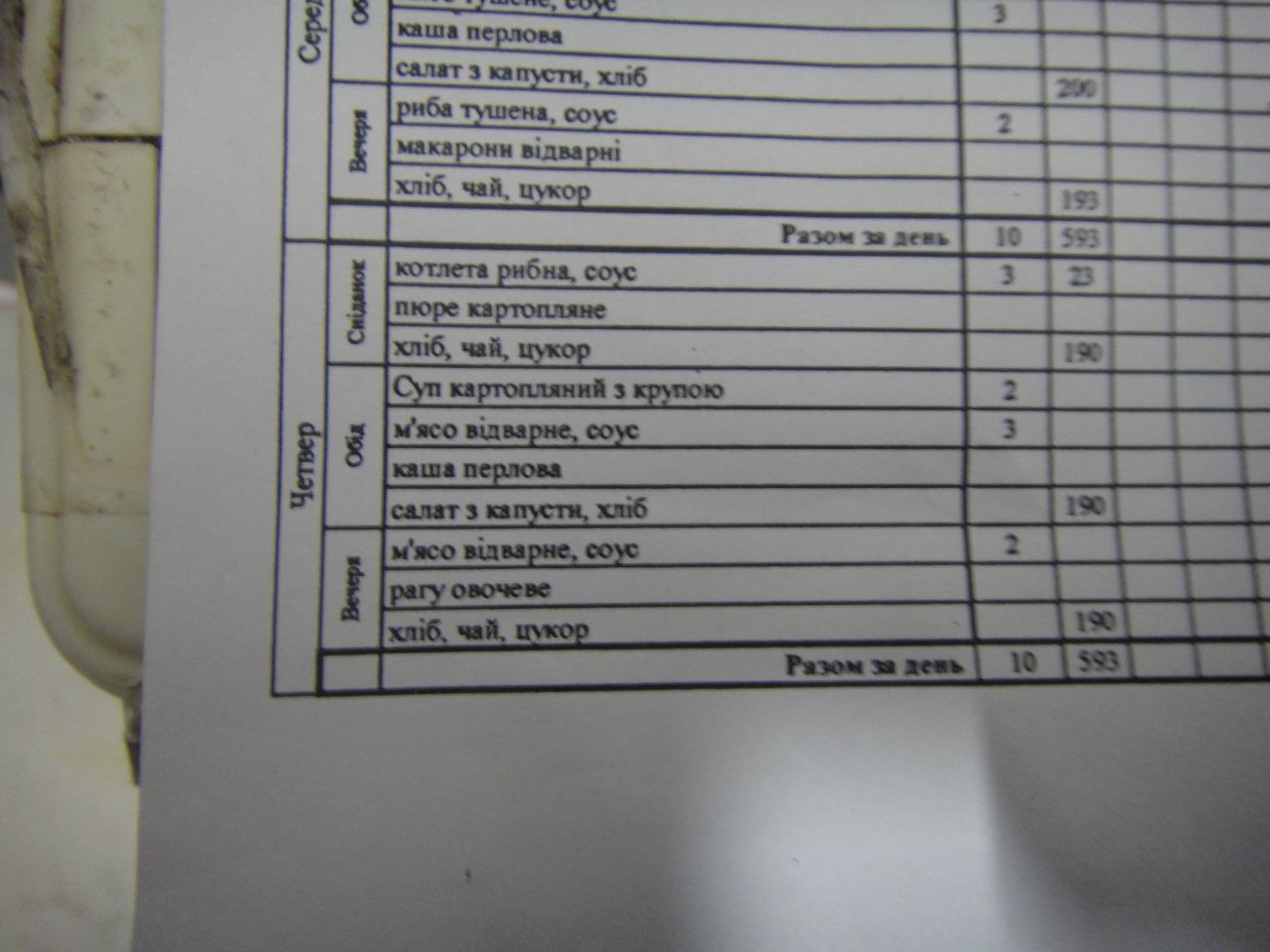
15. In violation of point 5 of section V of the Regulation on the organization of food supply in the State Criminal Executive Service of Ukraine for peacetime, approved by order of the Ministry of Justice of Ukraine dated 15.06.2021 No. 2160/5 (hereinafter — Regulation on the organization of food supply), dishes according to standard No. 1A, served for dinner on 13.11.2025, did not correspond to the approved menu-schedule. Specifically, instead of samples of the stipulated dishes ‘boiled meat’ and ‘vegetable ragout’, samples of the dishes ‘stewed fish’ and ‘boiled pasta’ were provided.
The indicated changes were made without the written permission of the head of the institution and without the submission of a corresponding report by the deputy head of the institution for logistics and utility support, which is a violation of the established procedure for the organization of catering in the institution.
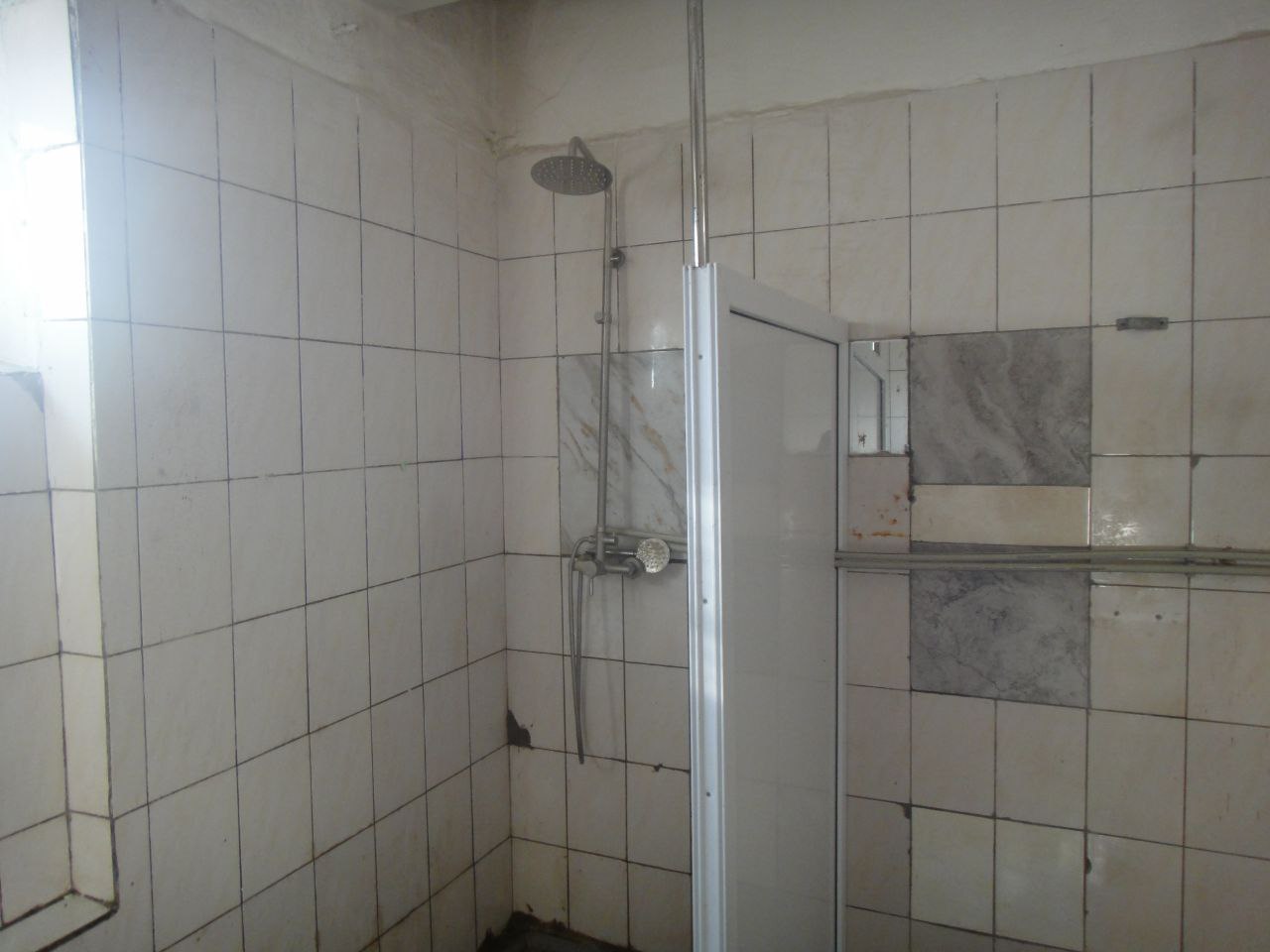
16. The monitoring group established a number of violations in the organization of bath and laundry services for prisoners and detainees. Thus, in violation of point 2.14 of section II of the Regulation on the organization of bath and laundry services for persons held in correctional facilities and pre-trial detention centres, approved by order of the Ministry of Justice of Ukraine dated 08.06.2021 No. 849/5 (hereinafter — the Regulation), the institution does not provide hairdressing services to prisoners and detainees.
In violation of point 2.11 of section II of the Regulation, the forced supply and exhaust ventilation system does not work in the DISO/PKT shower room. In violation of the requirements of rule 19.3 of the European Prison Rules, the right to privacy in the shower room is not ensured due to the absence of curtains on shower partitions.
17. The monitoring group established that the special means available in the institution, in particular protective helmets and bulletproof vests, are not equipped with proper individual numbering. Under such conditions, in the event of the use of physical force by an employee, it is practically impossible to identify the person who used the corresponding special means. The aforementioned contradicts point 1 of section XXVI of the IRCF. At the same time, the Committee in its report on the results of the visit to Ukraine in 2012 drew attention to the problem of personnel identification during interventions in institutions and recommended ensuring that every piece of clothing or protective helmet has a clear identification number, which would allow the identification of the employee if necessary (CPT/Inf (2013) 23, point 21).
18. During the visit, the monitoring group recorded that the institution’s staff who are in direct contact with prisoners openly carry special means, in particular rubber batons. At the same time, according to the eighth paragraph of point 1 of section XXVI of the IRCF, the carrying of special means by the staff of correctional facilities within the protected territory of the correctional facility should, if possible, be maximally concealed from the surroundings.
At the same time, the Committee recommends that prison staff who work in direct contact with prisoners should not carry special means (such as rubber batons, handcuffs, and aerosol canisters equipped with tear gas) openly in front of prisoners, as such carrying hinders the establishment of normal relations between staff and prisoners (CPT/Inf (2011) 29, point 85), (CPT/Inf (2013) 23, point 23), (CPT/Inf (2014) 15, point 166).
19. In accordance with subpoint 5 of point 2 of section IV of the Regulation on the programme of differentiated educational influence on prisoners ‘Preparation for release’, approved by order of the Ministry of Justice of Ukraine dated 16.05.2016 No. 1418/5, registered with the Ministry of Justice of Ukraine on 17.05.2016 under No. 735/28865, the staff of the institution’s social and psychological service, who directly organize and carry out measures for the implementation of the ‘Preparation for release’ programme, are obliged to provide prisoners with assistance in obtaining (renewing) a passport of a citizen of Ukraine, the registration number of the taxpayer’s account card (RNTK), other personal documents, as well as in applying for pensions.
At the same time, 149 prisoners need to have a passport of a citizen of Ukraine issued, 421 need to obtain an RNTK, and 4 persons need to apply for a pension, which indicates insufficiently conducted work of the department of social, educational, and psychological work regarding ensuring the processing of necessary documents for prisoners who do not have them.
20. According to information provided by the administration, from the beginning of 2025 (as of 11.11.2025), 420 short-term visits were granted to prisoners in ZhCC-4, 419 of which took place in a non-contact manner — through continuous partition glass using an intercom device.
At the same time, in the report to the Government of Ukraine on the results of the 2023 visit, the European Committee for the Prevention of Torture emphasizes that for all categories of prisoners, open visits (e.g., at a table) should be the rule, and closed visits the exception, the application of which is allowed only on the basis of substantiated and reasoned decisions after an individual assessment of the potential risk of a specific prisoner. In this regard, the Committee calls on the Ukrainian authorities to review the procedure for conducting short-term visits in penitentiary institutions with the aim of ensuring they are conducted, as a rule, in open conditions (CPT/Inf (2024) 20, point 99).
21. According to official documentation, the staff shortage at the institution as of 14.11.2025 is 136.5 authorized units. At the same time, in the report to the Government of Ukraine on the results of the 2023 visit, the Committee emphasizes that ensuring a positive climate in a penitentiary institution requires the presence of a professional team of staff, which must be present in sufficient numbers at any moment in places of detention. Insufficient staffing can only increase the risk of violence and intimidation between prisoners.
The shortage of staff who are on the front line also undermines the quality and level of measures offered to prisoners and jeopardizes the prospect of preparation for release and social rehabilitation. In this regard, the Committee calls on the Ukrainian authorities to take decisive measures to significantly increase the number of staff in Ukrainian penitentiary institutions where a low level of staffing is observed, with the aim of strengthening the presence of security and supervision staff inside the institutions. It is also necessary to take measures to put an end to the 24-hour shift of staff on duty (CPT/Inf (2024) 20, point 93).
22. During the monitoring visit to ZhCC-4, the state of ensuring access for prisoners to the Internet as one of the tools for the realization of the right to information, maintenance of social ties, preparation for release, and resocialization was investigated. As of the day of the visit, 1,104 prisoners were held in the institution; however, not a single one was provided with a tablet computer, the use of which is directly provided for by current legislation as a permissible form of controlled access to the Internet.
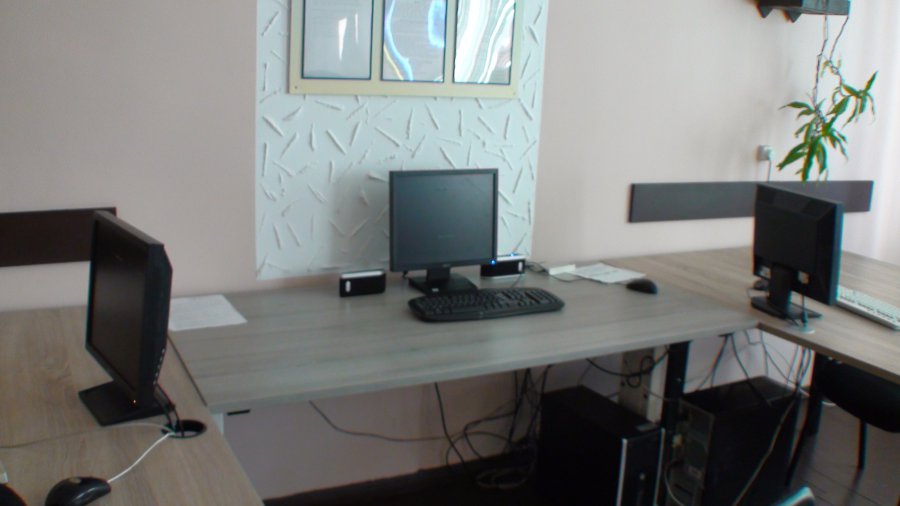
The actual possibilities for prisoner access to the Internet are extremely limited. In the institution’s Internet classroom, there are only three outdated desktop computers, which is clearly insufficient for such a number of persons and does not ensure the real possibility of regular Internet usage.
The analysis of logbooks confirms the formal nature of the functioning of this tool: according to the video call registration log, the last video call was made on 20.10.2025; according to the logbook of granting prisoners access to the Internet, the last entry is dated 28.10.2025; meanwhile, in the logbook of usage of the global Internet network using a tablet computer, the last entry was recorded on 16.10.2025, which, given the absence of any tablets among prisoners, indicates the actual cessation or declarative nature of this type of access.
The aggregate of the established circumstances gives grounds to conclude that access for prisoners to the Internet in ZhCC-4 is of a significantly limited, irregular, and formal nature and does not meet the real needs of the institution’s population. Such a practice contradicts modern approaches to sentence execution, which view controlled access to digital services as a component of the right to information, a means of maintaining family and social ties, as well as an element of preparation for release and social reintegration. An insufficient level of digital accessibility actually reinforces the isolation of prisoners and does not contribute to the achievement of the goals of the sentence in terms of resocialization.
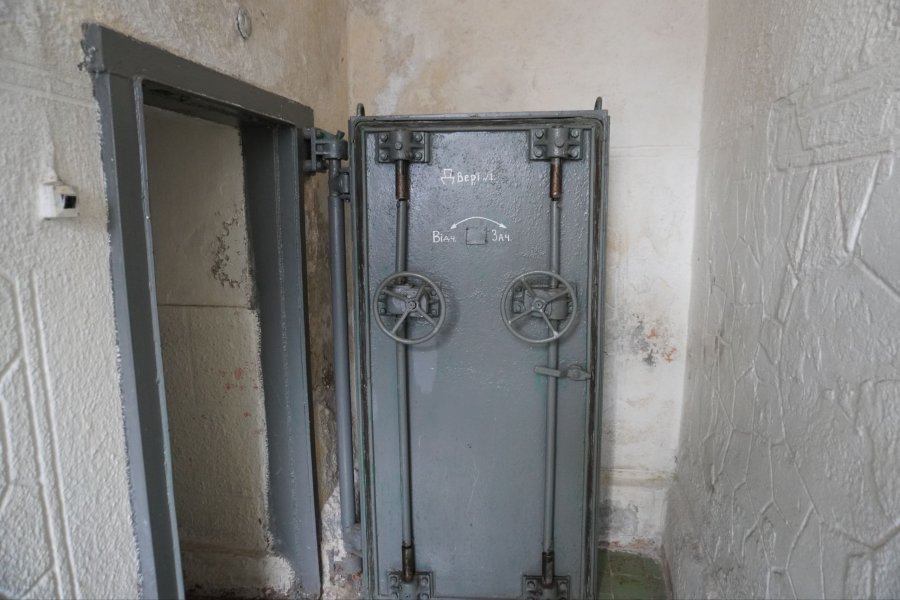
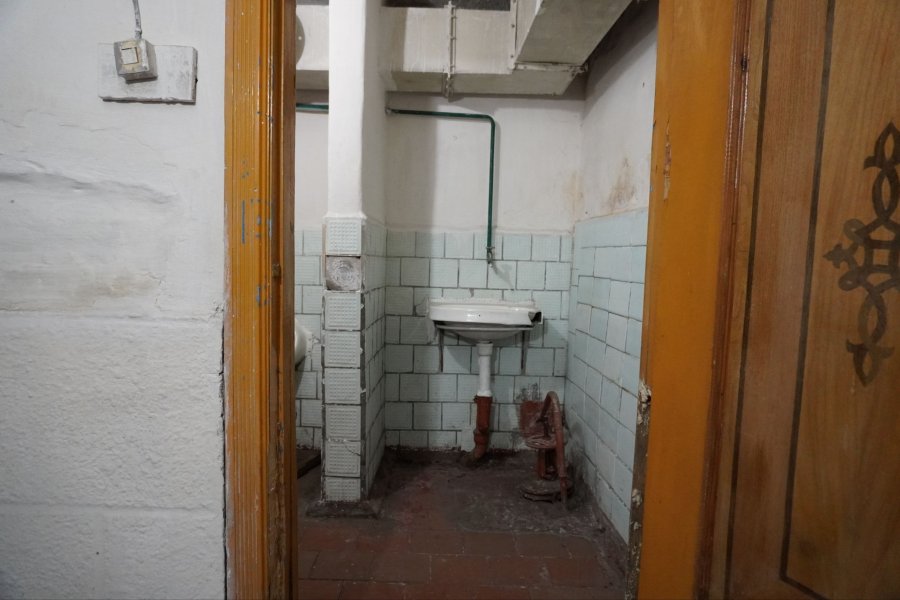
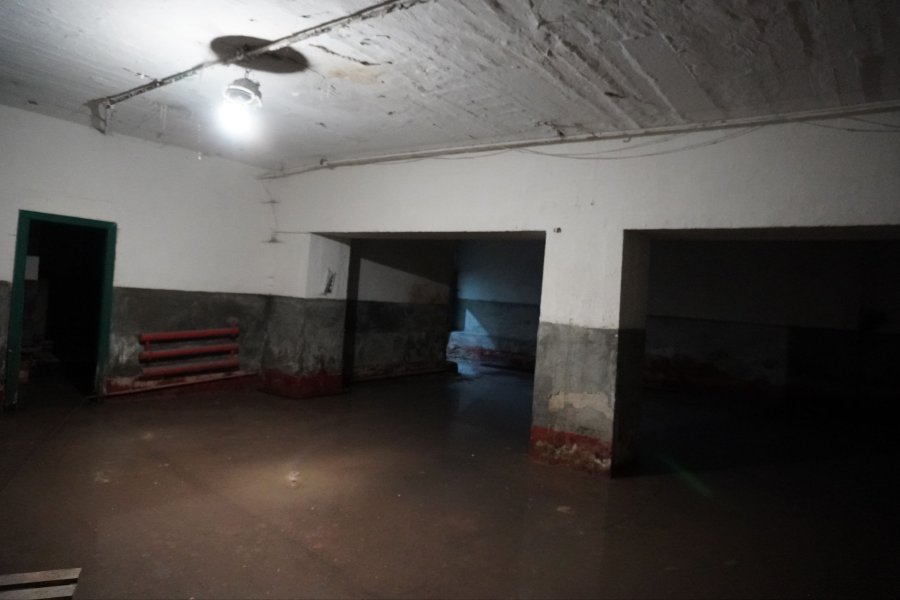
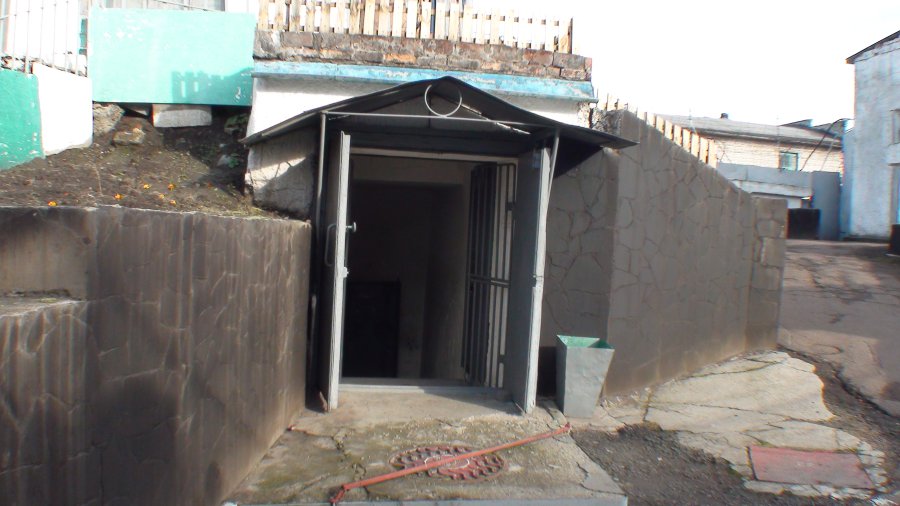
23. During the monitoring visit to ZhCC-4, the state of the arrangement and accessibility of protective structures intended for the sheltering of prisoners and staff during air raids was checked. The institution has two shelters located respectively in the quarantine, diagnostics, and distribution unit and in the residential zone.
The shelter located in QDD unit No. 2 generally has basic elements of functionality. In the premise, there is a second (emergency) exit, ventilation is ensured, and a sewage system is functioning. Information about the declaration of an air raid arrives via loudspeaker and is duplicated in every Social and Psychological Service unit, after which the inspectorate staff ensures the possibility for prisoners to descend to the shelter. Thus, organizationally, access to this shelter during an air raid is provided.
At the same time, the state of the second shelter, located in the residential zone, causes serious concern. Although it also has a second exit and connected sewage, the premise is not equipped with exhaust ventilation. Furthermore, the shelter is in a state of significant flooding, which effectively makes its full and safe use for its intended purpose impossible. Such a technical state creates risks for the life and health of prisoners in the event of the need for a prolonged stay in the shelter during an air raid and indicates an absence of proper readiness of the protective structure for use.
In aggregate, the established circumstances indicate that despite the existence of two shelters in the institution and certain organizational measures regarding the notification and access of prisoners, the state of one of them does not meet the minimum requirements of safety and suitability. This requires urgent measures to bring the shelter in the residential zone into a proper technical state and to ensure equal and safe protection for all persons held in the institution in the conditions of martial law.
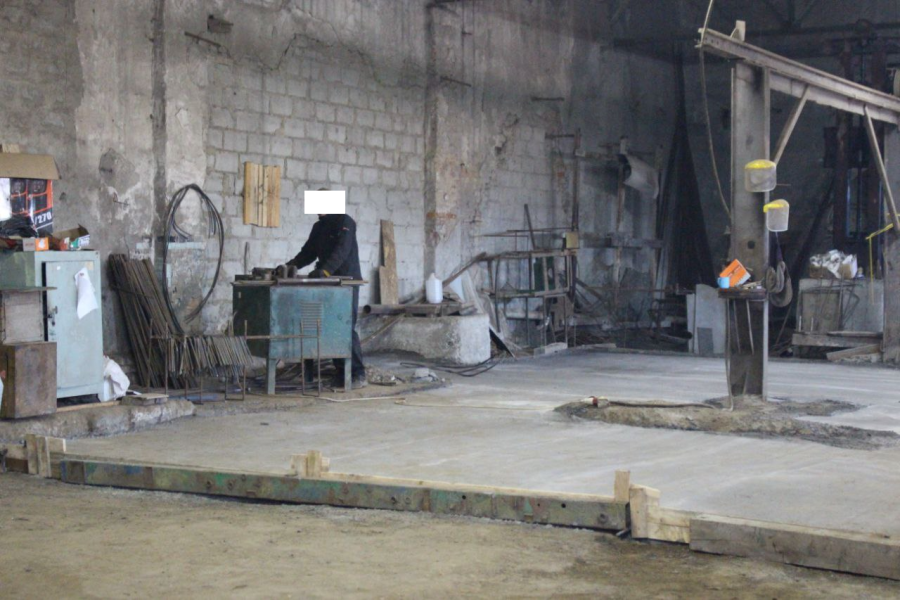
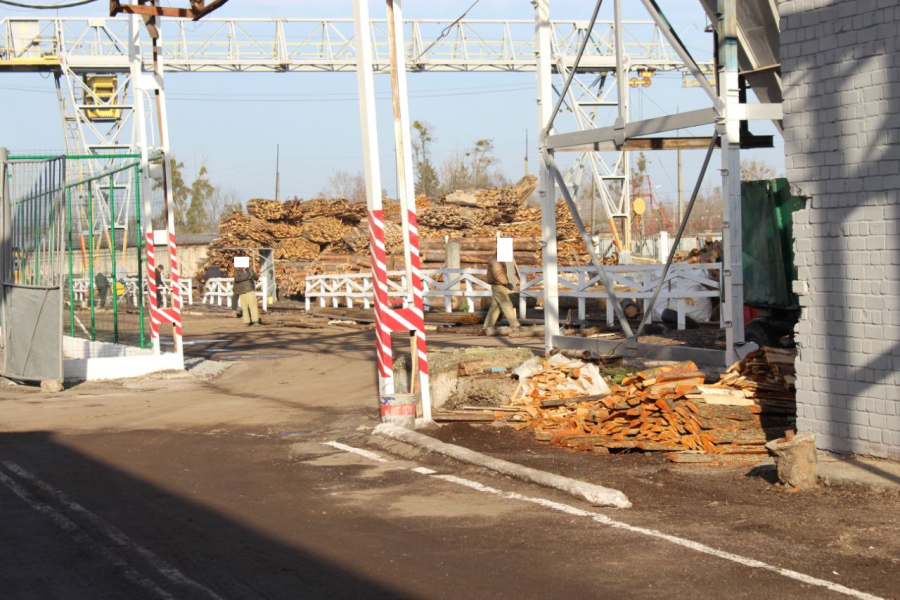
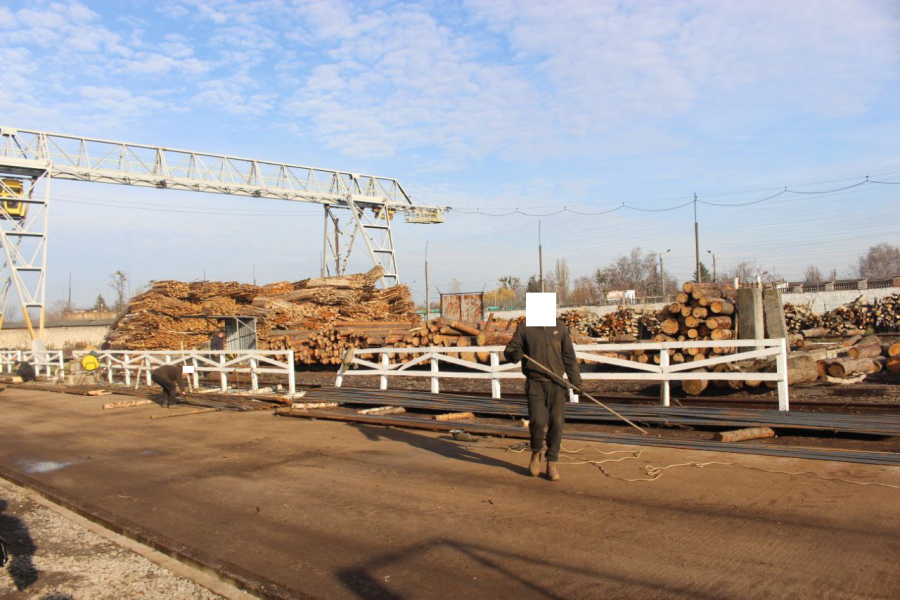
24. Prisoner labour in ZhCC-4 is one of the key elements of organizing the institution’s vital activity and, at the same time, an important component of the resocialization process. At the same time, it is precisely in the sphere of labour that the balance between the institution’s interests, the economic expediency of production activity, and the state’s duty to ensure compliance with labour and social rights of persons deprived of liberty is most clearly manifested.
According to information provided by the institution’s administration during the monitoring visit, as of the day of the visit, 442 prisoners were involved in various types of work. Of this number, only 27 persons worked on the basis of fixed-term employment contracts, while 382 persons were involved in work under civil law contracts (CLC). Such a structure of involving prisoners in labour indicates the dominance of the civil law form of organizing work and even at this stage requires critical evaluation given the nature and conditions of the work actually performed.
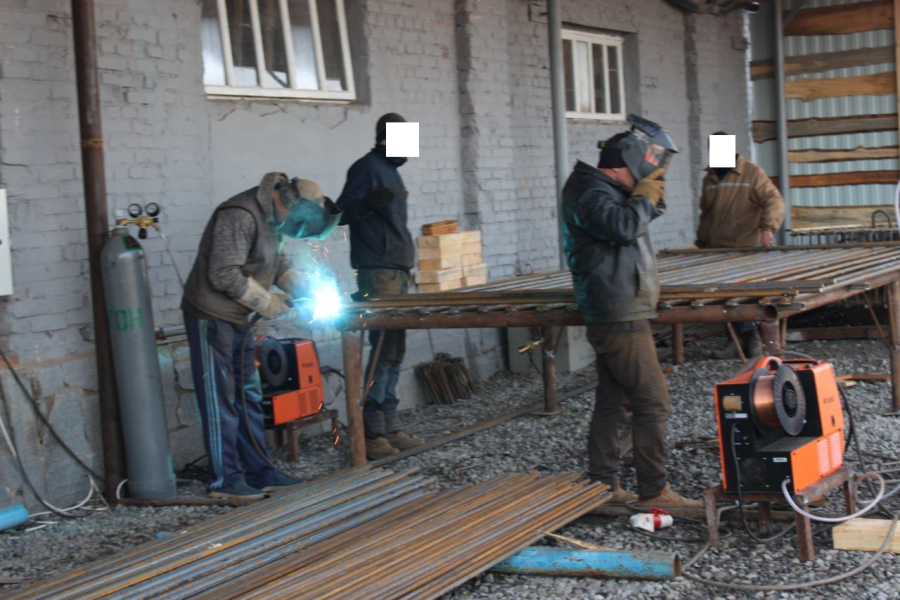
Prisoner labour in the institution is organized along several main lines. They include production activity in workshops, work at objects of household support of the institution, in particular in the canteen, performance of repair and auxiliary work, as well as the performance of the functions of ‘orderlies’.
From the provided documents, accounting logs, rosters, and civil law contracts, it is evident that a significant part of this work is of a permanent, daily nature, is performed in designated premises of the institution, according to a schedule established by the administration, with subordination to the internal organization of the production process.
In the production sphere, several workshops operate. Workshop No. 1 specializes in the manufacture of crates; 14 prisoners actually work in it. At the same time, in the receiving log and a part of other accounting documentation, this workshop is not listed, which indicates the incompleteness of the accounting of structural subdivisions and the persons involved in them. Such a situation makes proper control over working conditions, accounting of working time, and payment for prisoner labour impossible, and also creates risks of hidden labour.
Separately, information requires verification regarding prisoners A. and V., who, according to available data, receive about 2,000 UAH, however, in the provided wage accrual data, information regarding payments to these persons is absent.
In workshop No. 2, production activity is carried out in the direction of manufacturing briquettes and modular ‘dominoes’. The workshop has signs of a stable production subdivision with a permanent composition of workers and a defined internal organization, including with the assignment of foreman B. Such a nature of activity according to its characteristics corresponds to the organization of a labour process, and not the performance of one-off civil law work, which calls into question the legality of using civil law contracts as the main form of involving prisoners.
In workshop No. 8, the actual organization of work in two shifts with a workday duration until 22:30 was recorded. Such a labour regime indicates intensive use of prisoner labour and requires special attention from the point of view of compliance with norms regarding the maximum permissible duration of working time, rest time, and compensation for overtime work.
A separate concern is the situation with prisoner K., who has been working as a welder for approximately 2.5 years. According to the prisoner, he is not informed about any supplements for work in hazardous conditions and, in fact, does not receive them. This requires verification of information regarding the accrual of his wages, working conditions, and compliance with occupational health and safety legislative requirements.
A separate direction for the use of prisoner labour is the canteen. Analysis of logs for issuing cutting/stabbing items and medical examination logs indicates that a significant number of prisoners work in the canteen daily. At the same time, it was established that there is no staffing schedule in the canteen, despite the actual permanent employment of prisoners. Documented cases of work from early morning until late evening and without days off were recorded. Specifically, E. works as a dishwasher from 05:00 to 19:00, and Kh. has been performing work on a vegetable cutter for about one year from 08:00 to 17:00 daily, without days off. Also, the involvement of M. in repair work was recorded, which requires verification from the point of view of formalizing legal relations and payment for labour.
Prisoner A. performs the functions of an ‘orderly’ and works in the garage and the quarantine unit; however, information about the proper formalization of legal relations and information about the accrual and payment of wages is absent.
A legal assessment of the cited facts indicates the existence of systemic violations in the sphere of the realization of the right to labour and social protection of prisoners. In accordance with Articles 43 and 46 of the Constitution of Ukraine, as well as Articles 118-120 of the CEC of Ukraine, prisoner labour must be organized in compliance with labour legislation, with the provision of fair payment, safe conditions, working time accounting, and elements of social protection. Even taking into account the specifics of sentence execution, the state is not released from the obligation to guarantee minimum labour rights.
The actual conditions of performing work in workshops, the canteen, and other objects of the institution indicate the existence of signs of labour relations: systematic and continuous nature of work, performance of work in a designated place, according to a schedule, under the administration’s control, with subordination to the internal organization of labour. Under such conditions, the mass use of CLCs has signs of substituting labour relations with civil law ones, which leads to depriving prisoners of the guarantees provided for by the Labour Code of Ukraine, in particular regarding the duration of working time, days off, payment for overtime work, supplements for hazardous working conditions, and social insurance.
The absence of a staffing schedule in the canteen, incomplete accounting of production subdivisions, the absence or incompleteness of information regarding the accrual and payment of wages to individual prisoners, as well as the use of intensive labour regimes without proper documentation indicate improper organization of labour accounting and control over compliance with labour rights. Such a practice contradicts the principles of legal certainty, transparency, and accountability in the sphere of using prisoner labour.
In aggregate, the established facts give grounds to conclude that in ZhCC-4, a practice has formed of extensive use of prisoner labour in forms that do not ensure a proper level of labour and social guarantees and do not meet the requirements of national legislation and international standards, in particular the European Prison Rules and the UN Standard Minimum Rules for the Treatment of Prisoners (the Nelson Mandela Rules). This requires systemic changes in approaches to labour organization, proper legal formalization of labour relations, transparent accounting of working time and wages, and real provision of social protection for prisoners.
Medical Unit No. 4 of the branch of the State Institution ‘Health Care Center of the State Criminal Executive Service of Ukraine’ in Zhytomyr Region
The head of Medical Unit No. 4 of the branch of the State Institution ‘Health Care Center of the State Criminal Executive Service of Ukraine’ in Zhytomyr Region (hereinafter — medical unit) is P.V. Yavorskyi. At the time of the visit, the position of nurse is vacant — 1 authorized unit.
During the monitoring visit, violations of the requirements of national legislation and non-compliance with international recommendations in the sphere of prisoner treatment were identified, which lead to violations of the rights of prisoners:
1. During the visit, the monitoring group established that medical staff do not ensure proper documentation and recording of bodily injuries of persons deprived of liberty. In accordance with point 3 of chapter 1 of section II of the ‘Procedure for organizing the provision of medical care to persons sentenced to imprisonment’, approved by order of the Ministry of Justice of Ukraine and the Ministry of Health of Ukraine dated 15.08.2014 No. 1348/5/572 (hereinafter — the Procedure), in the event of detecting bodily injuries in a prisoner, the medical worker who discovered such injuries compiles a certificate in three copies, which details: information (written statement, oral or written explanation of the prisoner concerning the circumstances of receiving bodily injuries (date, time, place of receipt, methods of infliction, information about the person (persons) who, in the prisoner’s opinion, caused them)), as well as other information regarding receiving bodily injuries; a comprehensive description of medical indicators characterizing the state of health of the prisoner, the nature of injuries, their size and location; the medical worker’s assumption in view of the information provided by the prisoner and medical indicators, as well as the justification of their correlation.
To the certificate, the medical worker attaches the form of primary accounting documentation No. 511/o ‘Certificate on the recording of bodily injuries’, approved by order of the Ministry of Health of Ukraine dated 14.02.2012 No. 110, registered with the Ministry of Justice of Ukraine on 28.04.2012 under No. 661/20974, and photographs of the existing bodily injuries of the prisoner. Two copies of the certificate and its attachments are added to the materials of the personal file and the medical card of the outpatient patient No. 025/o, and the third copy is issued personally to the prisoner who underwent the examination.
Instead, as established during the monitoring visit, in cases of detecting bodily injuries, the medical staff actually only fill out the form of primary accounting documentation No. 511/o without compiling a certificate in three copies and without carrying out the full complex of actions provided for by the Procedure. This indicates a systemic violation of the requirements of point 3 of chapter 1 of section II of the Procedure and improper organization of medical recording of bodily injuries.
2. In violation of point 2 of chapter 2 of section II of the Procedure, the medical unit is not equipped with functional fluorographic/X-ray equipment, as a result of which prisoners and detainees do not undergo diagnostic examinations of the chest organs for the purpose of timely detection of respiratory diseases. This indicates the impossibility of early tuberculosis diagnosis in the institution’s medical subdivision.
3. During the visit, the monitoring group established that for four patients who were undergoing inpatient treatment in the medical unit, Primary Accounting Documentation Form No. 003/o, “Medical record of an inpatient”, approved by Order of the Ministry of Health of Ukraine No. 110 of 14.02.2012, had not been opened. All data regarding treatment and diagnostics in the inpatient ward, including examination results of the convict and the prescription sheet, must be entered into the specified form. The identified issue violates the requirements of clause 5, chapter 5, section II of the Procedure.
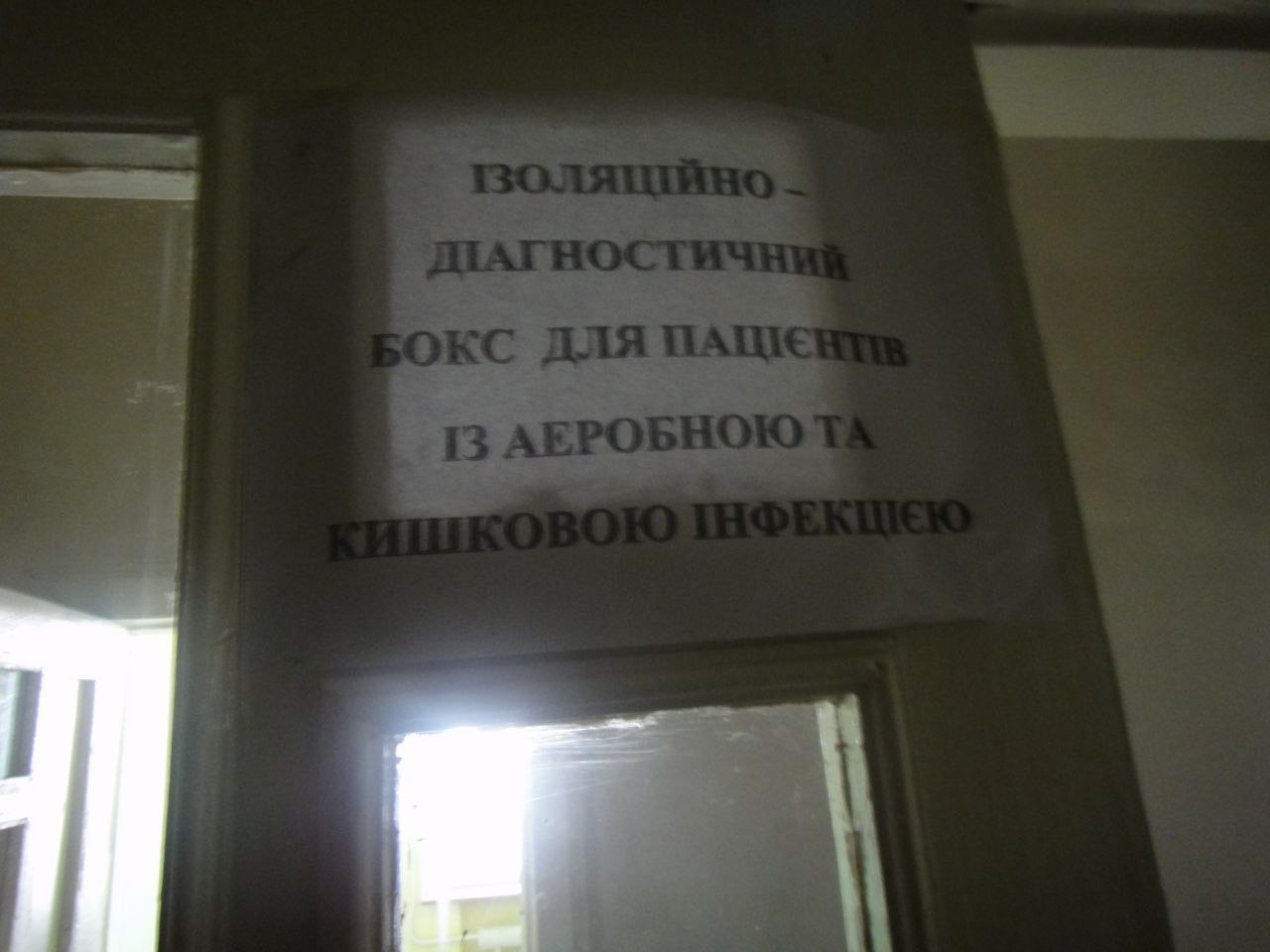
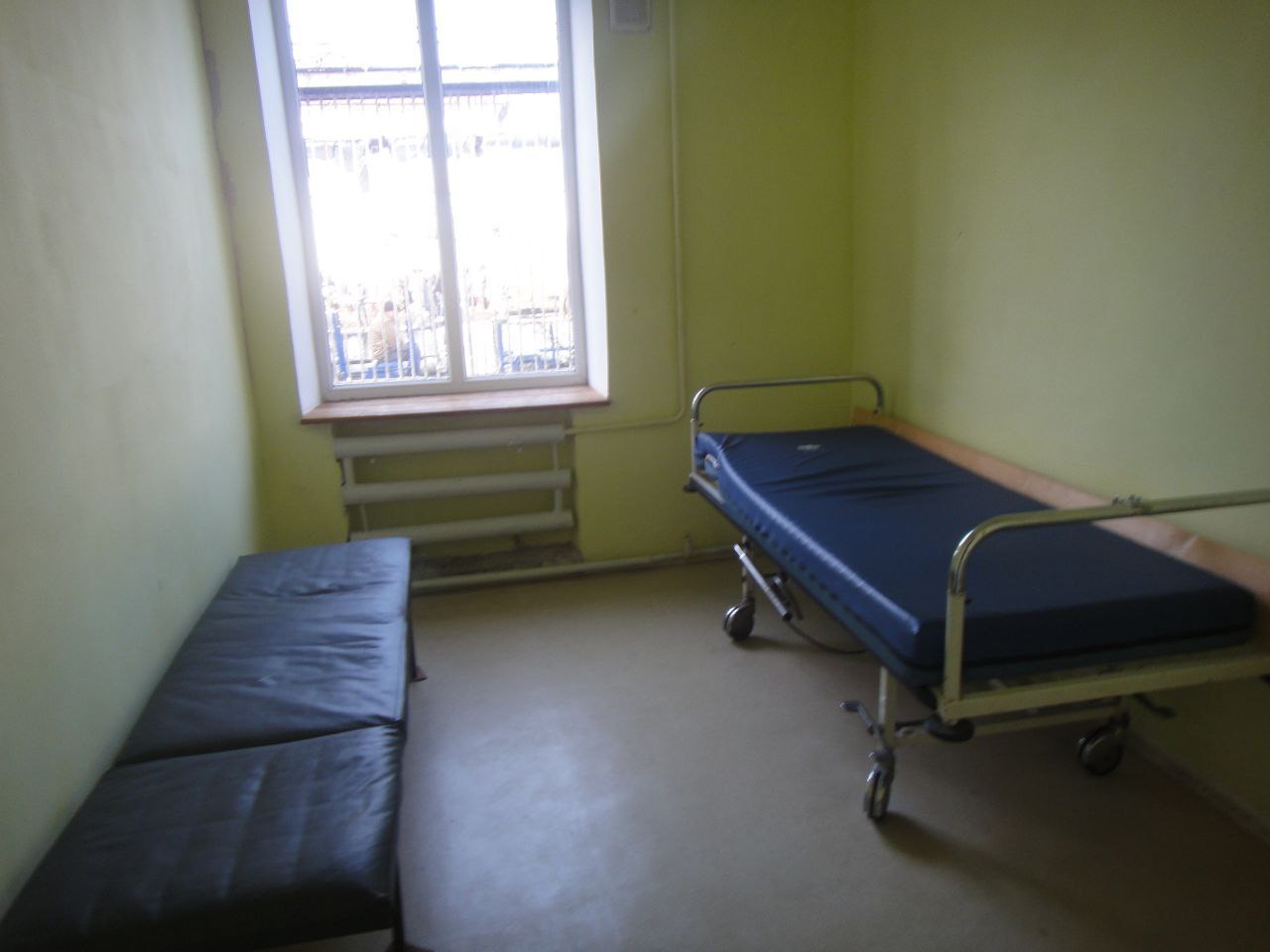
4. The medical unit's inpatient department is equipped with two isolation wards for infectious patients. However, these premises share a bathroom and a washbasin, which fails to ensure the isolation of patients with dangerous infectious diseases from each other and from other convicts, and contradicts the “Measures and means to prevent infection when providing patient care”, approved by Order of the Ministry of Health of Ukraine No. 1777 of 03.08.2020.
Furthermore, the isolation ward is fitted with darkened (frosted) windows, which does not ensure a sufficient level of natural light. In its report on the results of the visit to Ukraine in 2020, the Committee had already drawn attention to this and recommended taking measures to revise the design of windows in the cells to allow prisoners to see what is outside the cell (CPT/Inf (2020) 40, paragraph 48).
5. The medical unit has not organised substitution maintenance therapy (hereinafter — SMT) for individuals with mental and behavioural disorders resulting from opioid use, in accordance with the “Procedure for Conducting Substitution Maintenance Therapy for Individuals with Mental and Behavioural Disorders Resulting from Opioid Use”, approved by Order of the Ministry of Health of Ukraine No. 200 of 27.03.2012. Drug-dependent persons are not provided with social-psychological support, cognitive-behavioural therapy (CBT), relapse prevention, motivational interviewing, mutual support groups, etc. Thus, these individuals are deprived of the opportunity to receive SMT, which violates their right to choose methods of treatment in accordance with Article 38 of the Law of Ukraine “Fundamentals of Health Care Legislation of Ukraine”.
At the same time, the Committee in its report following the visit to Ukraine in 2023 notes that admission to a penal institution is an opportunity to resolve a drug-related problem, and therefore it is important that appropriate assistance be offered to all interested individuals; thus, appropriate medical care should be available in all institutions. The assistance offered to such individuals must be diverse; substitution therapy programmes for individuals with drug dependence should be combined with genuine psychosocial and educational programmes for individuals with opioid dependence who are unable to stop using drugs. Furthermore, access to SMT programmes in institutions should be easily accessible and managed by prison doctors who have undergone special training on issues related to drug use (CPT/Inf (2024) 20, paragraph 86).
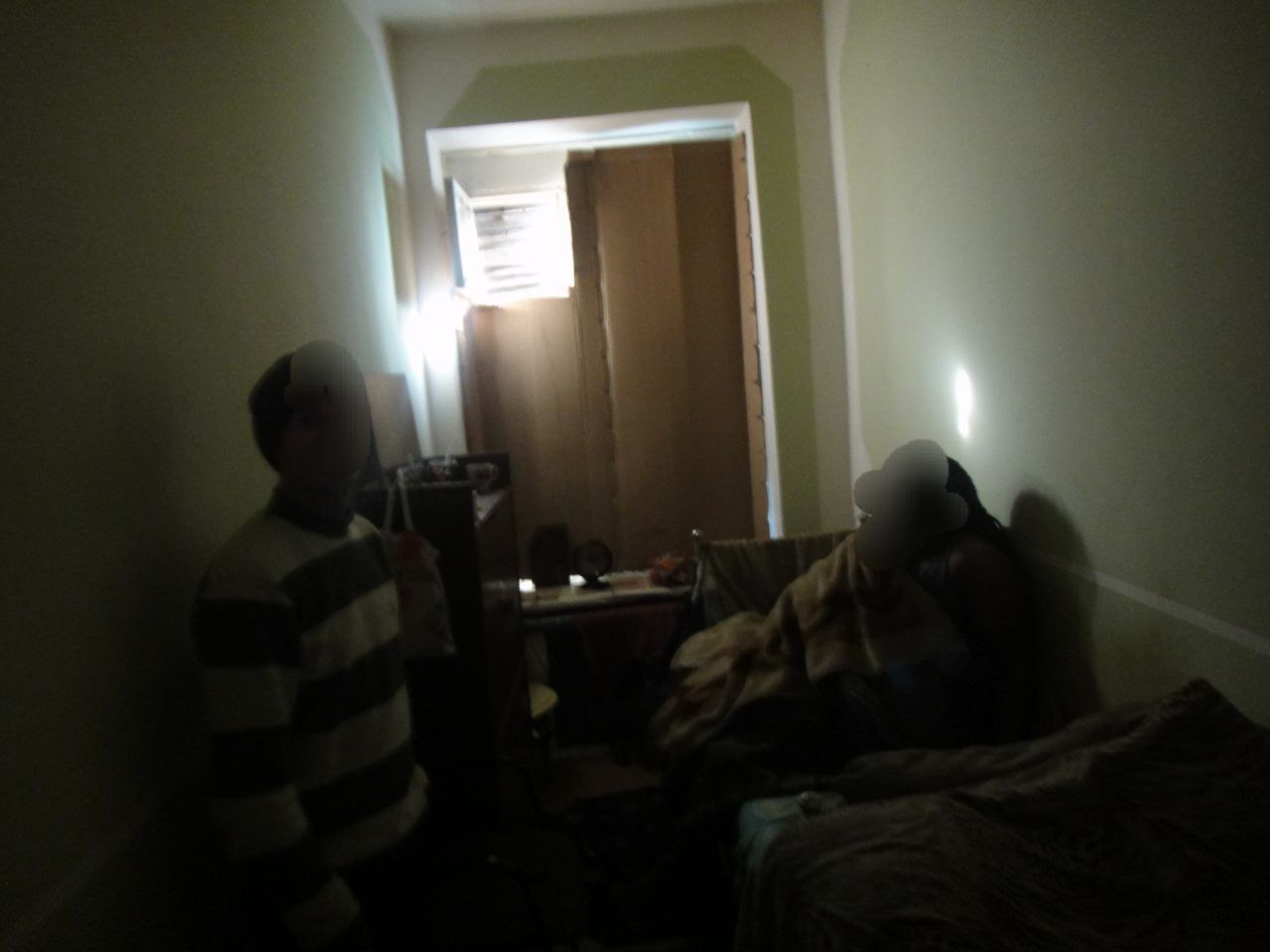
6. In violation of clause 9 of the Rules for the application of physical restraint and (or) isolation when providing psychiatric care to persons suffering from mental disorders, approved by Order of the Ministry of Health of Ukraine No. 240 of 24.03.2016, registered with the Ministry of Justice of Ukraine on 15.04.2016 under No. 570/28700, as well as clause 8.3.4 of the State Building Norms of Ukraine V.2.2-10:2022 “Health Care Institutions”, the isolation ward for persons with mental disorders does not meet the established requirements.
Specifically, the isolation ward is designed for the occupancy of more than one person (two persons), which contradicts the principle of individual isolation. The equipment in the isolation ward has sharp corners, which creates a potential danger for patients. The room lacks a bathroom, supply and exhaust ventilation, and a container with boiled drinking water.
Furthermore, in violation of Article 115 of the Criminal-Executive Code of Ukraine, the isolation ward does not comply with the requirements regarding the minimum living space per convict in inpatient conditions (not less than 5 m²). Indeed, the total area of the specified room, which houses two beds, is 8.7 m² according to the building plan; therefore, the actual area per convicted person is 4.35 m².
During the measurement of the room's area, it was also established that the distance between opposite walls is less than 2 m, which does not comply with the recommendations of the European Committee for the Prevention of Torture and Inhuman or Degrading Treatment or Punishment. Specifically, the report to the Government of Ukraine on the results of the Committee's visit to Ukraine in 2012 emphasised that any single cells must have a living space of at least 6 m² (excluding the sanitary unit), and the distance between the walls of the cell must be at least 2 m (CPT/Inf (2013) 23, paragraph 45).
7. The monitoring group established that the psychiatrist conducts psychiatric examinations of patients without properly formalising written informed consent. Specifically, contrary to the requirements of the “Instruction on completing the primary accounting documentation form No. 003-7/o 'Informed consent of a person to undergo a psychiatric examination'”, approved by Order of the Ministry of Health of Ukraine No. 970 of 15.09.2016, it was established that the medical documentation (specifically in the medical card of an outpatient form No. 025/o and the medical card of an inpatient form No. 003/o) lacks the patient-signed informed consent for the psychiatric examination.
8. In violation of the requirements of the Standards of medical care for chronic hepatitis C in adults, approved by Order of the Ministry of Health of Ukraine No. 51 of 15.01.2021, not all persons (200 persons as of 14.11.2025) with suspected viral hepatitis C are undergoing PCR testing, and consequently, they do not receive the necessary treatment, which may lead to the deterioration of their health and the spread of said infectious disease among convicts and prisoners. Furthermore, on the day of the visit, the medical unit’s pharmacy lacked medications for the treatment of viral hepatitis C.
9. Dispensary monitoring is carried out for 36 individuals with disabilities. Of these, group I — 0 persons, group II — 10 persons, group III — 26 persons. However, in violation of the requirements of the Law of Ukraine “On the rehabilitation of persons with disabilities in Ukraine”, persons with disabilities are not receiving proper diagnostic, treatment, and rehabilitation measures, despite the existence of information confirming persistent impairment of bodily functions caused by diseases and the consequences of injuries, which cause restrictions on normal daily life.
Indeed, during the examination of the convicts' medical documentation, it was established that 3 individuals with disabilities lack an Individual Rehabilitation Programme (hereinafter — IRP). Furthermore, the recommendations of the IRP are not being fulfilled; as a result, these individuals do not receive the proper diagnostic, treatment, and rehabilitation measures, despite the existence of information confirming persistent impairment of bodily functions caused by diseases and the consequences of injuries, which cause restrictions on normal daily life.
10. In violation of the requirements of the Standards of provision of bedding, special clothing, and special footwear (inventory property) for convicts undergoing treatment in medical-preventive institutions, institutions with the rights of medical facilities, and medical units at penal institutions and remand prisons, approved by Order of the Ministry of Justice of Ukraine No. 280/5 of 20.02.2012, convicted persons do not receive hospital property (hospital suit, robe, and slippers). Convicts stay in the inpatient ward in their everyday clothes, and sometimes with their own bedding. Some mattresses require replacement.
11. In violation of the requirements of the State Building Norms of Ukraine V.2.2-40:2018 “Inclusivity of buildings and structures. Basic provisions”, the medical unit lacks conditions for the stay and service of persons with disabilities.

12. In violation of clause 37 of the Resolution of the Cabinet of Ministers of Ukraine No. 285 of 02.03.2016 “On approval of Licensing conditions for carrying out economic activities related to medical practice”, the medical unit lacks the certificate confirming the provision of free access to the buildings and premises of the medical institution for low-mobility groups of the population, the acquisition of which is mandatory.
13. In violation of the requirements of the Table of equipment for one workstation of a dentist and dental technician, approved by Order of the Ministry of Health of Ukraine No. 158 of 11.04.2005, the medical unit lacks a dental X-ray machine, which makes it impossible to conduct a comprehensive dental examination of convicts and does not ensure the timely provision of proper dental care.
According to information provided by the medical unit staff, among the available types of dental care, tooth extraction prevails, while filling is performed extremely rarely, which significantly limits the right of convicts to receive proper dental care.
14. In violation of the Procedure for organising medical care at the primary, secondary (specialised), and tertiary (highly specialised) levels using telemedicine, approved by Order of the Ministry of Health of Ukraine No. 681 of 19.10.2015, the medical unit staff, due to technical limitations, are deprived of the ability to send requests for telemedicine consultations and receive professional assistance for providing medical services to convicts.
15. According to clause 7 of chapter III of section II of the Procedure, convicts working at food facilities (excluding work related to positions of sellers, managers of food and clothing warehouses, storekeepers), in the processing industry, children's homes, institutions of general secondary education, professional training units in special educational colonies, medical units (paramedic stations), and hospital institutions of the State Criminal-Executive Service (excluding work related to the provision of medical care), laundries, baths, rooms for long visits, dormitories, clubs, at water supply and sewage facilities, and sections for the breeding and raising of animals, must undergo mandatory preliminary and preventive medical examinations in accordance with the resolution of the Cabinet of Ministers of Ukraine No. 559 of 23.05.2001 “On approval of the list of professions, production facilities, and organisations whose employees are subject to mandatory preventive medical examinations, the procedure for conducting these examinations, and the issuance of personal medical books”.
For every convict in this category, a primary accounting documentation form No. 1-OMK “Personal medical book” is opened, approved by Order of the Ministry of Health of Ukraine No. 150 of 21.02.2013, registered with the Ministry of Justice of Ukraine on 23.04.2013 under No. 662/23194. However, during the inspection of personal medical books of convicts working in the canteen, it was established that these individuals had not undergone examination by an otorhinolaryngologist and a dermatovenereologist, which violates the requirements of clause 6 of the Rules for conducting mandatory preventive medical examinations of employees of certain professions, production facilities, and organisations whose activities are related to serving the population and may lead to the spread of infectious diseases, approved by Order of the Ministry of Health of Ukraine No. 280 of 23.07.2002 (as amended by Order of the Ministry of Health of Ukraine No. 150 of 21.02.2013).
16. The medical unit lacks the medication naloxone, which makes it impossible to provide emergency medical assistance in cases of opioid overdose.
17. In violation of the requirements of the Fire Safety Rules in Ukraine, approved by Order of the Ministry of Internal Affairs of Ukraine No. 1417 of 30.12.2014 (hereinafter — the Rules), the medical unit premises are not equipped with fire extinguishing and fire alarm systems.
Recommendations:
1. Ensure that the conditions of detention for convicts in the quarantine, diagnostic, and distribution unit are brought into compliance with the requirements of national legislation and international standards, in particular by eliminating overcrowding, observing the living space norm, and stopping the use of premises not intended for habitation.
2. Eliminate violations of material-living and sanitary-hygienic support in the quarantine, diagnostic, and distribution unit, residential units, and disciplinary isolation wards/cells of chamber type, ensuring the availability of premises, furniture, sanitary facilities, drinking water, ventilation, proper lighting, and privacy conditions provided for by standards.
3. Cease the practice of using convicts as “orderlies” in forms that involve the performance of control, supervision, or access to official and confidential information, as well as ensure the protection of personal data and medical confidentiality.
4. Ensure proper organisation of work with newly arrived convicts, in particular the full composition and regular work of the quarantine, diagnostic, and distribution unit working group, compliance with the established frequency of measures, and real, rather than formal, information provision, including ensuring translation for foreigners.
5. Cease stigmatising practices in residential premises, in particular the posting of information about crimes committed by convicts, which degrades dignity and creates risks of conflict.
6. Bring detention conditions in disciplinary isolation wards/cells of chamber type into compliance with established standards, ensuring a proper level of natural and artificial lighting, privacy of sanitary units, radioification, necessary repair work, access to information, and compliance with procedural guarantees during the application of disciplinary penalties.
7. Review the practice of video surveillance in cell-type premises in order to prevent disproportionate interference with private life and apply it exclusively on the basis of individual risk assessment.
8. Ensure compliance with the established procedure for organising food and laundry services, in particular the compliance of actually provided meals with approved menu schedules, provision of hairdressing services, proper operation of ventilation, and provision of privacy conditions.
9. Eliminate violations in the use of special means, ensuring their individual identification and ending the practice of open carrying of special means by personnel in direct contact with convicts.
10. Strengthen the work of the social-psychological service in preparing convicts for release, particularly regarding the issuance of passports of a citizen of Ukraine, taxpayer registration numbers, and pensions in accordance with the real needs of convicts.
11. Review the practice of conducting short-term visits with the aim of ensuring an open format as a general rule, and a non-contact format only as an exception based on individually motivated decisions.
12. Take measures to reduce staff shortages, strengthen the presence of staff in residential areas, and review service schedules in order to increase the level of safety and quality of treatment of convicts.
13. Ensure real, regular, and non-discriminatory access of convicts to the Internet, in particular by introducing tablet computers provided for by legislation, increasing the number of computers in the internet classroom, and stopping the formal keeping of logbooks.
14. Bring the institution's protective structures into a usable state, in particular by eliminating flooding, ensuring proper ventilation, and guaranteeing safe access for convicts to shelters during air raid alerts.
15. Ensure compliance with the right of convicts to work and social protection by bringing forms of employment into compliance with the actual nature of work performed, ending the substitution of labour relations with civil-legal ones, proper accounting of working time, and timely and full payment of wages.
16. Eliminate violations in the organisation of work in production workshops and at economic support facilities, in particular by fully accounting for all units, approving the staffing table of the food unit, and complying with norms of working time, weekends, and compensation for harmful and overtime work.
17. Ensure transparency of financial accounting and payments to convicts, making it impossible for cases of actual work performance to occur without reflection in payment slips and without proper information about the terms and amount of remuneration.
18. Take measures aimed at eliminating identified human rights violations and preventing torture, other cruel, inhuman, or degrading treatment and punishment in Medical Unit No. 4 of the branch of the State Institution “Centre for Health Care of the State Criminal-Executive Service of Ukraine” in the Zhytomyr region.
19. Ensure control over the proper maintenance of medical documentation in accordance with the Procedure for organising the provision of medical care to convicts sentenced to imprisonment, approved by the joint order of the Ministry of Justice of Ukraine and the Ministry of Health of Ukraine No. 1348/5/572 of 15.08.2014, as well as other regulatory legal acts.
20. Ensure the medical unit is staffed with medical specialists in accordance with the existing needs of the institution's contingent.
21. Ensure timely and proper documentation of bodily injuries in convicts in accordance with established requirements.
22. Provide the medical unit with necessary diagnostic equipment, including an X-ray machine.
23. Ensure the maintenance of primary accounting documentation form No. 003/o “Medical record of an inpatient” for all persons undergoing inpatient treatment, in accordance with the requirements of the Procedure.
24. Ensure the possibility of receiving substitution maintenance therapy based on a diagnosed mental and behavioural disorder resulting from opioid use.
25. Bring isolation wards for infectious patients into compliance with the requirements of the Order of the Ministry of Health of Ukraine No. 1777 of 03.08.2020, and ensure a proper level of natural lighting, in particular by replacing darkened windows with those that allow for daylight and visual connection with the external environment.
26. Ensure the isolation ward for persons with mental and behavioural disorders is arranged in accordance with established requirements.
27. Ensure the acquisition of patients' written informed consent for examinations and treatment in the established form.
28. Ensure all persons with suspected viral hepatitis C have access to PCR testing in the shortest possible time and organise necessary antiviral treatment for persons with a confirmed diagnosis.
29. Ensure the conduct of individual rehabilitation for persons who need it, in accordance with approved programmes and recommendations.
30. Ensure the accessibility of the institution's buildings in accordance with the requirements of the State Building Norms of Ukraine V.2.2-40:2018 “Inclusivity of buildings and structures. Basic provisions”.
31. Fulfill the requirements of clause 37 of the Resolution of the Cabinet of Ministers of Ukraine No. 285 of 02.03.2016 “On approval of Licensing conditions for carrying out economic activities related to medical practice”.
32. Ensure the issuance of hospital property to convicts during hospitalisation in accordance with established standards.
33. Provide the medical unit with a dental X-ray machine and necessary equipment for conducting a full dental examination and treatment.
34. Ensure proper operation of the telemedicine complex for doctors to make requests for telemedicine consultations.
35. Ensure that all canteen workers possess personal medical books and a full range of medical examinations provided for by the Procedure, necessary for admission to work at food facilities.
36. Eliminate violations of fire safety requirements.